Rip-roaring time in Ripon and whistling in the sun in Whitby

Sunday 6 September 2015

Today we awoke to blue skies and a gorgeous Summer day in Yorkshire making Autumn wait just a little longer.  We made our way to the 10.30am family eucharist at Ripon Cathedral, the mother church of the Diocese of West Yorkshire and the Dales.

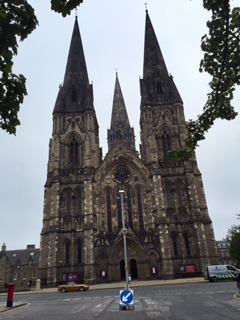
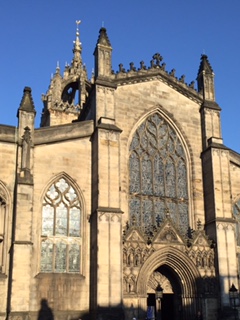
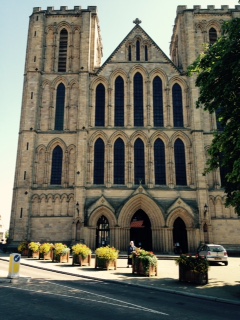
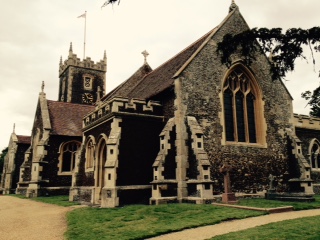
Ripon Cathedral exterior. The towers lost their towers after one of them fell through the roof in 1660! they have never been replaced.
Ripon Cathedral exterior. The towers lost their spires after one of them fell through the roof in 1660! they have never been replaced.

This is the largest diocese in England and covers huge cities like Leeds, Harrowgate, Bradford, Wakefield and Huddersfield, a total of 2.5 million folk. Today’s service was their monthly “open doors service” deliberately aimed at young families and seekers. They also welcomed back recently baptised children and their families for a welcome and gift from the congregation.

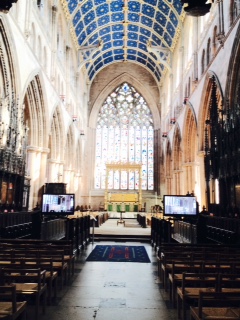
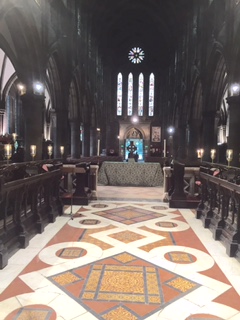
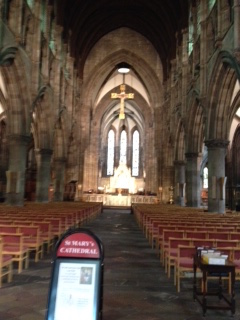
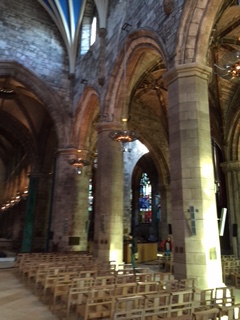
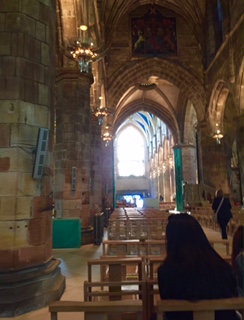
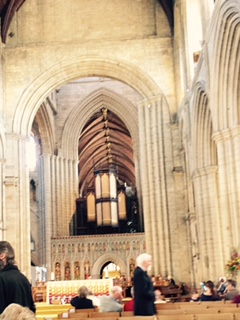
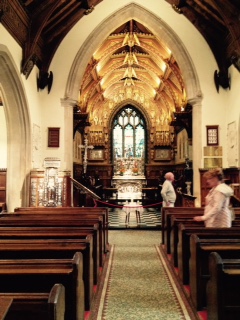
Ripon Cathedral nave at the end of the 10.30am eucharist service

The service was lead by Canon Ruth Hind and the preacher was Canon Elizabeth Sewell. The sermon was based on the Mark 7 reading of Jesus reaching out to the Syro-Phoenician woman…a curious lectionary coincidence considering the refugee avalanche convulsing Europe at this very moment.  Canon Hind gave a brief introduction to the issue and asked the question did Jesus change his mind about his mission when challenged by the Syro-Phoenician woman’s insistent request for help? Canon Hind said no he didn’t but it may be that Jesus adjusted his theology…the idea that Jesus had a developing theology was in itself left hanging somewhat.

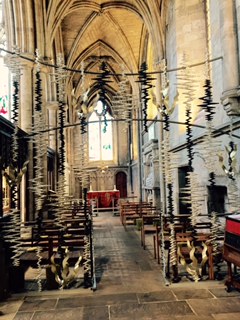
This brief introduction was followed by calling the congregation to get up from their seats and visit some of the five prayer centres around the church.  These contained a series of quite confronting refugee situations occurring currently and craft or artistic or symbolic activities designed to force folk to come to terms theologically and practically with current events.  It was an unusual thing to see in a staid middle class congregation but most of the congregation became involved although some stolidly sat it out grimly!

The service had a mix of new and old music, and sometimes new words with old tunes;  a piano and small group was used in the main but the organ was used first and last. It was an impressive service and carried quite a punch with me given the current crisis in Europe. This is now the fourth Sunday cathedral service we have enjoyed (St Paul’s in London; Gulldford Cathedral, St Albans cathedral, and now Ripon Cathedral as well as Holy Trinity Brompton.  All five services have been engaging, energised and challenging as well as all being totally different. It has been an interesting and edifying experience.

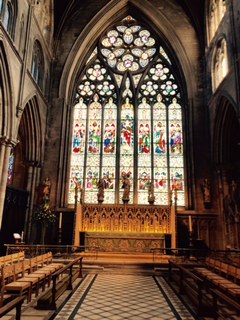
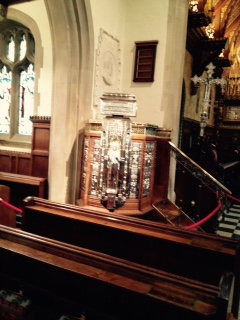
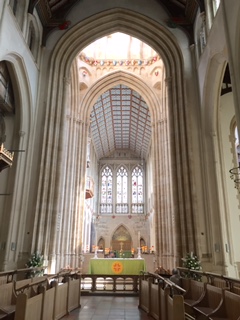
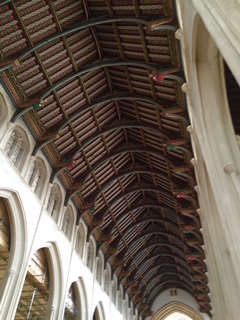
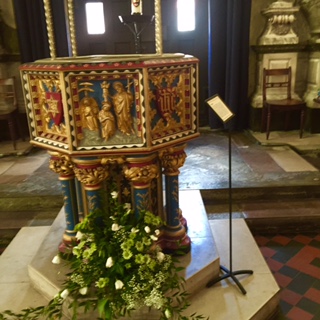
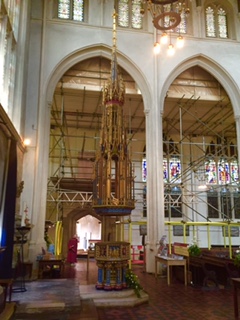
The Cathedral is one of England’s most ancient with a C7th Saxon crypt all that is left of the stone church built by Wilfrid in 672, the Norman abbey founded in 1132, Gothic towers built in 1220 and the nave rebuilt in 1502-5. It is a beautifully maintained and elegant cathedral with Victorian stained glass windows at the lower level, clear glass at the top level. The C20th pulpit is marble and metal and sits a little awkwardly.  The stone rood screen has a clear view to the main altar with the ancient quire stalls behind it. Both side chapels have modern make overs, one of them a 1970s “glam” look designed by silversmith Leslie Durbin. The strength of this cathedral it seemed to us is that it also very much the Ripon parish church and it is alive and kicking.

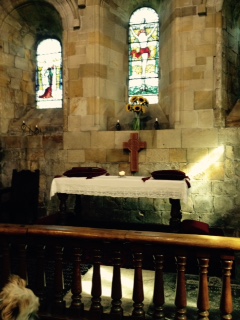
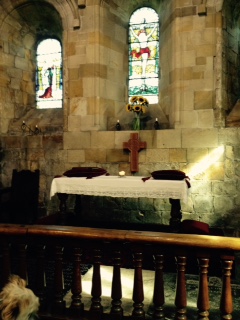
Interior of the stone sanctuary of St Mary's church at Whiby; this is the only uncluttered part of the interior ..the rest is a nightmare and you can see why they cleared out these churches in the C18th.
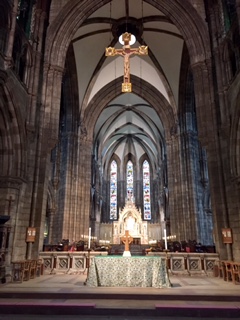
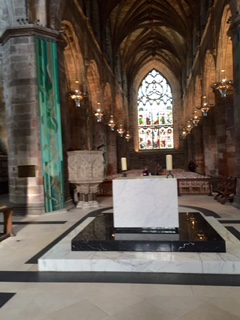
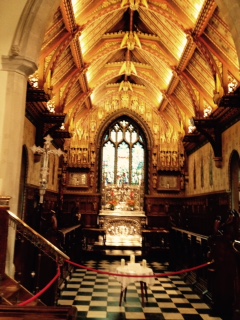
The simple main altar at Ripon Cathedral
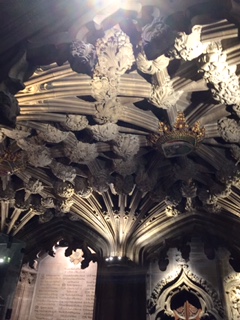
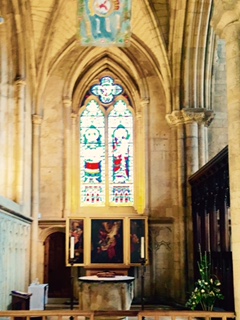
1970's redecoration of one of the side chapels at Ripon Cathedral to highlight the lightning like effect of the coming of the Holy Spirit.
1970’s redecoration of one of the side chapels at Ripon Cathedral to highlight the lightning like effect of the coming of the Holy Spirit.
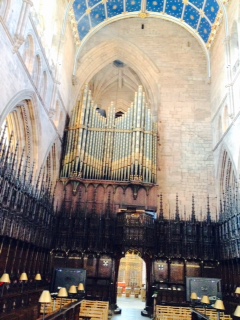
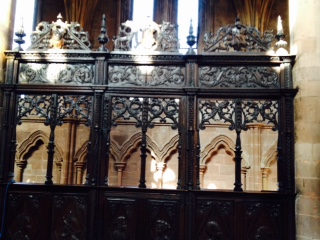
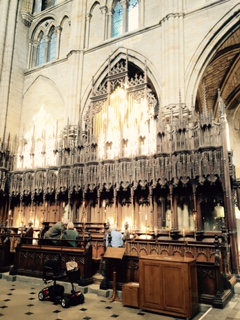
Ancient choir stalls and misericords in the old quire behind the rood screen
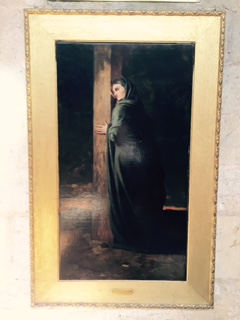
Unusual painting of Mary Magdalene, by Thorburn located in a side chapel of Ripon Cathedral
View from the quire back through the rood screen to the front of Ripon Cathedral
C7th crypt ..the only remaining part of Wilfrid's Saxon church at Ripon
C7th crypt ..the only remaining part of Wilfrid’s Saxon church at Ripon
The second more traditional side chapel but also with some modernising features

We emerged into the Yorkshire sun and journeyed eastwards through the wonderful northern moors

Whitby Yorkshire moors

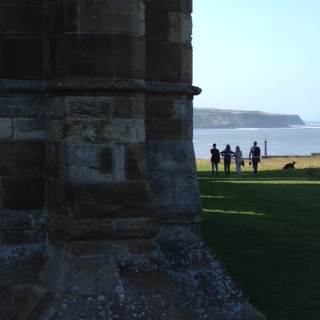
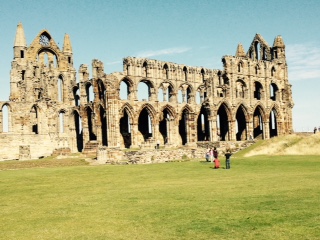
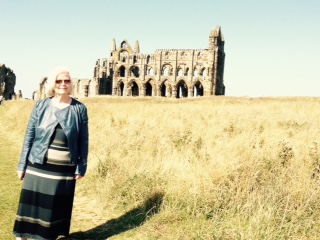
and beautiful little villages  to the gorgeous coastal town of Whitby at the mouth of the Esk River. The Abbey ruins still stand proud  and high on a beautiful headland in Whitby overlooking the beautiful village of Whitby which is built around the mouth of the Esk River. From the abbey 199 steps above the town you can look down on the village of Whitby, the winding Esk River full of boats, the busy harbour, the sandy foreshore  with folk swimming, the high rolling surf, the narrow heads, the headland beyond and to the south the rollling Yorkshire fields and hills.

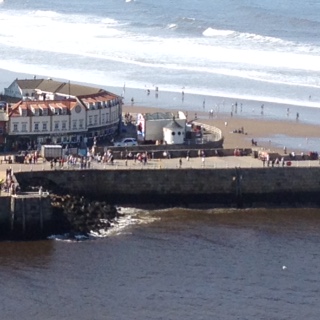
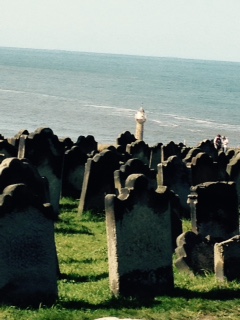
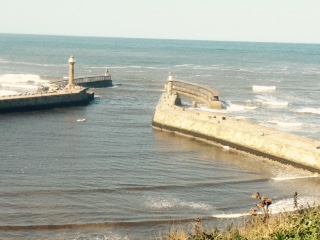
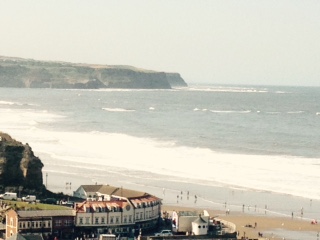
Whitby harbour and foreshore Whitby headland Whitby lighthouse beneath graveyard of St Marys church Whitby narrow heads at the mouth of the River Esk Whitby on the Esk River

The surf was high and was very inviting. The contrast between grass, surf, ocean, river, town and abbey amazing

Whitby surf 2 whitby view 2

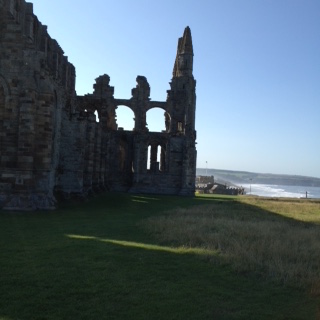
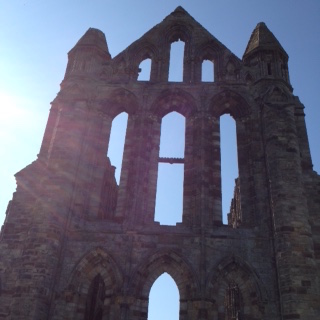
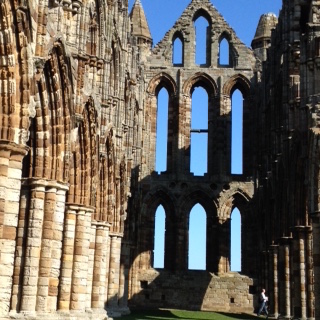
The  ancient ruins of Whitby Abbey, destroyed, as was the Fountains Abbey of Ripon,  by Henry V111’s dissolution of the monasteries still stands proudly today.  Whitby as we all learned in ThL Church History was the site ot the first English synod when the British church had to decide between ancient Celtic Christian customs and Western Roman customs led by the Pope’s emissary Augustine (not to be confused with Augustine of Hippo of the Confessions.) As usual Rome won the day and Wilfrid became a bishop and the Celtic Christians retreated to the wilds of Wales  and Ireland and the islands of Skellig off the coast of Ireland.  But the Abbey ruins stand tall and no doubt could tell many stories.

Whitby abbey 1 Whitby abbey 2 Whitby abbey 4 Whitby abbey 5 Whitby abbey 6 Whitby abbey 7 Whitby abbey 8 Whitby abbey 9

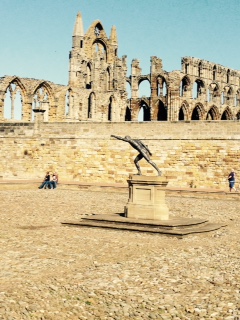
It is a simply stunning sight on a blue sky day! There is also a youth hostel serving light meals and a stunning museum of artifacts.  A lot of the abbey remains and it is an inspiring and powerful sight to behold and also a place of peace and meditation. A new feature is the setting up of a copy of the Borghezi Gladiator (now in the Louvre) statue in the  entrance to Whitby Abbey replacing one that was formerly set up by Hugh Cholmley who developed the old Abbot’s house into an C18th mansion.  No one knows what happened to Cholmley’s model.  Strangely enough alongside this is a touristic mix of Gothic Dracula stuff because apparently Bram Stoker was inspired by Whitby Abbey to create the scene for his Transylvanian hero. Indeed I did see a number of black crows flapping about with the seagulls!

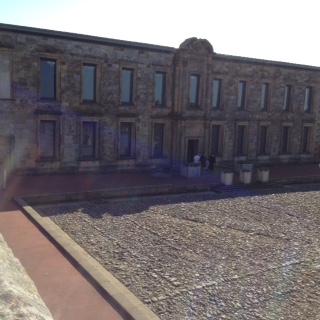
Rather sad looking C18th Cholmondly mansion at Whitby Abbey but inside it is now the most stunning museum of Whiby artifacts. Amazing transformation!
Rather sad looking C18th Cholmondly mansion at Whitby Abbey but inside it is now the most stunning museum of Whitby artifacts. Amazing transformation!

Whitby gladiator statue in Whitby information centre

Bronzed gladiator in the entrance to Whitby Abbey replacing the Cholmondly statue that disappeared who knows when. The original is in the Louvres and is frequently copied.

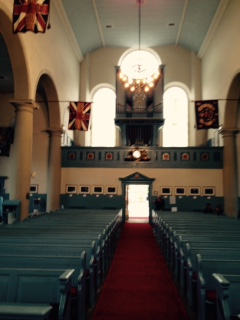
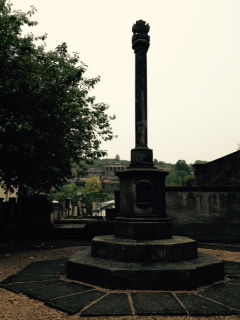
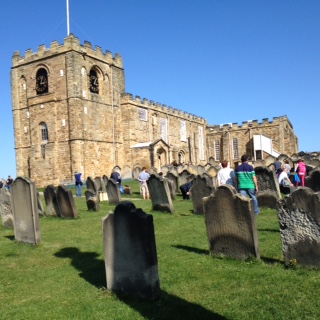
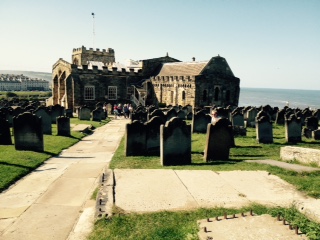
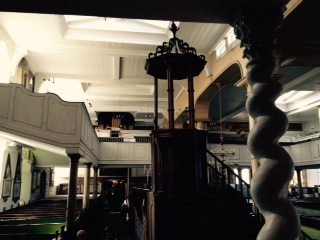
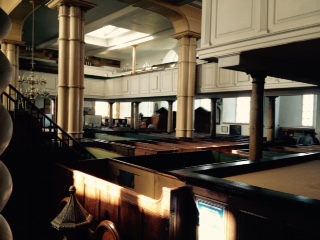
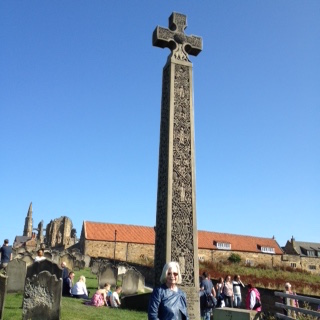
Standing close by the Abbey on the same hill is C12th St Mary’s church surrounded by a vast graveyard which includes an ancient Celtic cross.  The church, unlike many early churches in Britain has not been Gothicized and retains its crowded box pews, galleries, three tiered pulpit and very ancient stone sanctuary. At first it looks like a junk shop being so crowded with furniture but after a while you get the feel of it.

Whitby church sanctuarythis sanctuary  is the only uncluttered part of  St Mary’s …the rest is out of control and you can see why these churches were cleared out in the C18th.

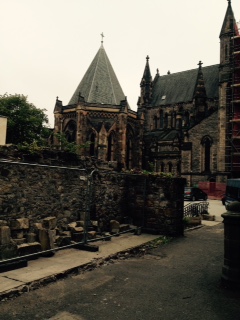
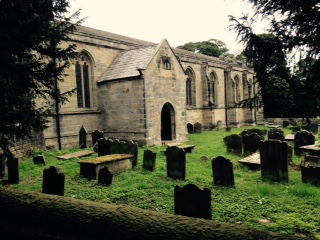
Exterior of St Mary's church in Whiby from the graveyard
Exterior of St Mary’s church in Whiby from the graveyard
St Mary's church Whitby from the Abbey
St Mary’s church Whitby from the Abbey
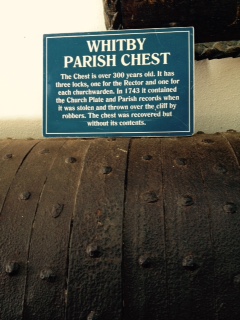
The Parish Chest at Whitby no honour among thieves!

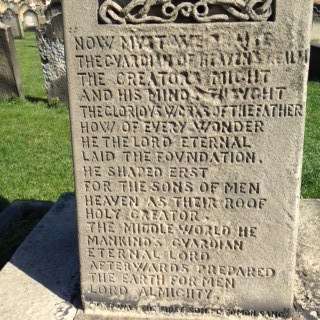
The following shots show the chaos of the boxed pews, the three storied pulpit and the gallery above. It is claimed they could fit 1000 in. I doubt that! The other shots are of “Caedmon’s cross and inscription”.

Whitby church interior 3 Whitby church interior 4 Whitby church sanctuary Whitby cross Whitby cross message

On a number of occasions on this pilgrimage I have found places of deep peace, thoughtfulness and spirituality. This is one of those places and they are needed!

A place to be still, to pray, to clear the mind, to be close to God, to love, to find meaning.

We returned home to Harrogate via  a different even more beautiful road through the Northern moors, seeing the huge hole of Horcum in the ground at NorthMoor National park…was it a meteorite? This is a quite spectacular depression in fact caused by “spring-sapping” where water wells up and gradually eats away the rock above. It is still continuing and has created a humungous depression which is quite awe-inspiring!

High end Literature in Haworth

Saturday 5th September 2015

We had a quiet beginning in Harrogate this morning wandering around the interesting shops including the famous “Betty’s” restaurant and tidying up Richard’s haircut. We also fell foul of the local Burrough for failing to correctly display our parking ticket..we have written an appeal letter and hope to beat this rap!

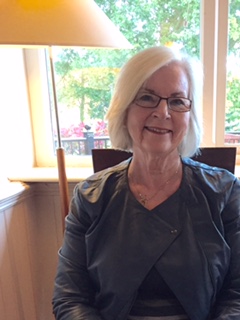
Ann enjoying brekky at the Harrowgate Premier Inn
Ann enjoying dinner tonight at the Harrowgate Premier Inn

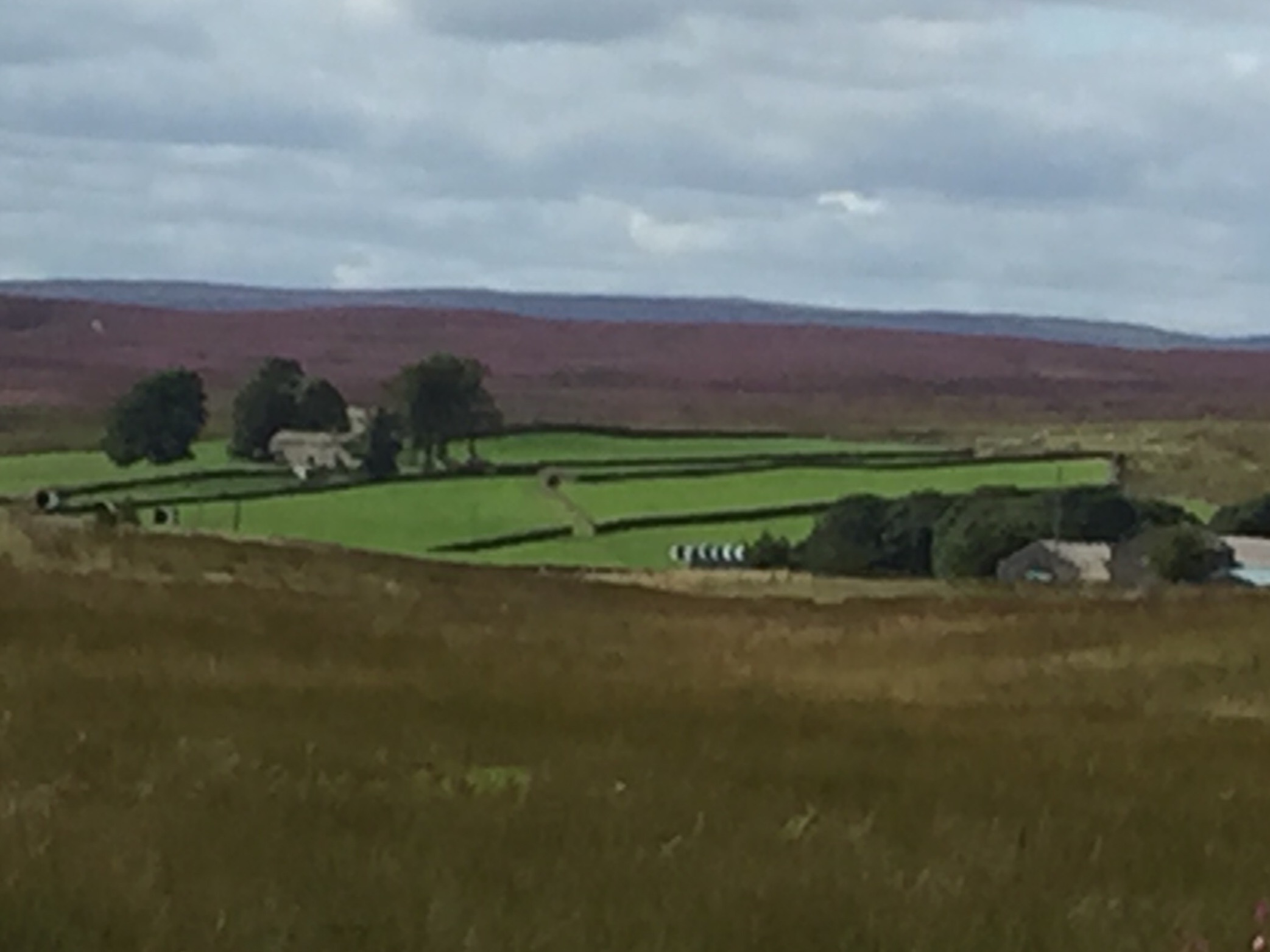
We then set out through the gorgeous valleys, lakes, drystone walls and pink heath of the Yorkshire dales. This is a most beautiful part of England and we have been delighted to be back here after our visit to Castle Howard some years ago. Our goal this time was the village of Haworth, the home of the Bronte family.

The Yorkshire dales covered in wonderful purple heath
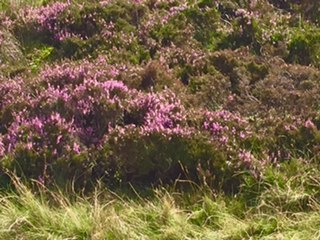
Close up of the heath in the Yorkshire dales

Haworth is set on a high hill and is a picturesque village attached to the large town of Keighley. Bronte mania is everywhere naming pubs, coffee shops, and numbers of book and antique shops.

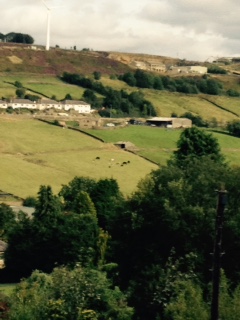
View of the Yorkshire dales from the Parsonage Hill of Haworth
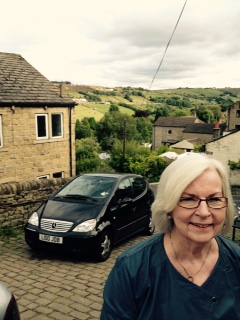
Ann still smiling after climbing the hill to the Bronte Parsonage
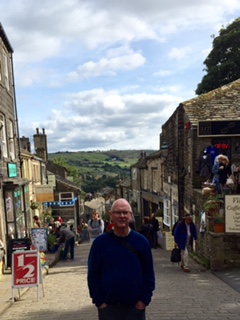
Haworth village with loads of bookshops and antique shops. A nice place to dream!

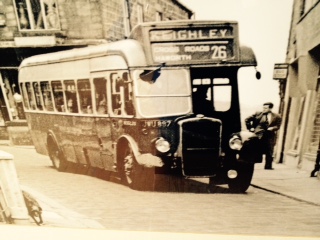
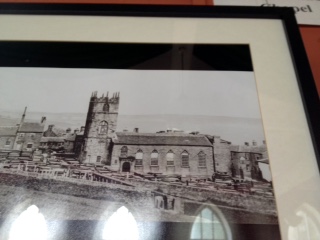
The old school hall built by Patrick to educate his children after the disaster of the death of his young daughters is still in the village and holds some wonderful photographs including the old charabang and buses ( I love old buses) that used to run in the village as well as a photograph of the original church that Patrick Bronte ministered to.

Bronte old buses from Haworth Bronte ancient charabang Bronte Old Haworth bus Bronte original church led by Patrick Bronte

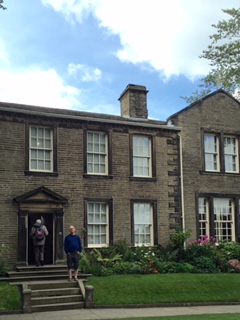
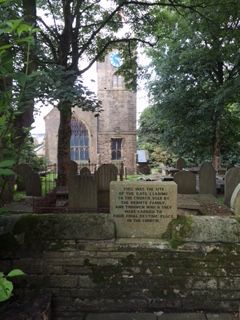
The Parsonage is a small house placed alongside the rebuilt Church of St Michael and All Angels and the graveyard.  After the mansions we have visited with their huge reception and State rooms it was bizarre to be in this “normal” village family home comfortably furnished but with precious little room to move.

The Bronte Parsonage. The house looks big enough but the rooms were tiny for four children, the father and a housekeeper
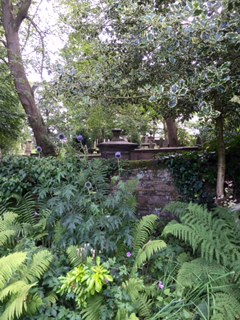
The graveyard between the house and the church...a sombre place to have outside your bedroom!
The graveyard between the house and the church…a sombre place to have outside your bedroom!
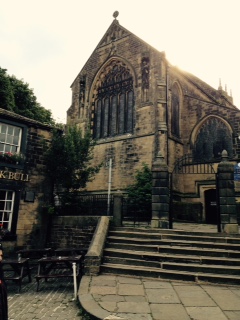
The rebuilt C19th church of St Michael and All Angels
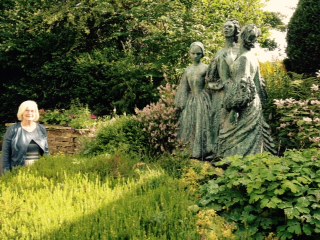
Sculpture of the three surviving sisters in the rear garden of the Parsonage
View of the church from the small front garden of the Parsonage

Emily Bronte’s novel Wuthering Heights made a huge impact on me when I first read it at University.  The rich contrast between the earthy vigorous Earnshaws and the rather effete Lintons, the brooding sombre Yorkshire moors with their gales and wildness, the complex and smouldering character of Heathcliff, the deep and spiritual love relationship between Heathcliff and Catherine with its overtones of spirituality have stayed with me ever since.  I read Charlotte Bronte’s Jane Eyre much later and whilst I found it engrossing it was not life-changing in the way that Wutthering Heights gripped me.  I have not read Anne Bronte’s The Tennant of Wildfell Hall so cannot comment on that novel.

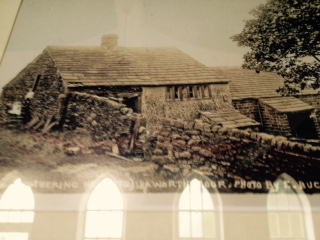
early photo of Withens Hut the place on which Emily Bronte based Heathcliff's adopted home in Withering Heights. It is just as I imagined in when I first read the novel
early photo of Withens Hut the place on which Emily Bronte based Heathcliff’s adopted home in Wuthering Heights. It is just as I imagined in when I first read the novel (apologies for window reflection)

The Bronte sisters were happy in the parsonage supporting their father after the early death of their mother. They worked hard domestically and in the village, but also sewed, painted, wrote poetry, taught as governesses and shared many years of imaginative dreaming of semi historical worlds they had created.  Yet there was also much suffering. Their brother Branwell could not find success in life and died an alcoholic.In addition two of their sisters died very young from TB after ill treatment at a village school (afterward portrayed in a very poor light as Lowood in Charlotte’s Jane Eyre.  The level of disease in the village was high and funerals were a major part of Patrick Bronte’s ministry.  Neither Emily nor Anne married and Charlotte died tragically only a year after her marriage at age 39. Neither Emily nor Anne reached 30.

The Bronte Parsonage dining room which was also the writing room and the actual table on which these classic novels were written

Although they published their novels under the name Bell it was not long before their true genius became evident and the impact of their writing continues to be felt today. There are deep and true strata running through these novels and they do not avoid the moral incongruities of life. It was a moving experience to be in this quiet house and feel some of their joy and pain. Their lives were short but they were happy and productive and their industry has given deep joy and thought to millions.

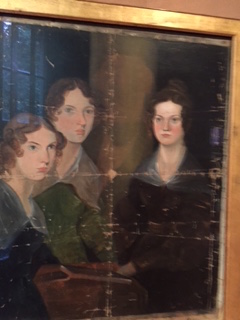
The three surviving Bronte sisters painted by brother Branwell  (he was in the middle and his shadowy outline remains.) This precious portrait now in the London Portrait Gallery
The three surviving Bronte sisters painted by brother Branwell (he was in the middle and his shadowy outline remains.) This precious portrait now in the London Portrait Gallery (It was folded for years in a drawer of the Irish husband of Charlotte Bronte …He lived in Ireland for another fifty odd years after her death.)

Happy in Harewood

Friday 4th September 2015

Today we said farewell to Cambridge and its students and bikes and travelled north on the M1 to York and the city of Harrogate stopping off at the beautiful Georgian home of Harewood on the way.  Harewood is the ancestral home for 300 years of the Lascelles Family and their descendants are still the Earls of Harewood and live in the house today.

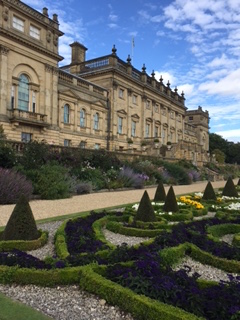
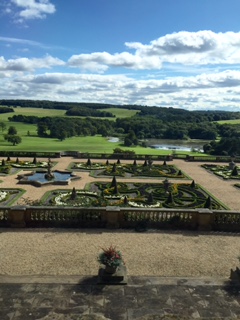
Harewood in York; the exterior of the South Face and formal terraced gardens.
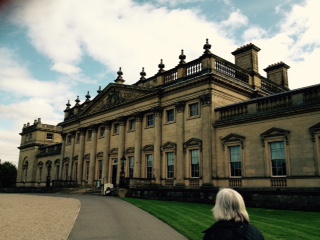
Harewood exterior of north face as you arrive
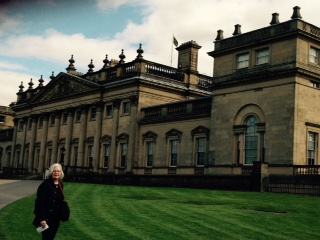
View of Harewood as you drive up to the front door literally before passing on to the carpark
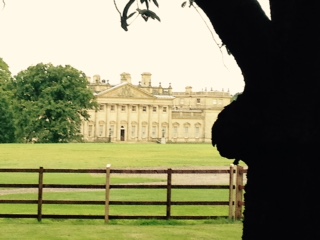
View of Harewood from the churchyard of All Saints Church on the Estate

Harewood was built in the C17th by architects John Carr and Robert Adam with Adam playing the key role creating a beautifully balanced Georgian Building with ceilings in his typical restrained and delicate style. The furniture is all by Chippendale and designed specifically for the house. The grounds are vintage Capability Brown and the major additions in the C19th by Sir Charles Barry have been very sympathetically aligned with Adam’s original work.

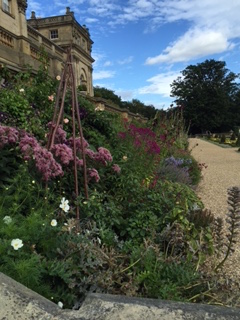
Herbaceous borders on the south face of Harewood
garden view at Harewood
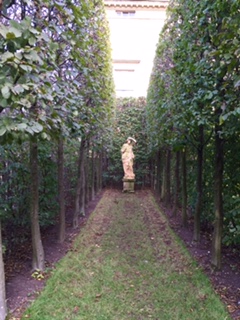
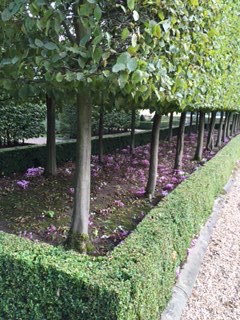
cyclamens and Lime trees in Harewood garden
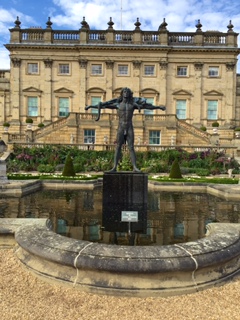
Orpheus statue in terraced garden at Harewood
Harewood terraced garden
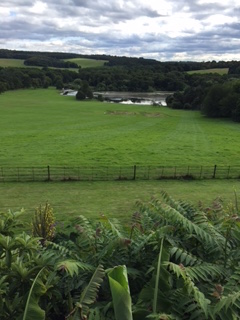
View to the south from Harewood

This is a place of wonderful planning with an amazing bird park of rare birds, terraced formal gardens, a glorious deer park and vast lawns, parkland, arboretum and forest, a large lake, children’s playgrounds, a second hand bookshop, tea shops and restaurants, and an early C15th estate church on the property.

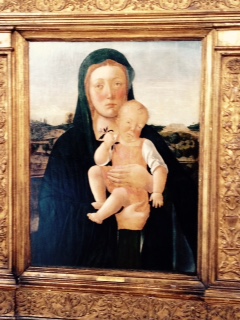
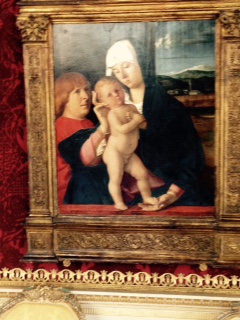
The house has a vast art collection including  two works by Turner who came there to paint and works by both Jacobo and Giovanni Bellini.

Turner Harewood Castle ruin in 1798
Turner: Harewood Castle ruin in 1798
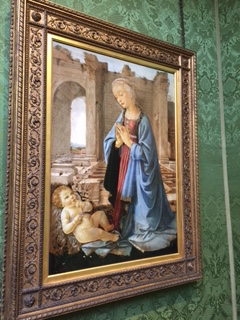
Giovanni Bellini Madonna and Child Harewood long gallery
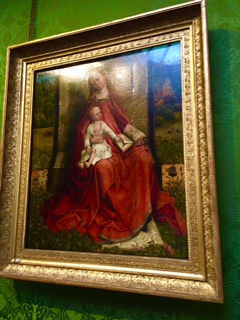
Jacobo Bellini Madonna and child and donor

Harewood holds a massive  collection of fine books especially on art history, theology and gardening spread over four large rooms,

Harewood library Harewood library 2 Harewood library 3books books and more books at Harewood

And again!
And again!

There are many unique collections such as Meissen porcelain of a particular period and owls.

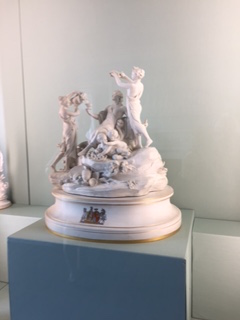
Part of Meissen porcelain collection
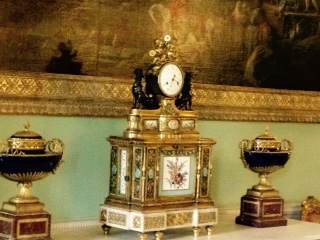
Sevres clock
Sevres clock

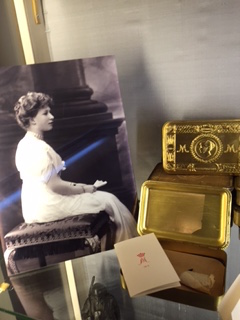
A feature of this house is that one of the Lady Lascelles was Mary the third daughter of George V and his wife Mary.   This royal connection is evident in many gatherings at the house and there is a photographic trail of some interest. In particular during World War 1 Mary launched an appeal to send every British soldier and sailor a Christmas gift which was extraordinarily successful and went out to many thousands of English servicemen.

Wartime photo of Mary Lascelles, third daughter of George V and his wife Mary. He shown with her Christmas gift boxes for British sailors and soldiers in WW!

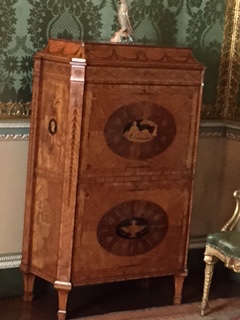
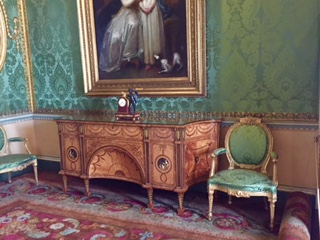
A feature of the house is the purpose designed furniture produced by Chippendale

Chippendale cabinet
Chippendale cabinet
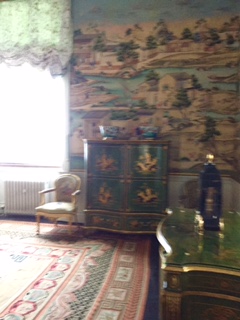
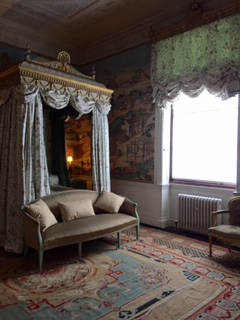
Chinese theme in Mary Lascelles bedroom
Princess Mary's bedroom
Princess Mary’s bedroom
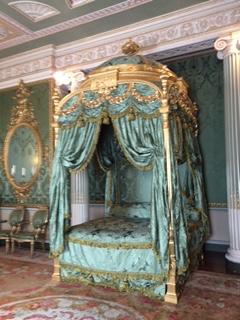
Harewood State bedroom
Harewood another Chippendale cabinet

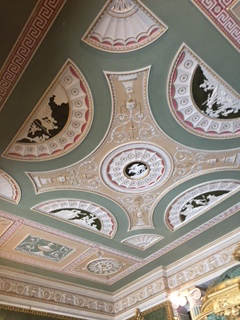
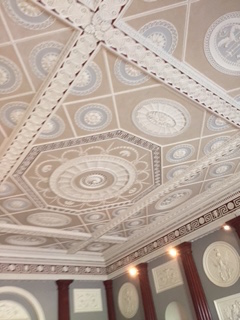
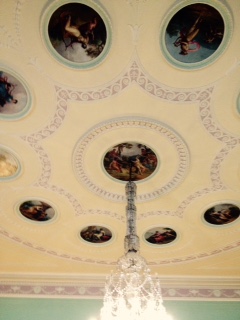
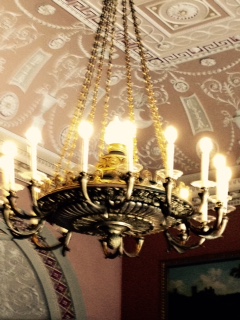
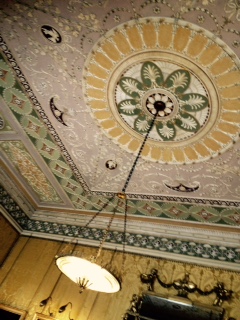
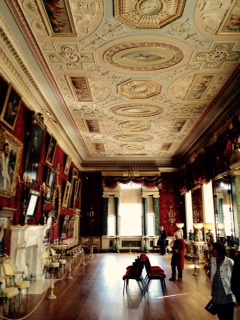
A defining feature of the house is the ceiling work by Robert Adam. Josiah Wedgwood is said to have been influenced by Adam’s designs in his porcelain work.  Four ceilings below.

Harewood ceiling 1 Harewood ceiling 2 Harewood ceiling 5 Harewood ceiling 6

Harewood ceiling 8 Harewood long room gallery

The Long Gallery on the right has a stunning art collection on display

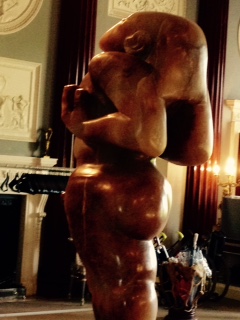
We have seen many stately homes on this trip and previously but the uniform excellence of Harewood is hard to beat.  There is a living warmth in the house which is magnified by the presence of the work of many current artists including Jacob Epstein as well as the personal work of the previous Earl who was a film director and manager of events including the Edinburgh Music Festival. Everything is artistically and elegantly presented and nothing is over the top. There is no doubt that the elegance of Chippendale furniture and the calming effects of Adam’s design work make a huge impact on this house.

Jacob Epstein's
Jacob Epstein’s “Adam”…not to everyone’s taste but this huge statue sits front and centre as you enter the front door of Harewood.
Sitting room used currently by the young Earl and his family
Sitting room set up as it was when the 7th Earl liked it but with modern artwork
The late 7th Earl of Harewood and his second wife who still lives upstairs at 91. She is an Australian former model and violist and apparently still checks out the house each day before visitors are let in.
The late 7th Earl of Harewood and his second wife who still lives upstairs at 89. She is an Australian, former model and violinist Patricia “Bambi” Lascelles and apparently still checks out the house each day before visitors are let in.

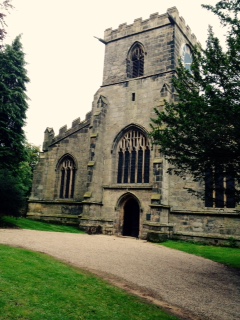
The Church of All Saints was built in 1410 by the Aldburgh family of the former Harewood Castle and contains ancient tombs of the Gascoigne family. It was remodelled in “Gothic style with stained glass windows in 1863. It is still consecrated but it is no longer used on a regular basis.

Harewood All Saints Church exterior. The Church is on the estate and still consecrated but not used regularly
All Saints Harewood nave to sanctuary; the church was built in 1403 and is still consecrated but not regularly used.
All Saints Harewood nave to sanctuary; the church was built in 1410
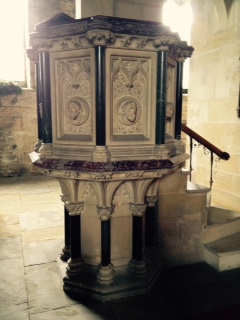
beautiful stone pulpit in All Saints Harewood on the Harewood estate
beautiful C19th  stone pulpit in All Saints Harewood on the Harewood estate

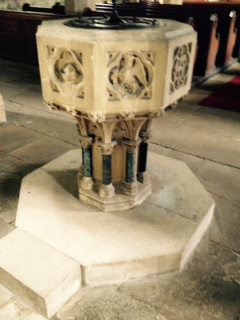
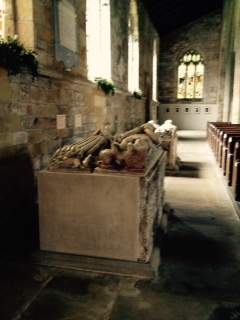
Harewood church font Harewood church tombs

stone Norman font and tombs of Gascoigne family dating to 1410

All Saints Harewood side view and graveyard

Hanging around in Houghton, sitting around with royals in Sandringham and hastening around Holkham

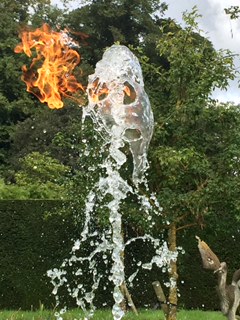
Artist Jeppe Hein's
Artist Jeppe Hein’s “fireflame” in the walled garden at Houghton

Thursday 3 September 2015

Today we ventured into Lord Nelson territory in Norfolk, past majestic Ely Cathedral and crossing not only the River Great Ouse but the River Little Ouse as well as the River Wissey! all lined with family boats and looking sparkling and finally arriving at King’s Lynn. Turning east from Kings Lyn along the Fakenham Road there are three magnificent estates along a 25km length….Sandringham, Houghton Hall and Holkham.  We managed to get into two of them but arrived too late to see the house at Holkham. All three estates had small additional villages within the estates

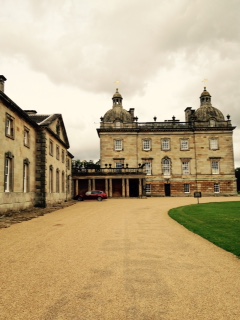
At our first stop we visited Hougton House,the home of Britain’s first Prime Minister, Robert Walpole and his majestic C18th mansion and gardens.

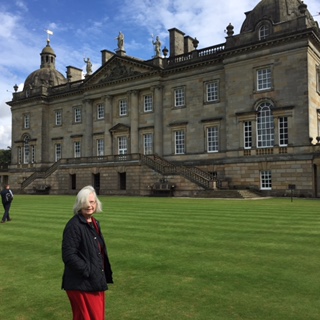
Houghton exterior approaching from the carpark with five acre walled garden on the left
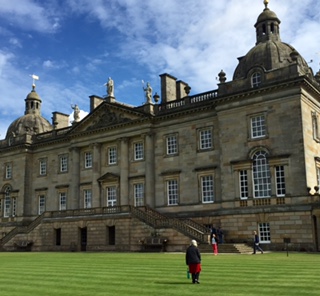
Houghton's exterior is standard Palladian with the formal classical lines and bridge of steps
Houghton’s exterior is standard Palladian with the formal classical lines and bridge of steps
Side view of Houghton surrounded on three sides with deer park and real deer but too far away to photograph
Houghton extension of the House ..it is huge ..we only saw the State rooms
Houghton another external view

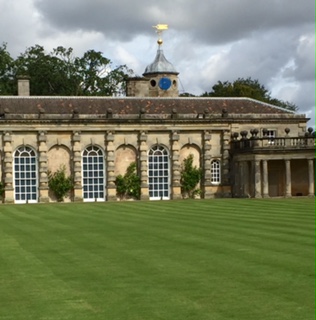
Charles Bridgeman did the gardens which include vast deer grazing lawns and over 2 miles! of mown parkland with wonderful trees.  The  absolute highlight is a five acre! walled garden containing English roses, topiary, greenhouse, fantastic herbaceous borders, a croquet lawn, sculptures, fountains, follies and the amazing “Waterflame” by Jeppe Heine.  The house was passed to the Cholmondeley family by marriage and the current owner is the eighth Marquess of Cholmondeley. The architects were James Gibbs and Colen Campbell and the interiors by William Kent, a disciple of Inigo Jones.  The significantly remodelled mediaeval St Martin’s church is located in the grounds but some distance and we did not venture in.  A “lightscape” display by James Turrell is a current feature at Houghton.

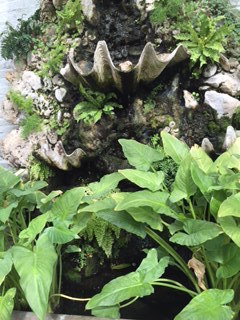
Grotto inside the Houghton green house
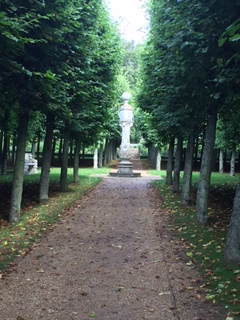
Avenue of lime trees and statue leading to the West entrance of Houghton
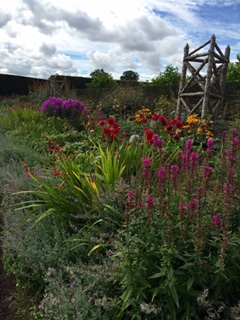
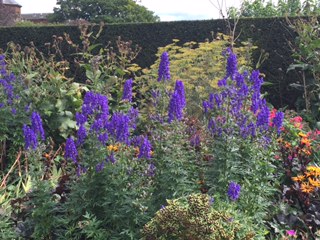
Herbaceous borders and climbing things inside the walled garden. The Summer garden here near the sea is just past its best
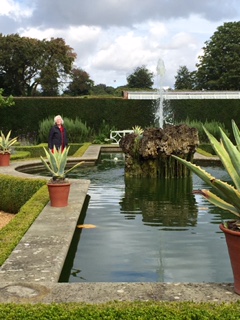
fountain and pond in Houghton walled garden
In Houghton's Walled garden statues turn up everywhere!
In Houghton’s Walled garden statues turn up everywhere!
wonderful lupins in Houghton's walled garden
wonderful lupins in Houghton’s walled garden
statue in Houghton's walled garden
statue in Houghton’s walled garden

Unfortunately no photography is permitted inside Houghton Hall  which is a pity because the interior is quite unlike other stately homes we have seen. The walls of the large staircase are covered with grey canvass painted in grissaille style to imitate sculpture i tromp l’oeil style Many of the ceilings are painted and the furnishings are mostly original to the House and functional and “working” rather than works of art for their own sake. A good example is Walpole’s working desk which is located in the most wonderful library.  I was unfortunately unable to photograph this treasure house of books.  On the other hand the State bedrooms had certainly the highest coverings we have seen anywhere and there were significant tapestries covering many walls.  The paintings are the tragedy of Houghton….the whole collection being sold to Catherine the Great and most still residing in St Petersburg.  A massive painting of Catherine the Great hangs in one of the State reception rooms as part of the receipt!  A few have been bought back and the original frames remain but the most of the paintings are copies.  This is a peaceful home with many exotic trees and plants and a most hospitable team of  welcoming guests.

We backtracked from Houghton Hall to the Queen’s personal estate at Sandringham just a few kilometres west of Houghton.

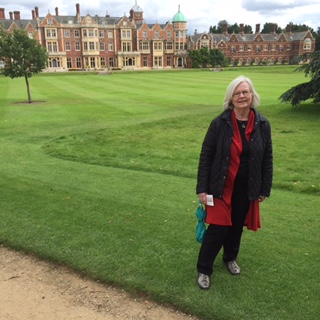
Front view of Sandringham from the carpark
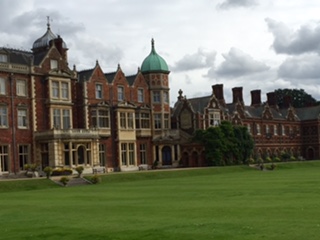
Closer view of Sandringham as you approach
Another view of Sandringham
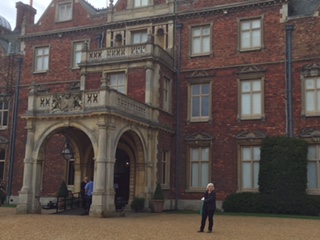
Formal entry to the Sandringham where the carriages arrive..it is reasonable rather than
Formal entry to the Sandringham where the carriages arrive..it is reasonable rather than “grand”

This remarkable estate of 200 000 acres contains one of the most beautiful gardens I have ever had the pleasure of walking in. The tree plantings are quite remarkable and the quality of lawns, lakes, paths and designed gardens is exceptional. The House sits on a site recorded in the Doomsday Book of 1086 but the current house dates from 1870 and it  has survived fire and various additons from various royals. Once again no photography is permitted inside the house so no pics of the inside only the amazing gardens.

Stunning collection of conifers with a view through to one of the lakes
The large formal garden at Sandringham
A view of the house from the garden
and again, another view of the house
Only the Queen could grow hydrangea heads as large as these!
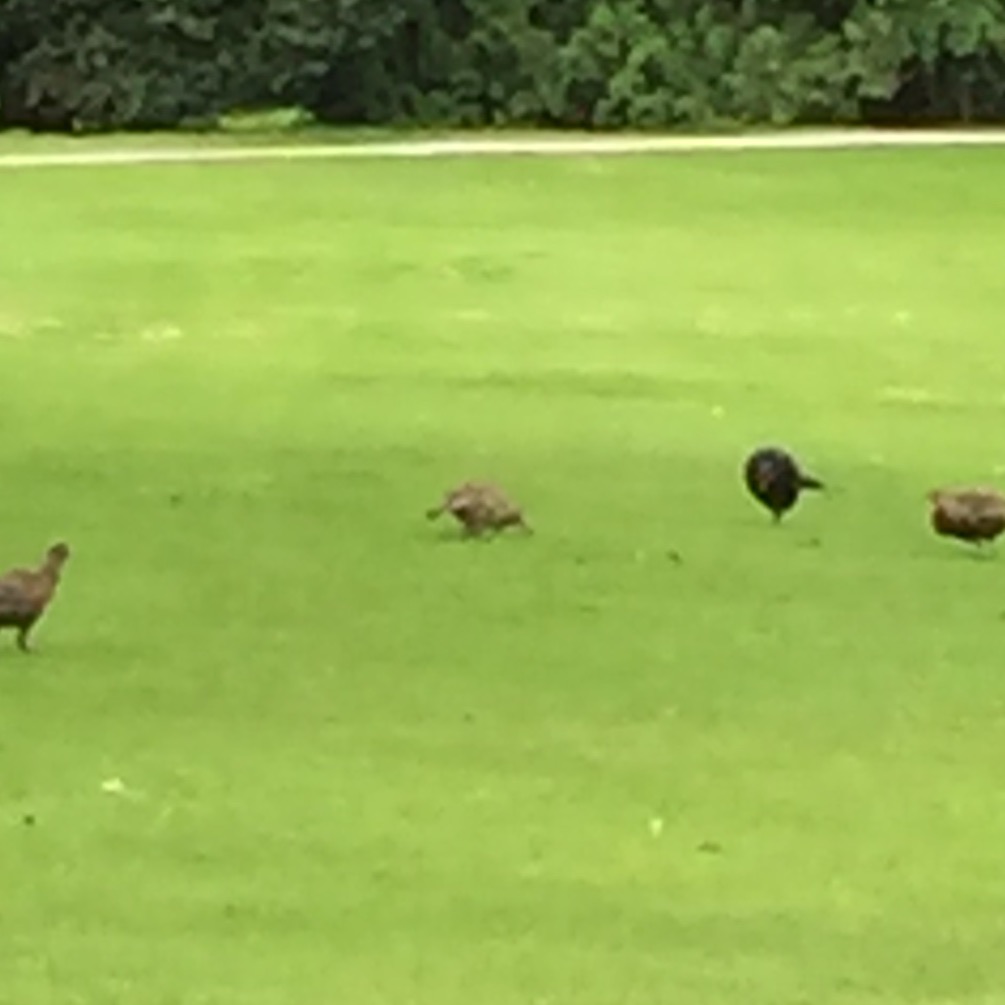
pheasants grazing on the lawns..obviously not hunting season
everywhere gorgeous trees

The Duke of Edinburgh describes it as “neither a castle or a palace but rather a large country house with an atmosphere of welcome” and I think that is a good description. The family rooms are large and spacious and built for comfort rather than display. Many of the personal collections of various royals from the past are on display (no stamps unfortunately) and the salon has the quality of a Stately home baronial hall with a minstrel balcony. There are books everywhere in beautifully crafted cases and the inevitable collections of arms including a remarkable display of Indian ceremonial knives and daggers given to the Prince of Wales (Edward V11) on a tour of India in the 1880s.

As well as the magnificent gardens the estate includes a museum (containing the childhood cars of the Queen’s children and the first royal Daimler Phaeton), and also the delightful little church of Mary Magdalene in which both Princess Diana and the new Princess Charlotte of Cambridge were baptised. A standout in the church is the silver facing on the pulpit and the communion table donated by a wealthy American to Edward V11.  The round walk back to the carpark from the house is to die for including glimpses of the house from various vantage points and remarkable tree and flower plantings as well as the little church and glimpses of the forest and parklands beyond.

Church of St Mary Magdalene on the Sandringham estate where both Princess Diana who grew up on the estate and Princess Charlotte were baptised
Church of St Mary Magdalene one of two village churches on the Sandringham estate where both Princess Diana who grew up on the estate and Princess Charlotte were baptised
Nave view to communion table of Church of St Mary Magdalene on the Sandringham Estate
Close up of the sanctuary of St Mary Magdalene church with its silver frontal given to Edward V11 by a wealthy American
and the silver coated pulpit given by the same gent!

It is easy to see why most of the royals love to come to Sandringham. Remarkably the grounds, shop and tearooms are open to the public throughout the year and the house also for many months throughout the year. Even when the Royals are in residence the public are permitted to wander throughout the grounds except for a relatively small section of the gardens around the house.  Sandringham is memorable in many ways, not least for the 500 staff families  who work hard to keep the estate shipshape and make the working farm run and who are unfailingly polite to the public ( as we found also at Buckingham Palace).

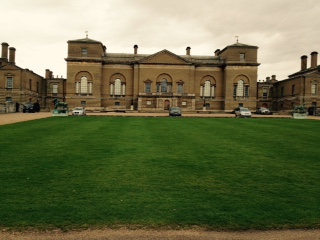
Leaving Sandringham in late afternoon we made a last minute dash for the majestic home of Holkham  in its own village on the seaside just 20 kms from Sandringham. This vast Palladian “pile” was closed by the time we found it but we were able to wander the vast grounds (but not the six and a half acres of walled garden!) and view the outside. The first Earl of Leicester, Thomas Coke commissioned the house in 1718 to house his exceptional collection of (largely Italian) works of art, statues , books and manuscripts.  His descendants still live in the vast estate and it is a busy and dynamic place.  A few photographs of the external appearance  in fading light will have to suffice for this extraordinary palace.

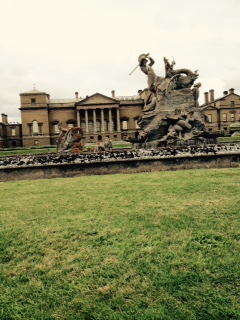
Holkham front of house with amazing statue from outside the wall

Excuse the worse than usual photo…taken on tiptoe peering through the external wall between the bollards!  amazing statue!

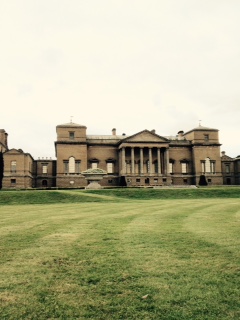
Long view of the front from the lake
Holkham long shot of the rear of the mansion
and again the front of house
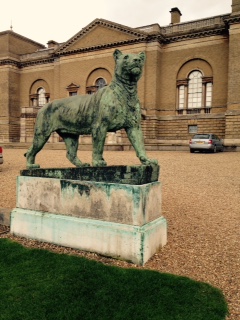
they like statues at Holkham
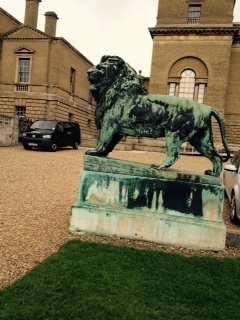
and everyone in power seems to like lions
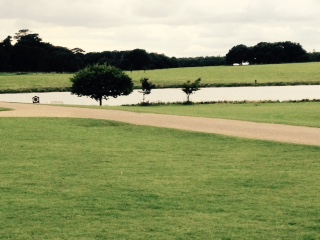
Lake and part of the vast parkland surrounding Holkham House
mown lawn into the distance at Holkham House ..a peaceful beachside home!

Busy in Bury St Edmunds and Milling about in Melford

Wednesday 2nd September 2015

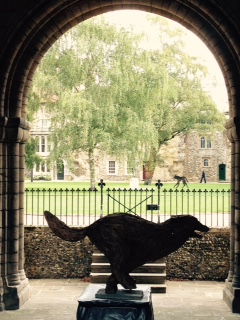
Today we beetled off eastward to the rolling green landscape of Suffolk to the busy market town of Bury St Edmunds.  Edmund was the C9th  King of East Anglia who was murdered  by opponents and his body dismembered and he was beheaded. Allegedly a wolf guarded his head until supporters came to find him and his body was eventually buried at the town now known as Bury St Edmunds. Today there are wolves everywhere around town and the story is alive and well.

The wolf appears all around Bury St Edmunds protecting the town

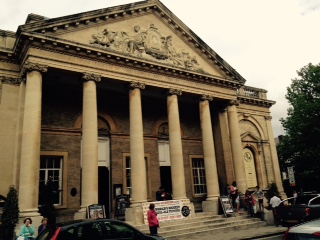
It was market day today and we enjoyed the Autumnal  sunshine wandering the streets and sharing in the Salamanca Hobart like bustle and excitement with buskers everywhere. It is a very smart shopping centre with or without market day and the whole town generates a sense of pride and purpose. The Palladian Corn Exchange was particularly busy with a very popular beer brewing festival in full swing.

Palladian Corn Exchange in Bury St Edmunds busy today on Market day with a Brewing festival
A squirrel busy in the old abbey park with all the visitors and action
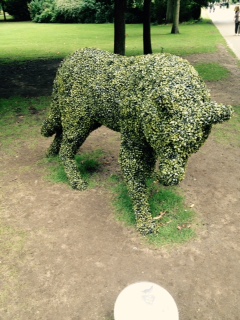
clever topiary in Bury St Edmunds park

The town retains a high sense of history with its ancient abbey ruins dating from 1065 and plundered by Henry VIII’s operatives. Today the ruins form part of a huge and beautifully tendered garden presentation much loved by families.

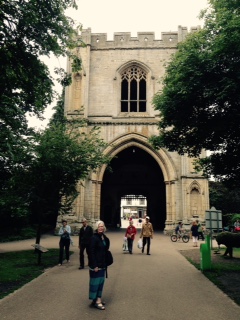
A Benedictene Abbey existed on the site of Bury St Edmunds from 1065 but was destroyed by Henry VIII’s dissolution of the monasteries. Today only the city gates to the monastery, parts of the old wall  and a few scattered ruins remain but the townsfolk have kept the site in the middle of town and transformed it into a beautiful garden park with stunning summer flowers and playgrounds for children

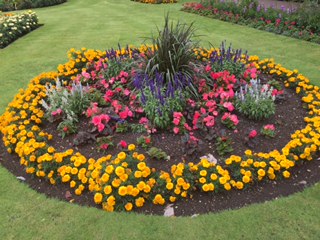
What a beauty!
What a beauty!
Abbey gardens in Bury St Edmunds
Ancient C14th gate into the former abbey
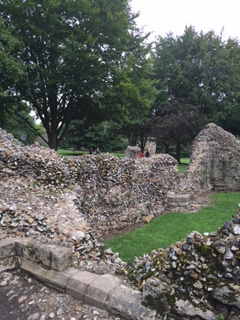
all that's left of the old abbey
all that’s left of the old abbey

During the English Reformation work began on not one but three Protestant churches in Bury St Edmunds. One, St Margarets has been demolished.  Two remain, and ironically they stand side by side with only a cemetery in between…St James’ Church was begun in 1503 as a late Gothic design with additions in 1711(new chancel) and the C19th (new roof and another new chancel).  The most radical changes occurred post 1914 when St James was consecrated a Cathedral. Since that time massive changes have occurred the most recent of which include a new quire and crossing (1970), a new cathedral centre and song school ((1990); new Gothic style lantern tower (2005) and new cloisters and transfiguration chapel (2008). Bury St James’ “Gothic” Cathedral is effectively England’s newest Gothic style Cathedral and it is alive and kicking with a lively congregation and a magnificent interior.

Bury St Edmunds Cathedral with its brand new (2005)
Bury St Edmunds Cathedral with its brand new (2005) “Gothic” lantern tower
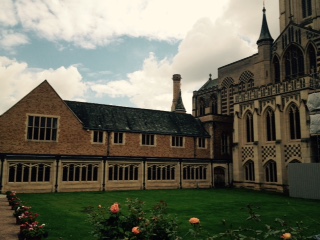
Bury St Edmunds Cathedral new extensions including choir school, treasury, tea shop, even cloisters
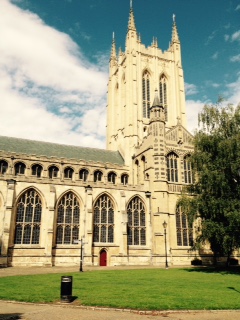
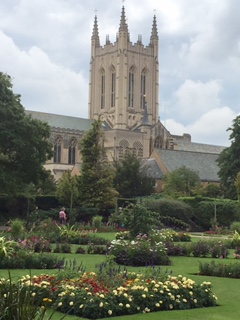
Bury St Edmunds Cathedral from old abbey gardens
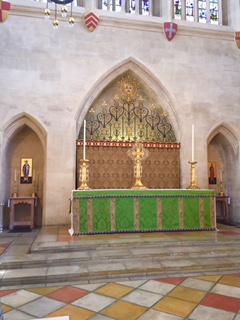
Bury St Edmunds Cathedral main communion table in the new quire (built 1970)
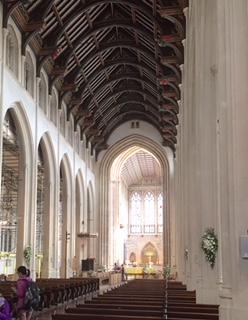
Bury St Edmunds Cathedral interior nave showing the new quire perfectly matching the older section
Bury St Edmunds Cathedral the new quire
Bury St Edmunds Cathedral the interior of the tower with painted fan vaulting
painted ceiling of Bury St Edmunds Cathedral nave difficult to capture with iPhone
Font in Bury St Edmunds Cathedral
Font with WW11 memorial cover

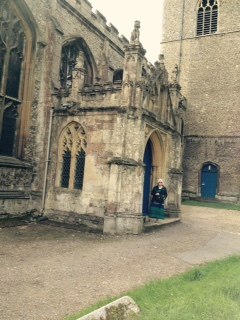
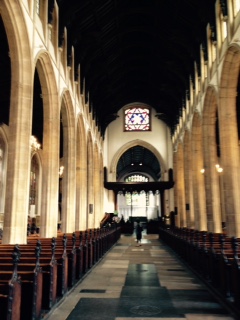
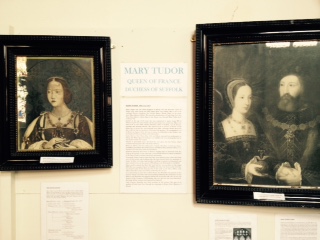
Also since the Reformation, St Mary’s church has arisen from the destruction of the Benedictine Abbey of St Edmund. It is larger than St James and the nave at 213 feet is the longest English parish church. Unlike the Cathedral St Mary’s has had few major changes and remains an authentic late Gothic church with wonderful stained glass, the tomb of Mary Tudor, third sister of Henry V111 and an ancient porch dating from 1440 commemorating merchant John Notyygham and his wife Isobel. According to the folk we spoke to both churches have lively congregations, one “High Church” and the other “Low Church”. It is an interesting phenomenon.

1440 porch in memory of one John Nottingham and his wife Isobel at St Mary's Church in Bury St Edmunds
1440 porch in memory of one John Nottingham and his wife Isobel at St Mary’s Church in Bury St Edmunds
St Mary's Parish church nave to sanctuary 213feet, the longest parish church in England in Bury St Edmunds
St Mary’s Parish church nave to sanctuary 213feet, the longest parish church in England in Bury St Edmunds
Memorial to Mary Tudor, Henry VIII's third sister buried at St Mary's Bury St Edmunds (not to be confused with Mary Henry's daughter or with Mary Queen of Scots!)
Memorial to Mary Tudor, Henry VIII’s third sister buried at St Mary’s Bury St Edmunds (not to be confused with Mary Henry’s daughter or with Mary Queen of Scots!)
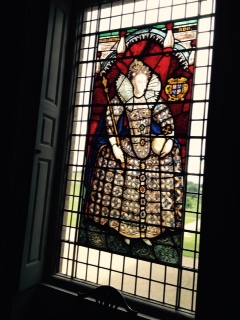
Elizabeth 1 stained glass window in St Mary's Church in Bury St Edmunds (actually C18th but from an old painting)
Elizabeth 1 stained glass window in St Mary’s Church in Bury St Edmunds (actually C18th but from an old painting)
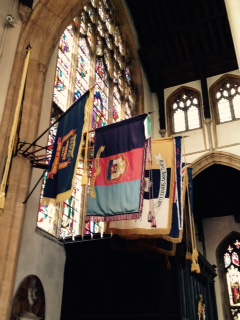
Windows and flags above entrance to St Mary's church in Bury St Edmunds
Windows and flags above entrance to St Mary’s church in Bury St Edmunds
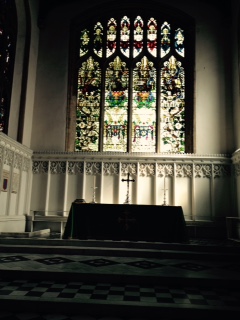
Simple sanctuary with tomb of Mary Tudor in St Mary's church Bury St Edmunds
Simple sanctuary with tomb of Mary Tudor in St Mary’s church Bury St Edmunds

We drove on from Bury St Edmunds to the Elizabethan Melford Hall which sits 15kms from the town in the beautiful Village of Melford which indeed also has its own very large parish church.

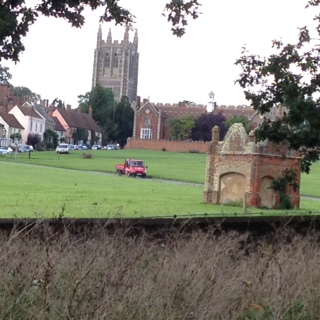
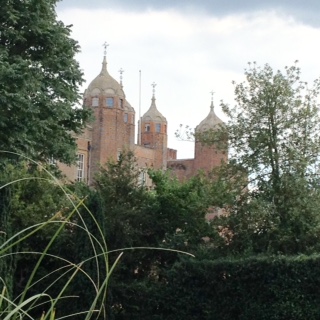
Very large village church of Melford rising over the horizon from Melford Hall

Melford Hall has been in the Hyde Parker family for the past 300 years and is set in the midst of idyllic Suffolk wool country. The home is run by the National Trust but the family still alive in one wing of the building. It is no treasure house and the charm of this home is that the furniture and fittings are not so totally removed from everyday life although there are some magnificent individual items.
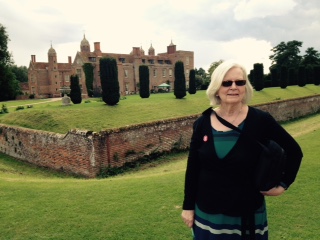
Moat and entry to Melford Hall
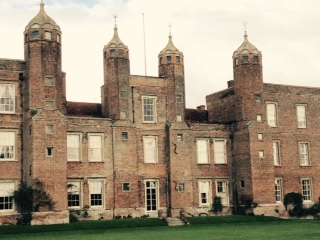
Melford Hall exterior
Melford Hall from the gardens
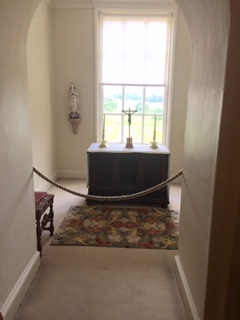
tiny chapel in Melford Hall still consecrated and used from time to time
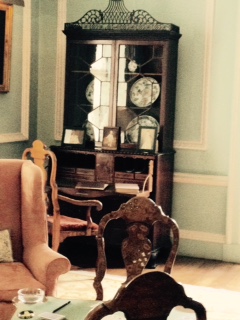
fine cabinet from Melford Hall
and another wonderful cabinet
Melford Hall library
and again the library
and yes again!
and yes again!
Main staircase at Melford Hall
garden and fountain at Melford Hall
Melford Hall gardens with Beatrix Potter influence
wonderful fruiting crab apple in Melford Hall garden

We both felt really at peace in this quiet corner of Suffolk ..not as intense as the tightly knit villages of some other counties and a sense of distance on a sunny day…idyllic England of the poets…. hard to capture  with our camera

The view from the main bedroom

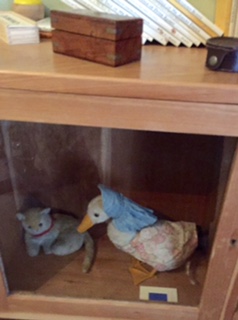
A unique feature of this home is the prevailing influence of children’s writer and ecology campaigner Beatrix Potter who was a cousin of the Hyde Parker family.  Here is found the original Jemima Puddleduck  and a large number of original paintings and drawings of Beatrix Potter and her influence is seen in the garden design and other elements of the home. The small villages of Suffolk are enchanting and we drove through many of them today. An English sunny day in the country is difficult to match!

Yes the actual original Jemima Puddleduck
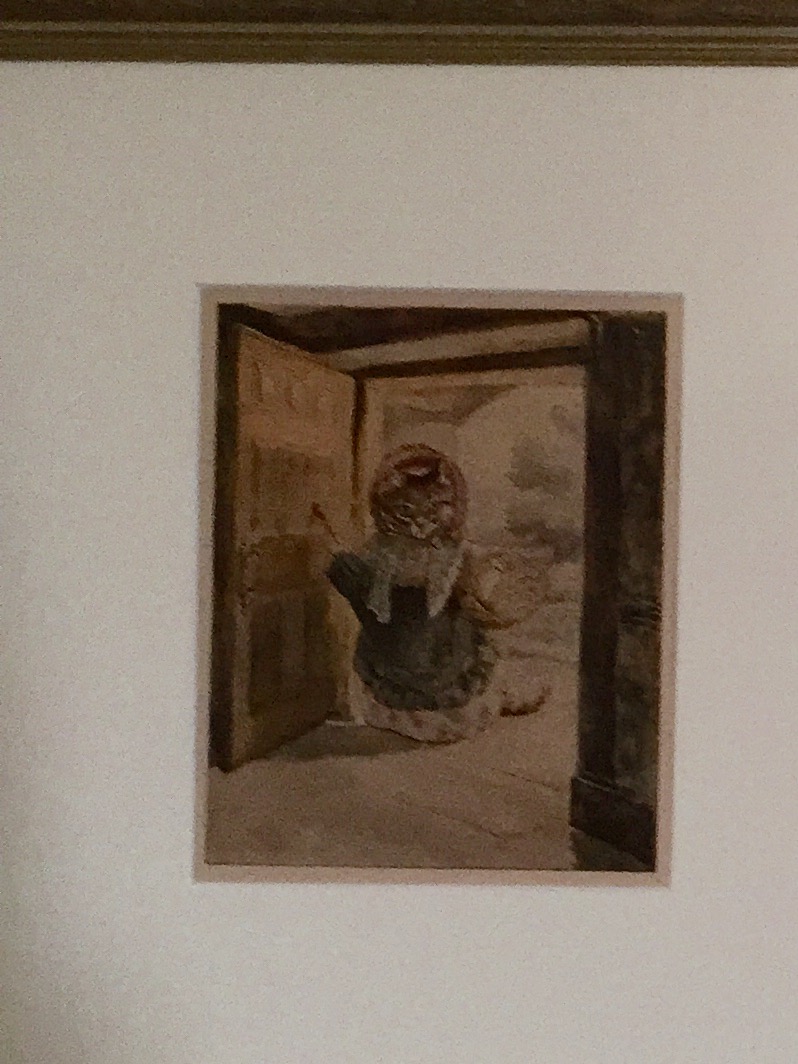
Beatrix Potter painting of Jemima Puddleduck (colours not right in photo)

Melford Hall Beatrix Potter painting Melford Hall Beatrix potter rat

Two more Beatrix Potter paintings of many at Melford Hall

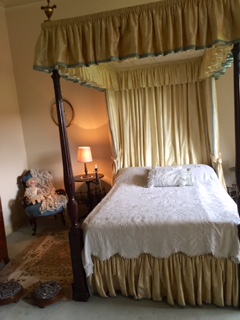
Beatrix Potter's bedroom at Melford Hall
Beatrix Potter’s bedroom at Melford Hall

Careering around in Cambridge, king hit in Kings College Chapel and filled with awe in the Fitzwilliam

Today we drove three quarters of a kilometre to a city car park and walked our little feet off  all over the ancient university city of Cambridge. Like Bologna, Padua and Oxford, Cambridge can lay claim to being one of Europe’s earliest universities. It is a beautiful city with its university colleges, impressive shopping centre, lovely river and boats and quite stunning Art Gallery, the Fitzwilliam Gallery.  Cambridge has more churches per square foot than any town I have ever been in even Rome!  Cambridge also has the most amazing bookshop Waterstones with four floors of wonderful books to browse in. Like being in Oxford with the martyrs shrine to Latimer and Hughes it is moving to be in Cambridge where so many Christian movements for evangelism came from and so many effective scholars laboured including Simeon, the Cambridge Seven, Lewis who worked at both Oxford and Cambridge and J B Lightfoot.
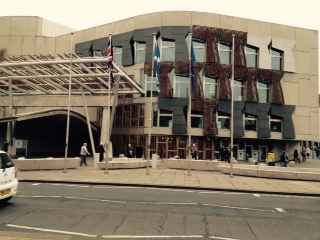
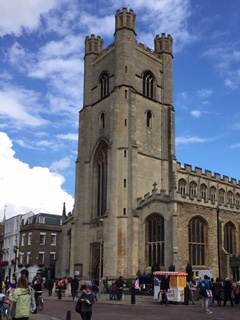
Great St Mary's Church in Cambridge
Great St Mary’s Church in Cambridge
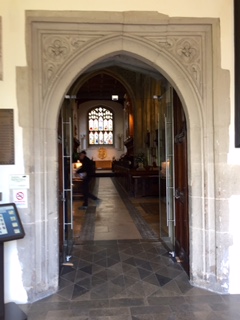
Interior of Great St Mary's ..a church based on preaching with a four storey pulpit
Interior of Great St Mary’s ..a church based on preaching with a four storey pulpit
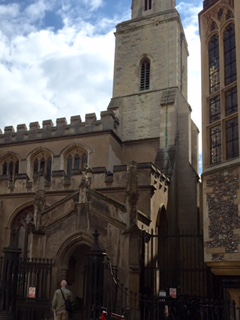
Holy Trinity Church ...a bit grey and gloomy and unfortunately not open to us
Holy Trinity Church …a bit grey and gloomy and unfortunately not open to us
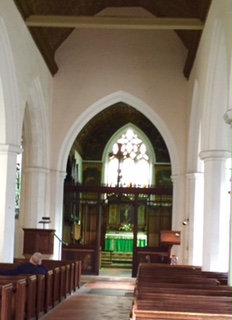
Ancient St Botolph's interior. A church has stood on this site since the C12th
Ancient St Botolph’s interior. A church has stood on this site since the C12th
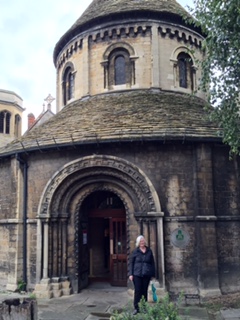
The Round Church in Cambridge based on the Church of the Holy Sepulchre in Jerusalem

Cambridge is of course also loaded up with amazing University colleges with their own grounds, lecture theatres, quarters for students and amazing facilities. It is a place where one feels like going back to university for the pure enjoyment of the environment; it is also a place of a thousand bikes per 100metres.

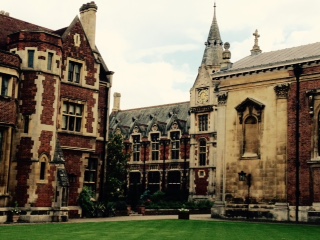
Pembroke College Cambridge
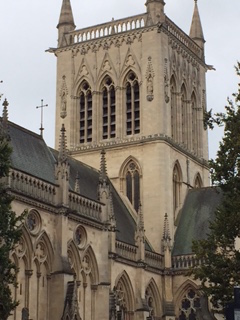
St John's College Cambridge
St John’s College Cambridge
Cambridge streetscape with the towers of Kings College in the distance
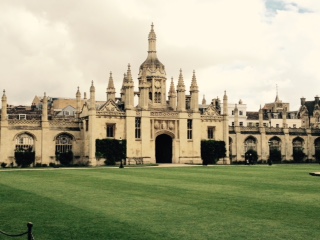
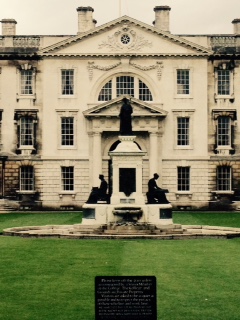
Central courtyard of Kings College Cambridge inside the street entrance
Front tower of Kings College from inside the courtyard
Statue in the centre of the central courtyard of Kings College Cambridge
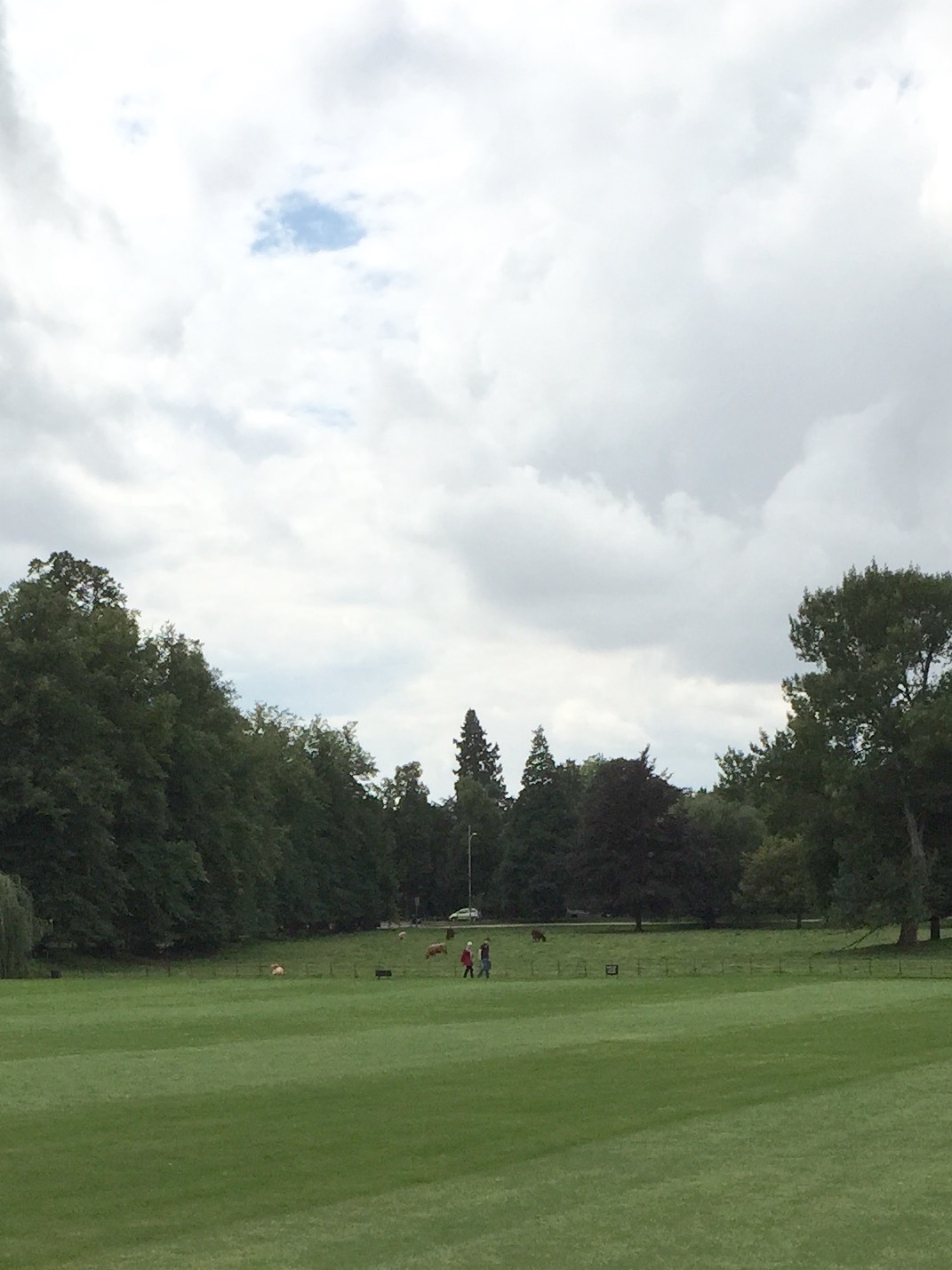
Cows on the common of Kings College

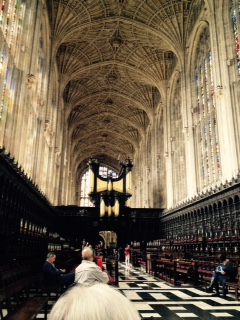
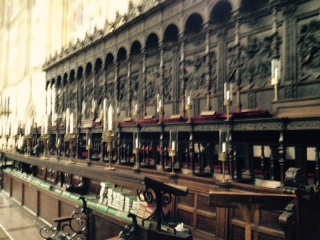
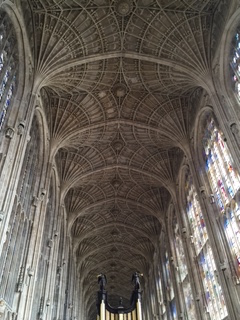
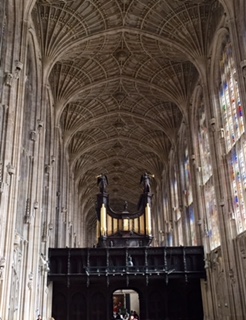
Of course the standout building in Kings College and perhaps in Cambridge is the C15th Chapel of Kings so famous for its choral work especially its annual Christmas Carol service which requires considerable effort to obtain tickets for. It is in many ways a simple Gothic construction based to a degree on the St Chapelle Chapel in Paris with its high straight stained glass windows.  The view is interrupted by the remarkable vault holding the large organ in the centre of the Chapel. The fan vaulting in the ceiling is remarkable as are the highly carved choir stalls. The Communion table is simple and dominated by the large Rubens painting “The Adoration of the Magi” above.  There is a brilliant explanation of the Chapel’s history and political ups and downs  in a side corridor. Of particular interest is the link with the Eton chapel and St George’s Chapel in Windsor Castle.

KIngs College Chapel Cambridge facing the street which is actually the rear of the building.
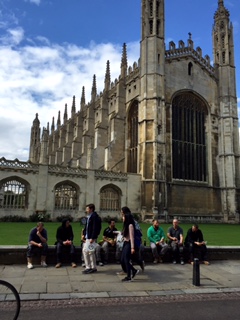
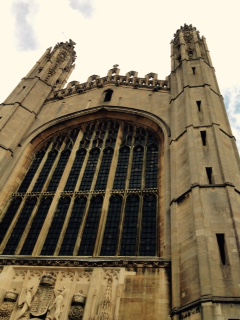
The front towers of Kings College Chapel facing the green common
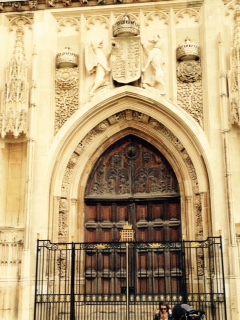
The front entrance to Kings College Chapel
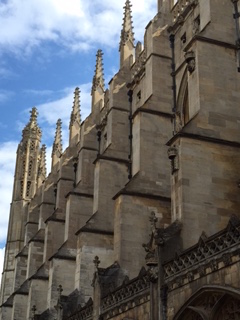
Easily recognised construction of Kings College Chapel in Cambridge
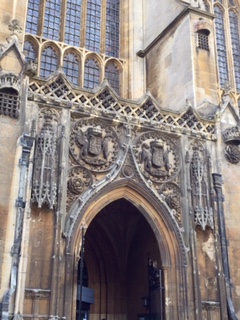
Detail of side door of Kings College Chapel by which casual visitors enter
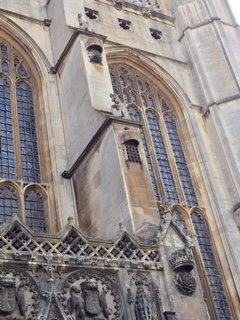
More external detail of Kings College Chapel
Interior view of Kings College Chapel as you enter with the organ loft dominating the view forward
Ornately carved choir stalls in Kings College chapel
Close up of amazing fan vaulted ceiling in Kings College Chapel
Close up of organ loft in Kings College Chapel
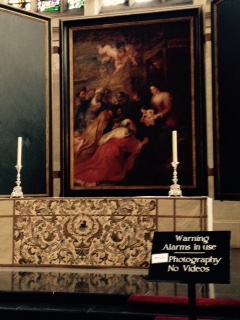
Rubens
Rubens “The Adoration of the Magi” hanging over the communion table in Kings College Chapel Cambridge

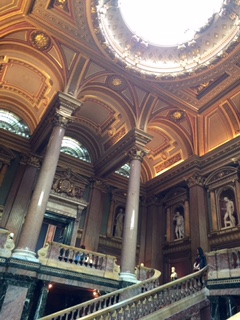
The Honourable Richard Fitzwilliam, 7th Viscount of Merrion (1745-1816) bequeathed his substantial art collection, library and the substantial sum of 100 000 pounds to provide “a good substantial museum repository” for the collection. The collection has grown through the years and a further generous bequest i 1908 by Charles Brinsley enabled the Gallery to be doubled in size.  The original building has a fine Palladian external appearance and the entry foyer and staircase with the dome is simply stunning.

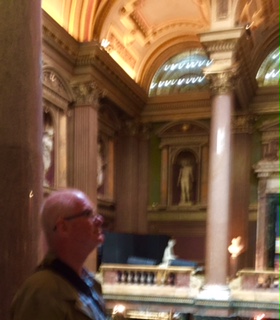
Richard being stunned in the Fitzwilliam Gallery entry foyer
Palladian exterior of the Fitzwilliam Gallery and Museum in Cambridge
Sculptures in the ceiling of the entrance to the Fitzwilliam Gallery in Cambridge
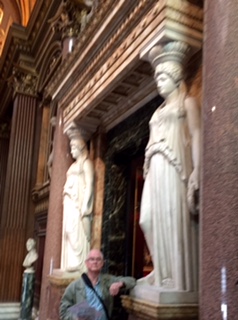
There are even caryatids in the Foyer
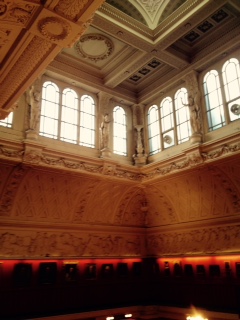
Amazing foyer ceiling and staircase under the dome

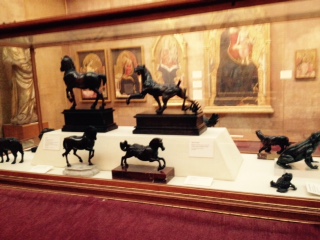
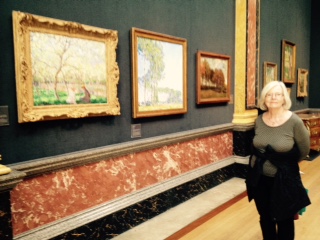
Everyone sees different things in a Gallery/Museum. The Fitzwilliam is brilliantly curated and the setting is majestic. At the moment there is a “personal treasures” exhibition which includes all of those things that folk of different ages have seen as desirable for their homes since earliest times. In addition there is Ruskin’s contribution of 48 paintings by Turner beautifully displayed and annotated and a very detailed display of English landscape painting and on loan from the V & A the Gilbert collection of jewellery and trinket boxes.  A further highlight is the Rothschild Michelangelo sculptures. Their origin is contested but a powerful defence of their authenticity is mounted with the display and in any case both pieces are stunning.   All of this is in addition to a remarkable art collection of all periods, strong in French impressionism, mediaeval Italian and of course English artists of all periods as well as a large number of bronzes and sculptures of both G E Moore and Jacob Epstein.  This is in addition to very significant holdings of early Greek, Roman and Egyptian artefacts of the highest standard especially the Egyptian sarcophagi and the Greek vases. All in all this is a stunning gallery indeed.  A very personal selection with limited photographic skills is included here….wonderfully curated gallery..needs a week. We gave it two hours!

Collection of animal bronzes
Ann amongst the French Impressionists
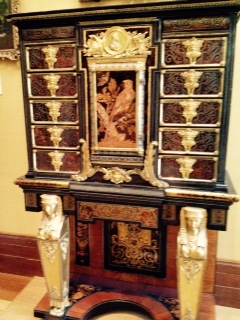
love the cabinets ..cannot stay away from the extraordinary workmanship in these units. This I think is Bouille but I have seen too many to be sure
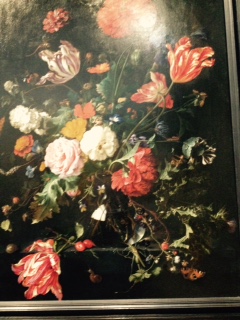
A whole room full of Dutch floral still lifes. I am not familiar with individual artists but this work stuns me.
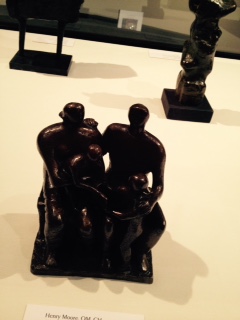
A cabinet full of G E Moore bronzes just lousy photography
G E Moore again...wonderful
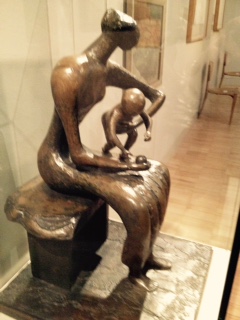
G E Moore again…wonderful woman with baby and ball
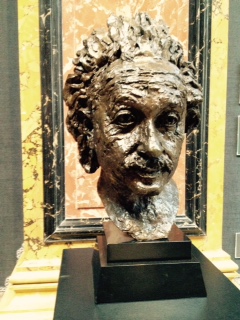
Jacob Epstein sculpture of Einstein (Epstein did the Christ in Majesty at Llandaff Cathedral)
The two contested Rothschild Michelangelo bronzes closely under guard
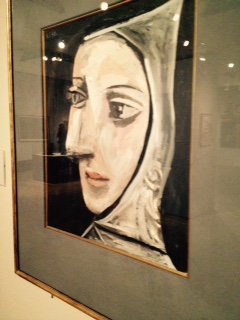
Picasso
Picasso
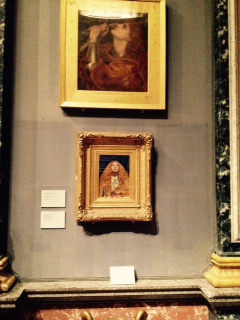
Two Pre-Raphaelites: Rossetti
Two Pre-Raphaelites: Rossetti “Joan of Arc” and Millais “The Bridesmaid”
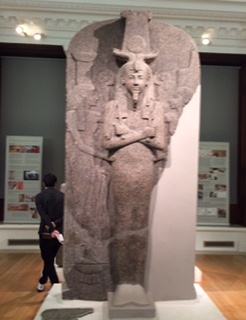
Huge Rameses 11? sarcophagus lid
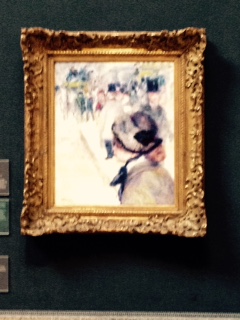
Renoir to die for
Renoir to die for
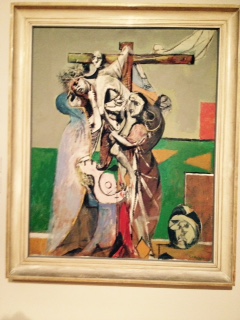
Sutherland
Sutherland “The Deposiiton”. I am not normally into abstract art in a big way but this painting spoke to me of the spiritual anguish of the Cross and the universe changing action that took place there
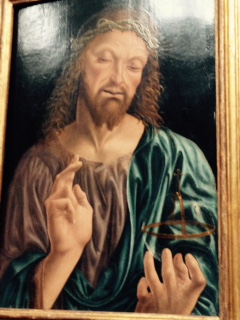
Svorzesca 1490 -94
Svorzesca 1490 -94 “Jesus saviour of the world” again to have Christ holding a glass globe of the world (hard to see in my photo) says it right for me
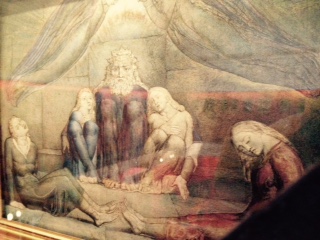
William Blake
William Blake “Count Ugalino and his sons in Prison”. Blake is so startling in everything he does. There are three small Blakes in the Fitzwilliam
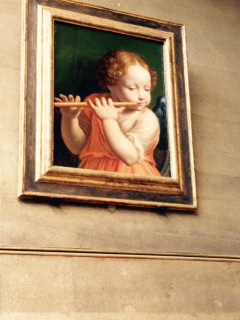
Luini Angel child playing the flute. Never really thought of child angels...
Luini Angel child playing the flute. Never really thought of child angels…
Millais again:
Millais again: “Cherry Ripe”
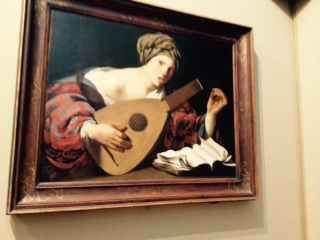
Hendrik ter Brugghen : Woman with lute

Beating the Barometer in Burghley House Northants

Monday 31 August

As I sit down to write this blog I can’t help feeling overwhelmed being in Europe at this time of moral crisis occurring over the Asian and African refugee crisis. Hundreds of thousands of folk fleeing war and oppression in Syria, Afghanistan, Eritrea and Nigeria are pouring into Greece, Macedonia, Hungary, Italy and Malta and making their way by any means possible to northern Europe, preferably Germany, France, Sweden or Britain. The complexities of the source of these problems is massive …political, historical, economic, international, religious and humanitarian. Britain is already a multi-cultural nation and in the motel industry which we now know well fluent English speakers are running at about 50%.  This is a nation of opportunity but it is struggling under the massive burden of dealing with the numbers.

Visiting stately homes also unveils a microcosm of similar historical changes ..vicious religions persecutions, the civil war with atrocities on both sides, destruction of works of art for all sorts of reasons, divisions between social classes and destructive wars between the nation states that make up the British Isles.  I honour William Morris’s socialist goal to remove all  differences of wealth between people…is it possible? It seems Jesus did not think so. Should we strive to care for those who call upon us? Yes of course..what if the numbers are overwhelming as in Rwanda or Viet-Nam who can cope? …We do what we can.  Should we forego the seemingly trivial….art? stately homes? collections? historical artifacts? literature? Buddhist statues in Afghanistan? Palmyra ruins? No I don’t thinks so. Human artistic, philosophical, literary, political, scientific, musical, historical, aesthetic, architectural, economic, religious, social reformation works are what makes us truly human.  So, stately homes with their treasures do not mean anything in themselves…they are pointers to the deep values and the beauty that is possible in every person…if we have enough of these values and enough heart, determination and faith we can and will solve the refugee crisis as well!

And so to Burghley House!

Burghley House exterior from the carpark and then from the front gate
Burghley House exterior (above) from the carpark and (below) from the front gate

Burghley House exterior from the carpark

On the last day of Summer in England it was raining cats, dogs and everything in between so we set off for another warm and dry stately home and found it in Burghley House in the village of Stamford in Northamptonshire on the border with Lincolnshire. Burghley bills itself as the GREATEST Elizabethan house in England but there is so little of the Elizabethan left inside the house that that honour should probably go to Longleat.  Nevertheless if it is just the outside to be considered then Longleat’s severe rather blockish design must yield I think to the exciting towers, domes and spires of Burghley though no doubt many of them are later than Elizabeth 1’s Golden Age also. A claim that is more accurate I think is England’s greatest “treasure house” although here also the upstart  C18th challenger Waddesdon might object.

Burghley House formal garden (one of) with fountain

It doesn’t really matter…Burghley House is a most wonderful place, the home of the Marquesses of Exeter for  eight generations and of the Cecil family of Lords Burghley for over 600 years and built by William Cecil, Lord Burghley and sometime friend and counsellor to Elizabeth 1. Members of the Cecil family still live there. The House is now owned by a charitable trust and only the title Lord Burghley is hereditary not the house and contents so its place is relatively secure providing the trust does its work well. The Cecils have been a key family in English history in many areas and are also responsible for the remarkable Hatfield House closer to London.

Once again we land in the midst of wonderful parklands created by Capability Brown in the C18th but once again also there are formal gardens and fountains, a recreated garden of surprises. Once again there are vast tracts of arboretums, deer forests and in this case remarkable fields and accommodation for horse trials which for three days every year and starting on this coming Thursday,  shuts the Village and surrounding roads for three days. There are three restaurants on the property and for all this week a market food court is operating with many yummy options. In addition there is a substantial museum of ancient Chinese and Japanese porcelain collected by one of the Marquesses and beautifully curated.

Painting of Lord David Burghley, the Sixth Marquess of Exeter, 1928 400m athletics Gold medalist and silver medalist at the 1932 Los Angeles Olympics in the 4x100m relay

The sixth Marquess Lord David Burghley won the 400 metres at the 1928 Amsterdam Olympics and a silver in the relay at the 1932 Los Angeles Olympics. He was played by Nigel Havers in the film Chariots of Fire running around the quad at Cambridge with full glasses of champagne against Jewish Brit Harold Abrahams.  Apparently the Lord Burghley in 1981 when the film was made refused to participate in the making of the movie because the real Lord David Burghley actually won the quad race within the minute, one of only two men ever to do so and it was with full matchboxes and not champagne glasses and probably about four years later leading up to the 1928 Olympics not the 1924 Olympics in Paris. This is their version of the lack of participation anyway.
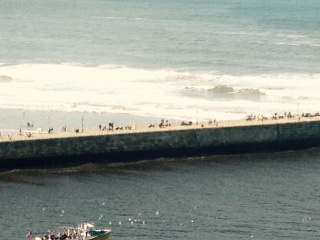
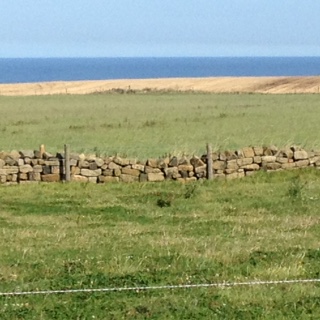
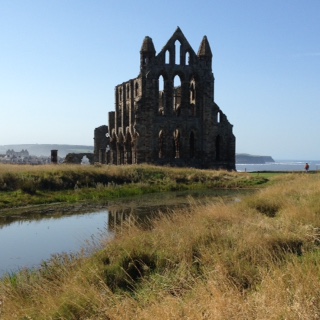
Burghley House ceiling painting of Hell by Giordano Burghley House drawing room with Elizabethan portraits Burghley House Luther by (school of) Cranach Burghley House Cyclops paintingThere are over 300 paintings in Burghley House..here we have Verrio’s Hell on the ceiling over the “Hell staircase”; six Elizabethan portraits; A school of Cranach portrait of Luther; and a scary painting of the Cyclops interpreted in human terms.

As with Waddesdon, highlights of Burghley House are too many to list.  Although many of the painting masters were sold in earlier years to pay death duties, there are still over 300 magnificent paintings including a portrait of Luther (school of Cranach), the extraordinary ceiling painting of Hell by Antonio Verrio over the “Hell Staircase” and “The Death of Seneca” by Giordano.

Other highlights include exceptional porcelaine collections (pre 1917 Chinese and Japanese and impressive Maiolica; the extraordinary Royal bedrooms in the State rooms; wonderful cabinet furniture and desks, four fireplaces with silver grates and fittings and the second largest silver wine cooler in the world weighing in at 18 stone (second only to one twice as large at the Hermitage in St Petersburg acquired by Catherine the Great; the humungous kitchen; the servants quarters with a 44 bell system; the baronial hall with gallery including a vast library of books; the stunning views of the gardens from every room and so on.

Burghley House 18 stone solid silver wine cooler Burghley House Baronial hall library From left: 18 stone solid silver wine cooler and Richard enjoying yet another amazing library in the Baronial dining Hall

Ann in the Baronial Dining Hall showing the music gallery and more porcelain and paintings

Burghley House Chinese blue and white porcelain Burghley House early Chinese screen blue and white Chinese porcelain and an early Chinese screen

Burghley House interesting scale model of the Church of the Holy Sepulchre in Jerusalem Burghley House Italian maiolica vase with table made from different Vesuvius volcanic solidified materials an amazing model of the Church of the Holy Sepulchre in Jerusalem and Italian maiolica on a table composed of polished volcanic materials from the eruption of Vesuvius

Burghley House sculpture room below Hell Staircase with antique pram

Sculptures and an antique pram in the crypt beneath the Hell staircase

The all over painted dining room ..walls and ceiling covered
One of four silver fire places with silver fire instruments...silver on steroids!
One of four silver fire places with silver fire instruments…silver on steroids!
Some of the 44 bells in the servants' quarters
Some of the 44 bells in the servants’ quarters

A feature of Burghley is the attention to the beds and bathrooms in the State rooms provided for royal and other guests. There were many such rooms so they clearly had many guests.

Little bathrooms and ante rooms are attached to most bedrooms and the colossal beds and textiles were outstanding as here

Burghley House blue silk bedroom Burghley House one of many royal bedrooms Burghley House yet another bedroom

It was a joy to see in this massive house a very large chapel permanently set up which is used on special occasions by the Village for worship as well as for services for the staff including weddings and funerals. The Cecils were always Protestant from their Elizabethan beginnings and sympathies but had a tough time during the English civil war because Burghley was occupied by a Royalist garrison and attacked and overrun by Cromwell’s men with much damage to the interior. It is good to see the Chapel maintained as a place for worship.

Overflow room for the Chapel
Permanent chapel set up with amazing carved seats.

Singing with joy in St Albans and Worn out by Waddesdon!

Sunday 30th August 2015

This morning we checked out of our Premier Inn in Highwycombe, north of London and ventured to ancient St Albans Abbey Church for the 9.30am Family eucharist. It was fantastic to see children running into the church with their parents puffing behind and it was difficult to get a carpark in the next door St Albans’ School carpark.

West face of St Albans Abbey Cathedral north of London. The stonework is under restoration
“newer” Gothic part of the exterior of St Albans Abbey Church
Another view of the St Albans exterior
St Albans Cathedral exterior of the ancient stone Norman section
St Albans Cathedral exterior view of the ancient stone Norman section

The very large cathedral was basically full and once the children came back from their learning activities for Communion it was decidedly full and delightfully noisy. The hymns were all oldies but goodies and sung enthusiastically eg Dear Lord and Father of Mankind to the traditional tune..one of my favourite hymns…Good to hear it again and we finished with Charles Wesley’s “Ye Servants of God, Your Master proclaim..”

The sermon by the Dean, the Very Revd John Jeffrey was on the Gospel from Mark 7:1-8 ..Jesus’ dispute with the pharisees over external rules and internal values. He spoke about shame and guilt societies. Shame societies care less about what folk do provided the external stuff is well handled. Guilt societies major on personal responsibility for doing good even if no one is watching. Christian societies have traditionally been guilt societies and it gets a bad press today because of course too much guilt can lead to depression and other psychological illness.

Nevertheless the Dean argued that a sense of guilt is a good thing which provokes our conscience and challenges us to the highest standards whether other folk are aware or not. For, as Jesus argued to the Pharisees it is what comes out of a person’s heart in speech and action that matters, not just keeping up appearances, Christian or otherwise.

We came away from St Alban’s with a sense of excitement for the Christian community there. They have a Christian education leader and an advertised program which included a five week course on Abraham,  another in Intermediate Latin and a third study group on the Greek New Testament!

As for the cathedral building, they are about to celebrate their 900th anniversary from their Norman beginnings so there is an old stone Norman abbey section to which a later Gothic flint covered vast extension has been added.  The stone rood screen in front of the crossing remains and new sanctuary furniture sits in front of it for the family service.

Interior of St Albans showing the solid stone rood screen effectively dividing the interior into two halves. The 9.30am service was conducted on this side with modern furniture in the sanctuary and a warm close knit community.
St Albans close up of colourful figures on the rood screen

The more traditional 11.00am service meets “on the abbey side” and the organ sits atop both and meets both needs. They have effectively created two separate worship centres and although it could be said that the architectural line from front to back has been permanently interfered with, my view is that it is a triumph of ecclesiology over architectural intention. The ancient Cathedral has adapted to the C21st and is alive and kicking. We came away very encouraged.

St Albans high altar on the
St Albans high altar in the more ‘traditional’ side of the rood screen
view from behind the rood screen showing newer wooden ceiling in the nave  and ancient choir stalls
One of the few side chapels in St Albans Cathedral
Rose Window in the Crossing of St Albans Cathedral

After church we journeyed from St Albans across to encounter Waddesdon House the amazing Baroque mansion built for Baron Ferdinand de Rothschild in 1874 and bequeathed by his descendant James de Rothschild to the National Trust in 1957.  On first sight we felt we were back in the Loire Valley looking at a French Chateau with its turrets and towers and formal gardens and this was certainly Baron Ferdinand’s goal. This is once again a massive house with multiple storeys and many rooms.

Baroque Waddesdon House in Aylesbury, built for Baron Ferdinand de Rothschild to house his families vast collections. It is now bequeathed to the National Trust

Inside, however, the house  is deliberately structured more like an art gallery as the Rothschilds have been serious collectors for generations. Making their money from the English banking system they have, over several generations, build up quite outstanding collections of paintings (English portraits, Dutch masters and some more modern material), one of the world’s largest porcelain collections (mainly Sevres but some significant Meissen), substantial collections of C18th and C17th French furniture, clocks, tapestries and carpets, musical instruments, lace, buttons, a full scale working aviary, fountains, and exhibition spaces for modern art events. Phew! No doubt I missed plenty e.g. all the amazing interior wall panelling no longer required in huge aristocratic hotels and homes in Paris.  Currently a major sculpture exhibition of the work of G E Moore is on view.

Ancient silk synagogue hangings origin unknown and languishing in a private collection until bought by Rothschild at significant cost to show to the public. There is a complete room dedicated to these complex fabrics.
Ann eyeing of the silver service in one of the three dining rooms
Ann eyeing of the silver service in one of the three dining rooms. Ancient and well kept tapestries are everywhere displayed

Waddesdon formal parterre garden Waddesdon Green Dining Room amazing modern light fitting

Just discovered how to add all these at once…now have to work out captions! Above left is the formal parterre garden  visible from all the formal reception rooms in the house; above right is a small “green dining room” for intimate gatherings. The modern light fitting has cutlery sticking out at all angles but iPhone photography is again defeated. Below is just a tiny sample of bits and pieces that appealed to us.

Waddesdon hanging clock Waddesdon hanging clock light eith birdcage

This extraordinary light fitting has a clock beneath (for telling visitors when to leave?) and a birdcage above (if the conversation flags?)

Waddesdon I really must improve my study desk at Berwick! Waddesdon large scale Meissen porcelaine

This elaborate C18th Franch desk makes me think I should update my plywood study desk at Berwick!  The huge Meissen turkey  and the goat to follow are items made to order. We saw six of these at Longleat but unfortunately managed to delete the photos after a rush of blood finding space on the iPhone!

Waddesdon massive Venice paintings by Guardi Waddesdon Meissen goat

The two vast Guardi  paintings of Venice in this entry hall do not look much but they are actually huge  and would barely fit in a standard tfbv lounge room.  The Goat as above is Meissen

Waddesdon one of two humungus urns in the entry garden Waddesdon painting of boy making a house of cards

Everything at Waddesdon is over-sized.  I am still some distance from this garden urn which must have required a crane to place it.  It is huge!  The collection is still growing as the Rothschild Foundation is still behind the collection. This evocative painting of a boy making a house of cards is by C18th French artist Jean-Simon Chardin.

Waddesdon tiny part of a vast Sevres porcelaine collection

These are all Sevres plates and this is a tiny fragment of three large rooms full of Sevres porcelain opened by the Queen in 1993

Waddesdon two of the Bakst Sleeping Beauty paintings

These are two of the Bakst “Sleeping Beauty” panels which are quite wonderful in a specially designed round room. The poor unfortunates sitting below are, like we were we, exhausted patrons trying to look excited by wonder after wonder.

This amazing elephant moves its trunk and it has many moving parts. When the Shah of Persia visited apparently he could not believe it and had to be moved on to the rest of the house

The house sits high on a hill in Aylesbury with a vast forest and cultivate arboretum surrounding it before you come to the manicured lawns and formal gardens.  It would be a week’s work to view carefully everything this magical place has to offer. We gave it three hours and retreated to Cambridge through some heavy rain for a quiet night.  Our conclusion is that although this house is quite majestic, our preference is for the humble, straightforward and more homely atmosphere of the William Morris country retreat by the Thames in Kelmscott. Too much of a good thing may well be too much of a good thing!

Keeping faith with William Morris in Kelmscott Manor

Saturday 29th August 2015

Today we completed our William Morris quest by driving straight back down from Wightwick Manor via the M5 to Gloucestershire to the small village of Kelmscott on the Thames, not far from its source in the Cotswold hills.  Kelmscott Manor was a C17th farm house, outbuildings and gardens which William Morris leased with his wife Jane and his companion/her lover Dante Gabriel Rossetti in 1871.

Ann at the entrance of Kelmscott Manor in the village of Kelmscott. Ann's quilting has been deeply influenced by the design work of William Morris so today was special for her
Ann at the entrance of Kelmscott Manor in the village of Kelmscott. Ann’s quilting has been deeply influenced by the design work of William Morris so today was special for her
Kelmscott Manor a C16th manor house in Kelmscott Village in Gloucestershire leased by William Morris and bought by Jane Morris after William's death
Kelmscott Manor a C16th manor house in Kelmscott Village in Gloucestershire leased by William Morris and bought by Jane Morris after William’s death
Kelmscott Manor ..another view of the exterior

The Morrises were living at their much loved “Red House” in Kent but it was too far from his London business which was taking off.  The scandalous Rossetti/Jane romance was also taking off and it was socially  convenient for Morris to move the whole triangle to Kelmscott. During this difficult period Morris several times spent six months at a time in Iceland. He had learned the language and was interested in the northern sagas as in all mythology. Rossetti eventually left in 1874 never to return.

Perhaps the most famous of the many portraits of Jane Morris by Dante Gabriel Rossetti. Morris suffered their affair at Kelmscott and travelled often to Iceland in this period. Eventually alcohol and drugs drove Rossetti away ..(perhaps guilt caused by his wife's earlier suicide??)
Perhaps the most famous of the many portraits of Jane Morris by Dante Gabriel Rossetti. Morris suffered their affair at Kelmscott and travelled often to Iceland in this period. Eventually alcohol and drugs drove Rossetti away ..(perhaps guilt caused by his wife’s earlier suicide??)

William Morris never owned the house but after his death and burial in the graveyard at St George’s Jane bought the house and lived there with her daughter May. The house was bequeathed by May Morris to Oxford University with very severe restrictions re change which led to the house and garden falling into serious disrepair. The Society of Antiquaries to whom Oxford passed on the Manor were able to overturn the will and have spent millions restoring the Manor to its original dignity. It is now a place of wonder and delight set in one of the most engaging villages in England.

Simple grave of William, Jane, May and Jenny Morris in the graveyard of St George's Church in Kelmscott Village
Simple grave of William, Jane, May and Jenny Morris in the graveyard of St George’s Church in Kelmscott Village; designed by Phillip Webb old friend and partner to William Morris casting him in the style of Old Norse mythological heroes of Valhalla
St George's Church C14th Romanesque in the Village of Kelmscott
St George’s Church C14th Romanesque with significant C17th additions in the Village of Kelmscott
Interior of St George's church in Kelmscott Village
Interior of St George’s church in Kelmscott Village
Romanesque columns in St George's Church in Kelmscott Village
Romanesque columns in St George’s Church in Kelmscott Village

The area is agricultural and fairly flat (Rossetti complained about how boring a place it was) rather than hugely romantically beautiful like say Stourhead gardens but it is quiet, picturesque and just 2 minutes from the Thames where Morris liked to fish. In 2003 the river flooded and fast work was needed to save the contents of the Manor House.  In the village there are a number of other early village homes and some newer very impressive additions together with the Memorial hall and three cottages all commissioned for the village by Jane and their two daughters. It was quiet, well away from London and a place for lots ot thinking. The memorial hall was officially opened by George Bernard Shaw a century after William Morris’s birth in 1834.

The Thames River flowing through the Village of Kelmscott just two minutes from the Manor House
Memorial cottage commissioned by Jane Morris after William's death with a wall carving of William Morris
Memorial cottage commissioned by Jane Morris after William’s death with a wall carving of William Morris by George Jack

The rambling house has three floors and many outbuildings and the gardens have been beautifully restored after falling into disrepair after the death of May Morris who lived there after William and Jane had passed away.  All of the original furniture  from both the Red House and Kelmscott Manor was sold at the time  but the Society of Antiquaries has managed to find and repurchase many items of furniture as well as a complete collection of William Morris’s writings and the bookcases are filled with books by Ruskin, Scott, Dickens and many others that Morris read voraciously from.

Kelmscott Manor restored attic bedroom
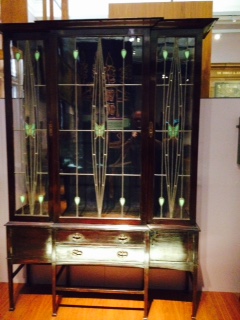
Arts and Crafts wooden cabinet in Kelmscott Manor
And a second Arts and Crafts cabinet
Original settle designed by Morris for the Red House now in Kelmscott Manor
Original settle designed by Philip Webb for  Morris for the Red House, and now in Kelmscott Manor

A number of original prints from Burne-Jones are there as well as some very famous Rosetti portraits of Jane Morris. In addition Morris’s large collection of Durer prints is there, a number of significant quilts and tapestries, the original kitchen, paintings including a wonderful Brueghel of a garden, silk hangings and works of Morris from his various sojourns in Iceland.

The White Room in Kelmscott Manor
Textile wall hanging of St Catherine worked by Jane Morris in Kelmscott Manor
Jewel casket belonging to Jane Morris in Kelmscott Manor
Beautiful Rossetti painting of Jenny and May Morris in Kelmscott Manor
Cot quilt with animal designs currently on loan to Kelmscott Manor
Another section of the Cot quilt at Kelmscott Manor

It is impossible to acknowledge the depth and  complexity of the gifts of William Morris…a craftsman expert in design of every sort, wood, furniture, textiles and fabrics, tiles, painting and tapestries. His writing varies from learned works of ethnography and linguistics to theology and ethics, translations of the Odyssey, Icelandic sagas, the legends of the Nibelungs and accounts of Greek mythology such as Jason and the Argonauts as well as his own mythologies. He wrote poetry, sagas, literary criticism, art theory and history and these are only the areas I am familiar with. Although a child of wealth and well educated he was passionately committed to Christian ethics and the idealistic goal of abolishing the differences between rich and poor in society and these passions led him to join the Socialist Party in England at a time when the gentry were not supposed to be involved in such thing. All of this while maintaining a highly successful London design business.

Morris’s  Kelmscott Press set new standards for quality publishing and even facsimilies now fetch huge prices. This is a work of some genius, illustrated by Morris and containing Chaucer, The Romance of the Rose, Boethius and much more besides. Morris was also passionate about authentic arts and crafts, and, like Ruskin, was horrified by the mediocrity of mass produced and repetitive designs compared with unique and crafted art and workmanship produced by those who love their work and were not just compelled to be there. To have his skill in languages, poetic gifts, moral strength and to hold together his workaholic writing, designing, business, political, intellectual and public responsibilities at the same time managing to keep a tempestuous loving marriage and home together in the face of outrageous pressure from Rossetti is an achievement unlikely ever to be repeated.  For me William Morris is a true Renaissance man who elevates everything he touches and who puts his learning to both artistic, practical and moral intent.

For Ann it is William Morris’s skill in textile design, weaving and understanding of materials that has inspired her now fifteen year passion for the time and design intensive art of quilting. She has produced over thirty quilts of varying sizes but her magnum opus to date is the heirloom quilt she made for her niece Sarah Lang, also an artist and a teacher of Art as well as a talented musician and event entrepreneur. The particular challenge of this quilt is that each square of flowers was hand appliquéd and indeed, all of Ann’s quilts have been worked by hand. The design for Sarah’s quilt is based on Jane Morris’s handworked quilt which can be found in Kelmscott Manor (currently for some reason on William Morris’s bed!)  The similarities between the quilts can be clearly seen in the attached photos.

Jane Morris bedroom quilt currently on William Morris's bed at Kelmscott Manor
Jane Morris bedroom quilt currently on William Morris’s bed at Kelmscott Manor
Ann's quilt made for Sarah Lang based on the Jane Morris design
Ann’s quilt made for Sarah Lang based on the Jane Morris design
Close up of Jane Morris's quilt design
Close up of Jane Morris’s quilt design in Kelmscott Manor

Clearly yesterday’s visit to Wightwick Manor and today’s journey to Kelmscott meant a great deal to both of us.  May and Jane Morris embroidered the following poem around William Morris’s bed canopy as can be seen in the photo above. I think the poem speaks for the man.

Kelmscott poem on embroidery on bed

Tweaking about in Tewkesbury and Whittling time away in Wightwick Manor

Friday 28th August 2015

This morning we left our Premier Inn home in  Chippenham in the southern Cotswolds to drive north to the Midlands to our one night Premier Inn home in Wolverhampton North near Birmingham. Along the way we stopped off at the very ancient Church of the Virgin Mary in Tewkesbury which was a Saxon site in the C9th and  Dominican Abbey prior to the Reformation with the church consecrated in 1121.  The Abbey survived Henry V111’s predations because the town of  Tewksbury paid him off for the sum of 453 pounds  (the cost of the lead and the bells!).

Tewksbury Abbey exterior ...
Tewkesbury Abbey exterior …”you are here to kneel where prayer has been valid” (Eliot)
Tewksbury Abbey West face
Tewkesbury Abbey West face

T S Eliot wrote in The Four Quartets,   

You are not here to verify,

instruct yourself,

or inform curiosity

ore carry report.

You are here to kneel where prayer has been been valid

                                     As soon as I walked into Tewkesbury Abbey this is how I felt. In many of the churches we have visited I have found myself “reporting” on this or that or seeking to “instruct myself” about this or that bit of history, art or architecture. Here in Tewkesbury Abbey with its massive round Romanesque columns and simple, stately architecture I felt strongly that people had been praying in this place for a very long time indeed. So here I did pray ..for peace in our troubled world and for peace in my own heart.

Romanesque Tewksbury Abbey with its massive round columns and beautiful ceiling bosses
Romanesque Tewkesbury Abbey with its massive round columns and beautiful ceiling bosses
Close up of the painted ceiling in the quire of Tewksbury Abbey
Close up of the painted ceiling in the quire of Tewkesbury Abbey
Vibrant new stained glass in Tewksbury Abbey
Vibrant new stained glass in Tewkesbury Abbey
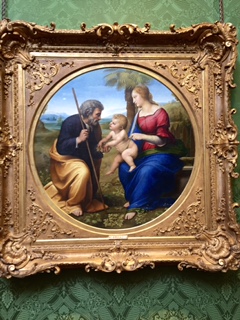
Raphael painting
Raphael painting ” Madonna del Passaggio” in Lady Chapel of Tewkesbury Abbey

The C17th organ in this Abbey today was allegedly played by John Milton. He was someone else who loved beauty and peace and I felt a kindred spirit with him today as yesterday at Stourhead House where Milton was twice honoured in the library.  This church has everything, remarkable painted ceilings, naughty misericords, wonderful roof bosses, a tiny Dominican prayer place, a Raphael painting in the Lady Chapel (Madonna del Posseggio) and some wonderful new stained glass windows. It is indeed a place of prayer and peace.

Travelling on up the M5 we turned off at Wolverhampton to find our place of rest and to explore Wightwick Manor House, the newest house ever bought by the National Trust in 1947 (at which time the house was only fifty years old. ) There has been a house on the site since at least the Doomsday book as it is noted there.  In the 1600s a wooden manor house was built and remains still exist in the Malthouse today.

The current house was built in 1887 by Theodore Mander and his wife Flora and they doubled its size in 1893. Mander was an industry king (industrial paints for vehicles), a politician, Lord Mayor and highly decorated public figure. He was also an aesthete and together with his wife they set to recreate the perfect “Tudor House” (architect Edward Ould) and formal garden down to the last detail complete with tiny set windows in odd places, a secret staircase from the front reception room to an upstairs bedroom if Flora didn’t like the person who came to the front door, a huge baronial hall with a balcony, two large staircases, room after rambling room with large fireplaces and much more besides.

Wightwick Manor built in1894 and enlarged in 1892 A
Wightwick Manor built in1894 and enlarged in 1892 A “Tudor” house with all mod cons, central heating and electricity included.
Ann at the entrance to Wightwick Manor
Wightwick Manor Baronial hall, paintings, ancient carpets, furniture, books
Wightwick Manor view from the balcony down to the Baronial Hall
Wightwick Manor breakfast/morning room
Wightwick Manor breakfast/morning room with Willam Morris wallpaper
Wightwick Manor Dining Room
Wightwick Manor parlour with C19th Grand piano
Wightwick Manor library full of books of poetry, lit cit and art history
Wightwick Manor parlour fireplace
Wightwick Manor garden with bridge over the main road to the forest
Nursery in Wightwick Manor

Both the Manders and their son Geoffrey and his wife Rosalie were also strongly influenced by the Arts and Craft movement, and Victorian art in general and were avid collectors of Pre-Raphaelite and Victorian artwork. Each room with one exception is wall papered with William Morris designs and significant artworks are found on every wall (probably the largest Pre-Raphaelite collection in one place in England). Works by Burne-Jones (including Love Among the Ruins), Millais (including the scandalous portrait of Mrs Effie Ruskin painted at the time they fell in love when Millais was staying with the Ruskins in Scotland),  Ford Madox Brown,  and many paintings by Pre-Raphaelite women including Lucy Madox Brown, Evelyn de Morgan (the amazing Flora), Lizzie Saddal, May Morris,  and Marie Spatali Stillman.

Edward Burne-Jones
Edward Burne-Jones “Love Amongst the Ruins” in Wightwick Manor
Evelyn de Morgan 1894
Evelyn de Morgan 1894 “Flora” in Wightwich Manor
Canadian sleigh in Wightwich Manor
Canadian sleigh in Wightwich Manor ” Malthouse”

In addition the house contains two early and rare copies of the Kelmscote printed Chaucer and there are many fine examples of William De Morgan tiles.  It would take a whole day to explore this house and garden. We gave it three hours and found it to be another very restorative experience, not unlike Stourhead the previous day. The National Trust in Britain has done a brilliant job with both properties.