N T Wright:The Day the Revolution Began: Rethinking the Meaning of Jesus’Crucifixion.

I just read this book and here is my review:

N T Wright: The Day the Revolution Began: Rethinking the Meaning of Jesus’ Crucifixion, Harper One/SPCK, San Francisco/London, 2016.

Tom Wright’s latest blockbuster is  a big sprawling book clearly based on a lecture series and therefore could have done with some judicious editing. (416 pages).  Nevertheless it makes a powerful impact because in this significant study Wright attempts to overturn many current and traditional theological understandings of the crucifixion of Jesus. The book will engender vigorous discussion and has already encountered substantial online opposition from Wright’s normal opponents both conservative and liberal. This noise should not deter readers from making the effort to stay the distance because Wright’s argument is Biblical, cogent, eventually compelling and in his final two chapters of application to today’s church I believe his analysis can only be ignored at the church’s peril especially the first world church,

In Part 1, the first three chapters, the opening question is “why did Jesus die”? Of course there are historical and theological answers but Wright’s two questions are first, “what was Jesus thinking when he chose to go to the cross? and secondly what did the earliest Christian writers mean by saying the reason for his death had resulted in “the forgiveness of sins.”? This is especially surprising given that Jesus’s own preaching had been based around the imminent coming of the Kingdom of God. Wright addresses directly the issue that Jesus preached the kingdom and the early church preached Jesus.

Wright answers his own questions with  he reality that, with the resurrection, Jesus’s followers became immediately aware that arguably the most momentous revolution in human history had begun. Jesus’s followers especially Paul believed it involved the defeat of the powers of the cosmos and in particular the power and fear of death. As his followers wrestled with the Cross an understanding of its universal significance began to dawn. Wright provides some difficult to read detail of the scandalous horror and unglamorous torture involved in Roman crucifixion to prove that only a life changing purpose could have made early believers make such a horrific death central to their understanding of God’s action in the world. Wright provides a cook’s tour of two thousand years of interpretation of the meaning of the cross, concentrating on Reformation responses and then demonstrates at length an equally varied response to the crucifixion in first century Roman and Jewish/Christian understanding.

In Part 11  headed “in Accordance with the Bible”  Wright engages in a surprisingly detailed analysis of the narrative of the Old Testament focussing deliberately and directly down on to the five themes of the universal covenant promises to Abraham; the narratives of exodus and exile; the prophetic call to God’s people to be “the light to the nations” and the suffering servant narrative of later Isaiah. Readers familiar with Wright’s major commentary on Romans in The New Interpreter’s Bible Volume X will recognise this approach. Thus Wright prepares the way for his “Israel centred” understanding of the meaning of the crucifixion in Part 111.

Part 111 is the most theologically controversial section of the book in which Wright analyses first the Gospels in some detail especially John, followed by “Paul and the Cross apart from Romans” and finally two chapters centred on Romans. All the “big-name models” of atonement are there including penal substitution, justification, propitiation (ἱλαστηριον), expiation, reconciliation, redemption, punishment, the wrath of God and the righteousness of God. These themes are reinterpreted in a broader understanding of God’s ongoing revolution lead by God’s people resuming the task of being light and salt in the world and playing their part of being the suffering body of Christ in the world as we await its transformation with the return of Christ.

In part this Old Testament story of God’s action in the world is Wright’s reaction to such “slimmed down” evangelistic models as “the Romans Road” (see gotquestions.org) in which the meaning of the crucifixion tends to be limited to the forgiveness of personal sin so that a person can “go to heaven when they die”.  Wright’s response is to underline Israel’s responsibility to be a light to the nations which, in spite of their return to Jerusalem, had stalled through their continuing “exile” under Roman rule in the first century. Wright sees Christ’s victory over the powers of the world on the cross as reigniting the establishment of the kingdom of God in a “this world time/space”, not escaping from the world into some disembodied heavenly existence. In this regard Wright gives Biblical expression to philosopher Roger Scruton’s recent powerful call to a spiritual life and 3an afterlife in time, [belonging] within the causal envelope, in the space-time continuum which is the world of nature. [The Soul of the World, Princeton, Princeton University Press, 2014 p198]  In relation to “the powers” Wright interprets them as three “old gods”..Mammon, Ares and Aphrodite i.e. wealth, war and sex!

Part IV of the book contains two chapters of a clarion call to living the Christian life within the victory of the crucifixion. It is hard-hitting, dynamic and potentially life-changing as well as threatening. Do not proceed if you do not want your spiritual equilibrium disturbed! Consider these zingers for example:

Many churches have colluded in the privatisation and spiritualisation of ‘salvation.” (p.394); Forgiveness of sins is not a tolerance of ‘anything goes’. (p396); Challenging political agendas does not absolve us from the need for personal holiness. (p403) We cannot assume that we are now mandated to live the Christian version of a modern Western “good life”. (p404) How easily the Western church embraces self-discovery, self-fulfilment and self-realization as if they were at the heart of the Gospel. (p410) “..for every word of Jesus against sins of the body there are a dozen against sins of the bankbook. (p410). So, finally, when the New Testament tells us the meaning of the cross, it gives us not a system, but a story; not a theory, but a meal and an act of humble service; not a celestial mechanism for punishing sin and taking people to heaven, but an earthly story of a human Messiah who embodies and incarnates Israel’s God and who unveils his glory in bringing his kingdom to earth as in heaven. (p415)

The Revolution began on that first Good Friday and continues in the faithful and suffering lives of God’s people around the world as they work with joyful politically challenging courage and holiness as the body of Christ to continue to create God’s kingdom of love, beauty and justice in the world, patiently awaiting its transformation at Christ’s return. May it be so in the churches to which we belong.

Richard Prideaux, Senior Chaplain, Newhaven College, Victoria, Australia
RECENTLY READ BOOKS

BOOKS READ RECENTLY

P T Forsyth:  Positive Preaching and the Modern Mind, New Creations Publications, Spotswood SA, 1993 (1907)   (read and carefully analysed 2013-2016) ..detailed notes elsewhere; certainly the best book on preaching I have ever read.  J K Mozley: Perhaps English Christianity’s most powerful theologian in the sphere of dogmatics. 5 stars

Phillip Henderson: William Morris: His Life, Work and Friends, Thames and Hudson, London, 1967  ( read December 2016)   amazing life and work of one of the world’s most amazing creative geniuses;  Yates: the most loved man in England!   5 stars

Rob Bell: Velvet Elvis, Zondervan, Grand Rapids, 2005. (Read December 2016;) unique style aimed at mega church attendees; Clarion call for common sense theology for the C21st in so many areas; all the key ideas are there but referred to almost tangentially;   3 stars

Kent Haruf: Our Souls at Night, Picador, London, 2015. (Read December 2016 )(Book club) Two single old folk who get together late at night for companionship. Heartwarming, passionate, cruel in its depiction of family stresses. 3 stars.

Roger Scruton: The Soul of the World, Princeton and Oxford. Princeton University Press, 2014.  (read December 2016.)  English philosopher arguing against reductionist conclusions in evolutionary psychology, cognitive dualism and neuroscience as well as nothing buttery and  reductionism in aesthetics, personal identity and relationships, music, art and religion.  Difficult read but a wealth of supporting data beautifully argued including deep analysis of opponents. Moves toward the the God of the Judaeo-Christian tradition but not enough for many Christians and way too far for many secularist atheists.   4 stars

Aristotle, trans. J A K Thompon (1953) Ethics: with intro by Jonathan Barnes & notes by Hugh Tredennick and Preface by A C Grayling, The Folio Society, London, 2003.  (Read term 3 2016 ) Difficult read in defence of virtue ethics but full of wisdom, wit, common sense and pre-Christian “Christian values” regarding the human pursuit of happiness. p121:All teaching starts by what is known; p201: A good man, if necessary, dies for his friends. p224 We ought, so far as in us lies, to put on immortality. p227: A man’s life will be happy if he acts in accordance with virtue.  4 stars

Peter Goldsworthy: Maestro, Melbourne, Angus & Robertson, 2010. (Read term 4 2016 Newhaven. ) Australian angry young man story with holocaust link. Very thin! …1 star.

Julian Barnes:  A History of the World in 101/2 Chapters,  (Read term 3 2016 Newhaven).  Clever,  annoying book with a water/Biblical/art/terrorism theme including an excursus on love and another on heaven.  (his father is Jonathan Barnes ..Oxford Classics and Philosophy genius)   3 stars

Daniel Varè: The Maker of Heavenly Trousers, Penguin Books Aust, Camberwell, 2011 (1935) ( Read December 2016 ) Curious story of an Italian diplomat in China during the period before and after WW1..mixture of romance, fantasy, poetry, philosophy,Chinese and Buddhist culture…3 stars.

Michelle De Kretser: Questions of Travel,  Crows Nest Sydney, Allen & Unwin, 2012 ( Read December 2016); Fiction based around two characters..footloose traveller and travel writer Laura Fraser and Sri Lankan refugee to Australia, Ravi Menises. Large book, interesting reflections on travel, striking ending, 3 stars.

Richard Holloway: Leaving Alexandria, Edinburgh, Canongate,2010. (Read January 2017.) Extraordinarily honest, annoying and searching book by renegade priest, prolific author and former Primus of the Scottish Episcopal Church before he was encouraged to quit by a significant section of his clergy. Widely read he gives a fascinating portrait of clerical life in the C20th from within an Anglo-Catholic perspective although one senses he would like to be a “liberal charismatic evangelical”.  In many ways a Christian atheist! Not a book for the faint-hearted but a useful read if only for the poetry and writers he quotes! 3 stars.

Bruno Vincent: Five Give up the Booze, London, Quercus (Enid Blyton for Grown-Ups, 2016.  (Read January 2017) Quirky adult story written in Enid Blyton style with Enid Blyton presentation and illustrations.  Quite funny and clever and even thoughtful in places   3 stars

Manning Clark: The Puzzles of Childhood: His Early Life, Ringwood Aust, Penguin Books, 1990 (1989). (Read January 2017)  Intensely written account of his early life and family history including his complex working class clergyman father, upper class mother and brother Peter. Includes his time at Kempsey, Phillip Island, Belgrave and Melbourne Grammar as a student.  Engaging, complex and funny in parts.   4 stars.

Simon Garfield: The Error World, London, Faber & Faber,2008. (Read January 2017 ) Funny, clever and engaging book about collecting. Focuses mainly on stamp collecting but many other interesting insights. Also a kind of autobiography of a writer who has ranged widely in non-fiction with books on music, time, war and history.   3 stars.

Manning Clark: The Quest for Grace, Ringwood Au, Viking, 1990.( Read January 2017) An autobiographical follow up to The Puzzle of Childhood. Stunningly honest and scarifying account of Manning’s desire for Christian grace alongside his biting and witty dismissal of his father’s stuffy Anglicanism, the smugness of the bourgeois, the attractions of sex and alcohol, his genuine love affair with socialism and a new world order and his final acceptance of the uniqueness of Australian culture against the dying European order set against the chaos of the build up and chaos of WW11; it is also the account of the birth and 25 year production of the six volume History of Australia and an amazing account of the significant students he taught and staff he taught and learned with at Geelong Grammar, Oxford, Melbourne Uni and ANU  as well as the writers, art, music and travel which influenced him.  According to his biographers, not always totally reliable. e.g. arriving in Germany the morning after kristallnacht.   5 stars.

Jean Calvin: Institutes of the Christian Religion, Ed., John T McNeil; trans. Ford Lewis Battles,  2 volumes (Volumes 20 and 21 in “The Library of Christian Classics”),  Philadelphia, Westminster Press, 1960. Latin title reads: The Institute of the Christian Religion, Containing almost the Whole Sum of Piety and Whatever It is Necessary to Know in the Doctrine of Salvation. A Work Very Well Worth Reading by All Persons Zealous for Piety, and Lately Published. A Preface to the Most Christian King of France, in Which this Book is Presented to Him as a Confession of Faith. Author, John Calvin, of Noyon, Basel, MDXXXVI.  (Read 2014 (complete)  and Book 3 again January 2017;)   A big read! (1784 pages);  Written initially in Latin, then in French over eight editions between 1536 and 1559. In this translation quite readable; outstanding notes and clarifications by John T McNeill. A remarkable window into the Reformation fight with the mediaeval church Councils and Papal rulings on Biblical interpretation and doctrine (including Jerome’s Vulgate) paying particular and detailed attention constantly to the failure of the doctrine of salvation by merit as well as substantial criticism of ‘The Schoolmen’ i.e. mediaeval scholars such as  Aquinas, Cochleaus, Servetus, Fisher, Duns Scotus, Bonaventura, Lombard, Abelard and hundreds of other scholars,  and many disputes with Luther, Erasmus and Melanchthon also. Relies heavily on Augustine, Chrysostom, Ambrose  and Bernard of St Clair. A clear statement of all the major Christian doctrines with detailed rebuttal of opposing arguments of the day. Calvin’s deep Renaissance knowledge of classical philosophy is evident especially Plato, Aristotle, Homer, Cicero, Seneca, Homer, Euripides, Plutarch amongst others. Wonderful treatment of prayer in Book 3.  The lengthy chapters on predestination and double predestination to Hell in Book 3 in which the latter is simply treated as a mystery into which it is unprofitable and dangerous to look will not be helpful to C21st readers with the exception of those committed to a stern Reformed theology. (4 stars)

J Ross Wagner: Heralds of the Good News: Isaiah and Paul in Concert in the Letter to the Romans, Boston/Leiden, Brill Academic, 2002( Read February 2017.)  Outstanding analysis of the quotations from Isaiah in Paul’s Letter to the Romans. A book for scholars and students of Paul and Isaiah..not for beginners.  Particularly interesting in relation to: (i) the importance of the Septuagint in Paul’s writing; (ii)reading and writing in the First Century of the Christian era;(iii)  the audacity of Paul’s treatment of Isianic prophecies about Israel being turned into prophecies about the salvation of Gentiles; Significant debt to the work of N T Wright, Richard Hays and E P Sanders but Wagner maintains his own position with trenchant and careful argument and does not slavishly follow any of these authors. Very useful bibliography and detailed footnotes; also very helpful charts of the Isaiah quotations and allusions. ( or “echoes”..Hays)  4 stars.

Rob Bell: Love Wins: At the Heart of Life’s Big Questions, London, Collins 2012.  (Read Feb 2017) A powerful follow up to Velvet Elvis (2005, see review above).  This is a clearly written and Biblically researched analysis of the Christian doctrines of Heaven and Hell, the Cross and the Resurrection written in an accessible style for folk who have little or no connection with formal church. I know no better book to give to someone ‘on the edge’ of faith or in opposition to faith. Bell tackles the universalism question straight on and mounts a powerful Biblical argument that, when all the chips are down, love wins. Winning no friends in the Facebook war, (Piper et al)  nevertheless Bell’s book  is a transformative, helpful and deeply thought provoking read. Bell lead the Mars Hill Michigan megachurch for many years and now lives in Los Angeles and is “on the circuit” which has included an appearance on Oprah Winfrey. In his later interviews he opposes the authority of the Bible as a source of ethical authority in the church of today which leaves him stranded for most conservative Christian believers. 5 stars

Martin Ayers: Naked God: The Truth About God Exposed, Kingsford, NSW, Matthiasmedia,2010. (read Feb.2017)  Probably the C21st version of Mere Christianity without the intellectual fireworks.  Simply written for teenagers and young adults with up to date references. Standard solid apologetics with a modern thrust although already strangely outdated e.g. by referencing Obama rather than Trump! (the obvious danger of using dateable examples).  A Useful book to give to someone on the edge but less cut than say Bell or Wright.  3 stars

N T Wright: The Day the Revolution Began: Rethinking the Meaning of Jesus’ Crucifixion, Harper One/SPCK, San Francisco/London, 2016. (Read February 2017) A big sprawling book clearly based on a lecture series and therefore could have done with some judicious editing. (416 pages).  Nevertheless it makes a powerful impact. Detailed review elsewhere; Notable for its emphasis on the narrative of the Biblical story rather than the Bible being a storehouse from which to dig out a systematic theology. Treats the crucifixion from the context of the Covenant promises to Abraham, the Old Testament narratives of exodus and exile, the prophetic call to a new covenant based on the vocation of God’s people to be the light to the nations, the narrative of the suffering servant in Isaiah, a helpful analysis of the four Gospels and three detailed chapters on Paul Including two chapters based on Romans. The book closes with two dynamic chapters and a call to arms for  the church and the vocation of God’s people. In summary Jesus died and rose again for the forgiveness of sins, demonstrating the  defeat of the dark powers at work in the world personified as Mammon (wealth), Mars (war) and Aphrodite (sex). At six o’clock in the evening on the first Good Friday the world was a different place…the Revolution began and continues in the faithful and suffering lives of God’s people around the world as they work with joyful politically challenging courage and holiness as the body of Christ to continue to create God’s kingdom of love, beauty and justice in the world, patiently awaiting its transformation at Christ’s return. (5 stars).

We cannot assume we are mandated to live the Christian version of a modern Western “good life”. (p 405); how easily the Western church embraces self-discovery, self-fulfilment and self-realization as if they were at the heart of the Gospel (p410)  (4 stars)

Carlos Ruiz Zafon: (translated, Lucia Graves):  The Shadow of the Wind, Melbourne, Text Publishing, 2004. (Read December 2016)
Clever, engaging Spanish novel involving books and who has owned and written them, arcane mystery, love, inter-generational relationships, criminality, a hint of an evil muse and a generally complex thematic structure.  The “library of forgotten books” owes a substantial debt to Borges’  “The Library of Babel” in his collection Labyrinths, and there is a debt to Borges also in the labyrinthine turns of the plot.  Hard to put down; a good read!  (3.5 stars).
Joseph Conrad: Heart of Darkness, Ringwood, Penguin, 1979 (1902). Read 1967 and Feb 2017).  Very short, powerful novel of a steamship captain’s recollection of a river journey in the Congo in search of ivory and a mysterious company agent gone native known as Kurtz. Stunning use of language, symbol, imagery, the most appalling sort of colonialism and perhaps a general symbol of the “dark heart” of the human situation at the start of the C20th epitomised by T S Eliot’s reprise of the line Mr Kurtz..he dead as his epigraph to his 1925 poem The Hollow Men. (5 stars)

Gigging in Glasgow and carting around in Carlisle before moonlighting in Manchester 

Thursday 10th September

Today with beautiful sunny Autumnal  weather we jumped back into the trusty Kia for the last time and drove through Edinburgh’s not very busy peak hour traffic to its neighbour city Glasgow one hour away.  Glasgow is no longer a bleak drab city, quite the opposite.  Its freeway access is second to none and the cityscape is stately, modern, clean and energising.
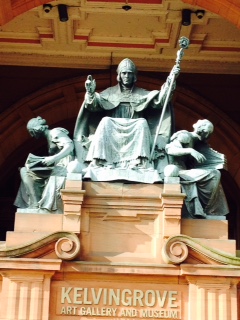
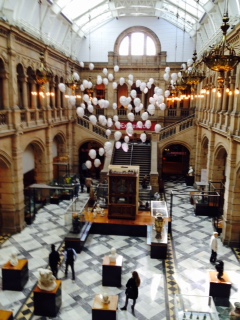
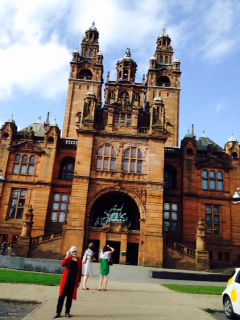
We made our way directly to the Kelvingrove Art Gallery which is an amazing Victorian purpose-built palace designed for presentations of all kinds.

Amazing C19th Victorian palace purposefully designed for an art gallery and celebration space
Amazing Kelvingrove Art Gallery in Glasgow. A C19th Victorian palace purposefully designed for an art gallery and celebration space
Kelvingrove front entrance detail

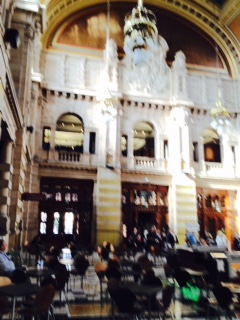
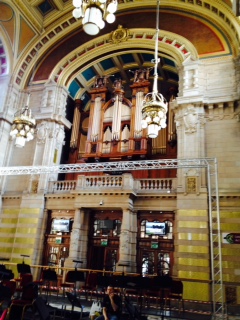
It has a huge hall with pipe organ on the second floor and organ recitals everyday. Installations of all kinds are everywhere and some sort of major production was being staged in the ground floor studio. It is a very happening place indeed.

Front wall of the event space in Kelvingrove Art Gallery and Museum in Glasgow
Pipe organ in the event hall at Kelvingrove Art Gallery in Glasgow. Organ recitals are held every afternoon
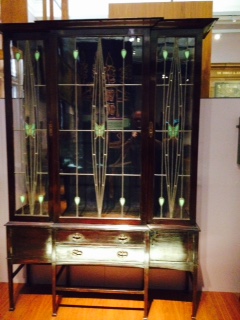
Currently there is a display of the architect and cabinet maker Charles Rennie Mackintosh. This is a stunning cabinet
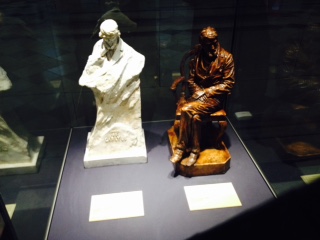
Plaster and bronze sculptures of Thomas Carlyle. He was arguably the C19th's finest essayist, historian and publicist but is little read today. A remarkable man
Plaster and bronze sculptures of Thomas Carlyle. He was arguably the C19th’s finest essayist, historian and publicist but is little read today. A remarkable man
Amazing installation of faces suspended in the main display area.
Very fine sculpture by Gilbert Ledwad, 1932 simply entitled
Very fine sculpture by Gilbert Ledwad, 1932 simply entitled “Garden Piece” at Kelvingrove Art Gallery

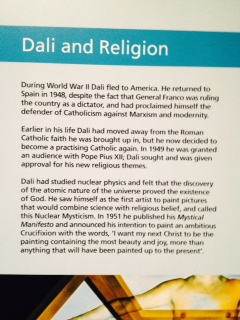
Our goal was to see Salvador Dali’s wonderful Christ of St John of the Cross which  is a stunning treatment of the cosmic impact of the  crucifixion. Spanish born Dali was an unusual figure and produced extraordinary contemporary art but later in life believed that he was the recipient of a vision and turned to some religious themes in his painting. He was received into the Church personally by the Pope at the time who gave his blessing to his religious art work.  This painting has always meant a lot to me and it was wonderful to see it in reality. It is much larger than I thought it would be and a very moving experience.

Salvador Dali:
Salvador Dali: “Christ of St John of the Cross” in Kelvingrove Art Gallery Glasgow

Kelvingrove Dali sources of inspiration info Kelvingrove Dali notes on religion

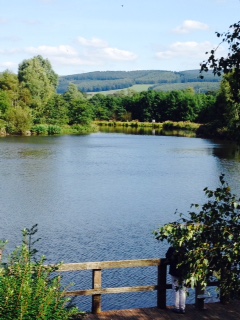
Moving on from Glasgow we drove the M8 South back into England, past Thomas Carlyle’s birthplace and stopped off at the wonderful historical town of Carlisle with its ancient Norman and Gothic cathedral. Below is the sort of scenery we passed on the way to Carlisle on an absolutely gorgeous Autumn day in England

Carlisle a quiet spot

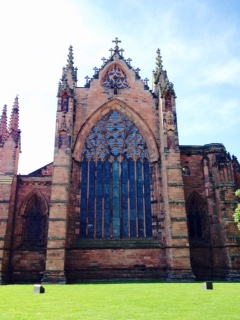
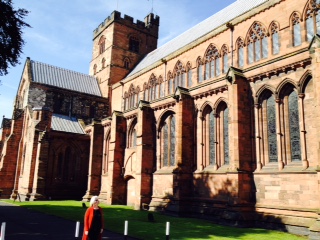
Carlisle cathedral exterior Carlisle cathedral ext 2

Two shots of the exterior of the Carlisle Cathedral in beautiful red stone.

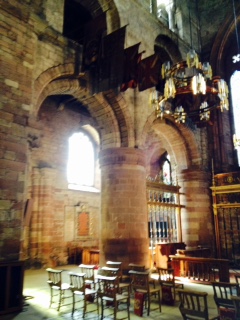
In its first incarnation in the C13th  it was a Romanesque cathedral with the normal “fat” round and shorter columns.  Some of these were broken down for the stones for defence by Cromwell’s men but quite a distinct section remains.

The Norman nave of Carlisle Cathedral with large round columns and round arches remiiscent of Tewksbury C12th
The Norman nave of Carlisle Cathedral with large round columns and round arches remiiscent of Tewksbury. This section is C12th

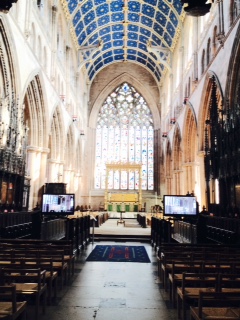
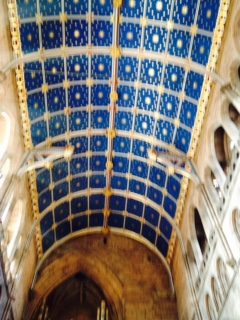
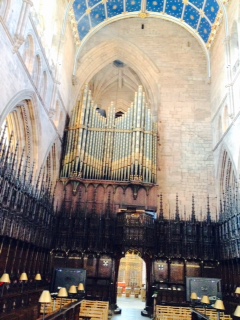
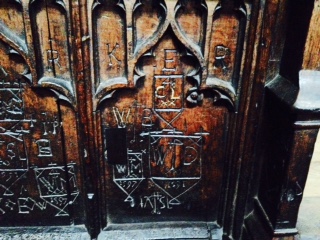
The Gothic section was added in C14th and is restrained and dignified. The nave is relatively short. The sanctuary was covered by a platform today because the local Trinity Grammar School has an academic presentation tonight.  The C16th grammar students have left their mark on the choir stalls with their Etonian like graffiti, names and even family crests.

Carlisle cathedral nave Carlisle Cathedral nave ceiling Gothic Nave and ceiling Carlisle Cathedral organ and choir stalls Carlisle student grafitti

organ, stalls, grafitti in Carlisle Cathedral

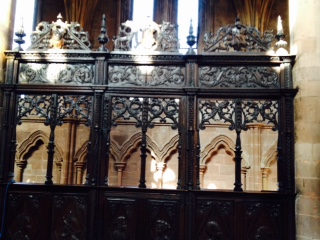
On the back of the ancient choir stalls are wonderful  C16tth paintings, some badly damaged but others in good shape, depicting the twelve apostles and several saints.  Some wonderful carving from Henry VIII’s time remains from Lancelot Salkeld, the last Prior of the ancient Abbey alongside the church. Apparently he kept his job by offering his skills and they are memorable including Henry’s coat of arms and several portraits in wood allegedly of Henry’s forbears (one of whom is the Roman emperor Severus who was of course an African as the carving shows!..(carving was on the other side of the Salkeld screen)

Slacked screen from C15th carved by former Abbot of the Priory after its dissolution. His way of keeping a job under Henry
Salkeld screen from C15th carved by former Abbot of the Priory after its dissolution. His way of keeping a job under Henry
High altar of Carlisle Cathedral

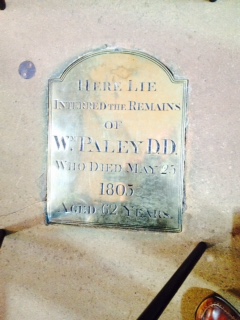
For me a particular treat was the memorial to William Paley, the biologist whose writings on the evidence for creation in defence of divine creation were forrmely required study for all Oxford entrants.  In a way he was the most famous supporter of “intelligent design”. He is buried at Carlisle with his two wives (the first died).

William Paley's tomb in Carlisle Cathedral. Famous for his
William Paley’s tomb in Carlisle Cathedral. Famous for his “Evidences” of creation in the Natural World which was the last word on the subject before Darwin.

The old abbey is still very much in evidence and the crypt is now an excellent tea room. The grounds of Carlisle are peaceful, treed and very inviting.

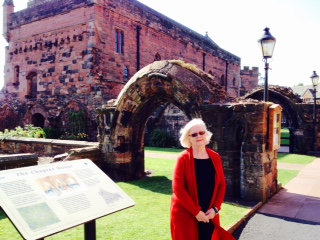
Ann at the door of the old abbey with the chapter house beyond

From Carlisle we drove through the wonderful Lakes District of northern England, draped in late afternoon sun in gorgeous Derwent colours  and we are now happily ensconced in the Crown Plaza ready to fly out early tomorrow morning to Munich, then Singapore then Melbourne.

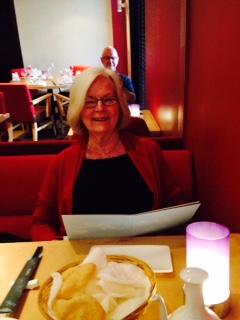
Ann high on Thai at the restaurant of the Crowne Plaza at Manchester Airport. That's me in the mirror taking the photo
Ann high on Thai at the restaurant of the Crowne Plaza at Manchester Airport. That’s me in the mirror taking the photo

So this little pilgrimage comes to an end and I thank the faithful who have followed or tuned in from time to time. We have seen much to digest and ponder upon in the years ahead. We have been both encouraged and dismayed by some aspects of “church”.  We have travelled quite close to political turmoil throughout Europe including terrorism in Turkey and Belgium, Financial brinkmanship and distress in Athens and refugee trauma in Calais, Greece and Germany.  Finally we joined the Queen in Edinburgh to celebrate the longest reign of a reigning monarch. Whatever your views of the monarchy, she has worked hard, long and consistently for the good of others and from our observation, lived relatively simply compared with some of the palaces of other leaders in the past. We  pray God for a safe flight home and give thanks for the privilege of sharing some of this experience with you fellow pilgrims.

Edified by art in Edinburgh and celebrating Queenie’s longest ever reign on the Quintessential royal yacht Brittania

Wednesday 9th September 2015

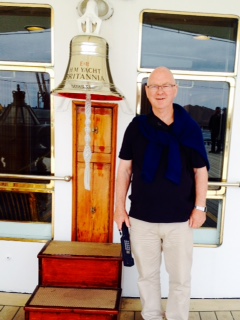
Today we slept in and took things slowly, finally jumping back on the double decker back to Edinburgh where the Queen herself was also coming by train to reopen the Borders Railway line.  We didn’t actually see her at Waverley Station but we did catch a bus from Waverley not long after she left to do the opening.  We drank her health on the former royal yacht Brittania which is moored these days at the Edinburgh docks and can be toured at length.

Prior to the Brittania we wandered around the Scottish National Art Gallery which has an excellent collection of all periods of Western Art majoring obviously in Scottish art but also a very strong collection of Dutch, Renaissance and other European art. As ever artistic tastes vary. I include some of my favourites from Edinburgh. An unknown Flemish artist, Raphael, Da Vinci, Verrochio, Jan Steen, Tiepolo and Turner.

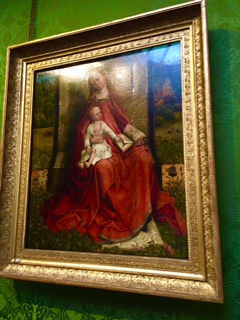
Unknown Dutch artist C15th beautiful Madonna and Child with leaves painted in such a way as they look like needlepoint.
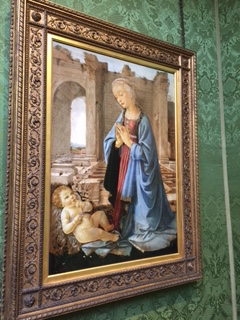
Verrochio C15th Italian: The Virgin adoring the Christ Child. This was one of Ruskin's personally owned and favourite paintings donated to the Edinburgh Gallery
Verrochio C15th Italian: The Virgin adoring the Christ Child. This was one of Ruskin’s personally owned and favourite paintings donated to the Edinburgh Gallery
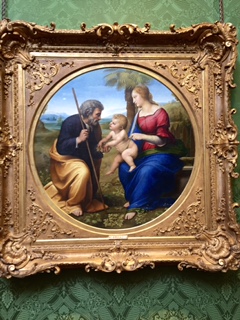
Raphael: The Holy Family..interesting to me because Joseph is hardly ever seen in art. On loan from the Bridgewater collection
Raphael
Raphael “The Bridgewater Madonna” …obviously from the Bridgewater collection on loan to Edinburgh. Apparently Raphael painted two different backgrounds, one a landscape and eventually removed both and it is all black!
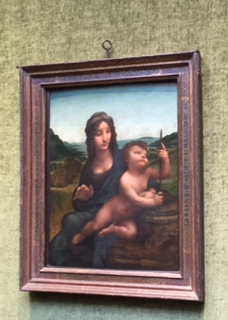
Leonardo Da Vinci: The Madonna of the Yard Winder, painted for Floriband Robertal, a French Minister interested in all things Italian.
Jan Steen 1670: A School for Boys and Girls! I hope my classes in term 4 do not look like this!
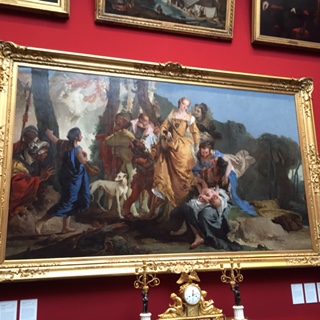
Tiepolo: The Finding of Moses, almost humorous in his use of contemporary comic faces known to some.
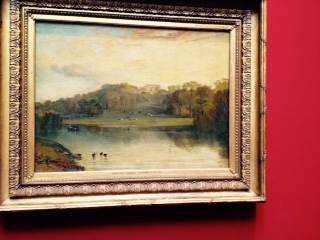
John Turner: Somer Hill

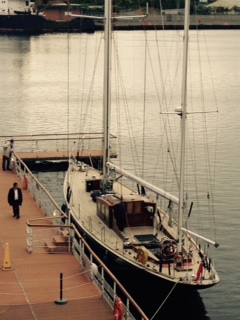
We then took the No 22 bus to the Docks to find the Brittania.  It is an amazing exhibition and includes all levels of activity on the boat from the engine rooms to Queen’s personal apartments. An independent trust now runs the Brittania and they have a working staff including full time chefs who run high class business dinners for profit.  Throughout there are many photos of royal events involving the yacht as well as the royal racing yacht which was raced with success by Prince Phillip and has now been completely restored. The royal barge is also stored in the same area.  We finished the afternoon in the tea room on the top deck looking out over the water. The weather held and it was a very pleasant way to celebrate the longest ever reign of a British monarch.

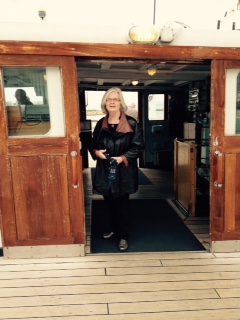
Ann on a boat! actually a boat severely anchored in three places for ever. Check the new coat!
Britain casual deck for games, sunbathing, even a portable swimming pool apparently
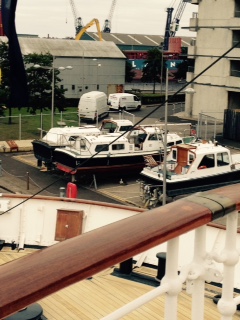
More royal boats!
More royal boats!
Close up of the royal lounge room carpet on the Brittania ..great taste..same Persian carpet as Prideaux Castle in Berwick!
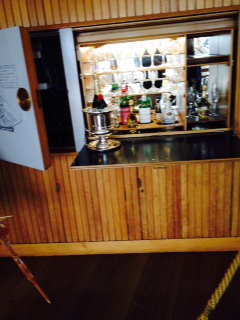
The bar in the Royals' sunroom...some good stuff here!
The bar in the Royals’ sunroom…some good stuff here!
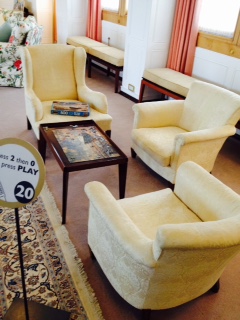
The ante -room to the royal lounge room ..together they could entertain 200 people. This set up is for the card players
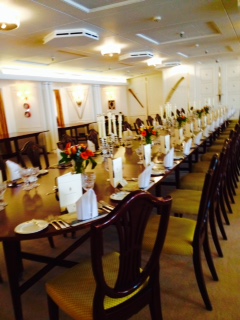
The royal dining room set for 56!
The racing yacht which won many races with the Duke and Charles at the helm at various times

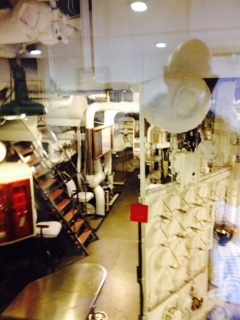
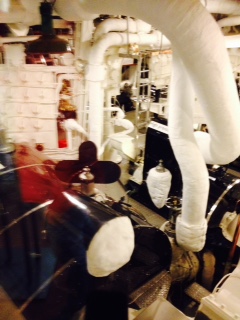
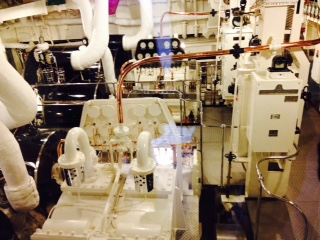
Brittania Engine room 1 Brittania engine room 2 Brittania engine room 3These are shots of the spit and polish royal engine room for Brian Brown, former Chief Engineer on many a  Merchant Navy and Shell ocean going ship for many many years.

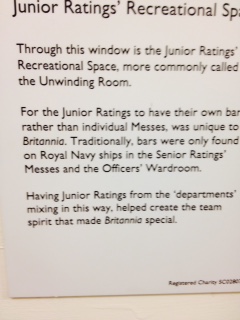
Brittania ...how the Junior rating sailors were cared for; they also did not have to wear their hats on board to avoid the royals having to return salutes; whenever a royal appeared they had to stand perfectly still and look straight ahead and all their deck cleaning etc had to be done by 8.00am
Brittania …how the Junior rating sailors were cared for; they also did not have to wear their hats on board to avoid the royals having to return salutes; whenever a royal appeared they had to stand perfectly still and look straight ahead and all their deck cleaning etc had to be done by 8.00am
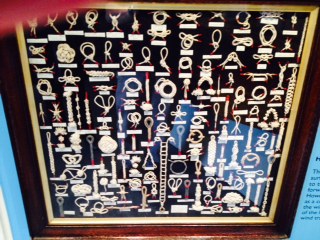
Just a few knots a sailor needs to know
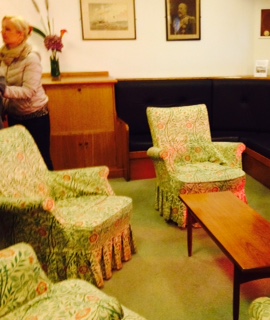
The Officer's lounge
The Officer’s lounge
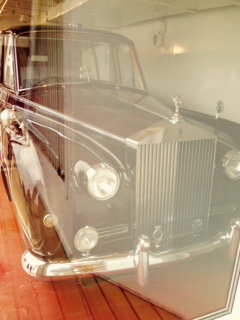
The Queen's Rolls Royce travelled with them to other lands. the bumper had to be removed to get it into the space
The Queen’s Rolls Royce travelled with them to other lands. the bumper had to be removed to get it into the space
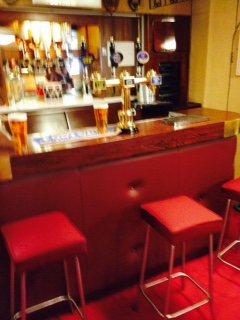
Security officers bar ...they had spirits, the sailors only beer. But officers had to pay for their drinks
Security officers bar …they had spirits, the sailors only beer. But officers had to pay for their drinks
The Old Brittania longer!
The Old Brittania donger!
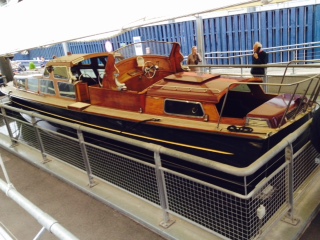
The Royal Barge..still in use from time to time I think
A Toast on the Brittania to the longest reigning monarch of England on our last day in Edinburgh and second last in Europe. We still seem to be friends...quite amazing really!
A Toast on the Brittania to the longest reigning monarch of England on our last day in Edinburgh and second last in Europe. We still seem to be friends…quite amazing really!

Hiding out in Holyroodhouse and sussing out St Marys Cathedral in Edinburgh

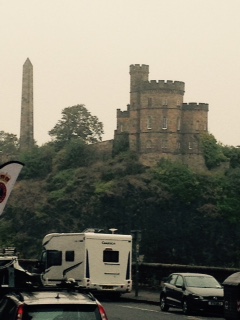
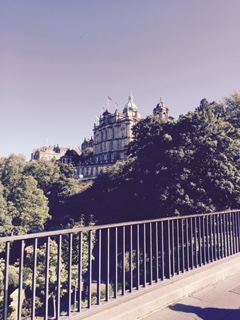
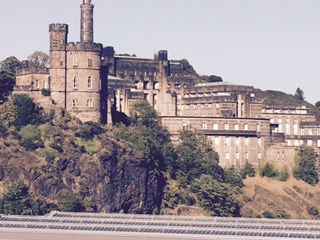
View once again form Northbridge looking towards the Edinburgh monument and a castle, on the way to Holyroodhouse

Tuesday 8th September

This morning we once again jumped aboard our trusty double decker bus and ventured back into Edinburgh and walked down the Golden mile towards Holyroodhouse, the Queen’s official Scottish residence.

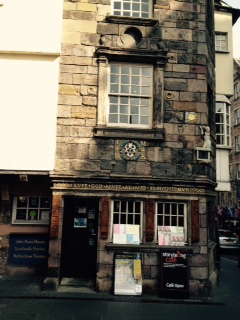
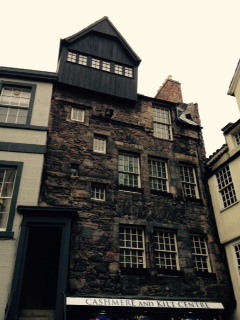
On the way we were waylaid first by the two oldest houses in Edinburgh, one possibly lived in by John Knox;

One of two of Edinburgh's oldest houses ..this one possibly lived in by John Knox
One of two of Edinburgh’s oldest houses ..this one possibly lived in by John Knox
The second of two very ancient houses in Edinburgh on the Royal Mile

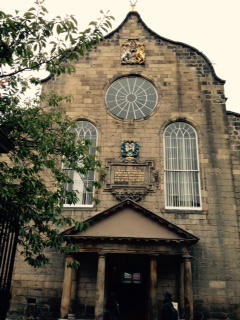
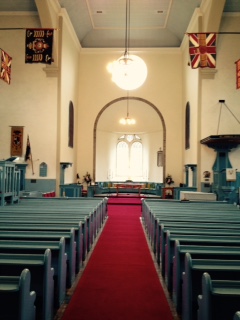
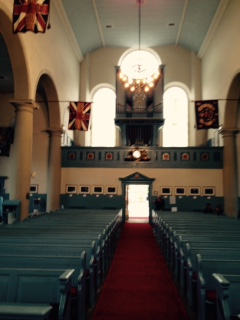
and secondly  by Canongate Presbyterian Church, the chapel of Holyrood. The all blue interior was a bit startling at first but it kind of grows on you after a time. It has been the place of many historical events including the Scottish crowning of Charles 1 as King of Scotland (although we note that the Holyrood Abbey also claimed that honour!)

Canongate Kirk, the Kirk of Holyrioodhouse. Built by King David 1 in 1690 after King James VII vacated the Scottish throne. Charles the 1 was crowned King of Scotland there. At the Reformation in 1560 the church became known as the Kirk of Holyrioodhouse.

Holyrood cannongate church int 2 Holyrood Cannongate int 2

View from entry to the sanctuary of Canongate Kirk  and, right, view from sanctuary to gallery

Holyrood cannongate int 3

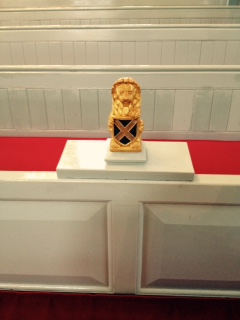
royal fitting on one of the pews at Canongate Kirk

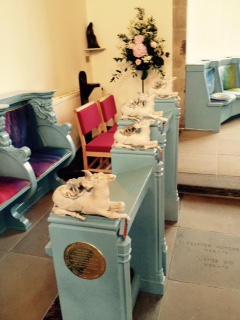
Unusual ornament on prayer desks in Canongate Kirk
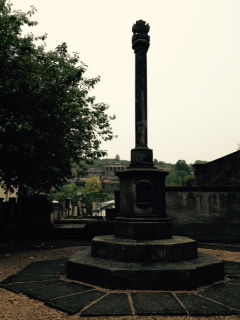
Ancient C14th cross next to Canongate Kirk

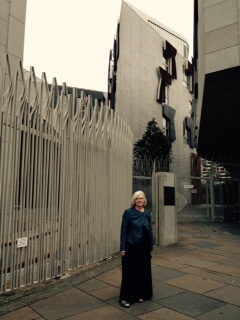
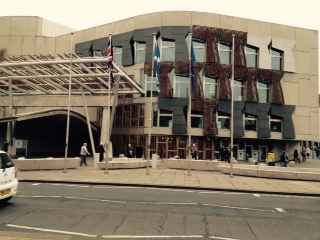
Thirdly we were waylaid by the extraordinary architecture of the new Scottish Parliament…like Fed Square in Melbourne Edinburghians either love it or hate it.

Holyrood Parl 3 Holyrood parl 2 Hopkins quote Holyrood Parl House 1

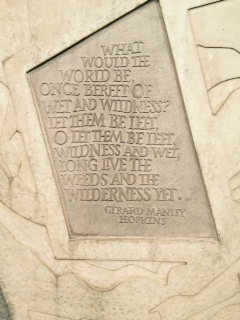
The new Parliament House replaces the old castle like building on Carlton Hill and it looks from the outside like a collection of separate buildings loosely joined together. The irony is greater because the shot above faces directly on to ancient Holyroodhouse. The quote from wonderful Jesuit poet Gerard Manley Hopkins is one of many embedded in the wall of Parliament House which you can read as you walk along the footpath. The quotes include a  bitter appeal from Sir Walter Scott about how if we don’t like the parliamentarians we can sack them but none has nails long enough to touch the parliamentarians in London!

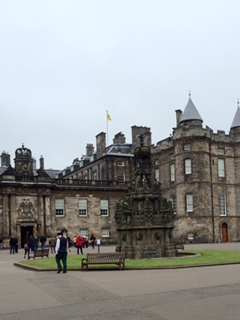
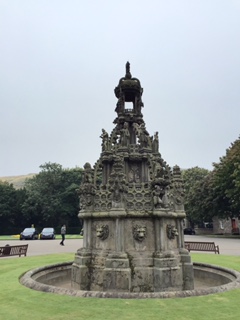
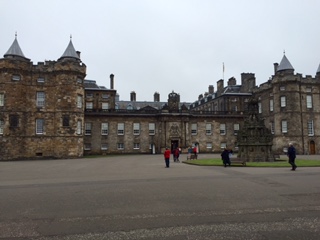
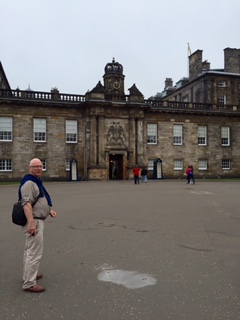
We finally made it to Holyroodhouse and once again enjoyed royal hospitality.

Holyrood ext 1 Holyrood ext 3 fountain Holyrood ext 2 Holyrood ext 4

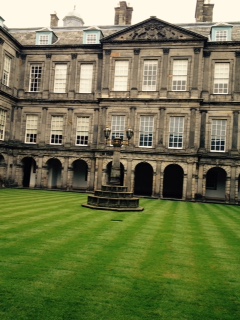
There is no photography in the house so were limited to external  shots  as above and shots of the old abbey, the courtyard and the garden.

Internal courtyard of Holyroodhouse...pretty dull really!
Internal courtyard of Holyroodhouse…pretty dull really!

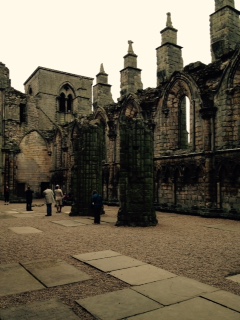
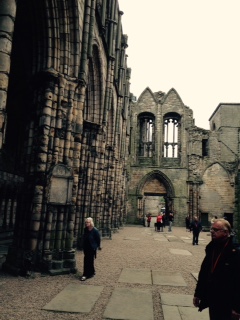
Holyrood abbey 1 Holyrood abbey 2

The ruins of the C12th Abbey of the Holy Rood (1128), dissolved by Henry VIII.

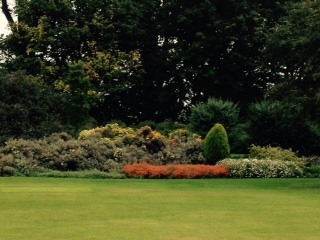
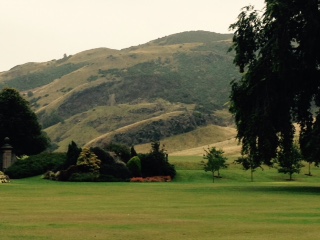
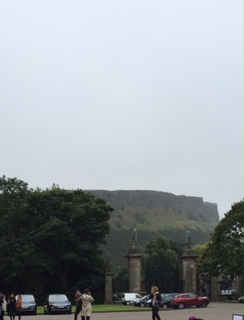
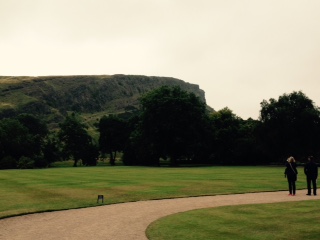
The garden is impressive…leading up to and blending in with the surrounding grass covered hills right on the edge of Edinburgh. It is an exceptional outlook from this side! on the other side, the city and the new Parliament House!

Holyrood garden 1 Holyrood garden 2 Holyrood mountain above the palace Holyrood garden 3

The  C15th House itself has seen a lot of history, some of it bloody especially with regard to the murder of the Italian secretary of Mary Queen of Scots …the spot is still marked on the second floor!  The internal rooms are dark with wood panelling everywhere and tapestries on most walls.

This is the sort of stuff that went on from time to time at Holyroodhouse!

The furniture is historic and rightly looks “tired”. Although the Queen comes to Holyrood for a week in Summer to have official engagements the reality is that Holyroodhouse is not a working palace like Buckingham Palace. She did entertain Pope Benedict here and he gave her a replica of the Charlemagne Lorsch Gospels complete with a replica ivory front and back cover. The three bits of the original are in the V & A, the Vatican and Romania! The feel of Holyrood is much more museum like with films of royal children and some very interesting material relating to Mary Queen of Scots and Bonnie Prince Charlie (including his two very small and smart pistols!). The long gallery is filled with a vast array of portraits of royals and other significant historical figures from Scottish history. After such a historical diet we needed to try out the Queen’s latest shortbread in the royal cafeteria!

Ann enjoying a lunch fit for a Queen!

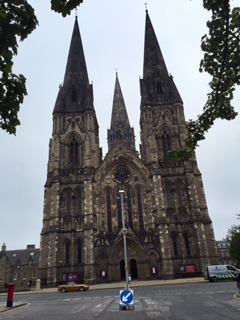
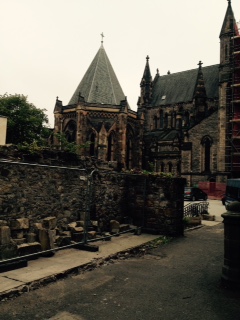
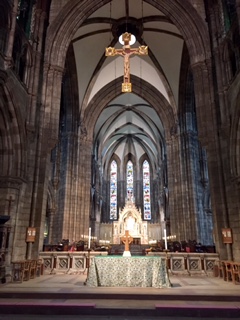
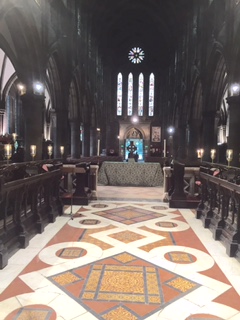
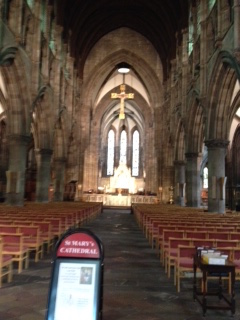
After lunch we walked across to the other side (literally) of Edinburgh to locate the Scottish Episcopal Cathedral of St Mary’s in the West End. (I had no shoes and complained until I met a man who had no feet…that’s how we felt after this trek!) Following the Reformation St Giles Cathedral lost then regained then lost its official “cathedral” status and is now a reformed cathedral of the Presbyterian Church of Scotland. This left Episcopal folk without a cathedral for some centuries until a massive donation from one family enabled the Episcopal church to commence, rightly or wrongly a traditional neo-Gothic cathedral in the late C19th. It is a huge plant including many surrounding halls and offices. Internally it is a restrained and dignified worship space right in the midst of a vast housing area of Edinburgh.

Holyrood St Marys West face Holyrood St Marys ext Holyrood St Marys sanctuary Holyrood St Marys nave to sanctuary Holyrood St Marys Scottish Episcopal intC19th St Mary’s Scottish Episcopalian Church in Edinburgh

Excited in Edinburgh

Monday 7th September 2015

Today we left the leafy avenues of Harrogate and rejoined the M1 travelling north towards Scotland on yet another balmy sunny blue sky Summer day in Autumnal England.  We travelled wistully past the mighty Durham Cathedral perched on its hill on the Wear River and equally regretfully past the Holy Island of Carnaervon protruding above the horizon from the very blue North Sea. Our goal was Edinburgh and it was a beautiful drive as from Newcastle onwards there were steadily increasing views of the ocean and northern England and Southern Scotland’s rolling green pastures and sheep of all kinds.

We landed in Edinburgh, found our Premier Inn in Edinburgh East with the help of the faithful satnav and then ventured by bus into the middle of Edinburgh on yet another perfect day weatherwise in the UK.  Edinburgh was in festive mode in the sunshine with a rock band performing in the square outside the Art Gallery, and the Scots sunning themselves on the lawns in the old glacial valley (now beautiful lawns) below the two street ridges which are the two major shopping drags in the city.

View of the ocean from North Bridge in Edinburgh
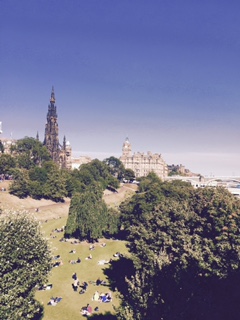
View from the Art Gallery square in Edinburgh with locals sun-baking on the lawns in the
View from the Art Gallery square in Edinburgh with locals sun-baking on the lawns in the “valley” below street level and Scott’s monument over all
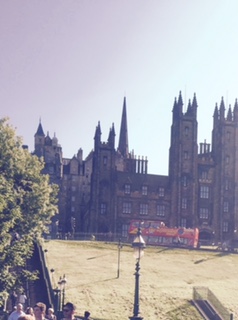
View of Edinburgh university from George St Bridge next to the Art Gallery
Neo-Gothic buildings of Edinburgh University

We have been in Edinburgh previously, visiting the Castle and being amazed by the Scottish Crown jewels as well as visiting a school and doing some shopping in Princes St. I think 17 years ago I was less interested in architecture than I am now.  This time around I have been amazed by the Gothic splendour of St Giles Cathedral in the Royal Mile, the Classical and neo-Gothic towers and domes of the University and the older C17th homes in amongst the newer buildings. All of this set against the grass covered surrounding hills and vistas of the ocean beyond. There is a vibrancy and energy about the city which is very attractive. I have to say though that there were more beggars on the streets of Edinburgh than any other European city we have visited. This was disturbing and heart breaking. The folk on the street we approached for direction were unfailingly friendly and helpful. It was quite an uplifting afternoon.

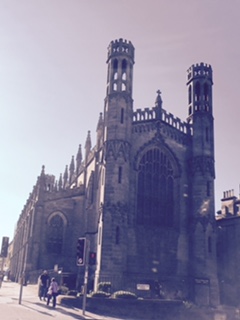
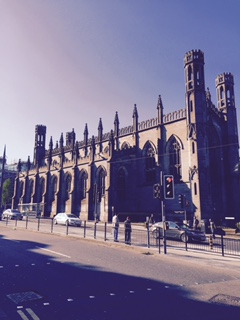
C19th Neo-Gothic Scottish Episcopal church of St Paul and St George in Edinburgh
Another view of St Paul's and St George's Scottish Episcopalian Church
Another view of St Paul’s and St George’s Scottish Episcopalian Church
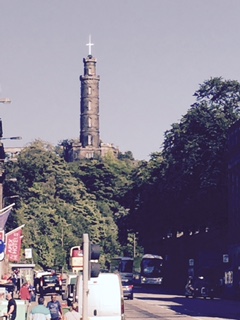
Scottish National monument and Nelson monument on Carlton Hill in Edinburgh
A closer  view of the monument
A closer view of the monument
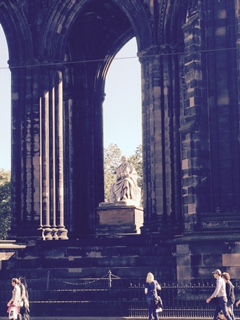
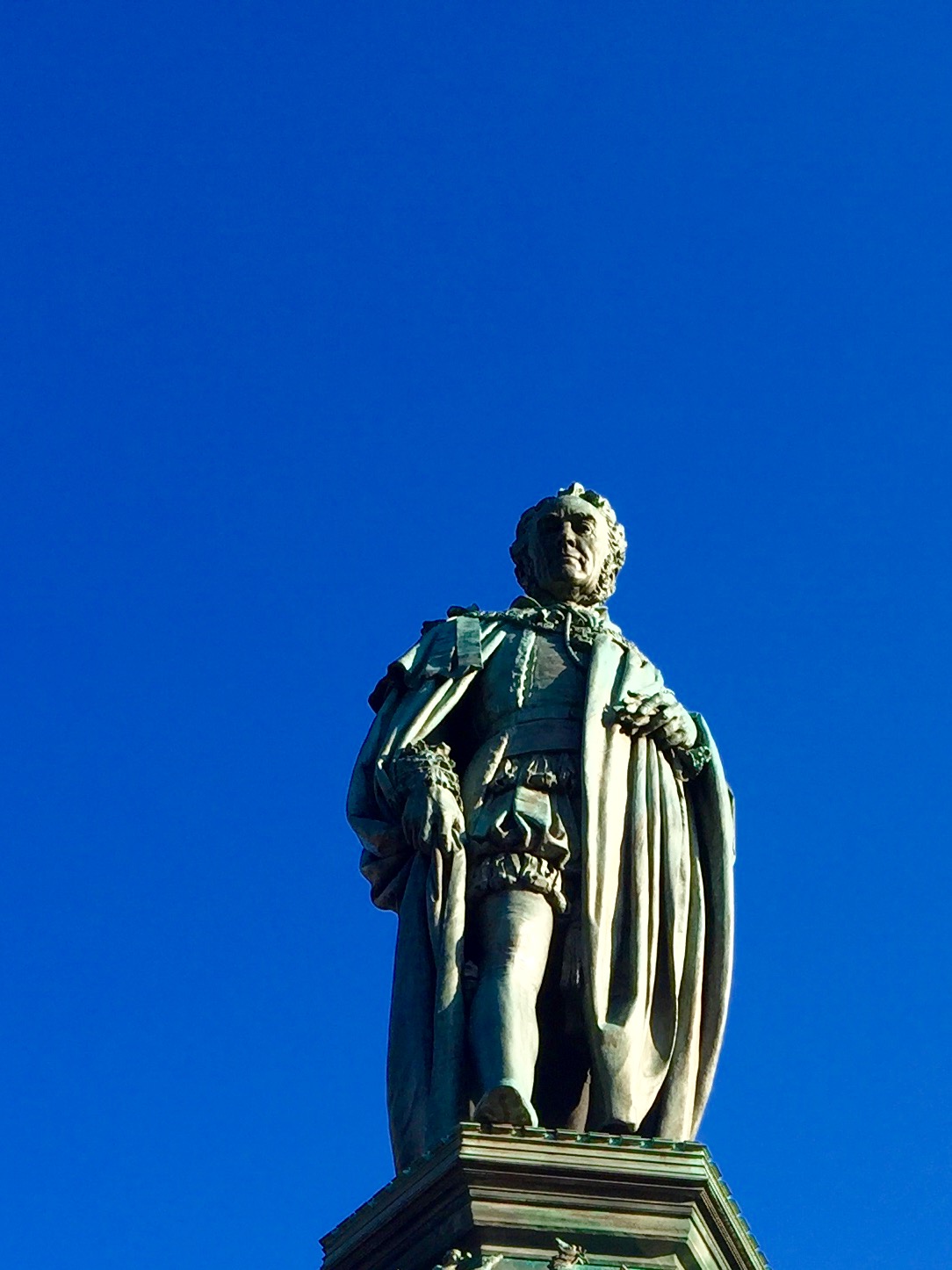
Sir Walter Scott is everywhere. This monument in Princes St is absolutely huge. Scott's work as a novelist, historian, creator of clans, politician and statesman cannot be overestimated in the formation of modern Scotland
Sir Walter Scott is everywhere. This monument in Princes St is absolutely huge. Scott’s work as a novelist, historian, creator of clans, politician and statesman cannot be overestimated in the formation of modern Scotland
Another monument to Scott looking down at us from the square outside St Giles Cathedral
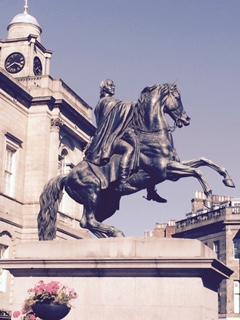
Edinburgh's Welllington monument. (There is also one in Glasgow. The Scots are happy to celebrate English heroes ..they just want their independence also recognised.
Edinburgh’s Welllington monument. (There is also one in Glasgow. The Scots are happy to celebrate English heroes ..they just want their independence also recognised.

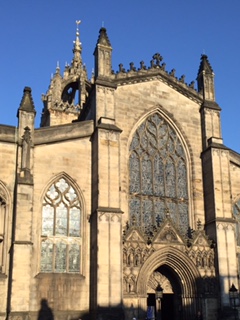
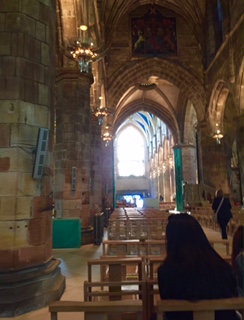
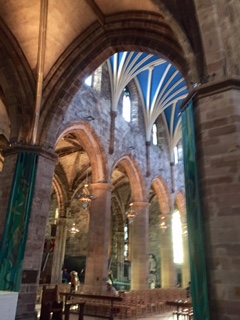
The major cathedral in Edinburgh is St Giles Presbyterian Cathedral in the Royal Mile. It is a very large traditional Romanesque/Gothic cathedral with many interesting modernising features and of course now sitting firmly in the Reformed tradition with many catholic features either removed completely or sidelined.

St Giles Presbyterian Cathedral in Edinburgh

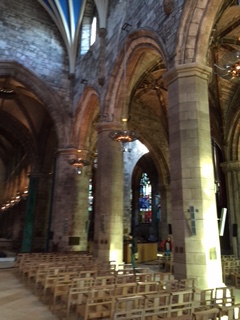
St Giles Cathedral is remarkable for the transformation of its interior following the Reformation.  Originally a C12th Romanesque church  it was transformed into a Gothic structure in the C14th with the result that there is an interesting mix of columns supporting the structure.

Hard to see in pic but the column on the left is shorter and much fatter than the two on the right which are later and inspired by Gothic design
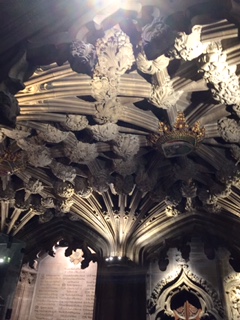
Ancient Gothic ceiling bosses in vestry room of St Giles cathedral

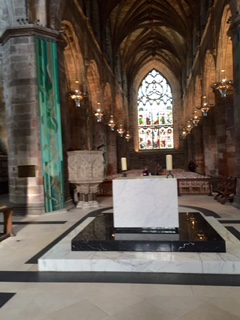
Following the Reformation a massive change took place in the sanctuary of St Giles with all of the Sanctuary furniture being removed completely..high altar, statuary, images, rood screen and reredos as well as choir stalls. Some remnants of this furniture is scattered around the cathedral and in their place are chairs for worship with a new modern communion table placed in the centre of the crossing. Elsewhere other elements of pre-reformed architecture including various side chapels with tombs of church benefactors etc have been simply partitioned off and left as historical remnants.

Modern communion table in the very centre of St Giles Cathedral. Stark, simple and highly effective

Edinburgh St Giles startling entrance feature

This is the illuminated Celtic carving which welcomes you into the cavernous St Giles Cathedral. It is a good mix of ancient and modern and looks like a very effective worshipping space. The following photos are various aspects of the interior. It was quite dark inside so difficult to photograph.

Edinburgh St Giles view from centre to front A view from the centre to the front door with massive Romanesque pillar on the left

Edinburgh St Giles ceilingAmazing blue painted ceiling in the nave shows off the ancient fan vaulting

Edinburgh St Giles another angleScattered in the aisles in suitable places are former furniture pieces including the old wooden pulpit, the reredos, choir stalls and prayer desks

Hard to see but this photo has the cleared out sanctuary now filled with chairs and magnificent Victorian stained glass
Hard to see but this photo has the cleared out sanctuary now filled with chairs and magnificent Victorian stained glass; ;Unlike any former Gothic cathedral we have seen ..the Scots have simply solved the English rood screen problem by removing it altogether
View of the classy new choir stalls quite close to the centre of the action

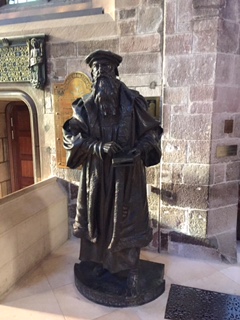
When I studied Church History Reformation we focussed on the English, German and Swiss reformers and paid little attention to John Knox and yet he was a key figure in Scottish history. Because of the at times anti English pro French state of Scottish politics and the strength of the Stuart claim to the English throne including the claim of Mary Queen of Scots there was every chance that Scotland could become a Catholic stronghold. John Knox had “trained” in England during the reign of Edward VI and was an influence on the English prayer book. When Mary came to the throne after the death of Henry VIII Knox fled to Switzerland and studied with Calvin. Returning to Scotland he became a fierce reformer transforming the nation and opposing Mary Queen of Scots rule. He gave his life to this course and permanently changed the understanding of the Christian faith in Scotland. He is honoured in St Giles with a major statue

Statue of Reformer John Knox in St Giles Cathedral Edinburgh
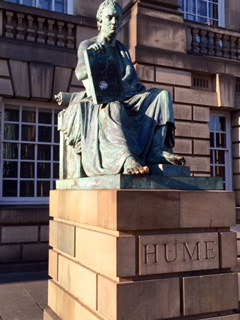
And here is John Knox's future opponent. David Hume was the darling of the C18th Enlightenment and his devastating critique of the intellectual basis of Christian faith has struggled to find adequate rebuttal even today. Hume was not aggressive towards Christianity as a person, apparently  being a charming, witty and very approachable person and not necessarily opposed to worship. But his modern day followers especially the new atheism still rely on his arguments. Scotland has produced so many intellectual giants in many areas..Economics, theology and especially philosophy.  I personally value James Denney's writing about the Cross as much as any book I own.  Three cheers for Scotland and their thinkers..they keep us honest!
And here is John Knox’s future opponent. David Hume was the darling of the C18th Enlightenment and his devastating critique of the intellectual basis of Christian faith has struggled to find adequate rebuttal even today. Hume was not aggressive towards Christianity as a person, apparently being a charming, witty and very approachable person and not necessarily opposed to worship. But his modern day followers especially the new atheism still rely on his arguments. Scotland has produced so many intellectual giants in many areas..Economics, theology and especially philosophy. I personally value James Denney’s writing about the Cross as much as any book I own. Three cheers for Scotland and their thinkers..they keep us honest!

Rip-roaring time in Ripon and whistling in the sun in Whitby

Sunday 6 September 2015

Today we awoke to blue skies and a gorgeous Summer day in Yorkshire making Autumn wait just a little longer.  We made our way to the 10.30am family eucharist at Ripon Cathedral, the mother church of the Diocese of West Yorkshire and the Dales.

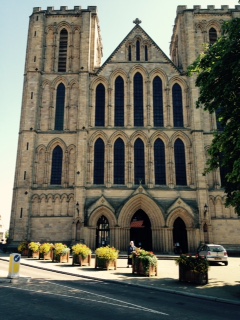
Ripon Cathedral exterior. The towers lost their towers after one of them fell through the roof in 1660! they have never been replaced.
Ripon Cathedral exterior. The towers lost their spires after one of them fell through the roof in 1660! they have never been replaced.

This is the largest diocese in England and covers huge cities like Leeds, Harrowgate, Bradford, Wakefield and Huddersfield, a total of 2.5 million folk. Today’s service was their monthly “open doors service” deliberately aimed at young families and seekers. They also welcomed back recently baptised children and their families for a welcome and gift from the congregation.

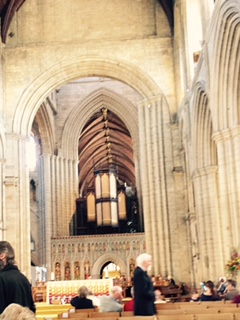
Ripon Cathedral nave at the end of the 10.30am eucharist service

The service was lead by Canon Ruth Hind and the preacher was Canon Elizabeth Sewell. The sermon was based on the Mark 7 reading of Jesus reaching out to the Syro-Phoenician woman…a curious lectionary coincidence considering the refugee avalanche convulsing Europe at this very moment.  Canon Hind gave a brief introduction to the issue and asked the question did Jesus change his mind about his mission when challenged by the Syro-Phoenician woman’s insistent request for help? Canon Hind said no he didn’t but it may be that Jesus adjusted his theology…the idea that Jesus had a developing theology was in itself left hanging somewhat.

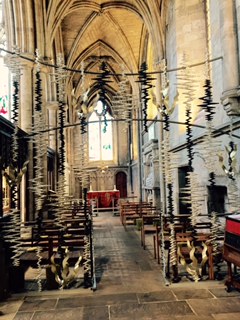
This brief introduction was followed by calling the congregation to get up from their seats and visit some of the five prayer centres around the church.  These contained a series of quite confronting refugee situations occurring currently and craft or artistic or symbolic activities designed to force folk to come to terms theologically and practically with current events.  It was an unusual thing to see in a staid middle class congregation but most of the congregation became involved although some stolidly sat it out grimly!

The service had a mix of new and old music, and sometimes new words with old tunes;  a piano and small group was used in the main but the organ was used first and last. It was an impressive service and carried quite a punch with me given the current crisis in Europe. This is now the fourth Sunday cathedral service we have enjoyed (St Paul’s in London; Gulldford Cathedral, St Albans cathedral, and now Ripon Cathedral as well as Holy Trinity Brompton.  All five services have been engaging, energised and challenging as well as all being totally different. It has been an interesting and edifying experience.

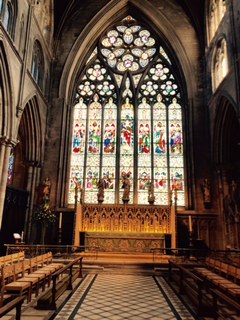
The Cathedral is one of England’s most ancient with a C7th Saxon crypt all that is left of the stone church built by Wilfrid in 672, the Norman abbey founded in 1132, Gothic towers built in 1220 and the nave rebuilt in 1502-5. It is a beautifully maintained and elegant cathedral with Victorian stained glass windows at the lower level, clear glass at the top level. The C20th pulpit is marble and metal and sits a little awkwardly.  The stone rood screen has a clear view to the main altar with the ancient quire stalls behind it. Both side chapels have modern make overs, one of them a 1970s “glam” look designed by silversmith Leslie Durbin. The strength of this cathedral it seemed to us is that it also very much the Ripon parish church and it is alive and kicking.

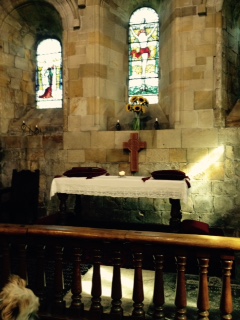
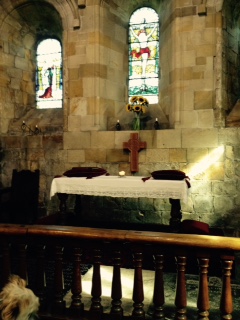
Interior of the stone sanctuary of St Mary's church at Whiby; this is the only uncluttered part of the interior ..the rest is a nightmare and you can see why they cleared out these churches in the C18th.
The simple main altar at Ripon Cathedral
1970's redecoration of one of the side chapels at Ripon Cathedral to highlight the lightning like effect of the coming of the Holy Spirit.
1970’s redecoration of one of the side chapels at Ripon Cathedral to highlight the lightning like effect of the coming of the Holy Spirit.
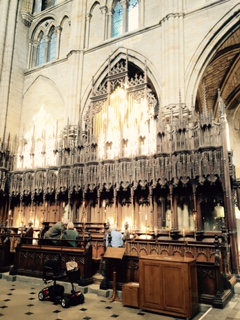
Ancient choir stalls and misericords in the old quire behind the rood screen
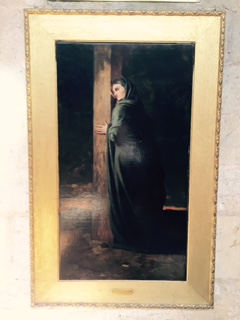
Unusual painting of Mary Magdalene, by Thorburn located in a side chapel of Ripon Cathedral
View from the quire back through the rood screen to the front of Ripon Cathedral
C7th crypt ..the only remaining part of Wilfrid's Saxon church at Ripon
C7th crypt ..the only remaining part of Wilfrid’s Saxon church at Ripon
The second more traditional side chapel but also with some modernising features

We emerged into the Yorkshire sun and journeyed eastwards through the wonderful northern moors

Whitby Yorkshire moors

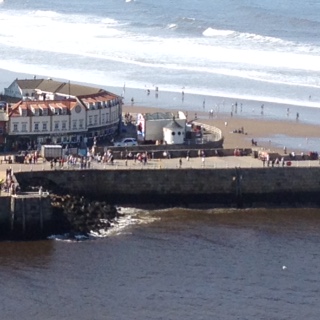
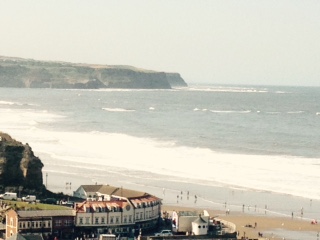
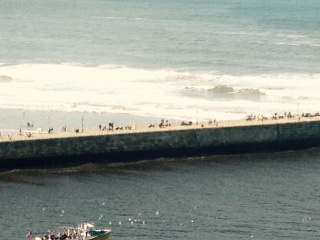
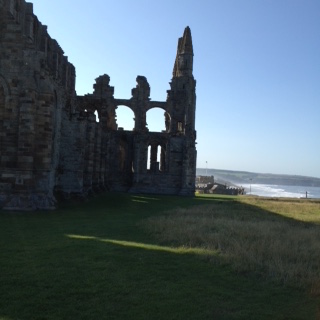
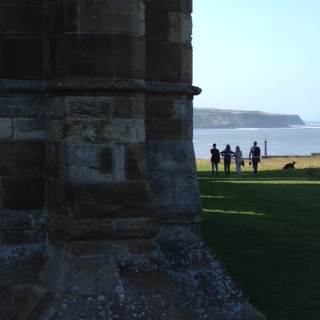
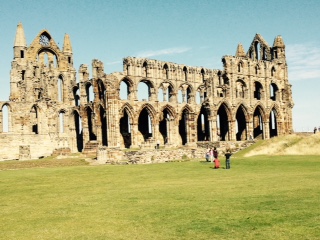
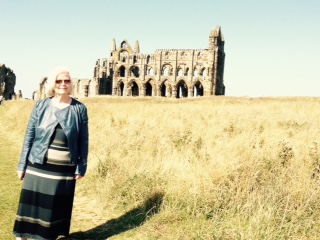
and beautiful little villages  to the gorgeous coastal town of Whitby at the mouth of the Esk River. The Abbey ruins still stand proud  and high on a beautiful headland in Whitby overlooking the beautiful village of Whitby which is built around the mouth of the Esk River. From the abbey 199 steps above the town you can look down on the village of Whitby, the winding Esk River full of boats, the busy harbour, the sandy foreshore  with folk swimming, the high rolling surf, the narrow heads, the headland beyond and to the south the rollling Yorkshire fields and hills.

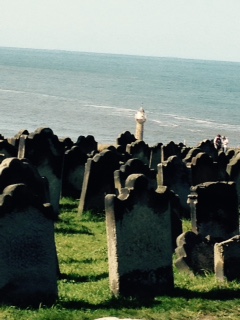
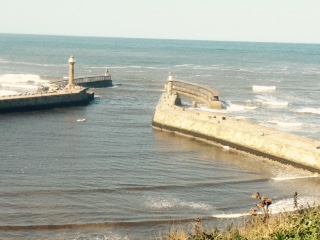
Whitby harbour and foreshore Whitby headland Whitby lighthouse beneath graveyard of St Marys church Whitby narrow heads at the mouth of the River Esk Whitby on the Esk River

The surf was high and was very inviting. The contrast between grass, surf, ocean, river, town and abbey amazing

Whitby surf 2 whitby view 2

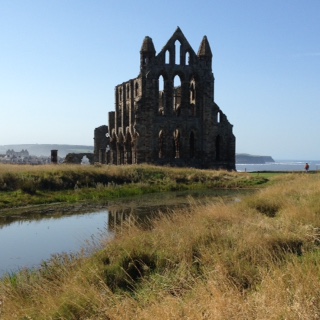
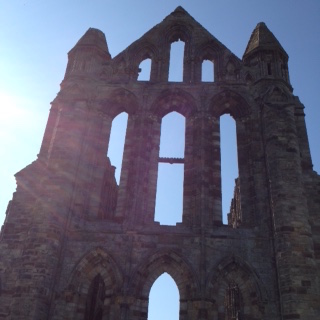
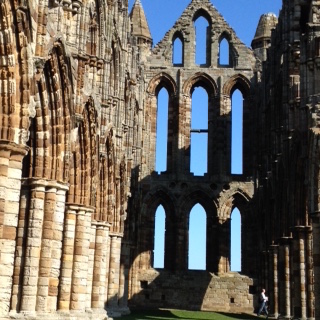
The  ancient ruins of Whitby Abbey, destroyed, as was the Fountains Abbey of Ripon,  by Henry V111’s dissolution of the monasteries still stands proudly today.  Whitby as we all learned in ThL Church History was the site ot the first English synod when the British church had to decide between ancient Celtic Christian customs and Western Roman customs led by the Pope’s emissary Augustine (not to be confused with Augustine of Hippo of the Confessions.) As usual Rome won the day and Wilfrid became a bishop and the Celtic Christians retreated to the wilds of Wales  and Ireland and the islands of Skellig off the coast of Ireland.  But the Abbey ruins stand tall and no doubt could tell many stories.

Whitby abbey 1 Whitby abbey 2 Whitby abbey 4 Whitby abbey 5 Whitby abbey 6 Whitby abbey 7 Whitby abbey 8 Whitby abbey 9

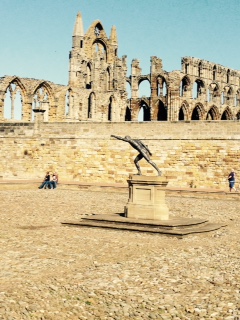
It is a simply stunning sight on a blue sky day! There is also a youth hostel serving light meals and a stunning museum of artifacts.  A lot of the abbey remains and it is an inspiring and powerful sight to behold and also a place of peace and meditation. A new feature is the setting up of a copy of the Borghezi Gladiator (now in the Louvre) statue in the  entrance to Whitby Abbey replacing one that was formerly set up by Hugh Cholmley who developed the old Abbot’s house into an C18th mansion.  No one knows what happened to Cholmley’s model.  Strangely enough alongside this is a touristic mix of Gothic Dracula stuff because apparently Bram Stoker was inspired by Whitby Abbey to create the scene for his Transylvanian hero. Indeed I did see a number of black crows flapping about with the seagulls!

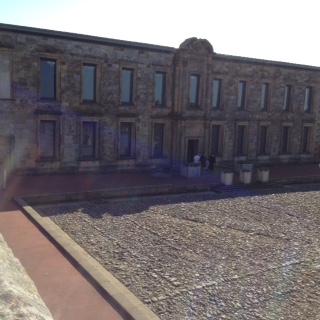
Rather sad looking C18th Cholmondly mansion at Whitby Abbey but inside it is now the most stunning museum of Whiby artifacts. Amazing transformation!
Rather sad looking C18th Cholmondly mansion at Whitby Abbey but inside it is now the most stunning museum of Whitby artifacts. Amazing transformation!

Whitby gladiator statue in Whitby information centre

Bronzed gladiator in the entrance to Whitby Abbey replacing the Cholmondly statue that disappeared who knows when. The original is in the Louvres and is frequently copied.

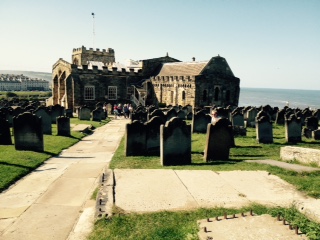
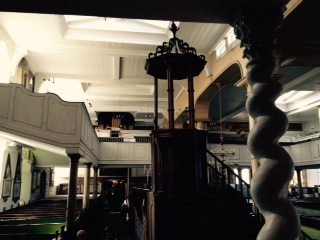
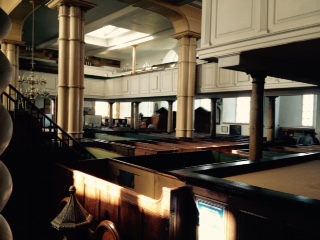
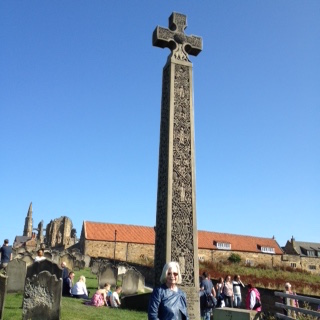
Standing close by the Abbey on the same hill is C12th St Mary’s church surrounded by a vast graveyard which includes an ancient Celtic cross.  The church, unlike many early churches in Britain has not been Gothicized and retains its crowded box pews, galleries, three tiered pulpit and very ancient stone sanctuary. At first it looks like a junk shop being so crowded with furniture but after a while you get the feel of it.

Whitby church sanctuarythis sanctuary  is the only uncluttered part of  St Mary’s …the rest is out of control and you can see why these churches were cleared out in the C18th.

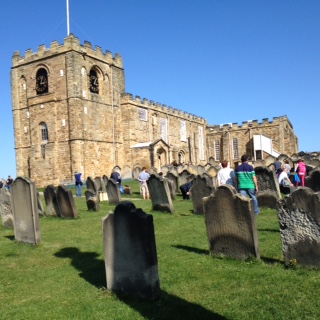
Exterior of St Mary's church in Whiby from the graveyard
Exterior of St Mary’s church in Whiby from the graveyard
St Mary's church Whitby from the Abbey
St Mary’s church Whitby from the Abbey
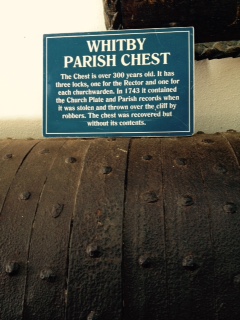
The Parish Chest at Whitby no honour among thieves!

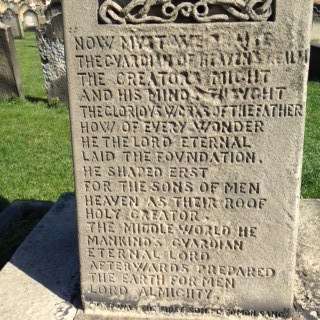
The following shots show the chaos of the boxed pews, the three storied pulpit and the gallery above. It is claimed they could fit 1000 in. I doubt that! The other shots are of “Caedmon’s cross and inscription”.

Whitby church interior 3 Whitby church interior 4 Whitby church sanctuary Whitby cross Whitby cross message

On a number of occasions on this pilgrimage I have found places of deep peace, thoughtfulness and spirituality. This is one of those places and they are needed!

A place to be still, to pray, to clear the mind, to be close to God, to love, to find meaning.

We returned home to Harrogate via  a different even more beautiful road through the Northern moors, seeing the huge hole of Horcum in the ground at NorthMoor National park…was it a meteorite? This is a quite spectacular depression in fact caused by “spring-sapping” where water wells up and gradually eats away the rock above. It is still continuing and has created a humungous depression which is quite awe-inspiring!

High end Literature in Haworth

Saturday 5th September 2015

We had a quiet beginning in Harrogate this morning wandering around the interesting shops including the famous “Betty’s” restaurant and tidying up Richard’s haircut. We also fell foul of the local Burrough for failing to correctly display our parking ticket..we have written an appeal letter and hope to beat this rap!

Ann enjoying brekky at the Harrowgate Premier Inn
Ann enjoying dinner tonight at the Harrowgate Premier Inn

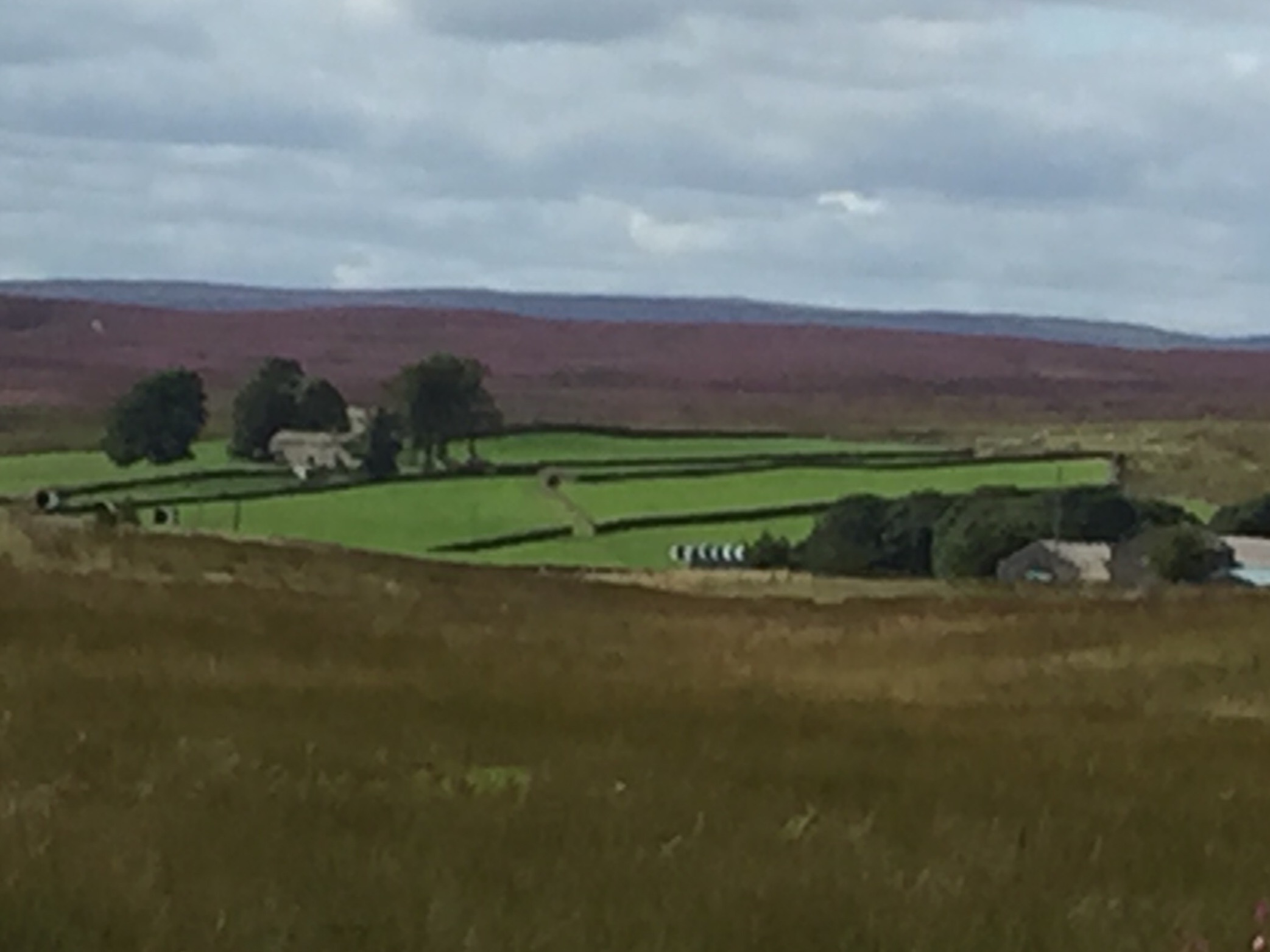
We then set out through the gorgeous valleys, lakes, drystone walls and pink heath of the Yorkshire dales. This is a most beautiful part of England and we have been delighted to be back here after our visit to Castle Howard some years ago. Our goal this time was the village of Haworth, the home of the Bronte family.

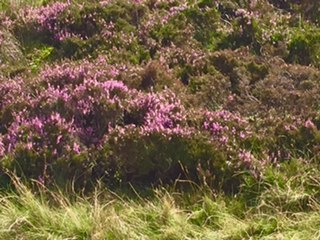
The Yorkshire dales covered in wonderful purple heath
Close up of the heath in the Yorkshire dales

Haworth is set on a high hill and is a picturesque village attached to the large town of Keighley. Bronte mania is everywhere naming pubs, coffee shops, and numbers of book and antique shops.

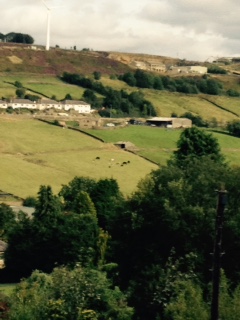
View of the Yorkshire dales from the Parsonage Hill of Haworth
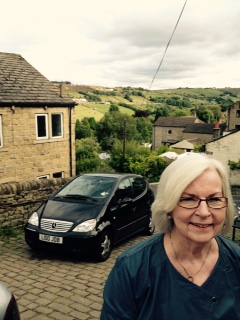
Ann still smiling after climbing the hill to the Bronte Parsonage
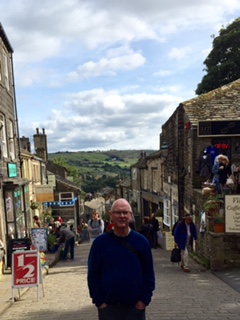
Haworth village with loads of bookshops and antique shops. A nice place to dream!

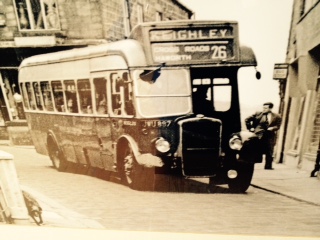
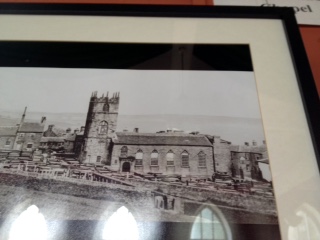
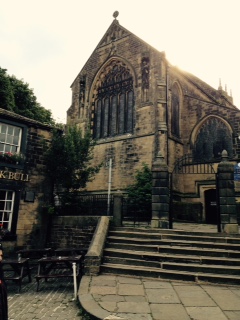
The old school hall built by Patrick to educate his children after the disaster of the death of his young daughters is still in the village and holds some wonderful photographs including the old charabang and buses ( I love old buses) that used to run in the village as well as a photograph of the original church that Patrick Bronte ministered to.

Bronte old buses from Haworth Bronte ancient charabang Bronte Old Haworth bus Bronte original church led by Patrick Bronte

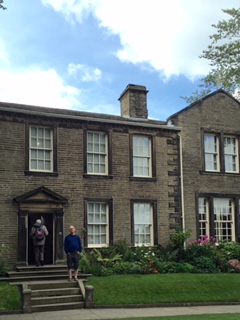
The Parsonage is a small house placed alongside the rebuilt Church of St Michael and All Angels and the graveyard.  After the mansions we have visited with their huge reception and State rooms it was bizarre to be in this “normal” village family home comfortably furnished but with precious little room to move.

The Bronte Parsonage. The house looks big enough but the rooms were tiny for four children, the father and a housekeeper
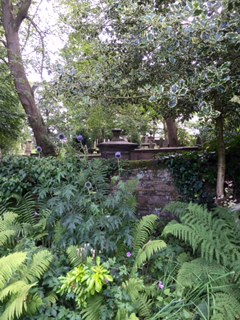
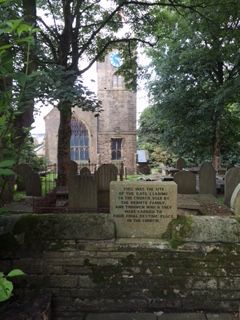
The graveyard between the house and the church...a sombre place to have outside your bedroom!
The graveyard between the house and the church…a sombre place to have outside your bedroom!
The rebuilt C19th church of St Michael and All Angels
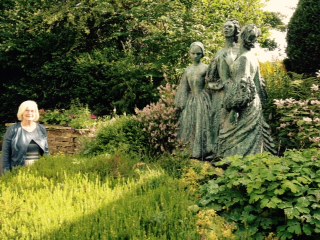
Sculpture of the three surviving sisters in the rear garden of the Parsonage
View of the church from the small front garden of the Parsonage

Emily Bronte’s novel Wuthering Heights made a huge impact on me when I first read it at University.  The rich contrast between the earthy vigorous Earnshaws and the rather effete Lintons, the brooding sombre Yorkshire moors with their gales and wildness, the complex and smouldering character of Heathcliff, the deep and spiritual love relationship between Heathcliff and Catherine with its overtones of spirituality have stayed with me ever since.  I read Charlotte Bronte’s Jane Eyre much later and whilst I found it engrossing it was not life-changing in the way that Wutthering Heights gripped me.  I have not read Anne Bronte’s The Tennant of Wildfell Hall so cannot comment on that novel.

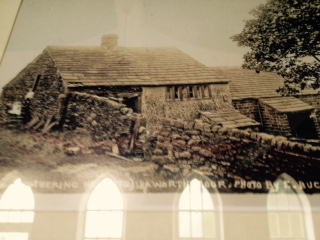
early photo of Withens Hut the place on which Emily Bronte based Heathcliff's adopted home in Withering Heights. It is just as I imagined in when I first read the novel
early photo of Withens Hut the place on which Emily Bronte based Heathcliff’s adopted home in Wuthering Heights. It is just as I imagined in when I first read the novel (apologies for window reflection)

The Bronte sisters were happy in the parsonage supporting their father after the early death of their mother. They worked hard domestically and in the village, but also sewed, painted, wrote poetry, taught as governesses and shared many years of imaginative dreaming of semi historical worlds they had created.  Yet there was also much suffering. Their brother Branwell could not find success in life and died an alcoholic.In addition two of their sisters died very young from TB after ill treatment at a village school (afterward portrayed in a very poor light as Lowood in Charlotte’s Jane Eyre.  The level of disease in the village was high and funerals were a major part of Patrick Bronte’s ministry.  Neither Emily nor Anne married and Charlotte died tragically only a year after her marriage at age 39. Neither Emily nor Anne reached 30.

The Bronte Parsonage dining room which was also the writing room and the actual table on which these classic novels were written

Although they published their novels under the name Bell it was not long before their true genius became evident and the impact of their writing continues to be felt today. There are deep and true strata running through these novels and they do not avoid the moral incongruities of life. It was a moving experience to be in this quiet house and feel some of their joy and pain. Their lives were short but they were happy and productive and their industry has given deep joy and thought to millions.

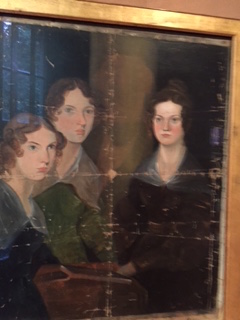
The three surviving Bronte sisters painted by brother Branwell  (he was in the middle and his shadowy outline remains.) This precious portrait now in the London Portrait Gallery
The three surviving Bronte sisters painted by brother Branwell (he was in the middle and his shadowy outline remains.) This precious portrait now in the London Portrait Gallery (It was folded for years in a drawer of the Irish husband of Charlotte Bronte …He lived in Ireland for another fifty odd years after her death.)

Happy in Harewood

Friday 4th September 2015

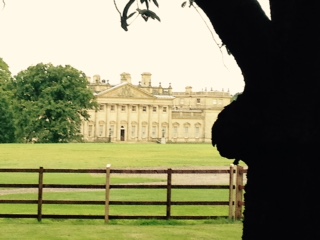
Today we said farewell to Cambridge and its students and bikes and travelled north on the M1 to York and the city of Harrogate stopping off at the beautiful Georgian home of Harewood on the way.  Harewood is the ancestral home for 300 years of the Lascelles Family and their descendants are still the Earls of Harewood and live in the house today.

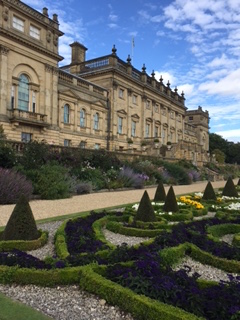
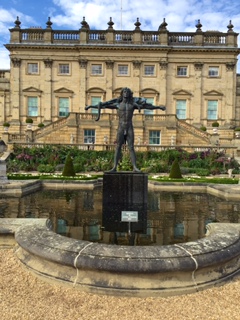
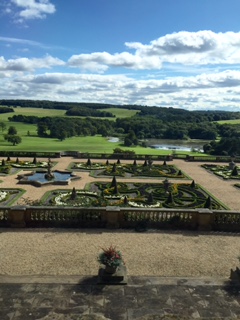
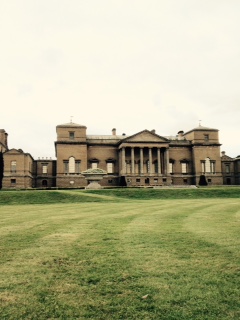
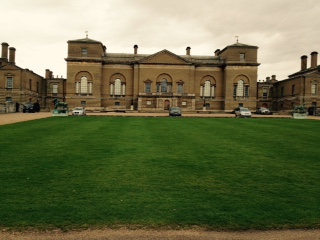
Harewood in York; the exterior of the South Face and formal terraced gardens.
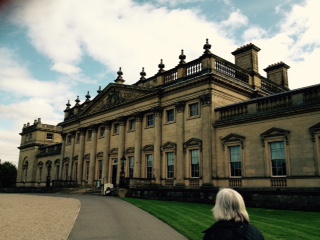
Harewood exterior of north face as you arrive
View of Harewood as you drive up to the front door literally before passing on to the carpark
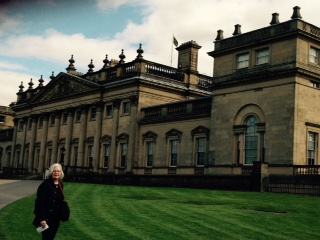
View of Harewood from the churchyard of All Saints Church on the Estate

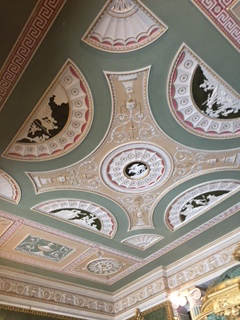
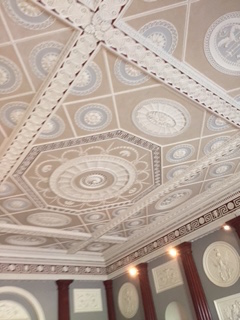
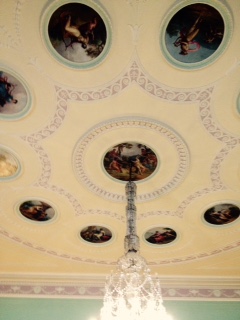
Harewood was built in the C17th by architects John Carr and Robert Adam with Adam playing the key role creating a beautifully balanced Georgian Building with ceilings in his typical restrained and delicate style. The furniture is all by Chippendale and designed specifically for the house. The grounds are vintage Capability Brown and the major additions in the C19th by Sir Charles Barry have been very sympathetically aligned with Adam’s original work.

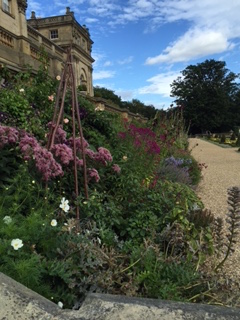
Herbaceous borders on the south face of Harewood
garden view at Harewood
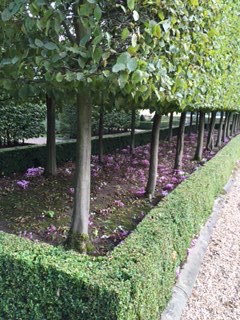
cyclamens and Lime trees in Harewood garden
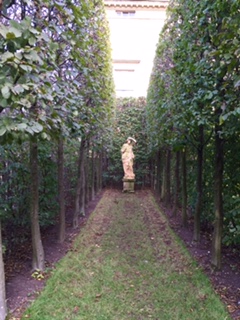
Orpheus statue in terraced garden at Harewood
Harewood terraced garden
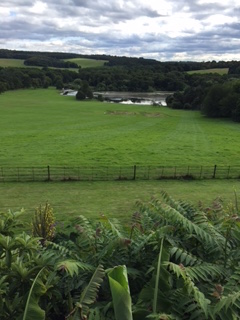
View to the south from Harewood

This is a place of wonderful planning with an amazing bird park of rare birds, terraced formal gardens, a glorious deer park and vast lawns, parkland, arboretum and forest, a large lake, children’s playgrounds, a second hand bookshop, tea shops and restaurants, and an early C15th estate church on the property.

The house has a vast art collection including  two works by Turner who came there to paint and works by both Jacobo and Giovanni Bellini.

Turner Harewood Castle ruin in 1798
Turner: Harewood Castle ruin in 1798
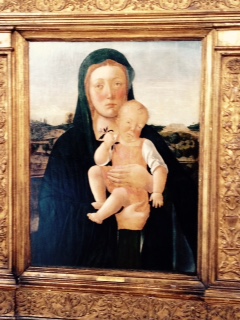
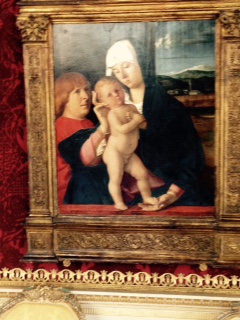
Giovanni Bellini Madonna and Child Harewood long gallery
Jacobo Bellini Madonna and child and donor

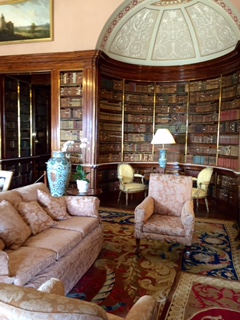
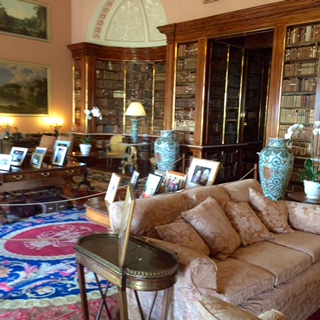
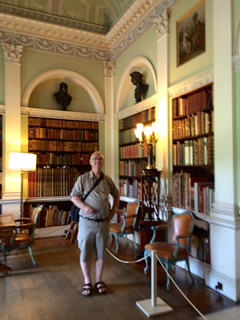
Harewood holds a massive  collection of fine books especially on art history, theology and gardening spread over four large rooms,

Harewood library Harewood library 2 Harewood library 3books books and more books at Harewood

And again!
And again!

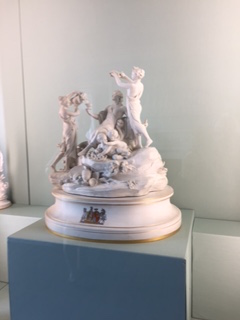
There are many unique collections such as Meissen porcelain of a particular period and owls.

Part of Meissen porcelain collection
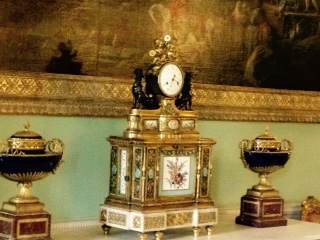
Sevres clock
Sevres clock

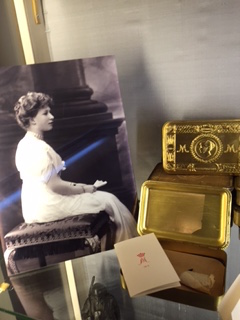
A feature of this house is that one of the Lady Lascelles was Mary the third daughter of George V and his wife Mary.   This royal connection is evident in many gatherings at the house and there is a photographic trail of some interest. In particular during World War 1 Mary launched an appeal to send every British soldier and sailor a Christmas gift which was extraordinarily successful and went out to many thousands of English servicemen.

Wartime photo of Mary Lascelles, third daughter of George V and his wife Mary. He shown with her Christmas gift boxes for British sailors and soldiers in WW!

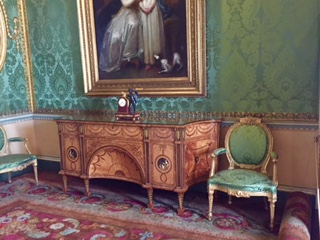
A feature of the house is the purpose designed furniture produced by Chippendale

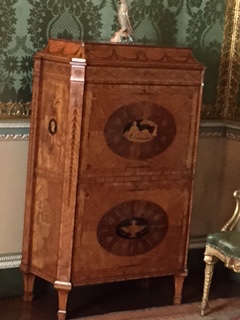
Chippendale cabinet
Chippendale cabinet
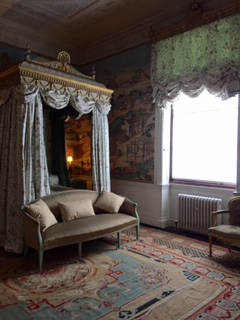
Chinese theme in Mary Lascelles bedroom
Princess Mary's bedroom
Princess Mary’s bedroom
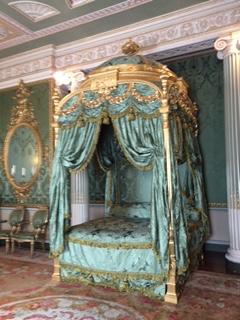
Harewood State bedroom
Harewood another Chippendale cabinet

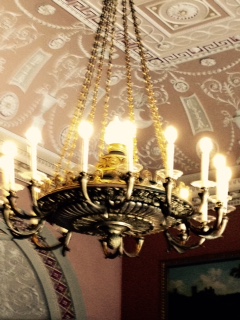
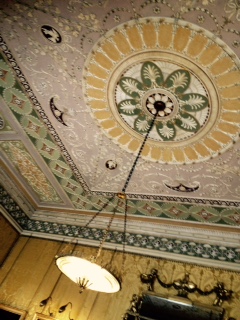
A defining feature of the house is the ceiling work by Robert Adam. Josiah Wedgwood is said to have been influenced by Adam’s designs in his porcelain work.  Four ceilings below.

Harewood ceiling 1 Harewood ceiling 2 Harewood ceiling 5 Harewood ceiling 6

Harewood ceiling 8 Harewood long room gallery

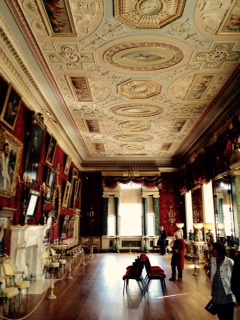
The Long Gallery on the right has a stunning art collection on display

We have seen many stately homes on this trip and previously but the uniform excellence of Harewood is hard to beat.  There is a living warmth in the house which is magnified by the presence of the work of many current artists including Jacob Epstein as well as the personal work of the previous Earl who was a film director and manager of events including the Edinburgh Music Festival. Everything is artistically and elegantly presented and nothing is over the top. There is no doubt that the elegance of Chippendale furniture and the calming effects of Adam’s design work make a huge impact on this house.

Jacob Epstein's
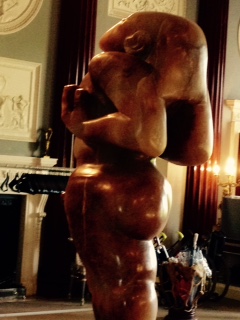
Jacob Epstein’s “Adam”…not to everyone’s taste but this huge statue sits front and centre as you enter the front door of Harewood.
Sitting room used currently by the young Earl and his family
Sitting room set up as it was when the 7th Earl liked it but with modern artwork
The late 7th Earl of Harewood and his second wife who still lives upstairs at 91. She is an Australian former model and violist and apparently still checks out the house each day before visitors are let in.
The late 7th Earl of Harewood and his second wife who still lives upstairs at 89. She is an Australian, former model and violinist Patricia “Bambi” Lascelles and apparently still checks out the house each day before visitors are let in.

The Church of All Saints was built in 1410 by the Aldburgh family of the former Harewood Castle and contains ancient tombs of the Gascoigne family. It was remodelled in “Gothic style with stained glass windows in 1863. It is still consecrated but it is no longer used on a regular basis.

Harewood All Saints Church exterior. The Church is on the estate and still consecrated but not used regularly
All Saints Harewood nave to sanctuary; the church was built in 1403 and is still consecrated but not regularly used.
All Saints Harewood nave to sanctuary; the church was built in 1410
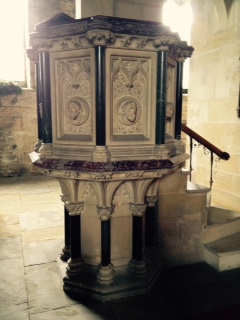
beautiful stone pulpit in All Saints Harewood on the Harewood estate
beautiful C19th  stone pulpit in All Saints Harewood on the Harewood estate

Harewood church font Harewood church tombs

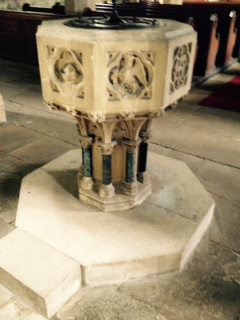
stone Norman font and tombs of Gascoigne family dating to 1410

All Saints Harewood side view and graveyard

Hanging around in Houghton, sitting around with royals in Sandringham and hastening around Holkham

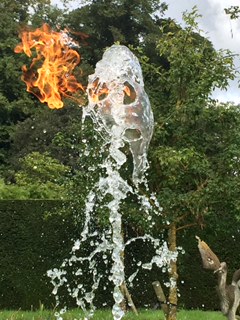
Artist Jeppe Hein's
Artist Jeppe Hein’s “fireflame” in the walled garden at Houghton

Thursday 3 September 2015

Today we ventured into Lord Nelson territory in Norfolk, past majestic Ely Cathedral and crossing not only the River Great Ouse but the River Little Ouse as well as the River Wissey! all lined with family boats and looking sparkling and finally arriving at King’s Lynn. Turning east from Kings Lyn along the Fakenham Road there are three magnificent estates along a 25km length….Sandringham, Houghton Hall and Holkham.  We managed to get into two of them but arrived too late to see the house at Holkham. All three estates had small additional villages within the estates

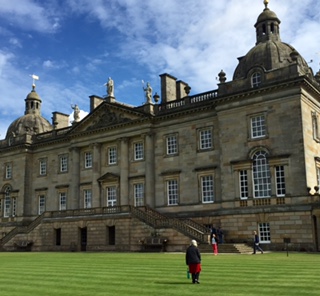
At our first stop we visited Hougton House,the home of Britain’s first Prime Minister, Robert Walpole and his majestic C18th mansion and gardens.

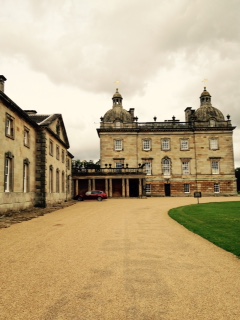
Houghton exterior approaching from the carpark with five acre walled garden on the left
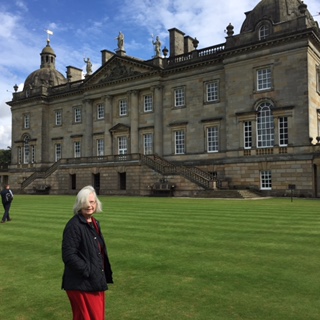
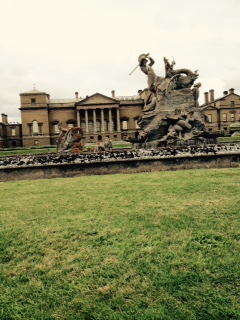
Houghton's exterior is standard Palladian with the formal classical lines and bridge of steps
Houghton’s exterior is standard Palladian with the formal classical lines and bridge of steps
Side view of Houghton surrounded on three sides with deer park and real deer but too far away to photograph
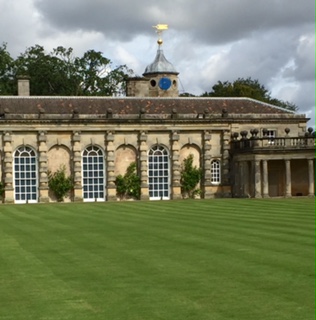
Houghton extension of the House ..it is huge ..we only saw the State rooms
Houghton another external view

Charles Bridgeman did the gardens which include vast deer grazing lawns and over 2 miles! of mown parkland with wonderful trees.  The  absolute highlight is a five acre! walled garden containing English roses, topiary, greenhouse, fantastic herbaceous borders, a croquet lawn, sculptures, fountains, follies and the amazing “Waterflame” by Jeppe Heine.  The house was passed to the Cholmondeley family by marriage and the current owner is the eighth Marquess of Cholmondeley. The architects were James Gibbs and Colen Campbell and the interiors by William Kent, a disciple of Inigo Jones.  The significantly remodelled mediaeval St Martin’s church is located in the grounds but some distance and we did not venture in.  A “lightscape” display by James Turrell is a current feature at Houghton.

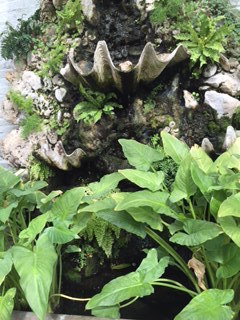
Grotto inside the Houghton green house
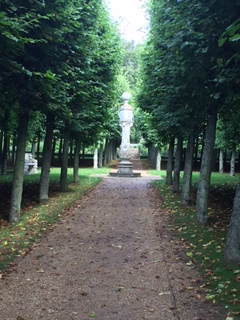
Avenue of lime trees and statue leading to the West entrance of Houghton
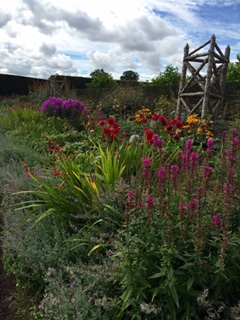
Herbaceous borders and climbing things inside the walled garden. The Summer garden here near the sea is just past its best
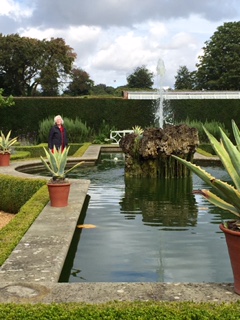
fountain and pond in Houghton walled garden
In Houghton's Walled garden statues turn up everywhere!
In Houghton’s Walled garden statues turn up everywhere!
wonderful lupins in Houghton's walled garden
wonderful lupins in Houghton’s walled garden
statue in Houghton's walled garden
statue in Houghton’s walled garden

Unfortunately no photography is permitted inside Houghton Hall  which is a pity because the interior is quite unlike other stately homes we have seen. The walls of the large staircase are covered with grey canvass painted in grissaille style to imitate sculpture i tromp l’oeil style Many of the ceilings are painted and the furnishings are mostly original to the House and functional and “working” rather than works of art for their own sake. A good example is Walpole’s working desk which is located in the most wonderful library.  I was unfortunately unable to photograph this treasure house of books.  On the other hand the State bedrooms had certainly the highest coverings we have seen anywhere and there were significant tapestries covering many walls.  The paintings are the tragedy of Houghton….the whole collection being sold to Catherine the Great and most still residing in St Petersburg.  A massive painting of Catherine the Great hangs in one of the State reception rooms as part of the receipt!  A few have been bought back and the original frames remain but the most of the paintings are copies.  This is a peaceful home with many exotic trees and plants and a most hospitable team of  welcoming guests.

We backtracked from Houghton Hall to the Queen’s personal estate at Sandringham just a few kilometres west of Houghton.

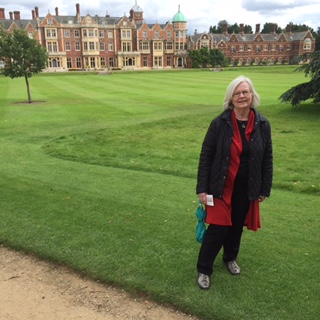
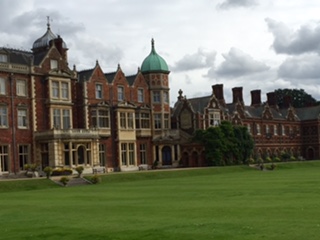
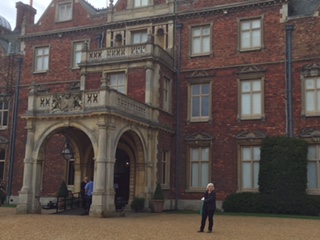
Front view of Sandringham from the carpark
Closer view of Sandringham as you approach
Another view of Sandringham
Formal entry to the Sandringham where the carriages arrive..it is reasonable rather than
Formal entry to the Sandringham where the carriages arrive..it is reasonable rather than “grand”

This remarkable estate of 200 000 acres contains one of the most beautiful gardens I have ever had the pleasure of walking in. The tree plantings are quite remarkable and the quality of lawns, lakes, paths and designed gardens is exceptional. The House sits on a site recorded in the Doomsday Book of 1086 but the current house dates from 1870 and it  has survived fire and various additons from various royals. Once again no photography is permitted inside the house so no pics of the inside only the amazing gardens.

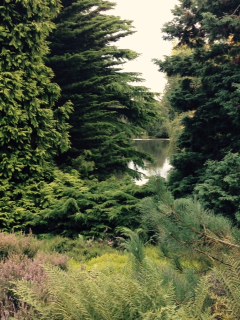
Stunning collection of conifers with a view through to one of the lakes
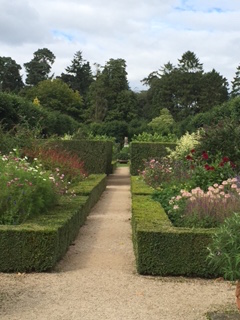
The large formal garden at Sandringham
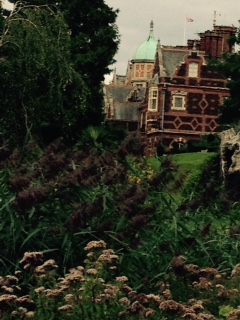
A view of the house from the garden
and again, another view of the house
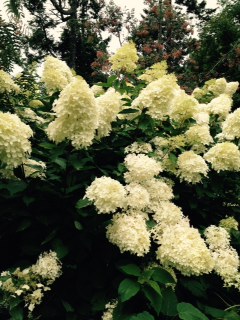
Only the Queen could grow hydrangea heads as large as these!
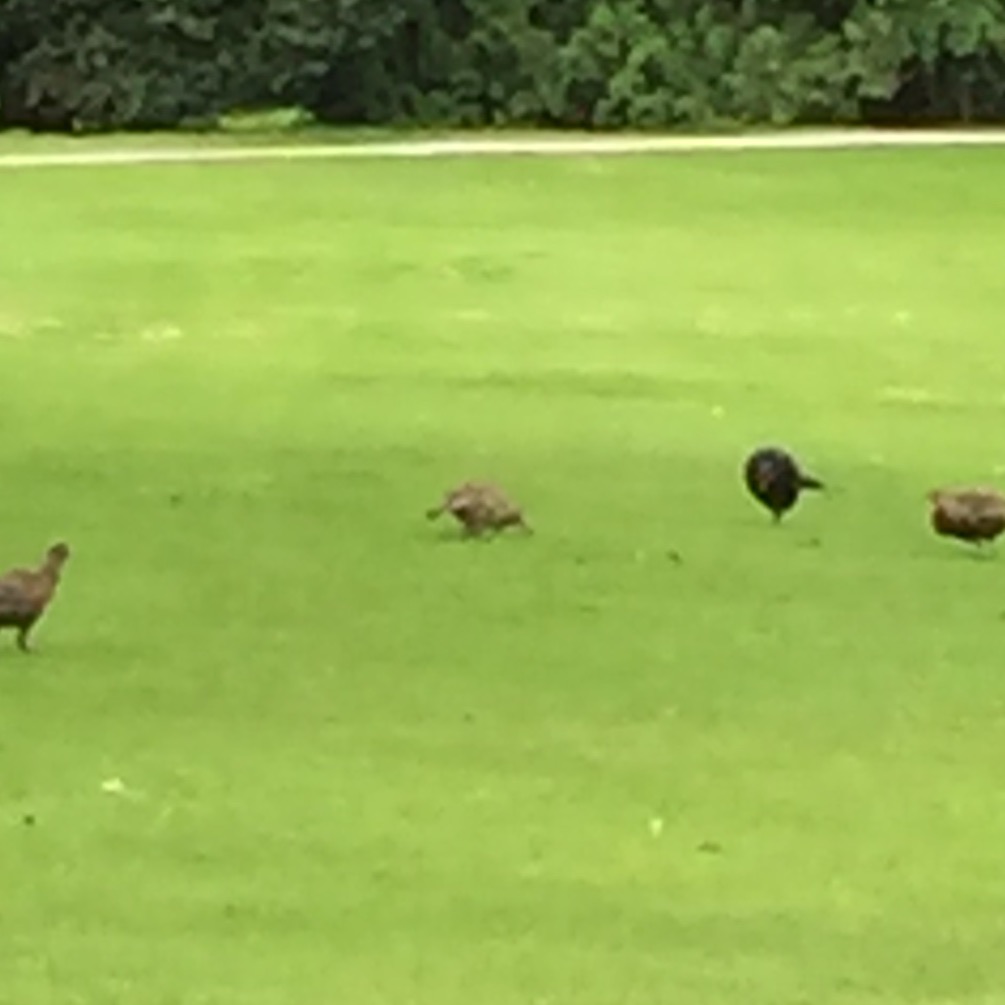
pheasants grazing on the lawns..obviously not hunting season
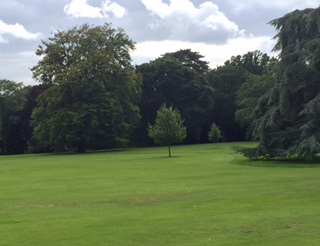
everywhere gorgeous trees

The Duke of Edinburgh describes it as “neither a castle or a palace but rather a large country house with an atmosphere of welcome” and I think that is a good description. The family rooms are large and spacious and built for comfort rather than display. Many of the personal collections of various royals from the past are on display (no stamps unfortunately) and the salon has the quality of a Stately home baronial hall with a minstrel balcony. There are books everywhere in beautifully crafted cases and the inevitable collections of arms including a remarkable display of Indian ceremonial knives and daggers given to the Prince of Wales (Edward V11) on a tour of India in the 1880s.

As well as the magnificent gardens the estate includes a museum (containing the childhood cars of the Queen’s children and the first royal Daimler Phaeton), and also the delightful little church of Mary Magdalene in which both Princess Diana and the new Princess Charlotte of Cambridge were baptised. A standout in the church is the silver facing on the pulpit and the communion table donated by a wealthy American to Edward V11.  The round walk back to the carpark from the house is to die for including glimpses of the house from various vantage points and remarkable tree and flower plantings as well as the little church and glimpses of the forest and parklands beyond.

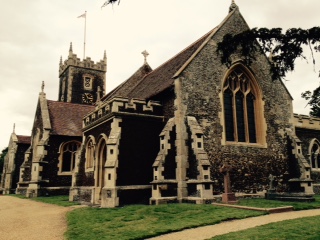
Church of St Mary Magdalene on the Sandringham estate where both Princess Diana who grew up on the estate and Princess Charlotte were baptised
Church of St Mary Magdalene one of two village churches on the Sandringham estate where both Princess Diana who grew up on the estate and Princess Charlotte were baptised
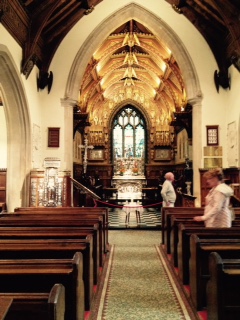
Nave view to communion table of Church of St Mary Magdalene on the Sandringham Estate
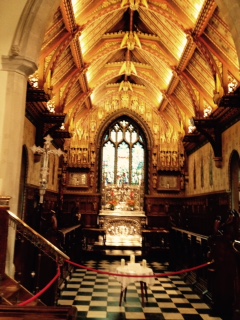
Close up of the sanctuary of St Mary Magdalene church with its silver frontal given to Edward V11 by a wealthy American
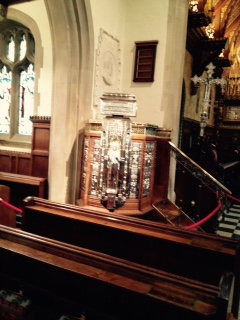
and the silver coated pulpit given by the same gent!

It is easy to see why most of the royals love to come to Sandringham. Remarkably the grounds, shop and tearooms are open to the public throughout the year and the house also for many months throughout the year. Even when the Royals are in residence the public are permitted to wander throughout the grounds except for a relatively small section of the gardens around the house.  Sandringham is memorable in many ways, not least for the 500 staff families  who work hard to keep the estate shipshape and make the working farm run and who are unfailingly polite to the public ( as we found also at Buckingham Palace).

Leaving Sandringham in late afternoon we made a last minute dash for the majestic home of Holkham  in its own village on the seaside just 20 kms from Sandringham. This vast Palladian “pile” was closed by the time we found it but we were able to wander the vast grounds (but not the six and a half acres of walled garden!) and view the outside. The first Earl of Leicester, Thomas Coke commissioned the house in 1718 to house his exceptional collection of (largely Italian) works of art, statues , books and manuscripts.  His descendants still live in the vast estate and it is a busy and dynamic place.  A few photographs of the external appearance  in fading light will have to suffice for this extraordinary palace.

Holkham front of house with amazing statue from outside the wall

Excuse the worse than usual photo…taken on tiptoe peering through the external wall between the bollards!  amazing statue!

Long view of the front from the lake
Holkham long shot of the rear of the mansion
and again the front of house
they like statues at Holkham
and everyone in power seems to like lions
Lake and part of the vast parkland surrounding Holkham House
mown lawn into the distance at Holkham House ..a peaceful beachside home!