Cavilling about cars, breezing past Bath and savouring sensational Stourhead House and gardens.

Thursday 27th August 2015

We had a half lay day today first of all finding and using a laundromat in Chippingham and secondly negotiating with Europcar over the health of our Vauxhall Estate Car which had quite a high mileage for a rental (not that much due to us!).  In recent days when the poor old Vauxhall was started up in the morning we had been receiving dire orange warnings on the desktop such as “oil pressure low”  “do not drive” , “service car immediately” etc   With my normal vast expertise in car mechanics I have been ignoring these warnings and still driving to Wales etc. because the signs seemed to disappear after a few seconds.

This morning as well as dire orange warnings we had all sorts of bells and whistles when we started it up. At first I thought it was the local bell ringers but eventually even I realised we shouldn’t keep driving the poor old thing so after some phone argybargy we drove to the nearest Europcar  centre in Bath, the home of the Georgian circle and the perpendicular Bath Abbey not to mention the hugely chlorinated and very expensive Roman baths!  After even more argy bargy (because of course no signs dared appear when a real mechanic was watching)  I was reduced to threats of being marooned in the wilds of Scotland (we are going to Edinburgh!)

They agreed to change vehicles after seeing the look on Ann’s face and we are now the proud drivers of a pretty well brand new white Kia SUV! This is a huge embarrassment to me because I have been a long time critic of SUVs and their drivers’ arrogance predicated on size. Apart from anything else all the lanes in England our satnav keeps sending us down will have to be immediately widened as the Kia is a seriously wide vehicle!

New Kia to replace the struggling Vauxhall

By the time we sat in the vehicle to drive off it was teeming rain, the vehicle was parked on a seriously steep gradient with a brand new  company van about a foot away in front, and a returning customer having parked a vehicle not far behind us.  In addition I was back with an old fashioned pull up hand break instead of the flash automatic button on the Vauxhall which simply released when we took off.  Pride would not allow me to take Ann’s sensible suggestion to ask them to move their vehicle so my first reverse wet handbrake start was not the greatest but did do the job and we emerged with all vehicles intact (phew!)

We tootled off through the glorious southern Cotswold hills and valleys over the amazing canal and boat systems and found the wonderful Red Lion pub in the hamlet of Wolverton where we felt we had deserved a baguette or two.

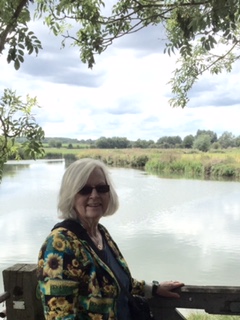
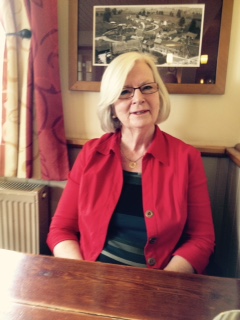
Ann looking good at the Red Lion in the hamlet of Wolverton in the Cotswolds

So it was 3.30pm when we arrived at our destination for the day, the wonderful National Trust property of Stourhead House and gardens in the tiny village of Stourton in Wiltshire. Aussie National Trust earned half its cost today saving us thirty one pounds entry fee which is over $60 Aussie in real money!

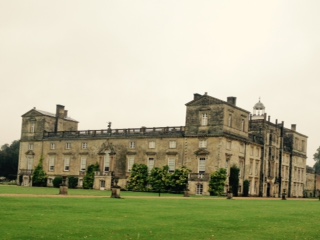
This property was built in the Palladian style by the Hoare family in  the early C18th and is much newer than the other stately homes we have been visiting except of course for the neo-Gothic house at Cardiff Castle. The Hoares have accrued four generations of banking leadership and the Hoare Bank is the only bank still in private hands in London.

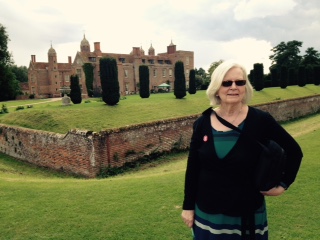
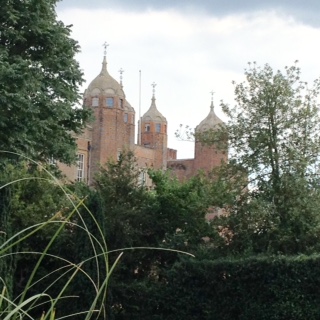
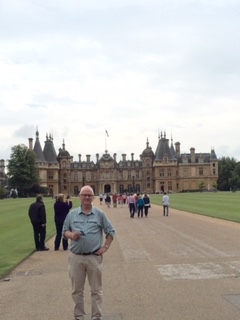
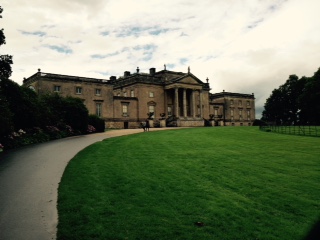
Stour head House on a grey day in Wiltshire
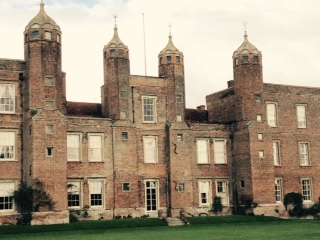
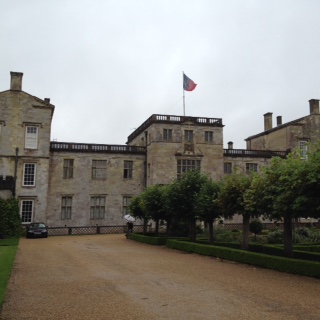
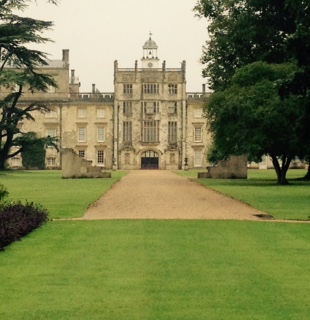
Stourhead House, the view from the garden
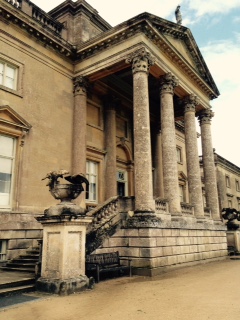
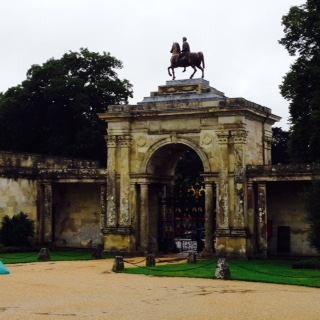
Stourhead House Palladian entry of the C18 house

In 1902 the House was badly damaged by fire but much of its contents were saved. It was rebuilt in identical style from photographs.  It is in some ways a sad story. The final heir Henry Hoare and his wife had their own property when they inherited  Stourhead and reluctantly moved there to set it up for their son Harry who was heavily involved in helping to develop the property and loved living there. Unfortunately Harry was killed in action in World War 1 and the couple had to decide whether to keep living there which they did and ended up further developing the property for over 30 years, dying within six hours of each other on the same day in 1947. The House was donated to the National Trust with an allowance for an extended family member to continue living there.

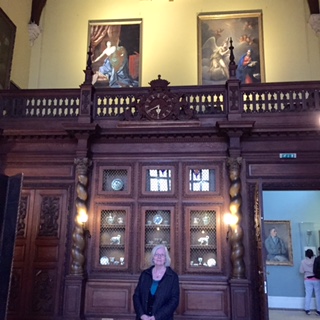
The House includes an impressive art and library collection although key items from both were sold over the years to raise funds. There is also some significant furniture and the house itself stands impressively on a hill surrounded by a village, forest and beautiful pasture land.

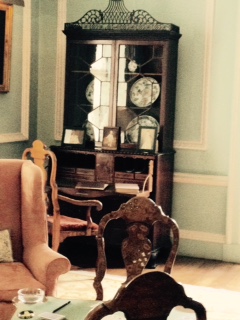
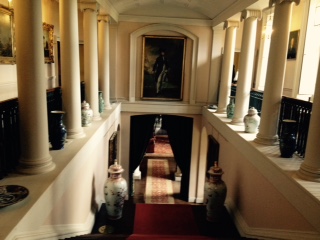
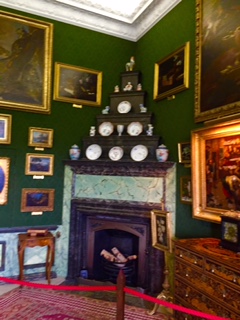
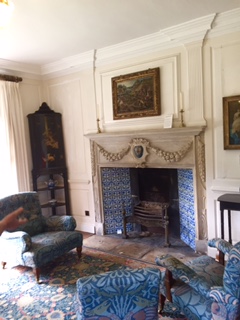
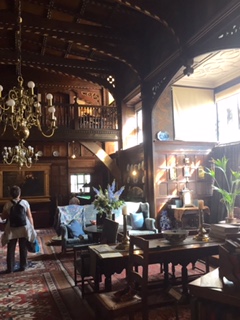
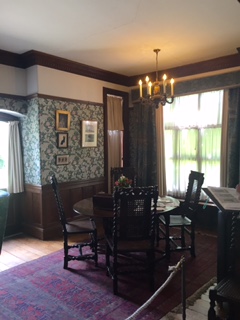
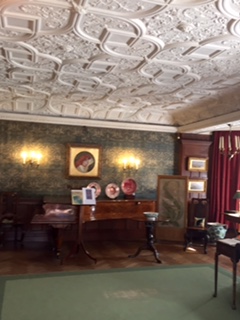
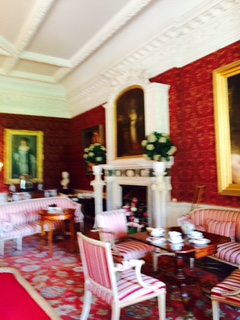
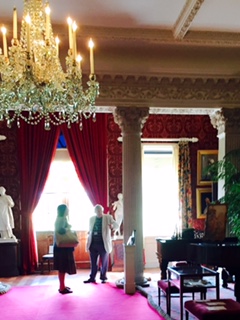
Stour head House drawing room
Stourhead House drawing room
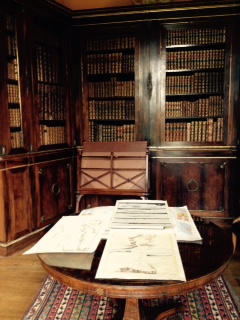
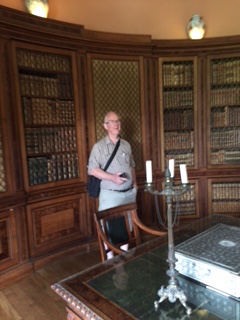
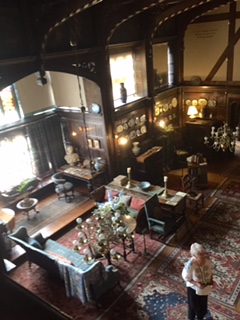
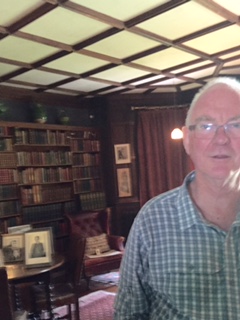
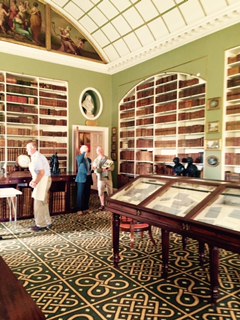
Stourhead House Library
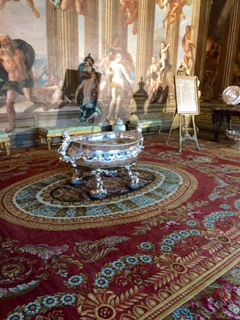
Stourhead House library with Wilton carpet made by the Wiltons of Wilton House fame!
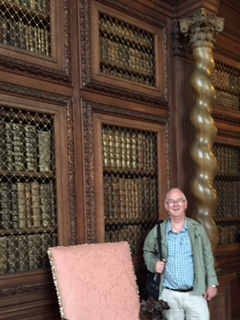
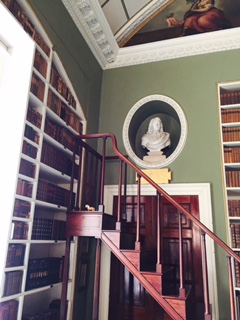
Stourhead House library shelf staircase and one of two busts of Milton
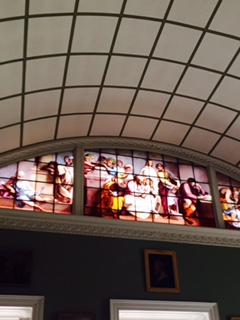
Stourhead House painted glass window based on Raphael's
Stourhead House painted glass window based on Raphael’s “School of Athens” in the Vatican. Various philosophers have been well copied and placed in new positions in the window to highlight learning and thinking
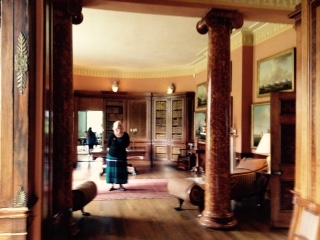
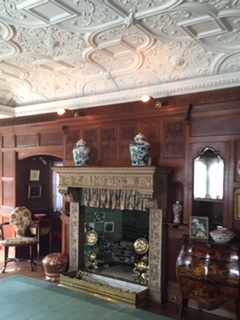
Stourhead House with Palladian columns even in the Drawing Room
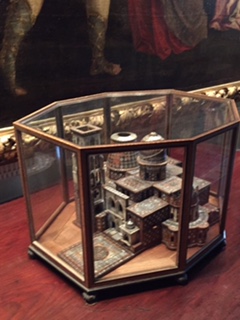
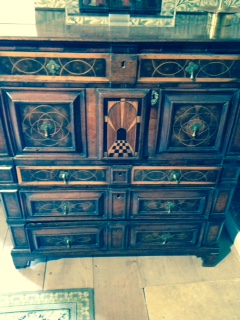
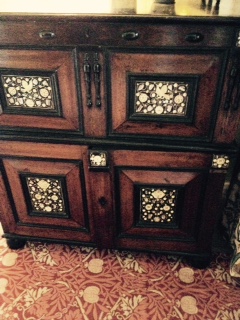
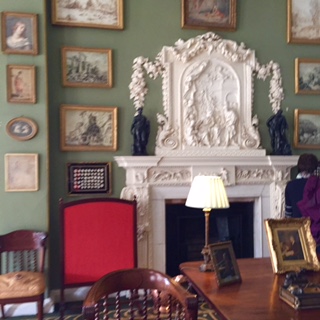
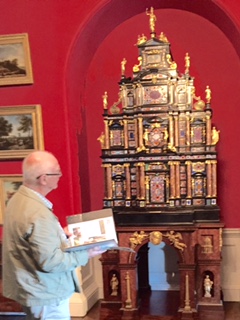
Unusual cabinet of curiosities which used to hold an organ and which once belonged to Pope Sixtus V now in Stourhead House

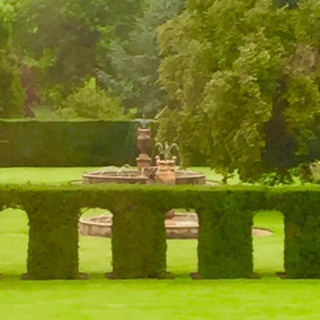
The real gem of Stourhead however is the garden.  Landscaped around a large man-made lake achieved by damming a small stream it is a vast forest of deciduous and evergreen trees of every shape, size and origin alongside vast areas of lawn and  glorious herbaceous borders, a very effective green house, and wonderful tracks with vistas to the lake, to various temples and follies and to the hills beyond.

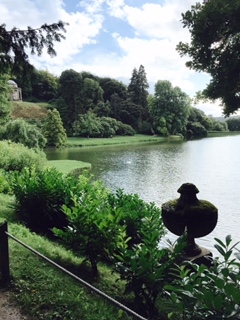
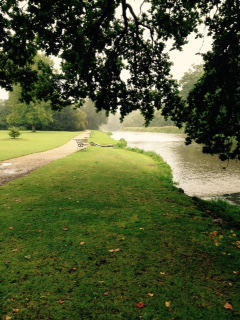
Stourhead House view of manmade lake
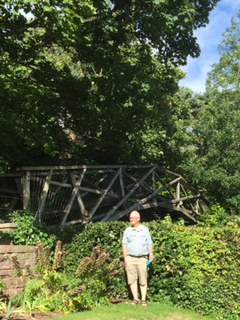
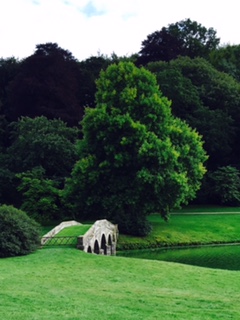
Stourhead House gardens with bridge over the lake
Stourhead House treelined driveway
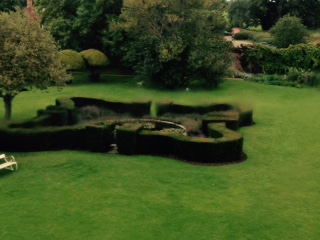
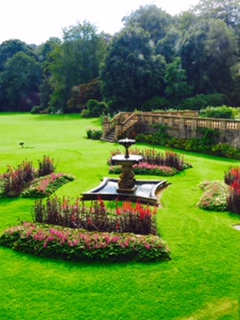
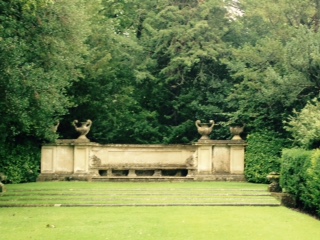
Stourhead House garden view from house
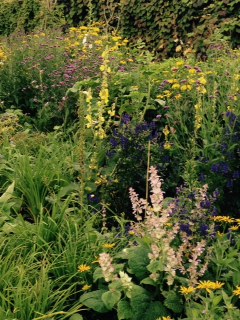
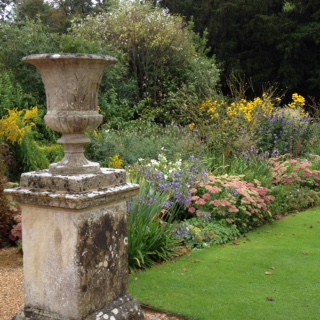
Stourhead House herbaceous borders
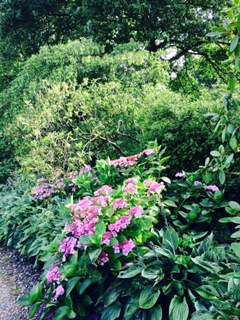
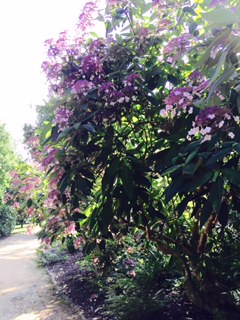
Stourhead House hydrangeas
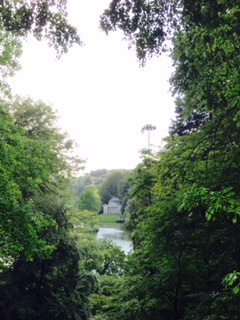
Stourhead House view of temple and lake
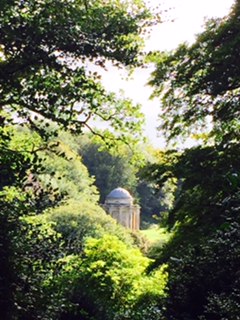
Stourhead House gardens another view of the Temple

It is certainly a place to lose yourself in and in some ways it is reminiscent  of the great Victorian gardens in Mt Macedon and the Dandenongs. There are literally forests of rhododendrons, maples, ash and liliodendron trees and all open to the village (which is a little remote) to walk in till dusk with their dogs.

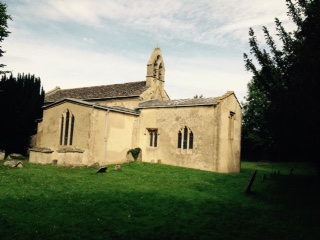
The village also contains a more than useful pub, a wonderful small art gallery, St Peter’s 700 year old early Gothic parish church of Stoughton and many fine old village homes. This is a placee to seriously lose yourself for a day or a year! We loved it!

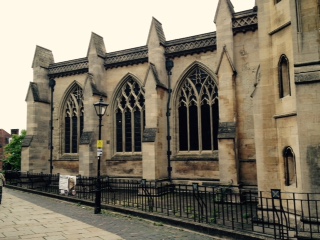
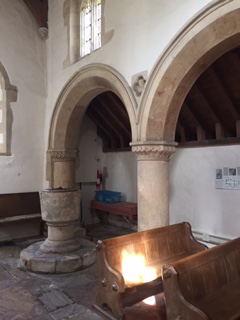
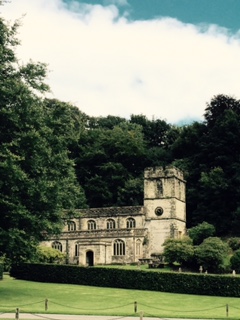
St Peter's parish church of Stourton, a 700 year old small Gothic church , part of the estate and village of Stourton and effectively part of the surrounds of Stourhead House
St Peter’s parish church of Stourton, a 700 year old small Gothic church , part of the estate and village of Stourton and effectively part of the surrounds of Stourhead House
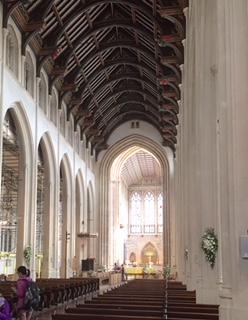
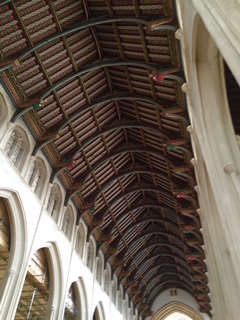
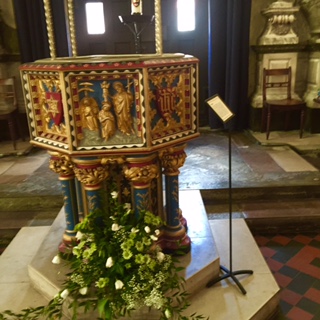
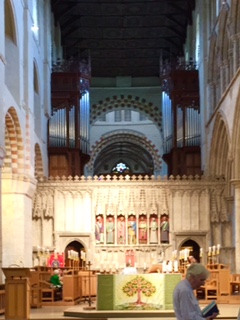
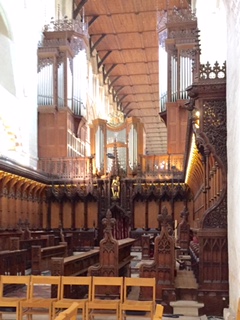
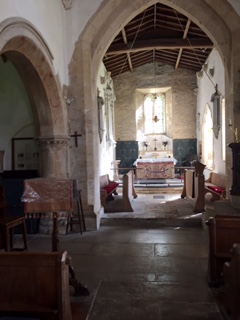
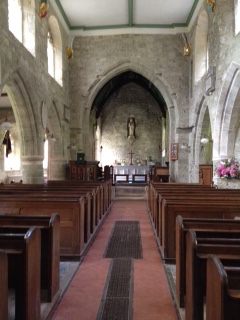
Interior of St Peter's parish church of Stourton on the Stourhead House Estate
Interior of St Peter’s parish church of Stourton on the Stourhead House Estate
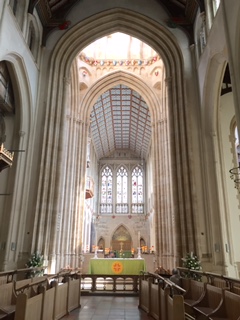
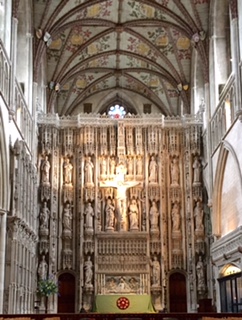
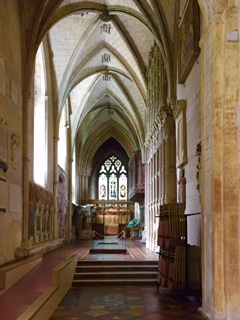
Another view of the Gothic interior of St Peter's Parish church in Stourton
Another view of the Gothic interior of St Peter’s Parish church in Stourton

Beetling around in brilliant Bristol, living it up in Llandaff and captivated by Cardiff Castle

Wednesday 26th August

Today with the rain moving East to London we took off West to the sunshine of South Wales but first detoured to the beautiful harbour city of Bristol to find Bristol Cathedral. The church historian and architectural scholar Pevsner describes this Cathedral whose nave was not completed until the 1860’s as superior to anything else built in England and indeed in Europe at the same time. This is high praise but the Cathedral does make an impact.  The reason for this is that the nave, choir and aisles are all at the same height creating effectively a mediaeval “hall church” …a lofty and elegant space with a series of elegant arches.” With the technology then available, flying buttresses were no longer required and the result is a very “clean” building with flowing lines.

C18th addition of the Nave at same height as the Choir to produce the effect of a Mediaeval
C18th addition of the Nave at same height as the Choir to produce the effect of a Mediaeval “Hall” church all at one height
Bristol Cathedral West front with the statue of Indian Renaissance philosopher, reformer, scholar and patriot Rajah Rammihun Roy (1772-1883) in the foreground.
Bristol Cathedral West front with the statue of Indian Renaissance philosopher, reformer, scholar and patriot Rajah Rammihun Roy (1772-1883) in the foreground (and me)
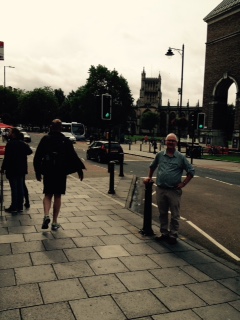
Richard in sight of another cathedral in Bristol
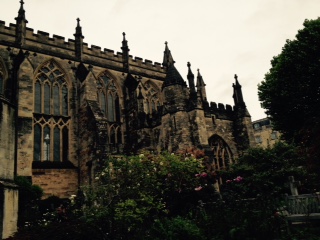
Exterior of Bristol Cathedral Gothic Revival with no flying buttresses

Originally a Norman  “hall church”  was built within the abbey in 1298 but  Henry V111 ordered the dissolution of the abbey in 1539 and only the choir remained until the nave and west front was added in Gothic Revival style in the 1860s.

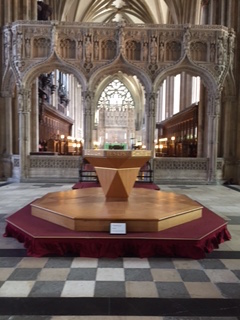
Striking Millenium Communion Table ..a radical move in the centre of Bristol Cathedral
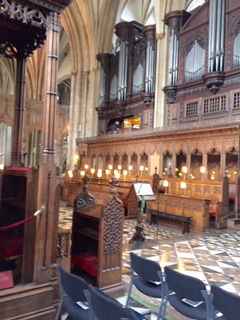
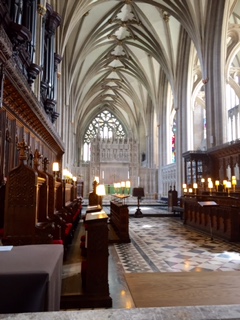
1298 choir stalls in Bristol Cathedral
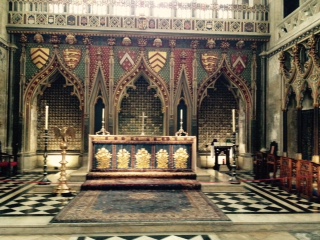
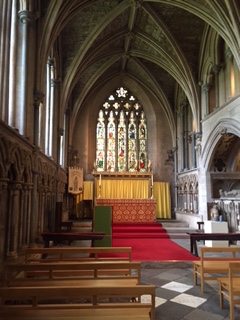
1298 Eastern Lady Chapel in Bristol Cathedral ..originally a memorial for the Berkeley family
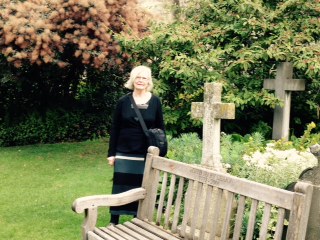
Ann in the memorial garden of Bristol Cathedral
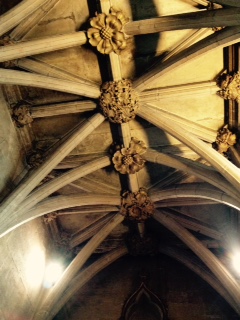
1298 ceiling bosses in the 1298 Berkeley Chapel
Original 1298 Gothic Choir of Bristol Cathedral
Early Henry V111 stained glass window in Bristol Cathedral
Early 1220 Elder Lady Chapel in Bristol Cathedral
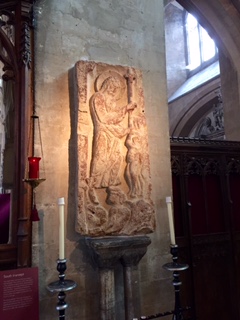
Ancient Saxon stone carving of the Harrowing of Hell, Christ saving Adam and Eve representing all humanity in Bristol Cathedral

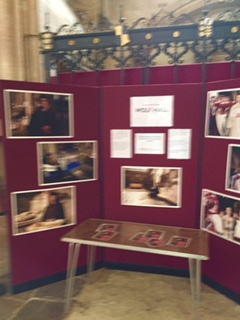
It’s latest claim to fame is as the site for the filming of Hilary Mantel’s impressive Reformation novel  Wolf Hall detailing the contribution of Thomas Cromwell to Henry V111’s  court and to the Reformation.  The chapter house and church were both substantially used in this BBC production and the church was turned into Westminster Abbey for Henry’s marriage to Anne Boleyn
Hilary Mantel's
Hilary Mantel’s “Wolf Hall” was filmed at Bristol Cathedral for the new BBC production..both church and chapter house were used in 2014

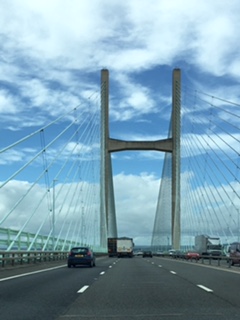
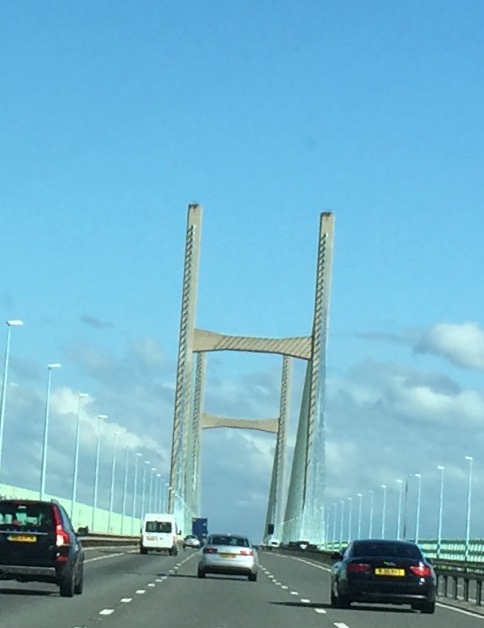
Moving on from Bristol we crossed over into Wales via the amazing suspension technology of the bridge over the Severn River.

Amazing suspension bridge over the Severn river linking Wales and England filmed through the car window (not by me!)
and again!
and again!

Our first goal was Llandaff Cathedral in the city of Cardiff. It is approached from a carpark high above the building by a series of steps …”The Dean’s steps” and one then arrives at a quite small front door which opens to four or five steps down to the floor of the cathedral so that you enter with a total overview of the whole interior from above.

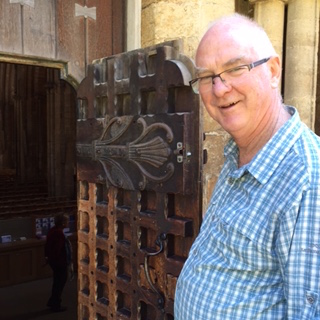
Ancient tiny carved front door at the base of the
Ancient tiny carved front door at the base of the “Dean’s steps” which opens to five more steps making you almost “dive” into the Cathedral ..quite wonderful
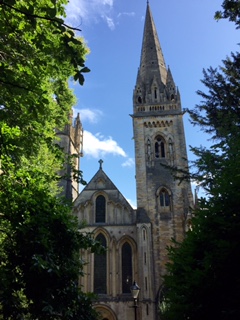
Landed Cathedral Cardiff, exterior view

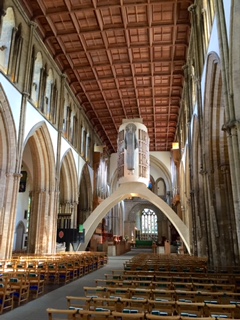
A church has stood on this site since 546. The C12th early Romanesque/early Gothic building fell into decline during the Reformation and Puritan era and was severely damaged by wild storms.  In the mid C18th restoration began but the building was again severely damaged by a German landmine in World War 11. Architect George Pace lead the reconstruction after the war which included a brand new chapel (The Welch Regiment Memorial), strengthening of the C19th tower and the extraordinary introduction of a concrete chancel arch which holds the former organ case on which was suspended the figure of Christ in Majesty  by Sir Jacob Epstein.

Jacob Epstein's
Jacob Epstein’s “Christ in Majesty” suspended on the former organ collar..a massive introduction to Llandaff cathedral in 1958
Reverse view seen from the Choir
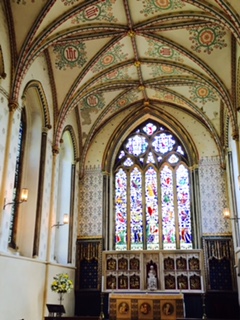
1280 Lady Chapel with unusual painted ceiling
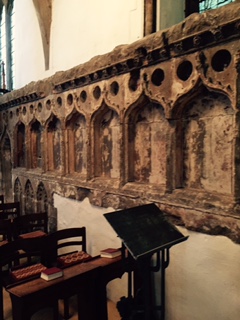
The old mediaeval stone reredos that used to stand behind the high altar now part of the wall of the side aisle

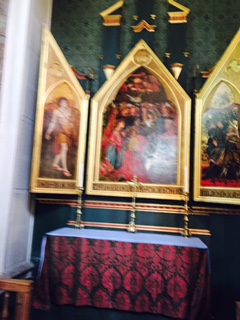
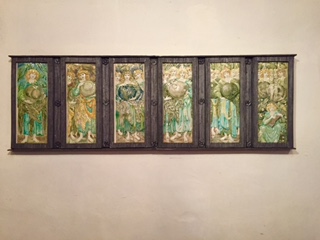
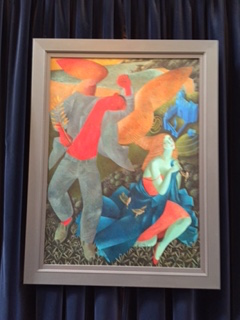
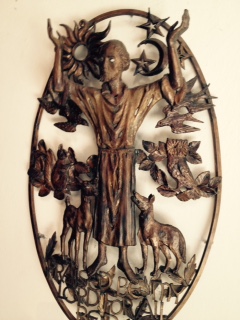
Artistically there are many treasures here including a set of porcelain panels by C19th Pre-Raphaelite artist Edward Burne-Jones  showing the six days of creation above the communion tabel in the Dyfrig Chapel, and “The Seed of David” triptych in the Euddogwy Chapel by another Pre-Raphaelite artist Dante Gabriel Rosetti. In addition there is the very modern “Annunciation” by Clive HIcks-Jenkins completed in 2010 and a memorial of St Francis of Assisi in bronze. This is a cathedral of surprises and it is completed by the installation in 2010 of a huge new organ  (the largest wholly-new British built organ to be commissioned in a UK cathedral for 50 years).

Pre-Raphaelite artist Edward Burne-Jones triptych
Pre-Raphaelite artist Dante Gabriel Rosetti  triptych “The Seed of David” showing David the Shepherd, (Edward Burne-Jones head), David the King (William Morris head) and the birth of Jesus (between 1856 and 1864)
Porcelain panels showing the six days of Creation by Pre-Raphaelite C19th artist Edward Burne-Jones.
“The Virgin of the Goldfinches ” by Clive Hicks-Jensen 2010
Memorial bronze of Francis of Assisi in Llandaff Cathedral Cardiff

After lunch we ventured back into Cardiff Central, past the beautiful homes in Cathedral Place and the sensational Millennium Stadium and found a lucky park near to the C12th Norman Cardiff Castle and keep.

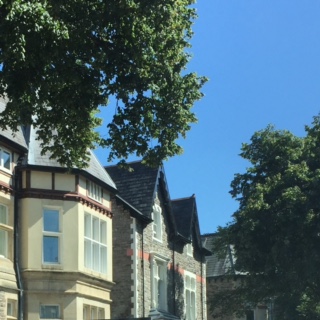
Impressive homes on both sides of Cathedral Place Cardiff
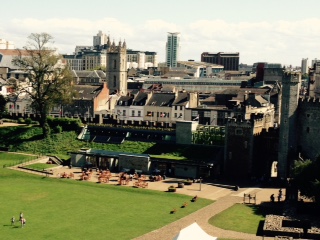
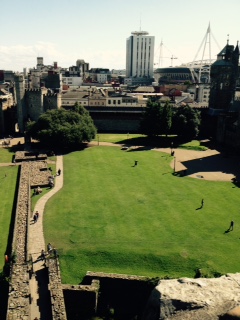
View of Cardiff from the top of the Norman Castle Keep
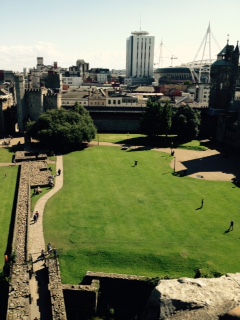
another view from the top with a glimpse of the sensational millennium stadium
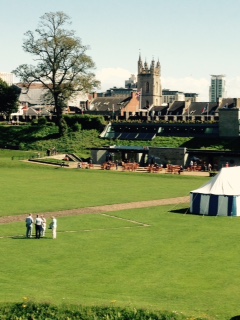
View of the city from the lawns of Cardiff Castle on a beautiful summer's day
View of the city from the lawns of Cardiff Castle on a beautiful summer’s day
Another view of the Castle house and Millennium stadium

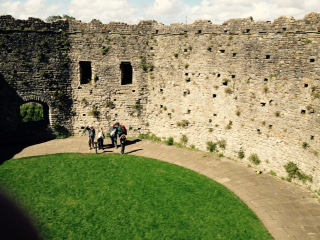
This huge walled site has also had a chequered history through all the wars and ups and downs of Welsh and British history too complex to describe here. Eventually it came into the hands of the Marquesses of Bute and one John Stuart who employed Capability Brown and Henry Holland to create a Georgian mansion on the site alongside the fortified castle keep. With wealth from the coal industry this family continued to expand the buildings, destroying most of the mediaeval components in the process.

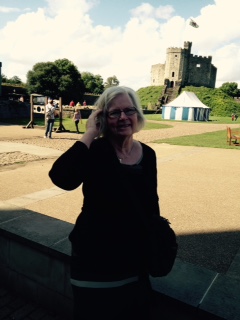
Ann at the Cardiff Castle fortified keep
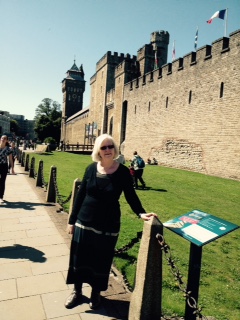
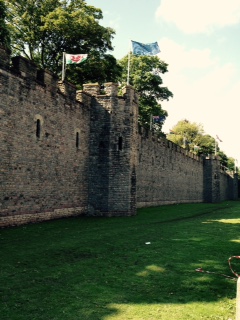
Ann outside the walls of the whole Cardiff Castle complex
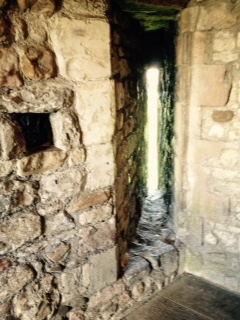
Arrow wall at the second level of the fortified keep
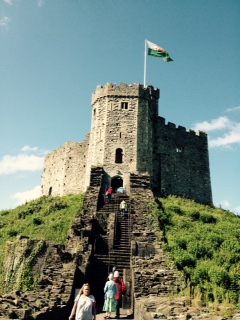
Close up of the Cardiff Castle fortified Keep
Inside view of the middle level of the Cardiff Castle fortified keep
Vertigo view from the top of the fortified keep of Cardiff Castle
The wall!
The wall!

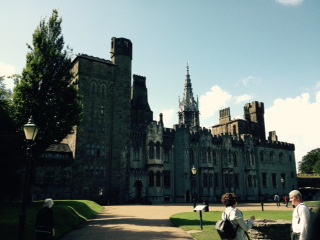
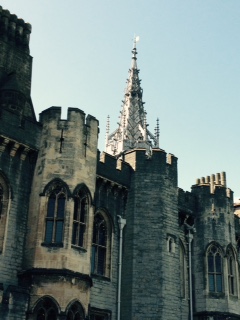
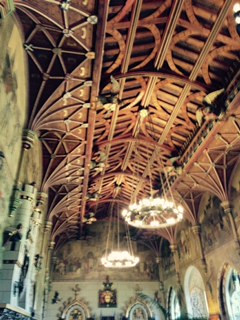
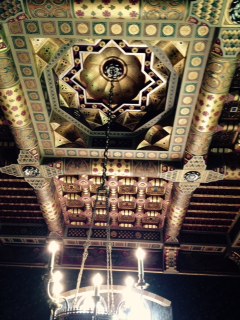
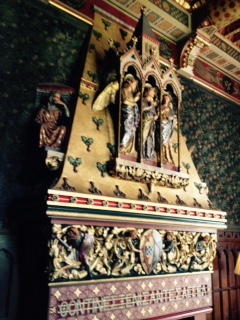
In the first half of the C19th John Crighton -Stuart employed archtect William Burgess to create a bizarre Neo-Gothic Revival house superimposed on the existing mansion and this is now what the National Trust cares for today. It has a romantic, almost Disneyland happy feel and on a beautiful summer’s day it was a nice place to be.

External view of the Gothic Revival home of the Marquesses of Bute
Detail of the Gothic Revival mid 18th house created by William Burgess for the Bute family
Ceiling of the Banqueting Hall
Another Gothic revival ceiling
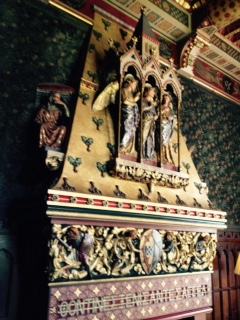
Fireplace detail in the Gothic revival House of Cardiff Castle
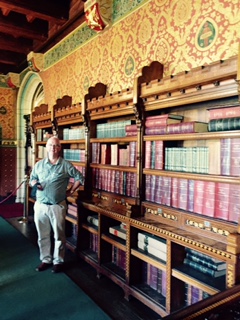
Richard once again in a wonderful library
and again!
and again!
and another fireplace
and another fireplace (actually now I look at it is the same one!)
Base of the staircase in the Gothic revival house at Cardiff Castle
Ann is the person in the mid-centre left on the lawn from the top of the Keep
Ann is the person in the mid-centre left on the lawn from the top of the Keep!

Wandering around wondrous Wilton House near Salisbury

Tuesday 25th August

Today we headed south east from Chippenham past the thatched rooftops of the homes of ancient Laycock and its even older abbey and later on past the even more ancient stones of Stonehenge to the relatively “new” C16th house of the Herberts, the Earls of Pembroke.

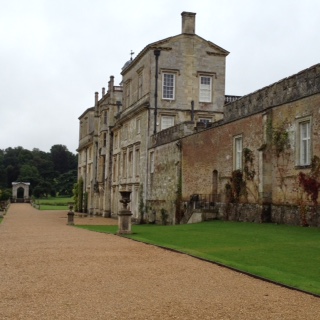
Wilton House external view
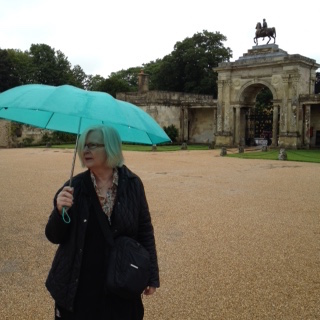
Wilton House Front gate with Marcus Aurelius on top (original statue in the Capitoline Museum in Rome
Wilton House, the Pemberley Estate with flag flying from the front
Wilton House, the Pembroke Estate with flag flying from the front
Wilton House the old (and preferred in my view, front aspect.
Wilton House the old (and preferred in my view,)front aspect.
Wilton House, the Tudor (and private) wing

Once again it is the homes of families who have somehow been able to maintain hereditary continuity who have most been able to cope with the vagaries of political religious upheaval and C20th Government taxation/death duties policy. The Herberts have hung on in Wilton House, very near Salisbury although they have had their moments as did many other royalist sympathisers during Cromwell’s Commonwealth.

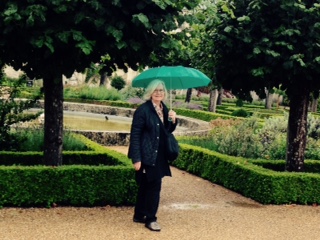
Ann in the front formal garden at Wilton House
Ann not concentrating

The current Earl and Countess of Pembroke are a young couple with young children and a youthful approach to “Stately home leadership”.  They open the house and gardens regularly for charity and hold many functions of various types on the property. They also refuse to “rope off” sections of the State and other rooms so when paying visitors come they don’t feel “kept out” of the rooms but are able to freely walk around. Indeed all of the house is still used by the family and apparently the family can often be seen mingling with the visitors. We were not sure if that was the case while we were there. I think it may have been possible. Another impressive feature was that special exhibitions were not charged at an additional rate.
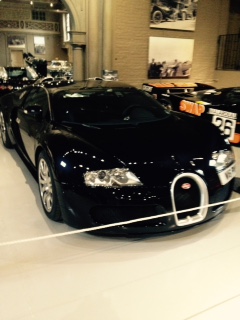
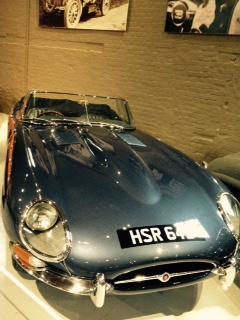
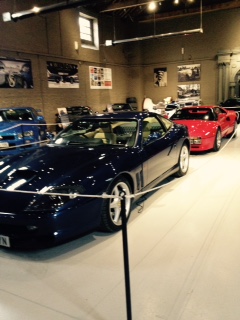
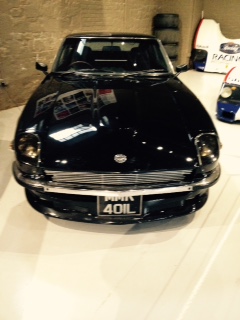
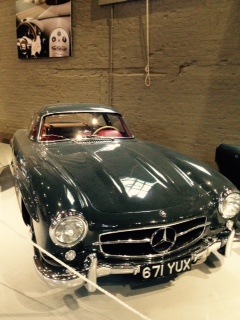
On our visit two exhibitions were open as well as a professionally made film of the history of the house which was quite outstanding. The exhibitions were firstly, the current Earl of Pembroke’s fast car collection and secondly an exhibition of Cecil Beaton’s photographic works. Cecil Beaton was an English fashion, portrait and war photographer, diarist, painter, interior designer and academy award winning stage and costume designer for films and theatre. He also often photographed the Royal Family for official publications. The cars were to die for and some have been successful in races.

Bugatti 2008 handbuilt Veyroon 16.4 No 141 from Pemberley collection
Bugatti 2008 handbuilt Veyroon 16.4 No 141 from Pembroke collection
Jaguar 1964 4.2 E-type
Two Ferraris
Two Ferraris
1972 Datsun 240Z
1972 Datsun 240Z
Lamborghini
Lamborghini
Mercedes Benz 300SL coupe
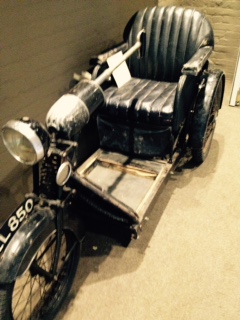
Early C20th electric invalid car
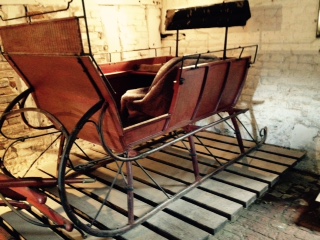
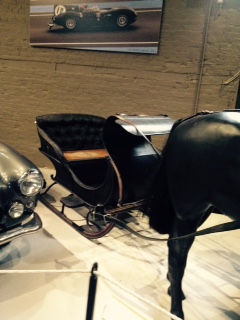
Russian sleigh Pemberley collection (a former Countess was Russian)
Russian sleigh Pembroke collection (a former Countess was Russian)
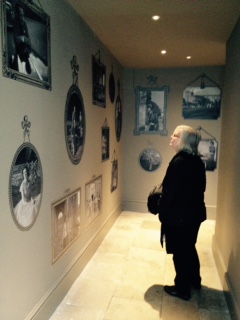
Ann studying the Cecil Beaton photographic collection

Cecil Beaton loved Wilton House, visited often, and his view of Wilton bears repeating:

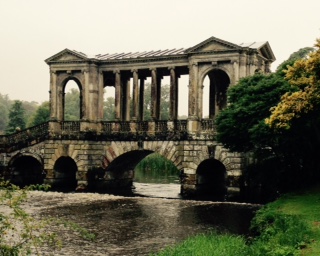
Wilton House is perhaps the most wonderful piece in all Wiltshire’s heritage of domestic architecture. Formerly an abbey and later designed at various stages by Holbein the Younger, Inigo Jones, Watt and Wyatt, with its cube rooms and the crimson velvet curtains, with its fantastic Palladian bridge and the lawns flanked with cedars of Lebanon, its gardens where Shakespeare acted and Philip Sydney wrote “The Arcadia”, Wilton is at every time of the year , in all weathers , unfailing in its beauty.

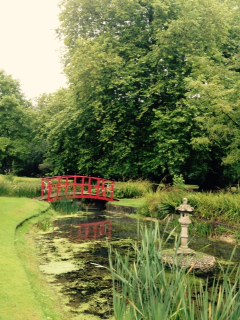
I can’t add to this except the impressive collection of paintings (Rembrandt painting of his aged mother, the largest collection of van Dyke portraits in England, Brueghel the younger and older, Titian, many Italian Renaissance paintings, over 100 classical busts and so on), the pair of Fred Astaire shoes, the wonderful Japanese inspired water garden and the wonderful front gate with a sculpture of Marcus Aurelius atop the gate!  Shakespeare did have a special connection with Wilton House and the house has a history of dramatic performance. Like many British stately homes Wilton was used as a hospital during World wars.

Once again photography was not permitted inside the house so no serious pics inside. The gardens and cedar lined lawns are to die for and the quality of the internal presentation of the house  has few peers.

The Wylye River running through the gardens of Wilton House
Wilton House garden urns earned after a long walk
Wilton House gardens herbaceous border
Wilton House garden seed planted by the future Tsar of Russia , now a giant oak
Palladian bridge over the Wylie River (nicer on a sunny day)
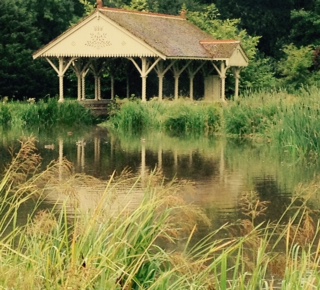
Summer house at Wilton on the Wylye River
swan and cygnets on the Wylye River at Wilton House
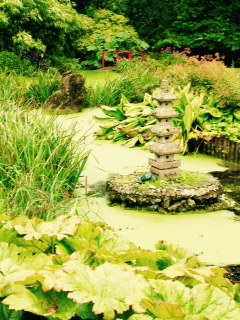
Water garden at Wilton House
Water garden again at Wilton

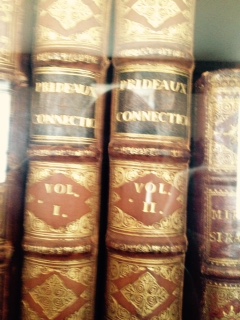
A small highlight for me is that in one bookcase in a drawing room Ann spotted  two beautifully bound volumes of the Revd Humphrey Prideaux’s Prideaux’s Connections. Humphrey Prideaux was a distant ancestor of mine and became the Dean of Norwich. I have a copy of Prideaux’s Connections, found for me by the late Bishop John Wilson, much less grand than the two volumes in Wilton House. The work is a scholarly attempt to relate the the Old and New Testaments theologically and historically. It was good to see them there.

Humphrey Prideaux the C17th Dean of Norwich and a relative of mine wrote a 2 volume scholarly work on the
Humphrey Prideaux the C17th Dean of Norwich and a relative of mine wrote a 2 volume scholarly work on the “Connections” between the Old and New Testaments and here they are beaufituflly bound at Wilton House
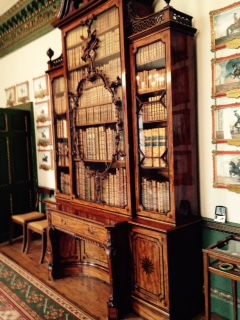
found in this bookcase, well spotted by Ann

Lounging around in Longleat and bedazzled by history in Bradford On Avon

Monday 24th August

Today we experienced our first seriously rainy day of touring and it certainly makes a contrast to the high thirties we experienced for a month in Italy.  We drove from Chippingham 35 minutes south to the C15th mansion of Longleat, ancestral home of the Thynne family who survived Tudor politics, serious Cromwellian warfare and the ups and downs of aristocratic life and who still own their house today.

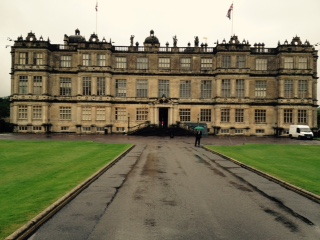
View of the front of Longleat, England's finest Elizabethan house with 1000 acres of parkland landscaped by Capability Brown
View of the front of Longleat, England’s finest Elizabethan house with 1000 acres of parkland landscaped by Capability Brown

The present Marquess is an artist and patron of artists who has added to the over 1000 paintings and portraits in Longleat his own quite impressive political and social comment art as well as two mazes and many other garden additions. In 2010 he handed over the running of the estate to his son Viscount Seymour.

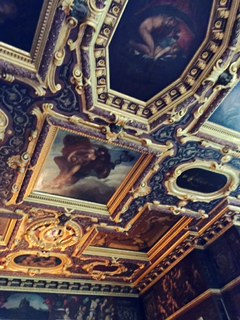
Ceiling in one of the three extraordinary State rooms. One of the marquesses was deeply influenced by travelling to Italy and the ceilings were modelled after the Doge's Palace ceilings in Venice
Ceiling in one of the three extraordinary State rooms. One of the marquesses was deeply influenced by travelling to Italy and the ceilings were modelled after the Doge’s Palace ceilings in Venice
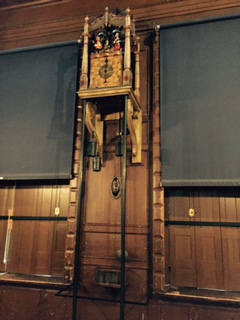
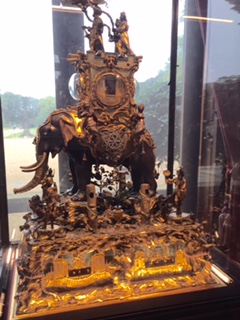
Longleat's C16th clock in the Elixabethan Baronial Hall . We were there at midday and the chime lasted over a minute with various antics of the figures
Longleat’s C16th clock in the Elizabethan Baronial Hall . We were there at midday and the chime lasted over a minute with various antics of the figures
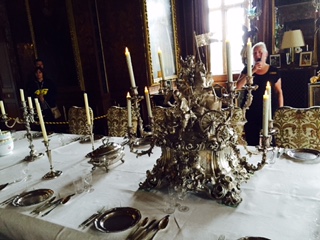
Massive solid silver candelabra on the State Room Dining Table commemorating a Thynne victory over Cromwell's ar,my
Massive solid silver candelabra on the State Room Dining Table commemorating a Thynne victory over Cromwell’s army

The estate is vast although not as big as in Elizabethan days.  It still measures 1000 acres of immaculately kept parklands initially established by famous English landscape designer Capability Brown. In addition there are 4000 acres of farmland which includes a running farm and another 4000 acres of woodland.

Ann in one of the seven library rooms of Longleat. The House holds over 44000 books, the largest private library in England

It was Henry Thynne (1905 -1992) who saved Longleat from the English death duties  taxation system (and in the process many other stately homes).  Against significant ridicule he opened the house to the public on a regular paying basis thereby setting a standard for many eventually to follow. In addition as an amazing entrepreneur he created an impressive wildlife safari park and a holiday campsite. Many major public events are held at Longleat and many films have been made there. Longleat is generally regarded as the most impressive still standing Elizabethan house in England.

The House itself contains just one space, the baronial  hall  remaining from Elizabethan times but that itself is an impressive space. Many ot the changes that have been made were completed in the C19th by architect Sir Jeffrey Wyatville  but what made an impact on us were the rich furnishings throughout the house and the high standard with which the interior and furnishings have been maintained. In addition the very committed and enthusiastic staff made an impact by their passion for the house. What made an impact on me was the library of over 44 000 books in seven extraordinary rooms! Hmm…
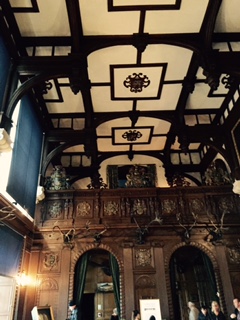
Baronial hall at Longleat, the only Elixabethan remnant in the house but an impressive room nevertheless
Baronial hall at Longleat, the only Elixabethan remnant in the house but an impressive room nevertheless. The  huge television screen is not Elizabethan!
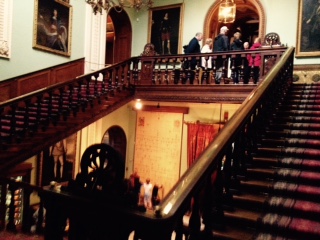
Front staircase at Longleaf. The house contains over 1000 paintings many of them portraits of the family over 600 years and also a number of royal portraits. Elizabeth 1 visited this house
This is the
This is the “ordinary” dining room with just the Sevres service!

Leaving Longleat after a very pleasant lunch in the crypt of the mansion, we journeyed back to Chippenham via the beautiful small Cotswolds town of Bradford on Avon which contains three very historic churches.  We were able to visit two of them. The most ancient is a small and simple Saxon Church, the Church of St Laurence whose existence is noted by William of Malmesbury in the 1120’s but thought by him to date back to the time of St Aldheim (died 709) although this date is contested and the original Saxon site may have been on the site of the present Holy Trinity Anglican Church. This is an ancient church indeed and reminds me of the simple chapel we saw in Glendalough Monastery in southern Ireland some years ago.

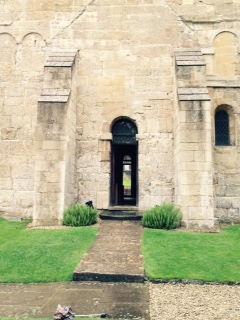
Entry to tiny Bradford on Avon Saxon church
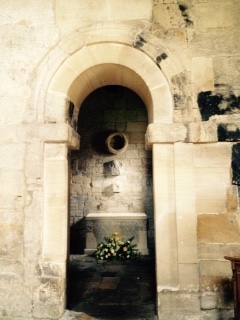
Bradford on Avon Saxon church C12th or earlier ..view of the simple sanctuary
Tiny Saxon church of St Laurence in Bradford on Avon dating back to at least the C12th where it is noted by William of Malmesbury
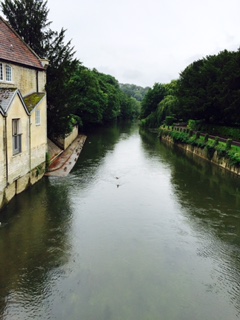
View of the Avon River at Bradford On Avon on a fairly grey day for an English summer
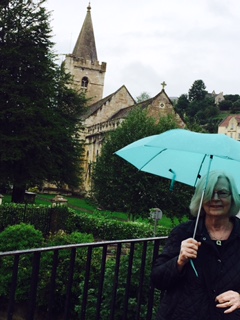
Ann on the bridge over the Avon River in Bradford on Avon with Holy Trinity Anglican church in background
Another view of Holy Trinity church in Bradford on Avon
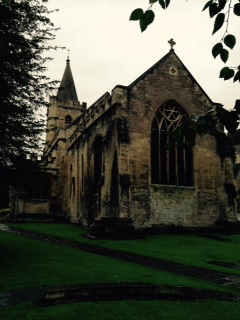
Exterior of Holy Trinity Bradford on Avon dating from C12th with many gravestones, most unreadable

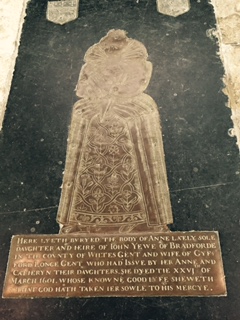
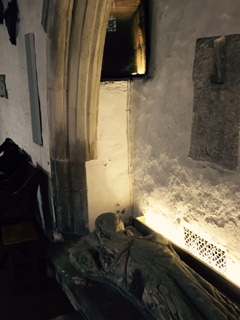
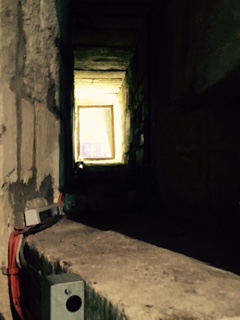
Holy Trinity is also an ancient church in Bradford on Avon although substantially rebuilt in the 1860’s. It certainly dates from the C12th on this site and ancient features include a faded wall painting in the sanctuary dating from c1300, the C15th tower, a funeral tomb for Anne Yew dating to 1601, the memorial to Charles Steward who fell off his horse in 1698 and the amazing “squint” or “hagiograph”…a long small corridor with a window into the sanctuary to enable leprosy sufferers to see the priest and hear what was happening in the sanctuary. In the former monastery in which the chapel was built there was a leprosy hospital. The Church will soon celebrate its millennium and is a lively and spiritually active community.

Anne Yew's 1601 tomb in Holy Trinity Anglican Church in Bradford on Avon
Anne Yew’s 1601 tomb in Holy Trinity Anglican Church in Bradford on Avon
View of Holy Trinity Anglican church in Bradford on Avon from the Sanctuary
The
The “Squint” window in the sanctuary of Holy Trinity Bradford on Avon which enables leprosy sufferers to stand in a separate room but to see and hear the service
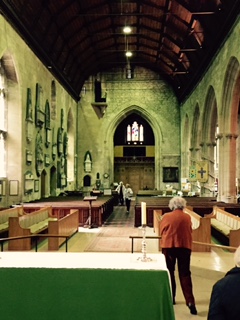
Interior of Holy Trinity Bradford on Avon dating from C12th
Norman
Norman “beggar’s door” at Holy Trinity Bradford on Avon
View of the
View of the “Squint” corridor from the room outside the body of the church
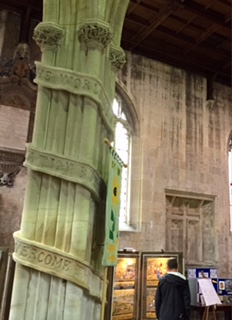
Unusual pillars in Holy Trinity Anglican church in Bradford on Avon containing well known Bible verses scrolled around

Chilling out in Chippenham in the Cotswolds

Saturday 22nd  and Sunday 23rd August

Saturday was a total chill out day for us in magnificent 28 degree Kentish sun.  We commenced a lengthy search for a prescription for Voltaren for Ann which is  not available off the shelf in Europe or the UK. We managed to find an online medical service to help but the prescription was sent to a pharmacy which was closed by the time we got there and re-routing of the prescription was not completed until 5.00pm in the delightful village of Faversham.  I managed to find a second-hand bookshop with titles in English at last!

The rest of the day was spent doing Richter genealogies in the garden at Forge House. We have now traced Ann’s father Murray Richter’s father Robert back two further generations to his first generation Australian father Adolphus  and his German grandfather Carl from a village near Hamburg.

Joyce and Brian, Ann and Richard celebrate a significant birthday for Joyce at the Red Lion, near Frinsted in Kent

We had an early start on Sunday with an emotional farewell to Ann’s cousin Joyce and husband Brian, Jack Russells Badger and Harvey and much loved Forge House and the tiny village of Frinsted. It is a long way from Berwick to Frinsted and we have come to love them very much over the last twenty years.  The beautiful Kentish sun which has been with us for the whole of our stay began to fade as we drove westwards into an Atlantic rainstorm.

We drove the 90kms to Guildford Cathedral and shared in the 9.45am Holy Communion Service led by the Dean the Very Revd. Dianna  Gwilliams.  Guildford is one of England’s newest cathedrals having been consecrated in 1961.  Begun much earlier,  its completion was seriously delayed during the Second World War.

Guildford Cathedral West Front
Commanding view over Guildford from the sides steps of the Guildford Cathedral
Commanding view over Guildford from the side steps of the Guildford Cathedral
View of Guildford Cathedral from the start of the hill climb path!

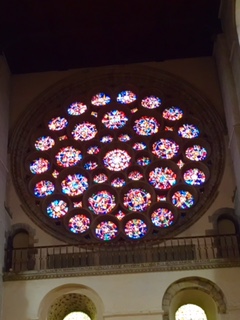
The Cathedral holds a commanding position on a high hill overlooking the university city of Guildford and looks the more austere in its position for the lack of surroundng gardens or trees.  The interior of the cathedral is Gothic in style and again very austere with subdued and small stained glass on the narrow windows and a beautiful Rose window in the sanctuary.

Guildford Cathedral interior

The Dean preached on Ephesians 6, the Christian’s defence described by Paul in terms of the armour surrounding a Roman soldier.  It was a spiritually helpful and clear address. and we were warmly wlecomed by members of the congregation and clergy.

We drove on through England’s gorgeous South West and Thomas Hardy and Jane Austen country  in the rain to Wiltshire and our home for the next five days Chippenham in the Cotswolds, one of the prettiest regions of England and very close to the Welsh border.

Chippenham is at the southern end of the Cotswolds and is quite a large town built around the wide and free flowing Avon River of Stratford fame. It has many fine streetscapes and fine old homes. The rain cleared in the afternoon and we were able to wander around the town, fairly quiet on a late Sunday afternoon.

Ann on the bridge over the Avon River in Chippenham in Wiltshire.
The peaceful flowing waters of the Avon River in Chippenham, Wiltshire, England
The duck army on the Avon River in Chippenham Wiltshire
St Andrew's Anglican Church in Chippenham Wiltshire England
St Andrew’s Anglican Church in Chippenham Wiltshire England
Streetscape in Chippenham Wiltshire England

Perambulating peacefully picturesque Penshurst Place

Friday 21st  August

Today we drove with Ann’s cousin Joyce and her husband Brian from Frinstead to the extraordinarily well preserved C14th Gothic stately home Penshurst in its own village of Penshurst high up in the Weald of Kent. This vast house was commenced in 1341 by Sir John de Pulteney and survived the Black Death, the peasant’s revolt and the hundred years war all in the hands of various Dukes of Bedford, Gloucester and Buckingham, the third of whom Edward Stafford fell out with Henry V111 and was hanged for treason leaving the Estate in the hands of the crown. Henry V111 used it as a hunting lodge and a place from which to woo Anne Boleyn.

Ann, Brian and Joyce at the entrance to the Gothic Baronial hall at Penshurst Place in Penshurst Kent
External view of part of Penshurst Place ..too large for iPhone photography
Part of the exterior of Penshurst Place taken from the formal parterre gardens.
Early Gothic windows at C14th Penshurst Place in Kent
Another view of the exterior of Penhurst Place in Kent

Eventually the Estate came to Edward VI after Henry’s death and he rewarded his tutor and Steward of his household by handing it over to Sir William Sidney. The House has been in the Sidney household ever since…remarkable continuity for such a stately home and its Tudor apartments are still used by the 2nd Viscount De L’Isle  Phillip Sidney and his wife Isobel. Phillip is the son of William Sidney , the first  Viscount De L’Isle and the former Governor General of Australia.

The Capital of New South Wales is named after this family of whom perhaps the most famous is the Renaissance scholar, poet, soldier and courtier Sir Philip Sidney, of whom C S Lewis in his role as Renaissance historian and literary critic writes: Even at this great distance Sidney is dazzling. He is that rare thing, the aristocrat in whom the aristocratic ideal is really embodied.

This remarkable estate sits in 2.5 thousand acres of pasture and forest high up in the Kent weald and the family own effectively the whole village of Penshurst, St John the Baptist’s Church and the vast house and garden. Once again no photography inside the house is allowed so no pics of the interior which is a pity because the house is entered through a front door leading to a Baronial hall of monumental proportions…timbered ceiling trusses and original huge roughly hewn C14th banqueting tables.  A small crypt contains the costumes used for the filming of the BBC production of Hilary Mantel’s Wolf Hall which was created at Penshurst in 2014.

View from the top of the parterre garden over the surrounding countryside around Penhurst Place. The view from the battlements and upper storey would be superb.
Porcupine statue in the Penshurst Gardens. The Porcupine is part of the Sydney family crest and identification.
Porcupine statue in the Penshurst Gardens. The Porcupine is part of the Sidney family crest and identification.

The State rooms begin with a vast dining room set with an unknown but early service, family  and royal portraits including James !, Anne of Austria and a copy of Van Dyke’s portrait of a mounted Charles 1, the original being in Buckingham Palace.

Several drawing rooms follow with early and magnificent furniture, a substantial Chinese porcelain collection, early tapestries; complex early embroidery, unusual European cabinets and tables of all  shape and sizes, and paintings from a range of periods but all rare and unusual, nothing can be taken for granted. The Long Room again has many family portraits and leads down a narrow stairway to a small panelled bedroom with again significant paintings and furniture. The Nether Gallery includes a substantial collection of arms and armour.

A feature is two exhibition rooms with a photographic gallery of the last 150 years of the Sidney family including many significant historic events and the damage to the house in World War 11. The photos are kept up to date and help viewers to understand that Penhurst Place is still a living and lived in home.

The gardens are quite remarkable and beautifully tended by a team of gardeners. There is the formal lime tree entrance drive,  a formal parterre garden with a beautiful oval pond well stocked with golden fish.  Terraced down the hill the gardens include wonderfully productive fruit trees of all kinds, large topiary gardens, a substantial rose garden, the heraldic garden, the nut garden, the magnolia garden, many paths with impressive herbaceous borders, Union Flag garden, Diana’s bath and the Porcupine statue.

View of the terraced gardens at Penhsurst
One of hundreds of floral displays at Penshurst Place
Penshurst Place oval pond well stocked with fish in the centre of the formal parterre garden
St John the Baptist Church from the formal parterre garden
Penshurst St John the Baptist Church
Penshurst Place, the Heraldic Garden
Penshurst Place, another view of the Heraldic Garden
Penshurst Place ..watchers at the oval pond

Penshurst Place is a personalised dwelling of peace and tranquility in a beautiful weald setting with wonderful views all around. It is an exceptional achievement to have house and gardens lasting 600 years through largely one family and a fine tradition of expert gardiners.

Detailed doodling around in Down House with Darwin in Downe

Thursday 20th August

Today we drove to The Down House, the family home of Charles Darwin in the leafy village of Downe not that far from us in Kent.  I have had a life-long interest in Darwin from university days studying Biology.  All of my studies in Biology and Biogeography and genetics forced me to realise that there is a deep unity in the organic make up of all living things and indeed that living things themselves are the product of natural substances found in the environment of the universe. At the same time I was getting excited about my university studies in the history and philosophy of science and realising that in relation to faith and science issues there were thinkers on both sides and all shades in between. Then again majoring in English Literature I soon began to see the need for the different kinds of literature in the Bible to be taken seriously for their original purpose and, for example, it was not necessary to ask historical questions about the parables, or the Book of Revelation, the last chapters of Ezekiel or indeed the first three chapters of Genesis.

This all became very clear to me in university but once I began teaching religious studies to senior students I became immediately aware that one of the biggest barriers to evangelism for thinking students was the issue of evolution and the Bible. How can we believe in this faith if we are required to adopt a literal view of the very important foundational stories in the Bible. I set myself on a course of studies which I have never left to delve deeply into Biblical hermeneutics, the Biblical text and its meaning, approaches to understanding Genesis,  evolutionary theory and the philosophies such as creationism that were so inimically opposed to it.

It is still no easy task because the mass media and indeed many secondary teachers in the Humanities  continue in their presentation of Christianity to regard Christian faith as being totally opposed to evolution and never bother to look deeper. This is frustrating because students by and large are unaware that a vast array of modern geneticists and evolutionists are also very thoroughly committed Christians including leading Geneticist Dennis Alexander,  Francis Collins the key player in unravelling the human genome, Owen Gingrich, Harvard’s Professor of Astronomy and many others.  See my book on this blog for a detailed bibliography.

In the process of thinking over the years I amassed a rather large collection of books and studies on the science and religion debate and in the end, with the late and much loved Dr Tony Pepper, physicist and former teaching colleague at St Paul’s Anglican Grammar School, we wrote a book on the subject. I remain convinced that as Augustine,  Schaeffer and McGrath have clearly shown there is “no final conflict” in being fully committed to a physical understanding of human origins and having a high view of the Scriptures as being written to help reveal the true and loving nature of the creator God to all mankind.  I was pleased to find a remarkable coherence between the books in the Down  house study centre and the books on my shelf at home!

This is not to suggest that everything that Darwin wrote stands without modification as written. Biological science has added much since 1859 when the Origin was published and the science of Genetics was non-existent then. Factors other than “natural selection” may well be at play in the evolutionary process and on the other hand, Darwin himself would have and did object to some of the sociological uses “Darwinism” has been put to especially in the areas of eugenics, economic theory and psychology.

With all this in mind I went to the Down House with some trepidation fearing a polemical view on one side or the other. I found instead a thoroughly researched and beautifully preserved and presented exploration of the man, his family, and the methodologies he employed and a very fair treatment of the response to his work and the explosion in the church which resulted.  Most of us think of his “work” as the major books such as the Beagle notebook, the Origin, and the Descent of Man. We are often unaware of his detailed research into plant biology, barnacles, beetles, earthworms and many other areas of biology.

Down House in the Village of Downe in Kent, the marital home of Charles Darwin and his cousin Emma Wedgewood, granddaughter of Josiah Wedgewood
Rear view of Down House
Part of the very impressive and well manicured grounds and gardens of Down House.
Another view of the gardens of Down House

The three storey house is full of various experiments he undertook,  his greenhouse, beekeeping, wondrous grounds with fruit trees and forest walks as well as beautifully manicured gardens, the old mulberry tree outside his study is still there and much else besides.  It is an eerie experience to be in his study which was set up with help from photographs provided by his son Leonard who died in 1943. No photography is permitted inside the house so all we have a some external shots.

Part of the substantial vegetable garden at Down House
Fully operative beehive now part of the workroom attached to the Green house at Down House
The beehive showing the bees' escape route to the garden outside
The beehive showing the bees’ escape route to the garden outside
Richard setting off on Darwin's
Richard setting off on Darwin’s “sandwalk” through the fields of the estate at Down House and on into the forest. Darwin apparently used this walk as his thinking track as he formulated his experiments and ideas.
Richard having a think himself in a place to rest on the sandwalk
Ann beneath the very old mulberry tree which grew up and across Darwin's study window on the second floor of Down House. He refers t the tree in his notes
Ann beneath the very old mulberry tree which grew up and across Darwin’s study window on the second floor of Down House. He refers t the tree in his notes

Darwin was a loving family man and there is much about his family in the house and of course the tragedy of the death of his much loved first daughter Annie. Her death was the big factor in denting Darwin’s religious faith, not the complexities of nature for which indeed he at times does seem to point to a bigger story.  We saw “Annie’s box” which has been much written about, especially by Randall Keynes and to be in this peaceful house and to walk the “sandwalk” through the woods which apparently he often did to ruminate and think was a wonderful privilege.

Cover of our book Science + Faith: What is the problem? copies available from info at the beginning of this blog.
Cover of our book Science + Faith: What is the problem?
copies available from info at the beginning of this blog.

How many kinds of sweet flowers grow in an English country garden?

18th and 19th August

We packed up our London apartment  at the Barbican and handed in our Oyster cards for a refund. London is such a diverse, exciting and “learned” city that you could spend a year here and not scratch the surface. We have had many happy visits here and are sad to leave but we are looking forward very much to being with Ann’s cousin Joyce and her husband Brian in Frinsted, Kent

Taking  the overland train from London’s Victoria Station to Maidstone East,,a very pleasant journey,  we soon left the suburbs for the rolling hills  and fields of the Northern Downs of Kent. Maidstone East is a major service town and here we picked up our 6 on the floor manual Vauxhall Estate Car, England’s GMH Holden equivalent. It is a curious feeling for me to be driving a Vauxhall because my father always drove Vauxhalls ..four of them over the years. This one looks a bit sharper than our old grey and white family Vauxhall Cresta.

It was wonderful to drive again through the leafy narrow lanes of the Northern Downs through places called Hollingbourne and Wormshill to the Forge House in Frinsted, a tiny village of 18 homes and a C17th church surrounded by cropped fields and bluebell forests (no bluebells in late Summer!).  Forge House is the original blacksmith’s house of the estate of Lord Kingsdowne, of the Leigh-Pemberton family who just recently died. We had met him at a parish dinner on a previous visit. He was a leading British financier and finished his career as Governor of the Bank of England. He and his family have done a great deal for the village and for the church and he is greatly missed here. His wife continues to run the estate with her eldest son John and his family.

C17th? Anglican church in Frinsted in the hills of Kent near Sittingbourne
Celtic cross in the Church graveyard in Frinsted Kent
Frinsted and the road to Sittingbourne
Village view of one of the fifteen houses in Frinsted..this used to be the pub but now a private home
Frinsted main street!
sweet sign in Frinsted

This is our fifth visit to Joyce and Brian’s lovely home. Joyce is an Aussie but met Brian, a Brit in 1954 on a ship travelling to England. Brian joined the ship in Singapore and they had cabins close by.  Their romance evolved slowly as Brian was a sailor and away many months and sometimes years at sea. They finally married in 1961 and prior to children Joyce joined Brian, a senior engineer, sailing all over the world.

Ann Brian and staffordshire terriers Badger and Harvey in the back garden at Forge House Frinsted
Ann Brian and their two busy Jack Russsell terriers Badger and Harvey in the back garden at Forge House Frinsted
Ann and Joyce with Badger and Harvey in the garden at Forge House Frinsted
Brian surveying the next job in the amazing veggie patch at Forge House

Some 30 years ago they bought the Forge House in Frinsted because they needed a horse paddock for their daughter. It is a magic three storey home including a cellar. Apart from the odd car passing through the village the only sound here is birdsong, occasional church bells (Monday evening practice, Sunday morning and weddings!) and that’s about it.

Forge House, formerly the Village blacksmith's house. Brian and Joyce's home for over 30 years
Forge House, formerly the Village blacksmith’s house. Brian and Joyce’s home for over 30 years
Another view of Forge House with its wonderful gardens

I especially love the lovingly tended “English country garden with its summer flowers, wonderful vegetables and shady trees. Joyce  and Brian are readers, explorers and thinkers and the bookshelves here are full of yummy books on art, porcelain, history and architecture. It is a treasure trove for me in every way. They are wonderful hosts and have sheltered many Aussies far from home over the years. We feel privileged to stay here once again and have a rest from hard core touring. I enclose some pictures of their wonderful garden.

Flowers in Forge House garden with lots of bumble bees
and again
and again
and yet again
and yet again
rear garden at Forge House with potting shed and very well used green house
and more flowers
and more flowers
A shady spot in the Forge House garden
beautiful trees and wonderful birds in the Forge House garden in Frinsted
Wonderful sunroom at Forge House Frinsted
Wonderful conservatory at Forge House Frinsted

More Looking around in London

Monday 17th August

Today is our last full day in London and so far we have spent it hunting down Southwark Cathedral.    An easy task I thought …just take the underground to Southwark and ask someone where the Cathedral is.  Turns out the only Southwark Cathedral they knew was St George’s Southwark Cathedral (Catholic) which is itself an ancient Gothic cathedral in the process of substantial renovation. Inside it has an unusual painted roof with the chi rho symbol repeated and in general it is a restrained Gothic style interior with a beautiful modern stained glass window on the West face.

painted ceiling of St George's Catholic Cathedral in Southwark. Ancient Gothic currently undergoing major external renovation
painted ceiling of St George’s Catholic Cathedral in Southwark. Ancient Gothic currently undergoing major external renovation
Glorious fairly new stained glass window at St George's Catholic Cathedral Southwark
Glorious fairly new stained glass window at St George’s Catholic Cathedral Southwark

We retraced our lengthy walk back to Southwark metro and found the map at the station we should have looked at in the  first place and saw that Southwark Cathedral is actually to be found at London Bridge, one stop closer to London central. We arrived there through the busy Burrough Market at lunchtime and found a ready welcome from all staff.  Southwark Cathedral lays claim to be the oldest Gothic cathedral in London and who am I to argue?

Southwark Anglican Cathedral exterior view
Front entrance to Southwark Anglican Cathedral near London Bridge
Side view of Southwark Anglican Cathedral with unusual slate finish
Side view of Southwark Anglican Cathedral with unusual nabbed flint finish
Ann with close up of slate pieces used to provide the external finish of the Southwark Anglican Cathedral
Ann with close up of the sedimentary chalk and amazing semi-crystalline sedimentary flint found in South east England used to provide the external finish of the Southwark Anglican Cathedral

It is beautifully cared for and has many historic associations with old London. It is one of the sites of Chaucer’s pilgrimage in the Canterbury Tales,  Dickens writes about it  and Will Shakespeare and his brother allegedly were members of this parish in the C16th.  In addition Bishop Lancelot Andrewes, a Biblical scholar who was part of the Westminster team who worked on the King James Bible is buried here as is one John Gower, who was poet laureate to both Richard 11 (when he was not away fighting or imprisoned in Europe) and to King Henry1V. The Cathedral also has a magniicent new stained glass in honour of Queen Elizabeth’s Diamond Jubilee.  There is a very swish cafe here and we had a light but excellent lunch there.

Window dedicated to Geoffrey Chaucer whose pilgrims in The Canterbury Tales would have visited Southwark Cathedral in the C15th
New window in Southwark Cathedral in honour of Queen Elizabeth 11's Diamond Jubilee
New window in Southwark Cathedral in honour of Queen Elizabeth 11’s Diamond Jubilee
Memorial scupture and window above not in photo dedicated to William Shakespeare who with his brother allegedly were members of Southwark Parish for a time in their day
Glorious stained glass in Southwark Anglican Cathedral. Most of the glass is new as much was destroyed in WW11 bombing
Tomb of John Carr, Poet Laureate to Richard !! and Henry !V in Soutwark Anglican Cathedral
Tomb of Lancelot Andrews Bishop and Biblical Scholar who was part of the Westminster team who helped to create the King James Bible

The Cathedral has a mellow and warm  feel with clearly a very caring congregation busy in and around the Cathedral in many roles. The interior is marked by a remarkable bronze and wooden screen behind the altar which features individuals who have played a significant role in the church’s long history. The simple pulpit and modern brought down communion table make an impact as does the beautifully painted and sculpted ceiling in the Crossing. This is an ancient Gothic church with warmth and love.

Impressive carved and modelled bronze and wooden screen behind the high altar with figures prominent in the church's long history
Impressive carved and modelled bronze and wooden screen behind the high altar with figures prominent in the church’s long history
Well maintained painted and carved ceiling in the crossing of Southwark Cathedral
Interior of Southwark Anglican Cathedral
View of east wall from centre of Southwark Cathedral
Simple modern pulpit and communion table in Southwark Anglican Cathedral

After lunch we watched the boats plying their trade under London Bridge for a while then ventured back into the city for a final wander through the streets of old London Town. We got out at Oxford Circle which is at the junction of Oxford and Regent Streets and absolutely retail centre. We walked the length of Regent St on one and a half sides including past Piccadilly Circus and down to Waterloo Place and the astonishingly tall tower of the Duke of York looking out over Green Park and Buckingham Palace.  The traffic of mainly double decker buses and taxis was busy as ever in London and the fashion shops like Burberry and Calvin Klein were in full expensive swing. We managed to resist buying anything and returned to our pad at the Barbican.

New skyscrapers emerging from the London skyline as seen from the south bank of the Thames
All Souls Langham Place Anglican Church at the top end of Regent St made famous by John Stott's work as Vicar and Vicar emeritus. John's evangelican leadership in the second half to the C20th was second to none and his preaching, writing and Biblical scholarship is of the highest standard and has been a help to vast numbers of Christians around the world
All Souls Langham Place Anglican Church at the top end of Regent St made famous by John Stott’s work as Vicar and Vicar emeritus. John’s evangelican leadership in the second half to the C20th was second to none and his preaching, writing and Biblical scholarship is of the highest standard and has been a help to vast numbers of Christians around the world
Extraordinary height of the Duke of York Statue in Waterloo Place London, a square celebrating England's wartime leadership heroes
Extraordinary height of the Duke of York Statue in Waterloo Place London, a square celebrating England’s wartime leadership heroes
Icons of London traffic..black cabs and red double decker buses
Another view of Waterloo Place with Edward V11 as military leader extraordinaire on horseback
Picadilly Circus in full flight

Tonight we had a very happy reunion  dinner with Beaconhills staff Colleague Amara Jensen.

Ann and Amara Jensen from the staff at Beaconhills College currently on leave and working in London

Tomorrow we train to Maidstone to pick up a car to travel to Frinstead Village in Kent, home of Ann’s cousin Joyce and her husband Brian. Not sure what the wifi situation will be there so there may be a five day gap in the blog. Regards to anyone who is still reading occasionally!

Spirituality and Portraiture in London

Sunday 16th August

Today we took it quietly in the morning after five days of quite hectic activity. We slept in; organised a date with Beaconhills staff colleague Amara Jensen who is also on leave in London; caught up with some overdue washing and generally rested our aching feet and backs!

We had the privilege today of worshipping in English!  for the first time in six weeks, not once but twice in two very different settings both with congregations of over 500.  The first was the 11.30am Sung Eucharist at St Paul’s Cathedral in London. What a privilege to worship in this place where folk have gathered for 1400 years in one building or another and in this building which through heroic efforts of staff and fire-fighters survived the bombing raids of the Battle of Britain.

Ann in front of ancient Roman walls in London revealed recently after excavations for a new building
On the way to St Paul’s Ann in front of ancient Roman walls in London revealed recently after excavations for a new building
St Paul's Cathedral interior at the close of the 11.30am sung eucharist
St Paul’s Cathedral interior at the close of the 11.30am sung eucharist
Inside the mighty dome of St Paul's Cathedral London
Inside the mighty dome of St Paul’s Cathedral London
Statue of St Paul in the gardens surrounding St Paul's Cathedral London
Statue of St Paul in the gardens surrounding St Paul’s Cathedral London

The choir for the service was a visiting all female choir, Aurora Nova, because the Cathedral choir is on a Summer break. The choir was superb and they sang arrangements by the ‘Oxford’ composer Cecilia McDowall who is ‘composer-in-residence’ at Dulwich College London. Her music for the Communion Service has been described as having a freshness, brightness and fidelity about it, combining flowing melodic lines and occasionally astringent harmony with rhythmic vitality.  That’s exactly as I found it and a wonderful aid to meditation and worship. The voluntary was an amazing Toccata from Symphony No 1 by Rachel Laurin (born 1961). A magical piece well received by the congregation. The organist was not named in the service notes.

The Preacher was the Reverend Paul Arbuthnot, a “minor canon”  of St Alban’s Cathedral who preached on the Gospel for today..John 6:51-58 “Unless you eat the flesh of the Son of Man and drink his blood, you have no life in you.”  In a service occasionally interrupted by backpackers and family groups lurching around oblivious to a service being in progress I thought he did a brilliant job reminding us of the advertising slogan “You are what you eat!”  Yes, Jesus may have been referring in some pre-emptive way to the eucharist but the eucharist is no use to us if our lives are not reflecting our spiritual bond with Jesus, who he was, what he taught, and how we live the faith we profess. It was clear, concise and to the point and we appreciated it especially after  a drought of teaching in the last month. We were greeted warmly by the preacher as we left the service.

Holman Hunt's portrait of Revelation 3:20 ...one of three he painted This one in St Paul's Cathedral London
Holman Hunt’s portrait of Revelation 3:20 …one of three he painted This one in St Paul’s Cathedral London

The second service we attended today was the 5.00pm service at Holy Trinity Anglican Church in Brompton, once again with well over 500 in attendance at this 1829 neo-Gothic parish church in the middle of London’s Sloane area near the Victoria and Albert Museum. This parish of course has been made famous by the outreach media work of its Vicar and leader Niki  Gumble of Alpha fame. The church has three other centres and has planted upwards of ten new churches in greater London.

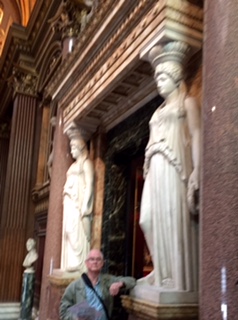
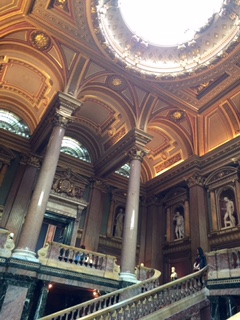
Amazing architecture of Victoria and Albert Museum..Renaissance and Classical happily mixed

Other than the ancient feel of pointed arches, wonderful frescoes in the sanctuary and beautiful stained glass in the East wall windows there could not be a greater contrast in the worship.

First of all it was an outreach service very directly aimed at the younger set (although the congregation consisted of quite a few greybeards like us!)  A vast high screen filled the front of the sanctuary and a very bright light show illuminated the whole sanctuary making St Pauls’ rather dainty candles look a little pale.  No photography was permitted so I cannot illustrate this service.

Beneath the screen right on 5.00pm  miraculously appeared a substantial rhythm band fired by an even more substantial sound system and after a brief opening prayer we moved quickly and emphatically into a series of Gospel songs enthusiastically taken up by the congregation.   At Berwick Anglican we are used to a good sing at the start of the 10.15am service (nearly always two songs and an outstanding band and singers).  But this was something else again…sustained singing of six songs which included free singing and the creation of a mood of seriously asking the Holy Spirit to be present in and through the whole service. It was powerful and strong and made a significant impact on many present who seemed to know what to expect and what to do as did our niece Naomi with whom we went to the service.To us as outsiders it was demanding but also helpful although (again as an outsider, maybe too long! especially after a long day. If I was 17 I wouldn’t have cared!)

After readings and an intercessory prayer the sermon was given by one of the Parish curates the Revd Rob Hall and  was based on an exegesis of Psalm 27 ..David facing overwhelming enemies but trusting God and going to God first rather than going to arms. Rob’s theme was fix your focus and feed your faith and his presentation was equally communicative as the morning service, establishing a real intimacy with the huge congregation (which sits in two levels upstairs and downstairs) and using no notes but very clever AV and online illustrations.  At the close of his address there was a call for conviction and repentance and a significant number of people responded. The service closed with more vital singing and a blessing.  We thoroughly enjoyed both services even though they were at opposite ends of Anglican expression. For me personally the joy of Anglicanism is the breadth of its worship and I would dearly love to see greater love and understanding shown by both sides in our very polarised Melbourne Diocese. Each type of liturgy has much to offer different types of people. Viva la difference!

In between these two services we visited the  very impressive (and free! yippee!) National Portrait Galley near Leicester Square. It was so exciting to see so many of my favourite people in wonderful portraits both modern and ancient.  Photography is difficult and I know I should be giving credit to the artist rather than the subject but most were unknown to me so I focussed on the people being painted. I did note what a successful portrait painter pre-Raphaelite John Millais came to be.  The photography is dodgy but I include a few. The highlight was the tiny drawing of the reclusive Jane Austen, carefully encased in glass and impossible to photograph.  Here are a few of my heroes in no particular order!

Charles Darwin
Charles Darwin
Mick Jagger by Andy Warhole
Mick Jagger by Andy Warhol
John Wesley
John Wesley
Lord Shaftesbury
Lord Shaftesbury
Thomas Arnold of Rugby School and father of Matthew
William Blake
William Blake
William Yeats
William Yeats
Keats
Keats
Kingsley Amis, author of
Kingsley Amis, author of “Lucky Jim” funniest English novel after Waugh’s “Decline and Fall”
Beatrix Potter
Beatrix Potter
The Bronte Sisters
The Bronte Sisters
George Elliot
George Elliot
Isaac Newton
Isaac Newton
James Joyce
James Joyce
John Donne (young )
John Donne (young )
Kenneth Clark who wrote
Kenneth Clark who wrote “Civilisation” and who started me on this quest for this trip
NIcholas Pevsner who wrote so much about English Cathedrals, Stately homes and English architecture in general and has influenced me greatly
NIcholas Pevsner who wrote so much about English Cathedrals, Stately homes and English and European  architecture in general and has influenced me greatly
Shelley
Shelley
Thomas Cranmer
Thomas Cranmer

William Wordsworth was missing and the staff member agreed there was a portrait and it was probably on loan.