Colin Renfrew: Prehistory: The Making of the Human Mind


Colin Renfrew: Prehistory: The Making of the Human Mind
Images of books and authors August 2024
ANDREW PRIDEAUX. JOB, ENDURING HOPE
and PATRICK O’BRIAN, MASTER AND COMMANDER
Andrew Prideaux

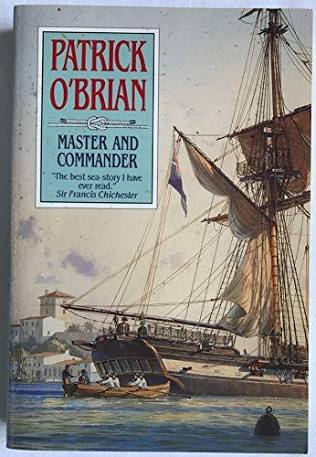
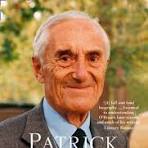
Patrick O’Brian: Master and Commander, p/b, London, Harper Collins,2002
Patrick O’Brian was a distinguished and prolific C20th English writer fluent in French, Spanish and Catalan. Married to Mary, mother of Count Nikolai Tolstoy, O’Brian was an autodidact and wrote many short stories, reviews, translations and novels. He translated Papillon from French to English, wrote a biographies of Picasso and Sir Joseph Banks and famously wrote twenty novels about the Royal Navy and the Napoleonic wars.
In brief Master and Commander, the first of his naval novels, tell the story of the impoverished Lieutenant Jack Aubrey who gains as his first command the sloop Sophie, a small but highly manoeuvrable ship. He persuades his newly found doctor friend Maturin to join him. Together they go to battle against their French and Spanish opponents during the C18th Napoleonic Wars and remain together for an additional nineteen novels!
Not being a lover of boats, ships or maritime warfare of any sort I found the first three chapters of this book demanding to say the least and unreadable to say the truth. His key character Jack Aubrey is clever at sea but makes himself ridiculous on land. His friend Maturin is thankfully, an excellent support.
Gradually and unwillingly I began to make sense of this story and to endure it rather than enjoy it. In my edition, the author’s notes indicate that all the military and and seaborne battles and skirmishes are taken directly from the Naval Chronicle and the Admiralty papers in the British Public Record Office. I found this encouraging, knowing that the events really did happen! I did note that O’Brien makes no attempt to lionise his hero and Jack Aubrey’s ineptitude in public events and willingness to bed the wives of his superiors, I am guessing, is simply demonstrating the normal routines of C18th British sea going morality!
I love to read but I have to say I will not live long enough to read the other nineteen or so volumes in this series by O’Brien. Just finally, towards the end of this story, I did find myself identifying with what C18th warfare in the world’s oceans might have been like and what a debt is owed to those who lived that life. 4 stars but never again!
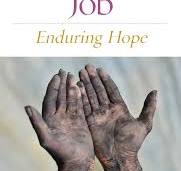
Andrew Prideaux: Job, Enduring Hope, Sydney, Aquila Press, Reading the Bible Today Series, 2024
The Reading the Bible Today series has been built around Australian commentators presenting their wealth of Biblical insight on paper. Andrew Prideaux’s commentary on the Old Testament book of Job is the latest in this series. Covering 383 pages Job, Enduring Hope is no small read and his 390 footnotes demonstrate Andrew’s careful attention to the Hebrew text and his interaction with a remarkable number of modern and ancient scholars who have written on the Book of Job.
A central value of the Book of Job for readers is the pastoral benefit to those who struggle in life for whatever reason including perhaps illness or other tragedies or harmful events in their lives. Christian folk can travel along comfortably with their love for and faith in God but they are not immune from traumatic events and tragedies which can shake them way off their runway.
They, like Job, begin to seriously wonder whether God is all he is supposed to be and indeed whether he is any help at all or even is God actually there and if he is why has he allowed these things to happen to me. This is certainly Job’s situation as he cries out to God in despair and indeed in anger.
Uniquely in the Bible, Job is not a Hebrew, but comes from the land of Uz, outside God’s covenant people of Israel. Nevertheless Job remains a God-fearing man who’s life and commitment have constantly been given over to the worship and service of the God of Israel.
In the opening narrative Satan challenges God with the idea that Job only serves and worships God because of his comfortable and wealthy lifestyle. Satan suggests that if these things were taken away Job would no longer worship or be commiteedqo God but would reject him in his misery.
As the story unfolds Job loses his home, his wealth and his family and he himself suffers a horrifyingly destructive skin disease which makes him an outcast from his society and a horror to behold even to his wife who calls on him to turn against God.
Job is supported in his despair by three well-meaning friends who offer him plenty of advice with turns out to be meaningless for Job who is looking for at least a statement or a conversation with the Lord God but nothing comes.
After the failure of the three friends Job is confronted by the young Elihu whose brash and confident rebuking of Job’s desire to speak with God humiliates Job even further. Job deigns not to even comment on Elihu’s words which to him are irrelevant. Job knows he has been loyal to God and cannot believe this traumatic hurt and chaos in his life.
Finally, through a huge storm, God does address Job directly with a powerful account of his creation and sustaining of the universe in all its complexity. God does deal with Job’s trauma but he is humbled and encouraged. He quickly learns to recognise that, difficult though his situation is, God has a purpose for his world and his people, even in those things which, like his suffering, seem to make no sense at all.
Job’s faith in God and his understanding of God’s sovereign purposes had been sincere but he needed somehow to acknowledge the deeper mind of God and his purpose and to trust him no matter what trials come!
God opens Job’s eyes to the wonder of creation and a reminder of his own smallness. He gains a sense that, even in his misery, God’s power and love are for him and with him in his loss and that even though it is a mystery to him why he should suffer, he must trust God to take him through it. His view of the world and God needed to be enlarged.
In return God vents his anger on the three friends who has spoken so wrongly about Job. Indeed they are only restored because Job intercedes and prays for them. God also restores Job’s place in the world a hundredfold.
The story of Job requires careful reading and deep thinking. Readers of this commentary will find many useful insights and a thoughtful and fresh understanding of this remarkable and significant component of Scripture. This is a commentary to be read carefully and thoughtfully and it will return rich spiritual encouragement.
Patrick O’Brian: Master and Commander
Andrew Prideaux: Job: Enduring Hope
Saul Bellow: Henderson the Rain King, p/b, London, Pan Books Ltd.,1959 (1962)
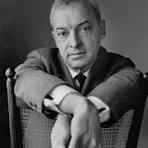
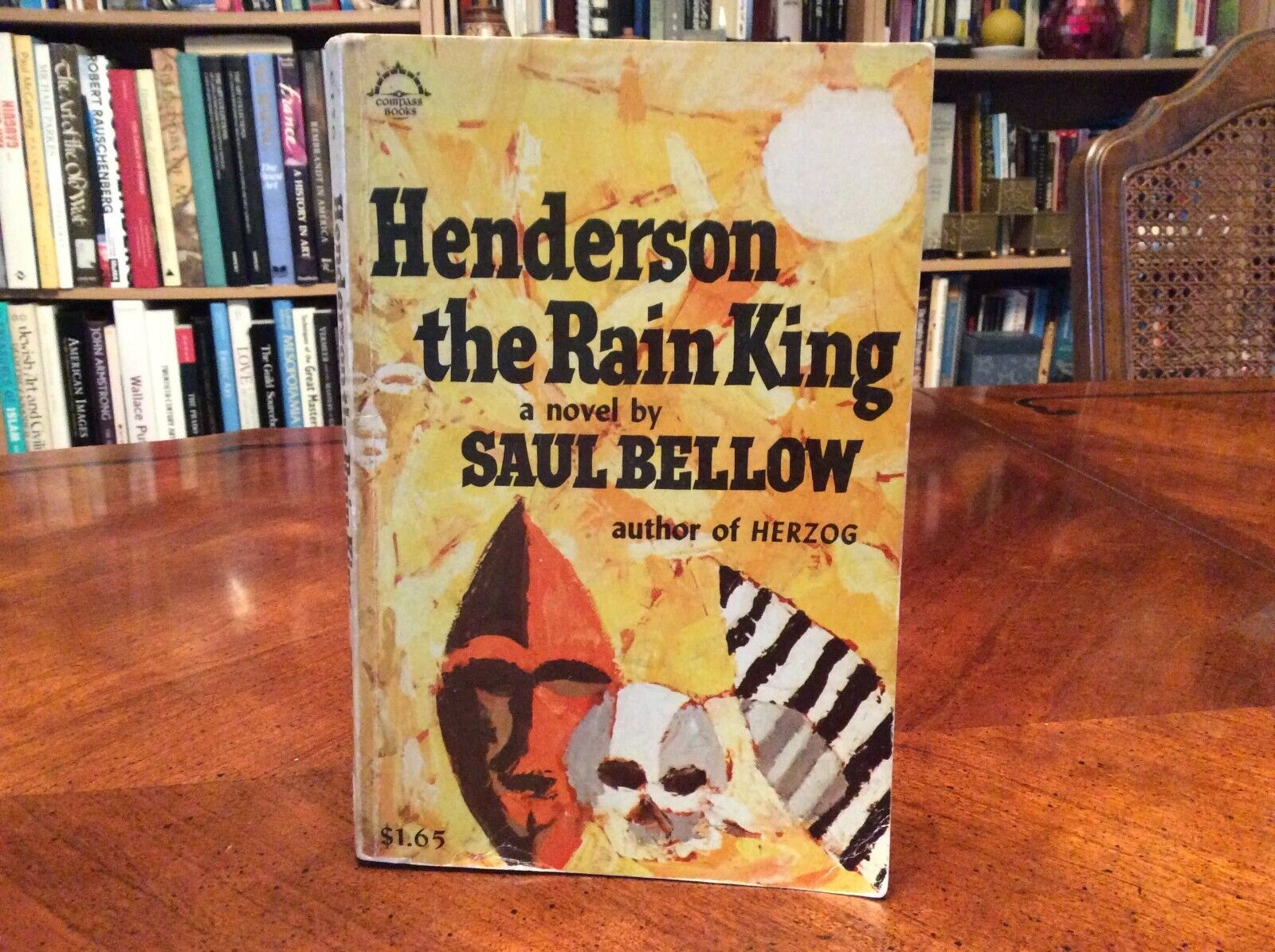
Jewish author Saul Bellow sits high on the list of America’s finest writers. Henderson the Rain King is an extraordinary roller coaster of a novel based around a wealthy Middle West playboy, highly decorated for his achievements in World War 11. Henderson is a man of unusual physical strength and heir to a very substantial income thanks to his hard working and highly sucessful father. Henderson knows he should be doing better with his wealth and also knows he should be more faithful to his wife and children but struggles to succeed in either case. On a whim he ends up in Africa and fortunately teams up with a faithful and honest African sidekick called Romilayu.
Any attempt to summarise Henderson’s activities in remote parts of the African continent would defy any serious attempt. As usual with Bellow’s novels the heroes antics and activities are interlaced with philosophical thoughts and quotations from both well known and obscure philosophers and writers. I have to admit that there were times in this demanding novel that I was severely tempted to throw the novel away as a load of rubbish but being a determined novel finisher I stayed with it and have to admit that the clever finale made the book impossible to put down.
I have the greatest respect for Saul Bellow’s writing. I would, however, put this novel further down the list than most of his novels. 4 stars.
Paul Lynch: Beyond the Sea: London, One World, 2019.

Challenging story by well regarded Irish author Paul Lynch about two men, one an experienced fisherman and the other a volunteer, who venture out to sea against the advice of other fishermen due to the promise of very heavy seas. Inevitably their small craft is embroiled in a storm of fearful dimensions which drags them far away from land in any direction after their motor seizes.
The remainder of the story describes their horrific battle with life and death as they drift mercilessly at the hands of a vast ocean with minimal food and water and with virtually no hope of rescue. The centre of the novel hinges on the relationship between Bolivar the experienced fisherman and Hector his untried assistant.
This short novel keeps the reader alert with the very different character of the two protagonists creating an unstable and difficult relationship between the two men. Paul Lynch retains the reader’s interest with this tension between the two men and the reader becomes persuaded that no-one will survive this adventure.
One piece of philosophy stands out in the novel on page 163. Bolivar remarks Man gives birth to his own problems. I see this now. The world has always been silent.
Although my wife found this narrative repetitive and boring I personally enjoyed the tension between the two men in their attempts to stay alive. I have to say this story did nothing to change my long held view that sailing around in the ocean is a very dangerous pastime indeed and one that in 75 years I have never tried! I am less persuaded that the world has always been silent.
4 stars.
Amor Towles: A Gentleman in Moscow: p/b, London, Windmill Books, 2016.

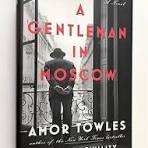
Outstanding second novel from Towles who for over twenty years was an investment professional but now devotes himself entirely to writing. In a remarkable tour de force Towles tells the ‘history of Moscow’ from pre-Revolutionary days to the elevation of Khrushchev in 1958. He has achieved this with an extraordinarily light touch because the central interest in the story is not the history of Russia but rather the invented complex life of Count Alexander Rostov, born in St Petersburg in 1889 and at the start of this novel narrowly escaping death by firing squad for the poetry he wrote. Instead Rostov is condemned to live permanently in a small apartment in the famous Metropol Hotel.
Also living at the hotel at that time was an adventurous young child named Nina who has studied and flitted around every inch of the hotel and who became a partner in crime with Rostov as they formed an unlikely friendship and spying partnership. Eventually Nina goes off to school, grows up and marries and has a child but the two meet again at the Metropol briefly because Nina’s husband has been condemned to five years hard labour in Eastern Russia. Nina appeals to Rostov to take care of five year old Sofia until she can find a place to live and support herself somewhere near her husband’s imprisonment.
The second half of the narrative describes the challenges Rostov faces in supporting Sofia as she grows up at the same time as he has a significant role to play as chief of staff of the restaurant at the hotel, responsible for all major events. Towles weaves a magical story of the Count’s upbringing skills and his organisational skills whilst at the same time coping with the constantly changing and highly dangerous ever present enemies of his wealth and power.
This is an exceptional novel in many ways. There is humour, sadness, danger and complexity of every sort in this narrative which runs at a pace impossible to put down, as one critic styled it “utterly mesmerising”. I entirely agree. 5 stars and rising.
Books Read May 2024
Rachel Mead: The Art of Breaking Ice: A Novel, p/b, South Melbourne, Affirm Press, 2023

Exceptional story of Nel Law, the first Australian woman to travel to Antarctica, joining her husband Phil Law in 1960-61 initially as a stowaway. In 1965 Nel founded the Antarctic Wives and Kinfolk Association of Australia.
Phil Law was a visionary Antarctic leader, Director of the Australian National Antarctic Research Expeditions (ANARE) from 1949 to 1966. He established Mawson, Davis and Casey stations an lead expeditions that explored over 5000 kilometres of coastline and approximately 1,000,000 square miles of territory as well as establishing world-class scientific facilities in Antarctica.
Nel Law was a talented Australian artist with a solo exhibition at the Leveson Street Gallery in Melbourne. Rachel Mead has access to Phillip Law’s papers which were donated to the Australian National Library including diaries, reports, press cuttings and scrapbooks including material about his wife and also Nel’s own diary.
Having said all this Rachael Mead reminds us that her novel is a fictional account of Nel’s first journey to Antarctica and the outline of Nel’s interactions with the various events and individuals in the novel is purely fictional. The result is a thought provoking and entertaining novel which keeps the reader on edge constantly throughout. It is difficult to contemplate what it would be like for just one female working and painting amongst a team of some 300 men for over a year. Rachel Mead has given us an impressive account of what that first experience might have been for Nel Law. 5 stars.
Saul Bellow: Herzog, p/b, Ringwood, Penguin, 1967 (1964)

Canadian/American Saul Bellow who died in 2005 was born of Russian Jewish parents. His many widely read novels have placed him in the highest order of American literature winning the Noble Prize and the Pulitzer along with many other literary awards.
Bellow’s Herzog, about a world weary academic unhappily in love and with a penchant for writing, but never sending letters to a vast array of academics and writers alive and dead, is a remarkable novel, impossible to put down.
The erudition and intensity of Bellow’s writing challenges the reader to follow up his remarks made in several languages as well as feeling left behind by his knowledge of just about everything that matters about the world and human life. In Herzog the reader finds humour, sympathy, sadness, amazement, empathy, wisdom and so much more. This is a rare book I once read as a teenager and again now in my 70’s and enjoying it even more now than I did then.
Herzog had many girl friends and two failed marriages and as the novel draws to a close he is perhaps getting ready to marry a third wife. Saul Bellow ought to know about these things as he had five marriages himself! Herzog is a novel to read far more than once because each time you read it a whole new set of ideas opens up. 5 stars.
BOOKS READ MAY 2024
Tom Nancollas: Seashaken Houses: A Lighthouse History from Eddystone to Fastness: p/b, London, Penguin, 2018

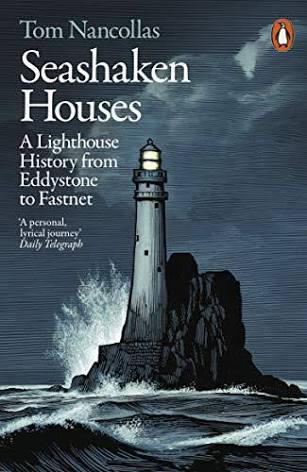
Dramatic history of several of the most famous British lighthouses, written by building conservationist Tom Nancollas. These histories contain some of the most horrific events of loss of life that could be found outside war zones or perhaps some of the appalling loss of life due to tidal waves or massive floods. This highly detailed work has the potential to be boring to all but genuine lighthouse enthusiasts but Nancollas manages to surprise us with a series of unlikely events and a lively set of personalities. The interlude Blackwell is a highly technical chapter of the history of lighthouse development which most mere mortals will struggle with but engineering experts will love.
The lighthouses studied in detail are Eddystone near Plymouth, Bell Rock near arbroath Scotland, Haulbowline near Carlingford Lough Ireland, Perch Rock at the mouth of the River Mersey in Wirral, Wolf Rock off Land’s End in Cornwall, Eddystone off Looe in Cornwall, Bishop Rock, 32 Miles of Lands End in Cornwall, and Fastnet off West Cork in Ireland. The final chapter is a plaintive call to make sure we never lose these beacons in the sea which have done so much to save the lives of so many.
I struggled with this book initially, not being of a technical bent but gradually the horror of lives lost at sea and the remarkable achievements of those who managed to plant lighthouses in the middle of the ocean gradually took me over. The engineering, courage and determination of these men (and they seem to have been all men) is quite astonishing. Nancollas brings meticulous detail to his account and lightens the complexity with humour and insight. 4 stars.
Trent Dalton: Boy Swallows Universe, p/b, Fourth Estate/Harper Collins, New South Wales, 2019.


Australian journalist Trent Dalton’s breakthrough novel has been a sensation in Australian publishing earning plaudits galore in Australia and internationally. Set in south Queensland the story centres on the early and young adult life of Eli and August whose separated parents are both loving and caring but also deeply heroin addicted. The boys live originally with their mother and her lover Lyall in a run-down end of town and later with their father when their mother is jailed and Lyall is murdered. Lyall cares for the two boys but also likes a drink and works for a major drug player resulting in his death.
The novel describes their inevitably hectic journey into adult hood including their school days and their dreams. Their role model Slim has done many years for murder but does provide a balancing wisdom while he lives. Both boys have talent but their unsettled lifestyle leads them into deep waters, especially when they tangle with the legendary Brisbane drug dealer Titus Bros. The writer’s emphasis is on Eli but his silent brother August also provides an unusual and wise support. Lyall eventually achieves his lifelong goal of becoming a journalist but his background and knowledge of the drug scene leads him into very deep waters at the same time as he falls in love with the much older journalist Caitlyn Spiers.
This remarkable novel never stops to draw breath and leaves the reader constantly hungry and finding it very difficult to put the book down. For a first novel it is a tour de force, constantly challenging and surprising the reader but also bringing a real depth of character as well as the reality of the impact of the drug scene sweeping many parts of Australia. It is a long time indeed since an Australian novel has made such an impact. 5 stars and rising.
William Faulkner: The Sound and the Fury,Intro: Richard Hughes, p/b, Ringwood, Penguin/Chatto & Windus, 1982 (1931).
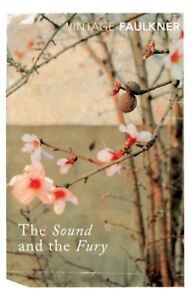
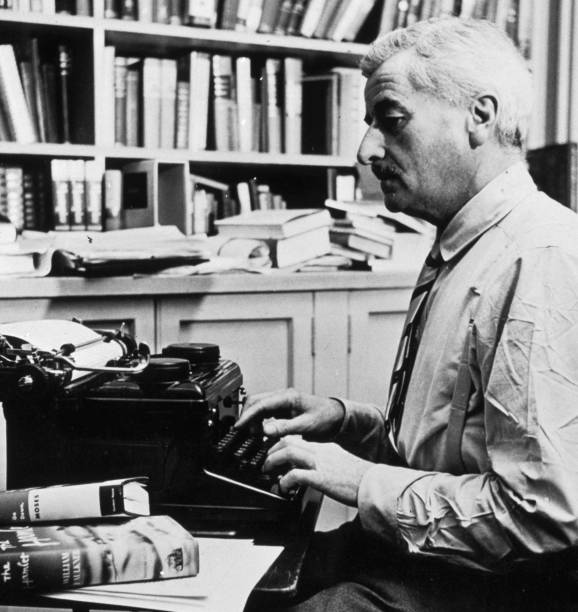
Traumatic account of the gradual falling apart of the American Compson family which included the very seriously disabled congenital Imbecile Benjy, now thirty years old, and still passionately devoted to his sister Caddy. The family survives in a poverty stricken environment, with increasingly unwell adults, ineffectual and poorly treated negro servants and a defiant rebellious niece. In spite of their poverty the mother is devoted to and deeply influenced by their Pentecostal church. Nevertheless the father who regularly cheats on his boss and anyone else he can, has amassed a fortune of $3000 which he has kept from the family.
There are two Quentins in this story, the first Quentin, a brother of the father, commits suicide at Harvard University and this complex story takes up the whole of chapter 2. The second Quentin is the rebellious niece who runs away from the family with her boyfriend and maybe or maybe not with the $3000, the final answer not being clear.
Richard Hughes’ preliminary notes provide sufficient information to enable a determined reader to make their way through Faulkner’s complex narrative and I for one am glad to have read this story. Every family and every individual has challenges, hard times, anger, defeat, love, acceptance and happiness and everything in between. Faulkner’s whimsical narrative is reminding us, if needed, that sound and fury are a part of all or our lives, and we all have our emotions, our wins and losses, our loves and failures at various times in our life on planet earth. The trick is to keep on keeping on!
Tony Payne: How to Walk into Church, p/b, Sydney, Matthiasmedia, 2015.

This little booklet is surprisingly full of good advice for practising Christians. It is written not so much for newcomers to a church because when you think about it, the first time you attend a particular church there can be a hundred different reasons for why you are there and just as many reasons why you might or might not continue to attend that church.
On the contrary this book is written for regular church attendees whether you are a weekly, fortnightly, monthly or yearly attendee. As someone who has regularly attended church all of my life I found a surprising amount of good advice in Tony Payne’s little monograph.
One key issue is the irregular attendee. That this is a major issue is very evident in many churches and let’s face it, irregular attendance springs from the set of priorities in our own life. If we are easily tempted to give church the flick, it’s because we prioritise other activities like sleeping in, having visitors, going away at the weekend, just doing other things on church day etc. Payne makes the point (p.37) that if we’re not there, we can’t love people, we can’t talk to them and encourage them, we can’t gather with them to listen and talk together, or simply genuinely share in their friendship and perhaps their challenges or problems.
A second key issue is Payne’s suggestion that we should prepare for church by using our brains, for example, by preparing the readings beforehand (p.41) but also being alert and ready to care for folk you know to be in need or having a hard time or who are shy or who simply need encouragement. Being alert to what is said also really shows that it is a rare service that doesn’t give you something to chew on about your own walk with God.
A third key issue is to come to church prayerfully. It stands to reason that if we we are already thinking negative thoughts when we first walk into church the experience is not going to improve! Again often it is what happens with interactions after church that counts whether in caring for new comers, good conversation during coffee after church, or simply being aware that a particular person is needy or is upset.
The above are only three issues that stood out for me in this booklet but Payne has some very wise advice and useful suggestions and he has done it all in a book that takes about thirty minutes maximum to read! I warmly commend this book.
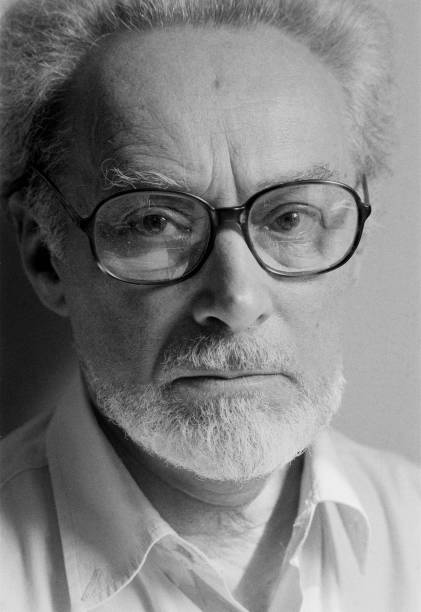
Primo Levi, If This is a Man, Trans. Stuart Woolf; Introduction, Frederic Raphael; Etchings by Jane Joseph, h/b, 7London, The Folio Society, 2000 (1947)
Of the vast number of documents and stories about the horrific German death camps of the Second World War, the sparing simplicity and matter of fact horror of Italian Primo Levi’s account must rank with the most important and certainly one of the earliest detailed accounts of the Jewish horror. Other survivors have spent much longer in the death camps whereas Levi was interred in Auschwitz in the final year of World War 11 and lived through both the horror and also the exit of the camp and the eventual Russian rescue. Nevertheless Levi has left us a stern and clear description, not avoiding the horror but relentlessly depicting the endless freezing grind, the viciousness of the treatment, the short lifespan of virtually all the inmates, and the various techniques used by each interred man to seek survival.
Levi was not a practising Jew and his outstanding knowledge of chemistry (top mark in the quantitative analysis examination at the Chemical Institute) resulted in his eventual selection to work in the Camp’s laboratories rather than continuing the heavy lifting work of most men working outside in freezing conditions over long days with minimal food and water.
The strengths of this Folio Society account include Levi’s Afterword: The Author’s Answers to his Reader’s Questions. These include why he has no expressions of hate for his German oppressors and no desire for revenge; Did the Germans themselves know what was happening; and Why were there no large-scale revolts? Levi provides extensive and thoughtful answers to these and other key questions which are particularly helpful. In addition the extensive introduction by Frederick Raphael is very useful and the remarkable and chilling etchings by Jane Joseph leave a lasting impression on the reader. As Frederick Raphael notes importantly, Hitler’s goal to destroy the Jews had nothing to do with the Second World War and it makes the existence of the events and the horror of the holocaust an experience beyond normal human comprehension.
Not many folk these days want to be reminded of the Holocaust and yet in an age of the Gaza and Ukraine wars perhaps it is the right time for this story to be told again and often.
Review of David Nicholls: One Day, p/b, London, Hodder & Stoughton, 2024 (2009)
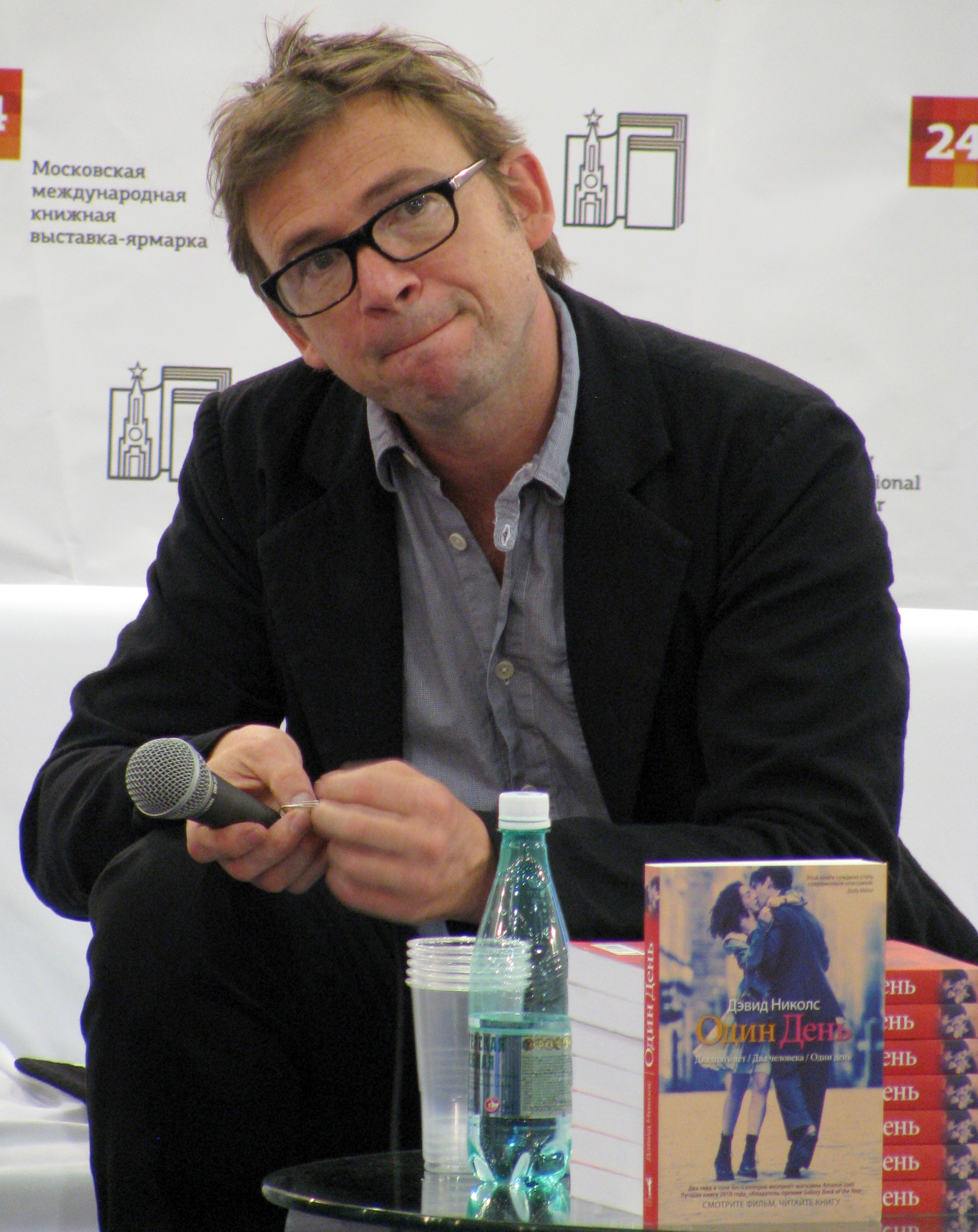

David Nicholls has written a remarkable and hugely popular novel of modern Western life. University graduates Emma and Dexter are good friends who never quite make it together until their mid thirties. Along the way their lives take very different turns with Emma finally reaching her goal of becoming a successful writer and Dexter’s life swinging between wild success and uncomfortable defeat. There is a great deal of alcohol and sex with other partners in between and as reviewer Nick Hornby accurately writes in his review, the novel is brilliant on the details of the last couple of decades of British cultural and political life.
Just when the reader thinks the couple are sorting things out and they are both about to live happily ever after a major crisis occurs which this reviewer will not spoil. Nicholls writes with assurance, energy and flair and with what appears to be a complete knowledge of the London nightlife scene. The novel holds both characters firmly in the reader’s grasp and there is a sense in which you cannot put down the novel and must read on which I have not felt for a long time. The reader loves and hates both characters at various times and the reader also yearns for different outcomes.
There is more than a touch of the Thomas Hardy in this novel and indeed Hardy does get a mention at one point, but then so do many other authors. One Day simply forces the reader to go looking for books you haven’t read for a while or indeed have on your shelf but have never read! As with Hardy’s books the reader inevitably gets deeply involved in the lives of both Dexter and Emma and also finds oneself reconsidering some decisions in one’s own life. I can think of very few novels which chain the reader to the book and refuse to let him or her put it down. I myself got up at 4.00am in the morning to finish reading this story because the book belonged to someone else and I was required to return. I have never read a book that cost me so much sleep!
Why am I reviewing this book for a Christian magazine? I think I can honestly say that there is no better book for a clergy person or youth worker to read if they want to really come to grips with the pressures, desires, goals and lifestyle of the “average” young adult today. If, like me, you have been sheltered by a Christian upbringing, this book will shake your comfortable view of the world and force you to take seriously the true reality of the lifestyle of today’s 20’s to 35’s in Britain at least!
Herman Wouk: The Caine Mutiny: A Novel of World War 11, p/b, New York, Back Bay Books, 2002 (1951).
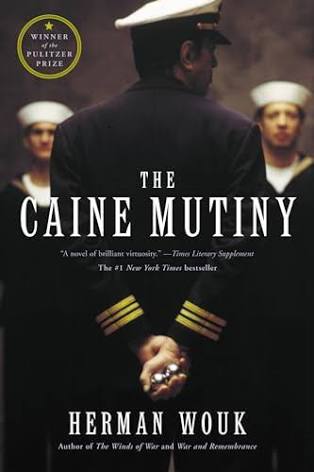
Pulitzer Prize winning author Herman Wouk wrote twelve novels, three plays and two works of non-fiction in his long life (died 2019, age 103). He received the Pulitzer Prize for the The Caine Mutiny. The story was in turn made into a popular movie in 1954, produced by Stanley Kramer and starring such luminaries as Henry Bogart, Fred MacMurray and Van Johnson. The Caine Mutiny is a large novel, the paperback version running to 537 pages of relatively small print.
The story thread line is based around reluctant World War 11 recruit Willie Keith and his on again off again night club singing girl friend Mae Wynn. After training Willie is signed up to the USS Caine, a repainted WW1 mine-sweeper that has seen much better days. Added to this challenge the new Captain aboard was Captain Queeg, a stickler for detail and precision, but with a tendency to be so wrapped up in small detail that the important events and necessary actions tended to be overlooked.
As a result and inevitably, relations between Captain Queeg and the rest of the crew deteriorated fairly quickly. Queeg made some serious errors of judgment in his leadership which made senior officers doubt his ability under pressure and at the same time Queeg spent an inordinate amount of time endeavouring to solve misdemeanours by crew members which were relatively insignificant and which were never finally solved at the time anyway.
The end result of this awkward leadership was that when a real disaster occurred, in this case a gale force typhoon, the Captain appeared to freeze under the pressure and was told by the Executive Officer Stephen Maryk to stand down. Captain Queeg did eventually and unwillingly stand down telling the leaders they would all be court-martialed. Under Maryk’s leadership the ship was saved and also was able to rescue sailors from another ship which had been destroyed in the typhoon.
The final section of the book covers the official court-martial trial of Executive Officer Stephen Maryk. This was a complex argument and makes for fascinating reading with a clever lawyer able to prevent Maryk from the disgrace of a court martial. The novel closes with the war over and Willie Keith still attempting to persuade Mae Wynn to marry him!
The Caine Mutiny is a powerfully written novel which maintains interest in spite of its length. Although fictional, the novel paints a powerful picture of the realities, challenges, fears and disasters of World War 11 sea warfare. Wouk’s knowledge of sea warfare is accurate and far-reaching. This novel has stood the test of time and still attracts interest. 5 stars.
Stephen McAlpine: Being the Bad Guys: How to Live for Jesus in a World That Says You Shouldn’t, p/b, UK, The Good Book Company, 2023 (2021)


Stephen McAlpine has pastored a number of churches in Western Australia, blogs online regularly and has written two books on Christianity and culture including this one. In this book McAlpine analyses the trend in Australian and Western society media for Christians not just to be disregarded and generally ignored but more directly to be regarded with hostility. He takes his introductory cue from the 1993 film Falling Down, which stars Michael Douglas as William Foster, an average law-abiding guy who ends up unwittingly on the wrong side of the law.
McAlpine regards Christians in the West today as being in this very situation. Christianity, he argues, is no longer an option; it’s a problem! He notes that the number of those who reject the faith they held until their late teens has risen dramatically. In addition Christians can no longer assume a seat at the cultural table, that place having been given to others. McAlpine notes that we should not ignore society’s calling out of Christians. Our first question should be are they right to call us out? On the other hand Jesus himself predicted that in the last days Christians will be condemned as evil.
McAlpine notes that some key factors in this change include a global persecution of Christians across the world, the preferencing of LGBTQI rights over religious freedom, the removal of Christian education in some Australian States and the fact that Christians were not active in the defence of cruel treatment toward homosexuals in earlier years. McAlpine quotes Mark Sayers: Our progressive culture seeks “the kingdom without the king!” McAlpine also notes that the individual is now enthroned in this new kingdom instead of family relationships of obligation. (p20)
Canadian philosopher Charles Taylor calls this “the age of authenticity” and it is fast tracked by massive technological progress including instant digital technologies alongside an army of instagram influencers. New ideas are conceived, birthed and implemented at breathtaking speed. (p.22) Christian culture in the West has been eclipsed and attempts to be clever like the pub church and early missional leaders like Rob Bell have simply faded away. The result is that many were left feeling burnt out, seeing little return for their labours and church attendees in many places left for good. Individual autonomy and personal authenticity at any cost now provide the ultimate meaning in the self.
Of course the Bible has prepared us to expect hostility as Christians. In Australia we have had a relatively peaceful time but no longer! The Apostle Peter taught us that there is a right way to suffer. These have come so that the proven genuineness of your faith …may result in praise. (p.42) We must learn to expect cultural, legal and political pressure where only certain ideas are permitted. We need to learn that secularism is not neutral (p47) and that our culture now actively suppresses dissent. (p.55). McAlpine notes that it is not just Christians who are targeted, citing JK Rowling as an example. (p50).
On the other hand McAlpine argues that playing the victim narrative is a dangerous game for Christians. We have freedom to worship, gather in public spaces and run vast Christian institutions. If anything, McAlpine argues, the church gained power in the West and then abused it. (p,68) He asks the question: has the church been aligned to power too closely? (p.69). The answer seems to be ‘yes. He suggests we should admit the reality of our failures and we often failed to speak up for the voiceless, powerless minorities. (p71). We should expect persecution since we follow a crucified Messiah (p72)…our hope is not in winning a culture war. Our hope is the One who has defeated our true enemies…Satan, sin and death. We have so much to offer our uncertain and confused inheritors of this age with their lack of meaning and purpose, loss of identity and the risk of never being forgiven. (p75) We need to decide not to be afraid (p76) for as St Paul writes: My grace is sufficient for you. (p.75)
McAlpine argues that it is self-denial not self-fulfilment that is the path to life..our true life is about finding life after this life ends! (P81) Self-fulfilment by getting what we want now is the source of sin, Adam and Eve being the best examples! (p82) McAlpine suggests there is an absence of humble, godly churches, and that many harsh shepherds run the danger of being in love with this present age, quoting 2 Timothy 4:10. (p84) We must say no to both secular and sacred self-fulfilment. (p85) and Christians can mask their self-promotion as self-denial, (p86) McAlpine reminds us. He also suggests that Western culture is obsessed with sexuality because it has declared that our deepest truest most honest authentic self is discovered there but is it so? Living a life of self-denial is preferable and life-giving. (p90). Cancel culture can be overcome by forgiveness. (p91) McAlpine reminds us that there is actually no such as atheism or not worshipping; the only choice we get is what to worship! (p97) Expressive individualism says “You do you”! Christians must learn to do the opposite. (p99) McAlpine encourages us to commit to your church and fellowship; don’t keep looking for a better upgrade. (p100) Let everyday praise make its way into our everyday conversation. (p104). The church is a community of promised resurrection hope in a society terrified by death. (p105). We can serve a world that scorns and rejects us. (106) Preference God’s people; proclaim God’s praises; promote God’s promises.(p108).
McAlpine writes we are citizens of another country (p126). There is little to be said for an angry fist-shaking Christianity that creates a gated community. (p128) Many a life, many a family, has been destroyed by a futile search for the authentic self. (p135) We gather as citizens of another city to serve others. (p135) We are called to live in both cities..we must ensure our own “city” is in order.(p136)
This is a book to read and re-read, perhaps in a study group. I warmly commend it.
Nicholas Shakespeare: Secrets of the Sea:

Nicholas Shakespeare is a World renowned English biographer, historian, writer and Fellow of the Royal Society for Literature. He has written a major history of Tasmania and in addition has published this non-historical Tasmanian love story, Secrets of the Sea. It tells the story of the relationship and eventual marriage between young Tasmanian farmer Alex and newcomer from Sydney, Merridy. The setting is the fictional Tasmanian village of Wellington Point. The marriage struggles due to the couples’ inability to have a baby alongside the significant differences in their character and attitudes..Alex the dedicated hardworking farmer and Merridy caught between a quiet Tasmanian village and the good life of Sydney along with a University degree. This complex relationships produces plenty of challenges including the entry of a former criminal trying to make a new start.
Shakespeare keeps the reader guessing to the very end which is dramatic indeed. Our book club uniformly disliked this novel, finding the story unlikely and awkwardly written. I quite enjoyed reading the novel but it is fair to say that Shakespeare is a better biographer and historian than a novelist.
Dante Aligerhi: The Divine Comedy, Trans. Clive James, London, Picador, 2013 (1308-1321).


Multi Talented Clive James (died 2019) has been the master of many literary skills. He was a newspaper critic, essayist, poet, song writer, memoirist, historian, travel writer and novelist, to name a few of his talents. Dante’s translation of Dante’s Divine Comedy in 2013 is surely his finest achievement.
The Divine Comedy, written by Dante in C14th Italy is a vast poetic panoply of the writer’s “history” of Hell, Purgatory and Heaven in three extensive chapters and written in quatrains rather than Dante’s Italian terza rima style, (aba bcb cdc). Attempting to re-create this rhyming style in English has proved very difficult for any poet and James’ version written in quatrains (stanzas of four lines) suits the English version far easier than other English attempts and has brought a whole new readership to The Divine Comedy.
Of course when we read The Divine Comedy with its remarkable collection of Inhabitants in each of Hell, Purgatory and Heaven, we are only getting Dante’s version of who should end up in each section of Dante’s version of the future life. In addition, of course, Dante’s account finishes in the C14th. I am sure we could all think of persons from The C15th to the C21st who should be firmly placed in Hell including Hitler, Stalin and Mao Zedong.
I read Kenneth Mackenzie’s very fine 1978 Folio Version of The Divine Comedy on a long distance flight from Melbourne to London. That was not a very good idea as I am sure most readers would agree. I remember very little of that version! Clive James’ exceptional achievement is, on the other hand, very readable and I am sure I will dip into again. One thing I was surprised to see this time around was how little a distinction Dante made between historical figures and clearly non-historical figures. I was not expecting such a combination. In addition of course, I realised how Italy and Greece centred Dante’s story is in spite of his various attempts to refer to folk from the further reaches of Europe.
What do we get by reading The Divine Comedy apart from feeling proud of ourselves? This time around I felt the genuine tension between good and evil; I felt far more deeply the intense love affair between Dante and Beatrice; the intricate friendship offered by the poet Virgil to Dante’s journey surprised me; and the inevitably strong referrals to events in Florence should not have surprised me but it did.
I recommend readers to The Divine Comedy in Clive James’ exceptional version. It will surprise and tantalise you and will make you think about your own version of what a glimpse of Heaven might be like, let alone a glimpse of Hell! 5 stars and rising.
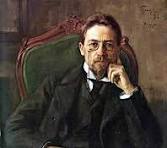
Anton Chekhov: Uncle Vanya, Trans. Constance Garnett; Intro. A.B.McMillin, h/b, Geneva, Heron Books, 1899 (1969).
A play in four acts which centres on a love triangle with no resolution and a climax leading very close to murder. The play builds from a peaceful set of relationships and close friends and moves with gradual then rapid steps to a very dangerous crisis which very nearly results in murder.
Chekhov plays with the ennui which descends on a busy farm estate when the original and ageing well regarded professor and owner, Serebrayakov now remarried with a beautiful young wife (Yelena Andreyevna) descends on the estate to see out his dying days.The family life is complicated by the regular presence of Astrov, a doctor friend of the family who stays so often he has his own room and falls in love with the new bride. the Family members, especially Voynitsky, the son of the owner’s first wife, who have been labouring for many years without any increase in their salary or conditions are outraged when the owner announces his intention to sell the property and use the income to go and live his last days in Finland.
At this point the quietly moving narrative explodes into angry and climactic chaos before subsiding to a quiet and subdued finale. This is vintage Chekhov where relationships can go in any direction and there is always a surprise. 5 stars.
Anton Chekhov, The Sea-Gull, A “Comedy” in four acts, Trans Constance Garnett, Intro: A.B. McMilen
The Sea-gull is an entertaining play based on the excitement and challenges of drama and acting. The dominant figure of famous actress Irina Nikolayevna Arkadin (Madame Tripley), deliberately dominates the stage and frequently and loudly proclaims her abilities and fame.
Her son Konstantin Treplev is a budding playwright and actor who is dominated noisily by his mother. He has fallen in love with Nina, the daughter of a wealthy land-owner who also likes to act and the two of them produce a play for performance in the family garden. The play comes to an abrupt end due to loud and unhelpful comments from Madame Treplev.
The story wanders between the Madame Trepley’s amorous intentions with “a literary man” (Trigorin) and Nina’s desire to be herself a great actress. Nina’s career and her relationship with Treplev reach a dramatic climax with the sea-gull as a continuing omen throughout the play.
I would call this play a tragedy! In any case as always Chekhov holds our attention to the end. 5 stars.

Review of Michael F. Bird: Religious Freedom in a Secular Age: A Christian Case for Liberty, Equality and Secular Government, p/b, Grand Rapids, Zondervan Reflective, 2022.
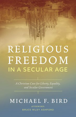
Australian Michael Bird is the Vice-Principal and a Lecturer at Ridley College Melbourne and the author and editor of over thirty books. I venture to suggest that Religious Freedom in a Secular Age, may well be the most important of all of them.
No person of religious faith of whatever variety could fail to notice the eroding of religious freedoms in Australian life and especially in Victoria where the immediate past Premier, Daniel Andrews, was publicly and frequently scathing about Christian faith in particular. It is significant that Bird dedicates his book to agnostic politician Tim Wilson who has been an advocate for both religious liberty and LGBTQI rights in Australian politics.
Michael Bird’s book of almost 200 pages is a demanding read, punctuated as it is on every page with scholarly references to writers of many faiths and none. His work covers three main areas, the rise of Militant Secularism, the Defence of Religious Freedom against its Critics, and the important task of Christian apologetics based on the model of Paul’s Letters to the Thessalonians. The book also has a useful afterword by American theologian Bruce Riley Ashford.
Michael Bird’s analysis will annoy some readers who believe he gives away too much to the critics of religion and equally he will annoy others who will argue that he fights for too much freedom for religious authors to put their case. Bird’s suggestions about what Christians should do about presenting the Gospel to the world are also demanding, not to say scary. Indeed Bird makes it very clear indeed that just turning up for church on Sunday followed by a quick chat and a coffee does not really cut it if we are serious about maintaining the importance of Christian faith in a secular Australia.
I do not believe anyone could complete all of the assignments and suggestions Bird puts before us but if you read this book I can guarantee that your approach to communicating the importance of Christian faith in our largely non-Christian Australian environment will be permanently changed for the better. I would have appreciated an index of topics and issues as Bird covers a large playing field. 5 stars and rising.
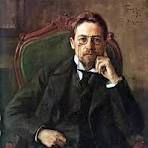
Anto Chekhov. The Cherry Orchard

Anton Chekhov: The Cherry Orchard, Translated, Constance Garnett; Intro. A.B. McMillin,
h/b, Geneva, Heron Books, original frontispiece by Went Strauchmann, 1969 (1903).
Russian playwright Anton Chekhov’s most popular play has a gay and happy feel which covers the sadness of the key figure in the narrative, Madame Ranevsky (Lyubov Andreyevna), the owner of the Cherry Orchard. Lyubov has just returned from France to her failing estate in Russia, having spent many years in a flawed relationship following her husband’s death through alcohol abuse. Lyubov had originally escaped from the Cherry Orchard property after the drowning of her son in the deep river alongside the Cherry Orchard. The merchant Lopahin, a friend of the family, works very hard to persuade Lyubov to sell the orchard to pay off their serious debts.
Whilst all this sadness and negotiation takes place a whole happy merry go round of light hearted love affairs and romance dances across the stage with Lyubov’s 17 year old daughter Anya, her 24 year old adopted daughter Varya, Dunyasha the maid and Charlotta the Governess mixing things up with the eternal student Trofimov and Epiphodon a clerk.
The pray draws to a climax with the selling of the Cherry Orchard for a vast sum thanks to the skills of Lopahin the merchant and we are left in the dark about the future of the romances. Chekhov’s skill in challenging the reader to worry about who should love who and what should be done with the cherry orchard keeps the audience alert and awake and highlights the skilled uncertainties and doubts that emerge from his earlier classic plays Uncle Vanya and The Seagull.
Chekhov remains a star… his gifts lie in the play of uncertainties leaving the reader always on edge to find the usually uncertain finale. How will this outcome be received? We will never know! 5 stars and rising.
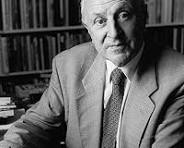
Review of Albert Hourani: A History of the Arab Peoples: Intro and Afterword by Malise Ruthven, London, The Folio Society, 2009.
Hourani went to Magdalen College, Oxford where he studied philosophy, politics and economics and he became more and more absorbed in History, particularly the history of the Middle East. He travelled to Beirut, taught himself Arabic and studied under Qustantyn Zurich, a lecturer in Islamic History. During the second World War Hourani worked as an analyst in these British Foreign Office’s Research Department and eventually followed Hamilton Gibb at the new Centre for Middle Eastern Studies Gibb had established after the war at St Antony’s College Oxford.
In 1942 Hourani was offered a position in the office of the British minister in Cairo where he remained until 1945. He met some of the leading personalities of the day including Glubb Pasha, the British Officer who commanded the Bedouin Arab Legion in Transjordan and David Ben Gurion the Zionist leader who would become Israel’s first Prime Minister. Hourani eventually published books on Syria and Lebanon, Great Britain and the Arab World and Minorities in the Arab World.
Later Hourani joined the Arab Office in Jerusalem, an organisation aimed at countering Zionist propaganda by explaining the Arab case. Hourani returned to Oxford during the Arab-Israeli war where he remained until his retirement in 1984. Hourani’s earlier works include his History of the Arab Peoples and Arabic Thought in the Liberal Age 1798-1939. This current work was also influenced by French historian André Raymond and American Quaker historian Marshall Hodgson as well as the Arab savant and philosopher of history Ibn Khaaldin (1332-1406).
Hourani’s magnificent work covers vast tracts of Arab and Islamic issues including early Arabic life and learning, Muhammad’s call of Arabs in the early seventh century to a religious movement from Mecca, the impact on the Byzantines and Sasanians, the actual appearance of Islam, the hijra, Medina, The formation of an Islamic Empire and the formation of a vast Islamic society, the articulation of Islam, Arab Muslim societies in the (C11th-C15th), the Arab Muslim world..states and dynasties, The land, countryside and its use, the life of Arabic cities, their rulers, clients and dynasties, the ways of Islam, the culture of the ‘Ulama (religious scholars), divergent paths of thought..Islamic philosophers, the development of Shi’ism, the cultures of courts and people, the Ottoman Empire and its limits, Ottoman societies, the changing balance of power in the C18th, European power and reforming governments (1800-1860), European empires and dominant elites, the culture of Imperialism and Reform, The Climax of European power (1914-1939), life in the new cities, The end of the Empires (1939-1962), The second world war, Changing societies 1940s and 1950s, the climax of Arabism (1950s and 1960s), Arab Unity and Disunity since 1967, A Disturbance of Spirits since 1967.
Malise Ruthven’s Afterword 2009 covers the 1990 Iraqui invasion of Kuwait, Desert Storm and the liberation of Kuwait, the fall of Saddam Husayn, the American invasion and false nuclear weapons, the unification of the two Yemens, creation of the Palestinian National Authority, Israeli occupation of the West Bank, the Assassination of Rabin by Jewish extremists, the Second Palestine intifada November 1995, Islamic attacks on New York and Washington (over 3000 deaths) – Osama Bin Laden, the death of Arafat in 2004, Civil wars in Algeria in 1990s, new Shi’i strength in Iraq and Syria, and Lebanon.
It is difficult to comprehend the complexity of the Arabic peoples, the power of Islam, and the interactions between the Arabic world and the West. Hourani’s work is an excellent place to start and his even, carefully selected analysis makes for straightforward reading and, as always, a desire for further information. This Folio presentation with its vast collection of coloured photographs is an absolute treat to read Of course while we read, we now also see the dreadful war between Hamas and Israel every day on our TV screens, reminding us that the tension between the West and the Arab/Islamist world is not going to go away in a hurry. We will need a new Hourani to cover the next stage! 5 stars and rising.

 Theological, Cultural and Educational Reflections