Dante Aligerhi: The Divine Comedy, Trans. Clive James, London, Picador, 2013 (1308-1321).

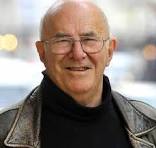
Multi Talented Clive James (died 2019) has been the master of many literary skills. He was a newspaper critic, essayist, poet, song writer, memoirist, historian, travel writer and novelist, to name a few of his talents. Dante’s translation of Dante’s Divine Comedy in 2013 is surely his finest achievement.
The Divine Comedy, written by Dante in C14th Italy is a vast poetic panoply of the writer’s “history” of Hell, Purgatory and Heaven in three extensive chapters and written in quatrains rather than Dante’s Italian terza rima style, (aba bcb cdc). Attempting to re-create this rhyming style in English has proved very difficult for any poet and James’ version written in quatrains (stanzas of four lines) suits the English version far easier than other English attempts and has brought a whole new readership to The Divine Comedy.
Of course when we read The Divine Comedy with its remarkable collection of Inhabitants in each of Hell, Purgatory and Heaven, we are only getting Dante’s version of who should end up in each section of Dante’s version of the future life. In addition, of course, Dante’s account finishes in the C14th. I am sure we could all think of persons from The C15th to the C21st who should be firmly placed in Hell including Hitler, Stalin and Mao Zedong.
I read Kenneth Mackenzie’s very fine 1978 Folio Version of The Divine Comedy on a long distance flight from Melbourne to London. That was not a very good idea as I am sure most readers would agree. I remember very little of that version! Clive James’ exceptional achievement is, on the other hand, very readable and I am sure I will dip into again. One thing I was surprised to see this time around was how little a distinction Dante made between historical figures and clearly non-historical figures. I was not expecting such a combination. In addition of course, I realised how Italy and Greece centred Dante’s story is in spite of his various attempts to refer to folk from the further reaches of Europe.
What do we get by reading The Divine Comedy apart from feeling proud of ourselves? This time around I felt the genuine tension between good and evil; I felt far more deeply the intense love affair between Dante and Beatrice; the intricate friendship offered by the poet Virgil to Dante’s journey surprised me; and the inevitably strong referrals to events in Florence should not have surprised me but it did.
I recommend readers to The Divine Comedy in Clive James’ exceptional version. It will surprise and tantalise you and will make you think about your own version of what a glimpse of Heaven might be like, let alone a glimpse of Hell! 5 stars and rising.
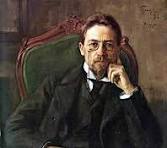
Anton Chekhov: Uncle Vanya, Trans. Constance Garnett; Intro. A.B.McMillin, h/b, Geneva, Heron Books, 1899 (1969).
A play in four acts which centres on a love triangle with no resolution and a climax leading very close to murder. The play builds from a peaceful set of relationships and close friends and moves with gradual then rapid steps to a very dangerous crisis which very nearly results in murder.
Chekhov plays with the ennui which descends on a busy farm estate when the original and ageing well regarded professor and owner, Serebrayakov now remarried with a beautiful young wife (Yelena Andreyevna) descends on the estate to see out his dying days.The family life is complicated by the regular presence of Astrov, a doctor friend of the family who stays so often he has his own room and falls in love with the new bride. the Family members, especially Voynitsky, the son of the owner’s first wife, who have been labouring for many years without any increase in their salary or conditions are outraged when the owner announces his intention to sell the property and use the income to go and live his last days in Finland.
At this point the quietly moving narrative explodes into angry and climactic chaos before subsiding to a quiet and subdued finale. This is vintage Chekhov where relationships can go in any direction and there is always a surprise. 5 stars.
Anton Chekhov, The Sea-Gull, A “Comedy” in four acts, Trans Constance Garnett, Intro: A.B. McMilen
The Sea-gull is an entertaining play based on the excitement and challenges of drama and acting. The dominant figure of famous actress Irina Nikolayevna Arkadin (Madame Tripley), deliberately dominates the stage and frequently and loudly proclaims her abilities and fame.
Her son Konstantin Treplev is a budding playwright and actor who is dominated noisily by his mother. He has fallen in love with Nina, the daughter of a wealthy land-owner who also likes to act and the two of them produce a play for performance in the family garden. The play comes to an abrupt end due to loud and unhelpful comments from Madame Treplev.
The story wanders between the Madame Trepley’s amorous intentions with “a literary man” (Trigorin) and Nina’s desire to be herself a great actress. Nina’s career and her relationship with Treplev reach a dramatic climax with the sea-gull as a continuing omen throughout the play.
I would call this play a tragedy! In any case as always Chekhov holds our attention to the end. 5 stars.

Review of Michael F. Bird: Religious Freedom in a Secular Age: A Christian Case for Liberty, Equality and Secular Government, p/b, Grand Rapids, Zondervan Reflective, 2022.
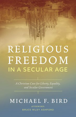
Australian Michael Bird is the Vice-Principal and a Lecturer at Ridley College Melbourne and the author and editor of over thirty books. I venture to suggest that Religious Freedom in a Secular Age, may well be the most important of all of them.
No person of religious faith of whatever variety could fail to notice the eroding of religious freedoms in Australian life and especially in Victoria where the immediate past Premier, Daniel Andrews, was publicly and frequently scathing about Christian faith in particular. It is significant that Bird dedicates his book to agnostic politician Tim Wilson who has been an advocate for both religious liberty and LGBTQI rights in Australian politics.
Michael Bird’s book of almost 200 pages is a demanding read, punctuated as it is on every page with scholarly references to writers of many faiths and none. His work covers three main areas, the rise of Militant Secularism, the Defence of Religious Freedom against its Critics, and the important task of Christian apologetics based on the model of Paul’s Letters to the Thessalonians. The book also has a useful afterword by American theologian Bruce Riley Ashford.
Michael Bird’s analysis will annoy some readers who believe he gives away too much to the critics of religion and equally he will annoy others who will argue that he fights for too much freedom for religious authors to put their case. Bird’s suggestions about what Christians should do about presenting the Gospel to the world are also demanding, not to say scary. Indeed Bird makes it very clear indeed that just turning up for church on Sunday followed by a quick chat and a coffee does not really cut it if we are serious about maintaining the importance of Christian faith in a secular Australia.
I do not believe anyone could complete all of the assignments and suggestions Bird puts before us but if you read this book I can guarantee that your approach to communicating the importance of Christian faith in our largely non-Christian Australian environment will be permanently changed for the better. I would have appreciated an index of topics and issues as Bird covers a large playing field. 5 stars and rising.

