Books read June 2023
Margaret Mitchell: Lost Laysen, Ed. Debra Freer, h/b, New York, Scribner, 1996
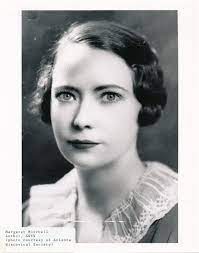
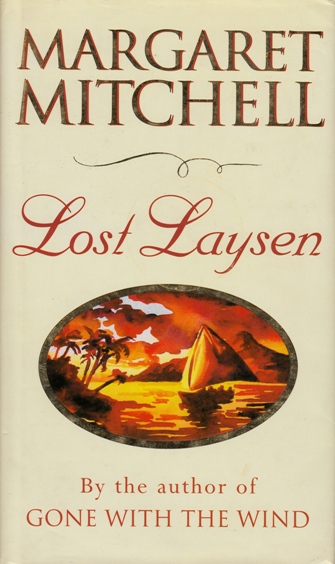
Lost Laysen is a relatively recently discovered novelette written by Margaret Mitchell when she three months short of sixteen years old. For many years it was thought that Mitchell had written only one novel, the extraordinary American civil war novel, Gone With the Wind. Mitchell had many beaux in her life and one constant was a school friend Henry Love Angel along with four other particular male friends. One of these was Red Upshaw whom she married in 1922. This was an unsuccessful marriage and she eventually divorced him and married John Marsh, another school friend. Throughout all this time Mitchell’s friendship with Henry Love Angel was very strong.
Mitchell died in 1948, killed in a car accident crossing a road in Peachtree Street, Atlanta, Georgia. Her will stated that all of her literary works, letters, journals manuscripts including most of the original pages from Gone With the Wind were to be systematically incinerated. Unbeknown to her many fans and anyone else, Henry Love Angel had kept many souvenirs of their close relationship including over thirty photographs and the gift of the manuscript of her teenage novel Lost Laysen.
Henry Love Angel took his friendship, and the knowledge of his photographs and novelette manuscript with him to his grave but his son Henry Angel Junior saw towards the end of his life a financial opportunity in the material and approached The Road to Tara Museum of Atlanta, Georgia. Debra Freer, a Margaret Mitchell historian, was asked to validate the material and the Museum duly unveiled Henry Love Angel’s legacy of his friendship with Mitchell and her novelette in April 1995.
The story of Lost Laysen tells of a friendship between would be missionary Courtney Ross and a rough and ready fighting sailor Billy Duncan who met on a trading ship sailing in the South Pacific near the mythical island of Laysen and the subsequent tragedy that unfolds. For a fifteen year old, Lost Laysen is an impressive yarn which keeps the reader occupied and keen to see the outcome!
To be fair the most interesting part of this book is the many now published photographs taken by Henry Love Angel of Margaret Mitchell and their many love letters and the material put together by Debra Freer. This material beautifully reproduced with authentic photographs of letters, gives a delightful picture of Margaret Mitchell, the socially active and dynamic 1920’s flapper who eventually came to write one of the most popular novels of all time, Gone With the Wind.
Mark Sayers, author of “A Non-Anxious Presence”

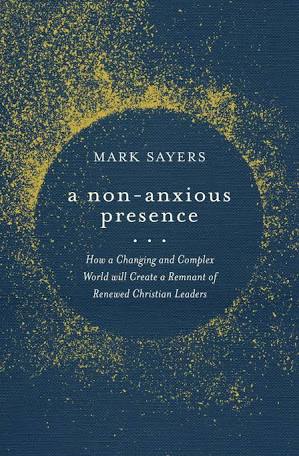
Mark Sayers, Pastor of Red Church in Blackburn South and Nunawading and a partner in Uber Ministries has written a challenging analysis of the impact of COVID19 on many church congregations and leaders. In a world where Google replaces Pastor and Screens replace disciples the world has entered a “Gray Zone”. (that’s a US spelling of grey!) It is not the end or the start of an Era, it is a grey zone of uncertainty. Grey zones exist in the overlap of two eras, making life confusing and contradictory. Shifts in urbanisation and consumption, technology and competition, ageing and labour are affecting all countries.
In a huge comparison Sayers compares the total destruction of Krakatoa after probably the earth’s largest ever earthquake with the extreme rapidity of change in our own day. In Krakatoa new growth eventually came. Sayers writes that the current Western world’s preoccupation with “continual consumption,ever-present anxiety, and self-focus” also demonstrates a hunger for renewal. The result is that Christian leaders facing an anxious world can become paralysed.
Sayers notes that not long ago Christian leaders of super large churches and influential Christian organisations were the leaders and influencers. Today media influencers have far more sway shaping the views and thoughts of the Christian world. The result is “that a secular autopilot version of Christian leadership takes hold, where we lead like practical atheists, with God as an afterthought.”(Sayers, p.53) Further Sayers writes “The modern world promises progress and perfection without God. Leaders therefore presume that dependence on God is optional” (p.56)
Sayers notes that “with no agreed-upon defining story or shared values, identity becomes something the participant in a networked society must search for themselves.” (p.83). Sayers also notes that we are coming to the end of the American Century. China will surpass the United States in terms of gross domestic product in the next decade. Sayers quotes George Town University Professor of International Affairs Charles Kupchan: the next world will have no centre of gravity. It will be no one’s world. (p87)
Sayers analyses Social media’s immense access across the internet which enables dynamic activists to apply real pressure on large organisations including the church through online feedback to advance their goals. This tactic, called cancel culture “can exclude opponents from the network resulting in a privatised form of censorship” he writes. (p94) Such digital networks can become a primary influence on folk, more important than their church network.
American political scientist Edward Friedman writes about today’s “herd instinct swamped by chronic anxiety”. People no longer act rationally and the more aggressive members, with a perpetually argumentative stance will start to rule. “In this brutal world humour, satire and irony are lost. Everything becomes at best a slight, at worst a direct assault. Sayers notes that “Conflict, sexual activity, and even violence become normative forms of social engagement,”(p.99)
Friedman has proposed a novel and radical leadership solution. Instead of leadership being found in those with charisma, drive, intelligence, training, or achievements, Friedman argues that “the most vital attribute to lead, especially in anxious human environments and systems, was a non-anxious presence. Retreating to our comfort zones insulates us from development. Increasing individualism and a dizzying diversity of opinion in the West contrasts strongly with the complete lack of individualism in China and many Islamic states. On the other hand grey zones are our wilderness. It is in the wilderness that God gave Christ the power to conquer Satan. It was in the wilderness that Israel’s leaders learned obedience to God. Sayers suggests “The Wilderness is where God woos us!” (p.119)
Sayers further notes that character and maturity in leadership are more important than comfort or ease. There will be many events and situations that will be outside of our control and yesterday’s management model will not work today. “We do not need superhuman resilience and we don’t want spiritually stagnant leaders on the couch buried in their phones. We must vanquish the infective foe of anxiety,” Sayers writes.
But of course we can only be non-anxious presences with God’s presence. Sayers quotes Dag Hammdkjold whose rule was that “we need humility to experience reality.” St Paul said when I am weak then I am strong. (2 Corinthians 12:10) and Sayers notes that “we certainly do not need an addiction to approval.” There will always be pressure in leadership. Without pressure there would be no development and no holiness.
Here is a book on leadership that should be read carefully. It will particularly help leaders who are feeling a bit down and defeated. I warmly commend it. 5 stars.
Cormac McCarthy: All The Pretty Horses: p/b, New York, Picador, 2022 (1993)

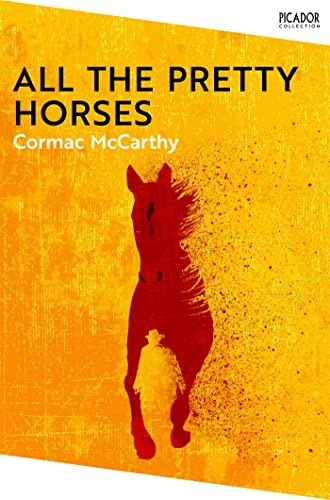
Hard hitting novel involving sixteen year old John Brady Cole who grew up on his grandfather’s cattle ranch outside of Saint Angelo Texas. When his grandfather sells the ranch Cole sets off with his friend Lacey Rawlings to find work on a horse breeding ranch in Mexico. Trouble soon arrives when they are joined by thirteen year old Jimmy Blevins, a runaway with a taste for killing people. After losing his horse in a thunder storm and stealing it back Blevins leaves them to hide in the mountains. Eventually Cole and Rawlings find work on a wealthy horse stud where Cole falls deeply in love with the Mexican owner’s daughter Alejandra and a life that gets more and more complicated and particularly dangerous as Blevins re-enters the narrative.
There is a great deal of blood and death in this writing as in most McCarthy novels. These grim passages would not be to every reader’s taste, authentically told though they may be. The description of the Mexican foothills, mountains and plains is remarkable. McCarthy won significant acclaim for this work and indeed the novel totally engages the reader as events go from bad to near impossible. I found this novel violent, romantic and powerfully written all at once. For folks not fluent in Spanish significant sections of dialogue have to be guessed at and the online translation guide is by no means complete. This novel is part of a trio so I will reserve judgment until I can get through the remaining two volumes. 4 stars so far.
George A. Lindbeck: The Nature of Doctrine: Religion and Theology in a Postliberal Age, 25th Anniversary Edition with a new Introduction by Bruce Marshall and a new Afterword by the author.

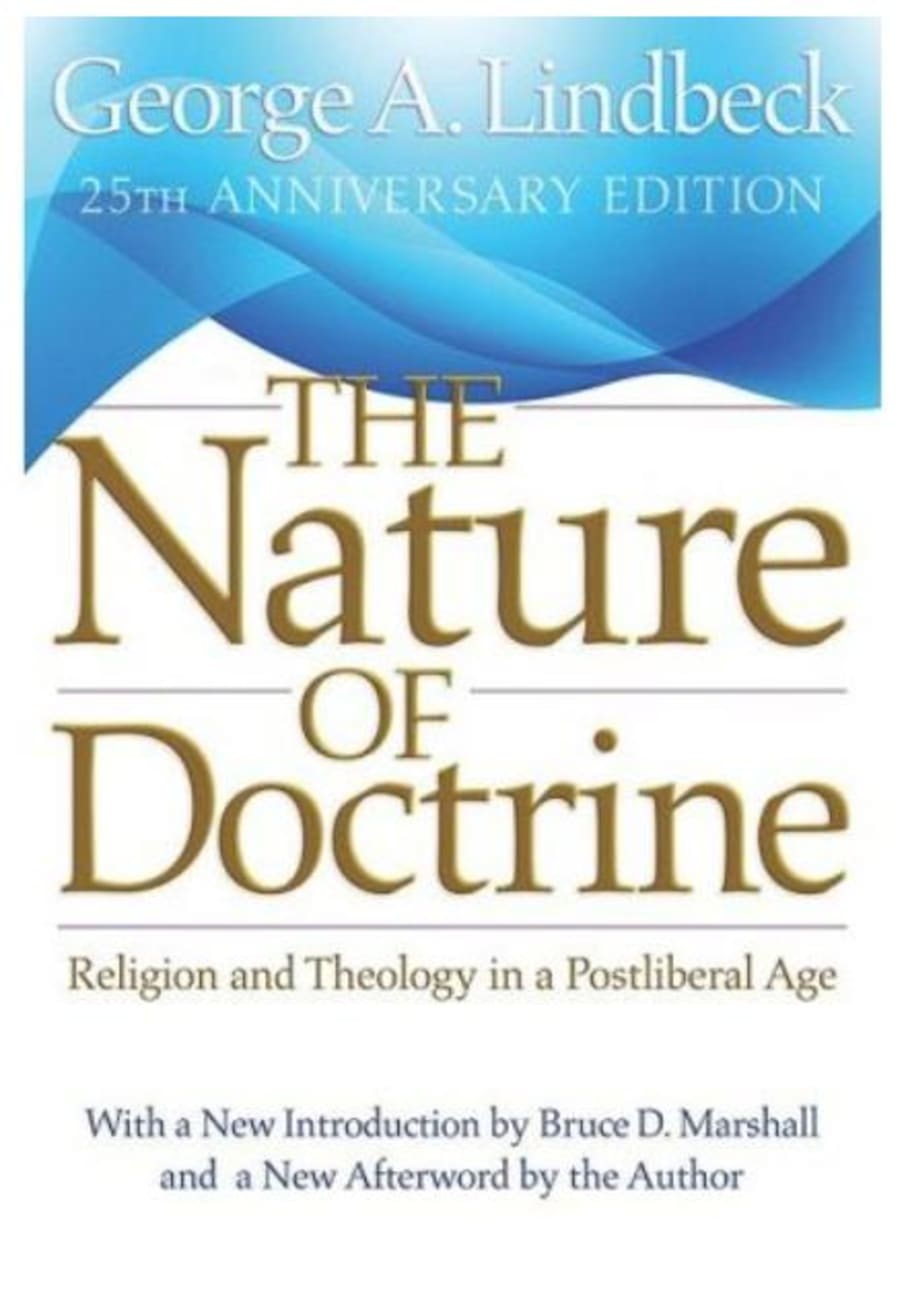
Lutheran Theologian and ecumenist George Lindbeck, who died in 2018 at 94, was a child of Lutheran missionaries in China and Korea and played a major role as a delegate observer in the Second Vatican Council. His major theological work, The Nature of Doctrine, is a penetrating study of the future of Christianity in a post-Christian era. First published in1984 Lindbeck’s book has to my knowledge ever been out of print. As a delegate to the Second Vatican Council 1962-65, Lindbeck has spent a theological lifetime grappling with divisions within the Christian faith and exploring whether the Christian faith will even survive in the C21st.
Lindbeck provides a pathway through the classical propositional approach to Christianity; the experiential/expressive Christianity of evangelicalism, and the attempts by Catholic theologians Karl Rahner and Bernard Lonegan to combine both approaches in a cultural and linguistic approach to Christian theology which might reach out usefully to folk in other world faiths. Lindbeck’s work reaches out also to a C21st Post-Christian society asking why modernity cannot also be religious, particularly reaching out to Islamic and Buddhist approaches to faith in a modern world order.
Lindbeck respects the countervailing traditional tendencies of C20th scholars like G.K. Chesterton, C.S. Lewis and Malcolm Muggeridge as well as the neo-orthodoxy of Karl Barth and even some key ideas about faith found in Wittgenstein’s influence. Nevertheless Lindbeck, against all odds, argues strongly for his cultural-linguistic alternative. Lindbeck cites Rahner’s notion that devout followers of other faiths could be regarded as “anonymous Christians”. (p.43) Rahner also proposes that dying itself be pictured as the point at which every human being is ultimately and expressly confronted by the gospel, by the crucified and risen Lord. It is only then that the final decision is made for or against Christ. (p.45). I myself am personally attracted to this idea also.
Lindbeck notes that theology and doctrine are assertions based ultimately on faith (p61) and Evangelicals would add, on New Testament history. Much discussion on these matters hinges on the nature of doctrines, how they are formulated and how they are expressed (p.66). In Christian faith formation the experiential dimension is more important than hard core doctrines. Practical doctrines like “the law of love” carry more weight than discussion about ontological truths (p.71) and then there are “accidental doctrines” like Sunday or Christmas. (p.72)
The standard doctrines like those of Nicaea and Chalcedon have worn well, but later R.C. Marian doctrines like the Immaculate conception, the Assumption of Mary and Papal infallibility cause big problems for non Roman Catholics.(p82f) especially since many of the Popes throughout history have been morally corrupt. As for the doctrine of the Trinity itself it is beyond formulation and comprehension ..it just is! (p.92). Lindbeck finds support from Wittgenstein who notes that there is a way of grasping a rule which is not an interpretation, but is exhibited in what we call ‘obeying the rule’ and ‘going against it’ in actual cases!..interpretations by themselves do not determine meaning. (p97).
In a concluding chapter Lindbeck argues that the marks of good theology are faithfulness, applicability and intelligibility. (p.98). All the major world faiths have relatively fixed canons of writing that they treat as exemplary or normative (p102). For Christians to know how to live we need to know about God’s Being from the text of Scripture but in the end it is difficult to “know” God. Post liberal “intratextuality” (p.108) may help some moderns interpret the Biblical text but in the end theology must be practical and empirically defensible. (p.111).
Post-Liberals start with a vision of the kingdom of God in a quest for transcendence and selfhood but the responsibility for the wider society is more important than personal fulfilment. (p.113) Service rather than domination is the best course for Christians. Credibility comes from good performance…there is still hope (p.116). We need to absorb the universe into a Biblical world is LIndbeck’s final word. Thinking about Christian doctrine is hard work. The Nature of Doctrine will help you do this but it could also confuse you. Enter this world with care! 4 stars.
Barbara Kingsolver: Unsheltered, p/b, 2018, London, Faber & Faber.

Clever partly historical novel which describes the lives of two couples and their families about 150 years apart. Willa and her Greek science teacher husband Iano have two children and having moved house for employment find themselves the unlucky owners of a home which proves to be unredeemable.
At the same time both their twenty something children find themselves in difficulty and need to return home to live. Along with their seriously ill grandfather on a breathing machine and a new baby of one of their children, the couple struggle to make ends meet as their house gradually disintegrates.
Meanwhile in the 1870’s Science teacher Thatcher and his beautiful wife Rose are living in the same house 130 years earlier, along with his equally attractive teenage daughter Polly. At his school Thatcher is caught up in the scandal of Charles Darwin and his new theories of biological evolution which he passionately supports.
Thatcher’s convinced Darwinism is strongly opposed by his Headmaster who becomes determined to destroy Thatcher’s name and career. At the same time Thatcher meets the remarkable Dr. Mary Treat (1830-1923), a naturalist and a key contributor to Darwin’s work through her scientific collections, explorations and experiments.
The two scientists become soul mates as the marriage begins to fail.
Double story novels with some connection seem to be a current fad with Geraldine Brooks’ novel Horse a typical example. Kingsolver even commences each chapter of one family with the last sentence of the previous family’s story. These days I have trouble keeping up with all the characters in one novel let alone two novels side by side, so I found the structure difficult to cope with at first.
As a sometime biologist myself I found the Treat/Darwin connection fascinating and well told. The opening story line with its lessons about twenty somethings having the answers to all the world’s problems felt more like a series of school lessons at times and became a bit tedious. I gave this novel 4 stars.
 Theological, Cultural and Educational Reflections