BOOKS READ AUGUST 2019

James M Barrie: Peter Pan, Scholastic, n.d. with Introduction by Jack Gantos.

JAMES BARRIE
Peter Pan

J M Barrie wrote Peter Pan as a play in 1904 and it became his best known work.  He later retold the story as a narrative called Peter Pan and Wendy in 1911.  Although I have read “Peter Pan” many times as a child and in a children’s version this is the first time I have read the unabridged narrative. I have always been interested in the idea of humans flying and for many years in my youth I used to dream very realistically that I was flying, not just around my room, but outside over the twenty acre former CEBS site in Frankston where my father was the Camp Warden and my mother was the chef.  I always awoke refreshed and excited by these dreams remembering how I could look down on our house and the oval and tennis court  and the hall from above and that it was exhilarating to be flying fast and far. I have never forgotten these dreams and I used to feel very sad when I totally woke up and realised I couldn’t actually fly on demand! 

Children’s story Peter Pan  may well be,  but the original narrative is actually a novel for adults more than children. It has a dark side from the beginning with its description of Peter Pan as selfish, even spiteful, a tease, quite dangerous when teaching the children to fly and seldom concerned for the feelings of others. Captain Hook is living out his revenge for all his enemies from his English public school  days  and has a sensitive musical side with his ability on the harpsichord.  The  surprise pirate attack on the redskins is a vicious slaughter and Tinkerbell’s jealous plot to get Tootles to kill the “Wendy bird” is a tragic and threatening little event. Nevertheless Tinkerbell is surely redeemed by her sacrificial drinking of the poison Hook had prepared for Peter Pan and it is indeed good to know that fairies will come alive again as long as children believe in them

 Adults fare no better with the Darling’s parenting coming under withering fire both at the beginning and at the end of the narrative. The whole narrative has an edgy feel unlike anything in Lewis Carol or A A Milne. Even in Tolkien the heroes may be tempted to turn aside but they are never mean spirited.  In spite of this uneasiness the story of the “boy who refuses to grow up” and the dream of Never land being passed on from Wendy to her daughter and grand-daughter tugs at the heart-strings of all our memory of childhood.  J M Barrie was a complex man and this story, like many of the fairy tales of the Brothers Grimm and Hans Christian Andersen has some powerful messages for adults as well as children about the realities of our true selves and of life.    3 stars.                                                                                      

Michel Eyquem de Montaigne, Lord of Montaigne:  The Essayes, or Morall, Politike and Miliitarie Discourses of Lo. Michael de Montaigne, Book 1, translated by John Florio, London, The Folio Society, 2006 [ Florio’s original translation 1603; Montaigne’s original Book 1 published in French in 1588.]

Montaigne [1533 – 1592] was one of the most significant philosophers of the French Renaissance and had a vast and profound influence on Western philosophy and literature including Francis Bacon, Rene Descartes, Blaise Pascal, Jean-Jacques Rousseau, William Hazlitt, Ralph Waldo Emerson, Friedrich Nietzsche and most probably towards the end of his writing, William Shakespeare.  Montaigne popularised the essay as a literary genre and in Harold Bloom’s Genius: A Mosaic of  One Hundred Exemplary Creative Minds, Montaigne stands in the first lustre, along with Shakespeare, Cervantes, Milton and Tolstoy. I have only read Book 1 so far so I will reserve judgment because there are two more huge books to come!
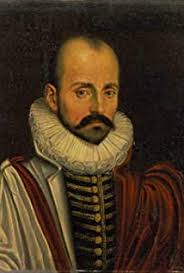

Lord Montaigne
Essays Book 1

Book 1 contains 57 essays of varying lengths and significance. Some of forty pages and some of one or two pages. Some of weighty issues eg “the institution and education of children”  and others of triviality eg “ A  trick of Certaine Ambassadors”. Florio’s translation is brilliant but the early C17th English takes some getting used to eg the often used “whilome” means “of former times”  and there are some wonderful French words that are not translated at all for example “embabuinized” (in Essay 39, On Cicero).  which is not in my Harrap’s French Dictionary either. 

Montaigne’s writing is filled with Latin and Greek quotations from the Classical period. His formal education, organised with great care by his father,  was undertaken entirely in Latin by a master who had no French and Montaigne thus became a fluent Latinist and indeed Latin was his first language He was taught Greek at the same time by a teacher who used games and fun activities not formal grammar. The major classical influences on his writing are from Plutarch, Seneca and Plato but many others are frequently mentioned including Juvenal, Lucretius. Horace, Herodotus, Ovid, Lucan, Cicero, Aristotle, Martial, Virgil, and some more modern authors for his day including Dante. This list is far from complete. Fortunately in Florio’s translation these quotations are printed in Latin or Greek and then translated into very clever English.   I understand from elsewhere that Many of Montaigne’s Latin translations come from Erasmus’ Adagia including all his quotations from Socrates.   Plutarch and Seneca were his other major sources. A large number of the essays are about military battles and individual feats of bravery or cowardice both ancient and in his own time. One thing that did surprise me was that Montaigne, a devout Roman Catholic but bitterly opposed to the French war against Protestantism,  at least in Book 1,  takes not a single quotation from the Bible in spite of a careful defence of  conservative Catholic Christianity in Essay 56. 

Essays which I found particularly impressive and interesting were chapter 8 on Idleness; 

Chapter 19 – That to Philsophize, is to learn how to die (at least four major essays in Book 1 centre on death);

Chapter 22 Of Customs, and how a received law should not easily be changed;

Chapter 23 On Honesty and Justice in Politics; and 

Chapter 24 On Pedantisme (Pedantry)

Individual quotations that stood out for me included:

p126: “those whose sufficiencie is placed in their sumptuous libraries!  Hmmm! (ch.24)

p132: “We can never be wise, but by our own wisdom”. (ch.24)

p132  “The role of education is religion, truth and virtue, self-control and courage.

p135  Montaigne is critical of his own learning, admitting that he only knows well Seneca and Plutarch.  (ch.24)

p144 “according to Platoes mind, who saith, constancie, faith, and sinceritie, are true Philosphie”. (ch. 25)

p144 “..visiting of forraine countries, and observing of strange fashions , are very necessary…” (ch. 25)

p157  “ She loveth life ; she delights in beautie, in glorie, and in health. But her proper and particular office is, first to know how to use such goods temperately, and how to lose them constantly.  (ch 25).

p158  “We are taught to live, when our life is well-nigh spent”  (ch 25) …Montaigne is of the view that by the age of 20 we should know all we need to know and learn and we should then be out and about getting on with a serious vocation, because life is very short.

p.215 “…said Plato,”it is an easie matter to please, speaking of the nature of the Gods, than of men.”  (ch.30) “…nothing is so firmly beleeved, as that which a man knows least. “…”But I utterly disalow al common custome amongst us, which is to ground and establish our religion on the  prosperitie of our enterprises.

p231 “Even from my infancie, Poesie hath the virtue to transpierce and transport me” (ch.36)

p236  “..we are not borne for our particular, but for the publick good.”  (ch38).

p246 Bookes are delightfull; but if by continuall frequenting them, we in the end lose both health and cheerfulnesse (our best parts) let us leave them. I am one of those who thinke their fruit can no way countervaile this losse. (ch38)

p247 We must tooth and naile retain the use of this lives pleasures, which our yeares snatch from us, one after another. (ch.38)

p249  “Let honest Ideaes still represent themselves before your mind….(Seneca) ..be contented with your selfe; to borrow nothing but from your self…(Ch.39)

p252  “Wise men say, that in respect of knowledge, there is nothing but Philsophy, and in regard of effects, but Vertue. (Seneca).  (ch.39)

p262  Regarding pain: “I have no commerce or dealing with her: But it is in our power, if not to disanull, at least to diminish the same, through patience: And thought the body should be moved thereat, yet to keepe the minde and reason in good temper.. “(ch 40)

p269   “Verily,  it is not want, but rather plentie that causeth avarice.”   (ch40).

p276   “This is the totall summe of all, that you be master of your selfe”  (Cicero) (ch.41)

p336  “Whatsoever it be that falleth into our knowledge and jovisance, we finde, it doth not satisfie us, and we still follow and gape after future, uncertaine, and unknowne things, because the present and knowne please us not, and doe not satisfie us….Man supposing it is the vice and fault of things he possesseth, feedeth and filleth himselfe with other things, which he neither knoweth, nor hath understanding of…. (Ch53)

p340  “… if these Essayes were worthy to be judged of, it might in my opinion happen, that they would not greatly please the common and vulgar spirits, and as little of them, the latter over much; they might perhaps live and rub out in the middle region. (ch.54)

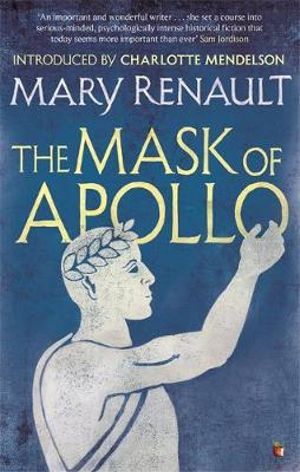
Mary Renault: The Mask of Apollo, London, New English Library, 1968 (1966).

Mary Renault was an outstanding English novelist and historian of Ancient Greece and its literature. . The Mask of Apollo is one of eight novels she wrote in this genre and tells the double story of Plato’s Academy and substantial role in the Greek city of Syracuse in Sicily and secondly the tragic story of Syracuse itself under the tyrant Dionysius 1 (423 -367 BCE), his son Dionysius  11 (who ruled Syracuse as tyrant from 367-357 and from 346-334, and40 his son-in-law Dion (408 – 354) who also ruled as tyrant of Syracuse. Told through the eyes of the fictional actor Nikeratos, the novel is a slow burner. Without any background the reader takes some time to get the feel and sense of the novel and the culture but within a few chapters the narrative has a mesmeric effect which makes it difficult to put down. An unsettling element is the homosexuality and bisexuality of Nikeratos which makes no material impact on the narrative but is everywhere present. Renault had a life-long relationship with fellow nurse Julie Mallard and the couple moved from England to live permanently in Durban South Africa seeking a more liberal and less repressing atmosphere to continue their life together and it is at least possible that C4th BCE Greek sexual mores suited her historical research. This is rich reading indeed. Reader’s of Plato’s The Republic and Greek philosophy in general  will be interested to see a more personal side of Socrates, Speusippus, Xenocrates,  Aristotle and Alexander the Great as well as constant reference to the Greek dramatists.   5 stars. 
The Mask of Apollo
Mary Renault

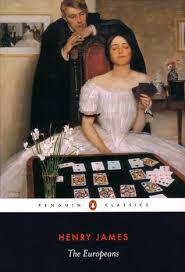
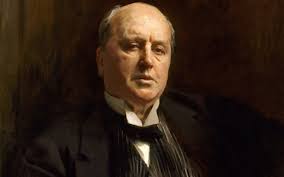
Henry James: The Europeans, Camberwell VIC, Penguin, 2005 (1878)
Henry James

American born Henry James, brother of renowned psychologist William James,  studied law at Harvard before moving  to Europe at age 32 and becoming a writer.  He lived first in Paris for one year before settling in England and eventually becoming a naturalised citizen one year before his death in 1916. He wrote some twenty novels of which Portrait of a Lady is perhaps the most well known. James also wrote short stories, plays, books of criticism, autobiography and travel. 

The Europeans records the adventures of two siblings, Eugenia and Felix,  born to American parents living in Europe.  Eugenia is the central character of the novel. She is  a thirty something attractive, stylish and ambiguous figure  seeking an escape and financial security away from an unhappy morganatic marriage to a German aristocrat.  Felix, her younger brother is a painter with an indefatigable joie de vivre and a permanently sunny disposition. They have both enjoyed a peripatetic somewhat bohemian  lifestyle in Europe before deciding to seek out their American relatives in Boston. Their Boston relatives, the Wentworths are serious minded, stable, steady Puritans and the cultural clash and interaction is the substance of the novel, in particular the  romantic relationship between the rebellious Gertrude Wentworth and the whimsical bohemian  Felix. This relationship is matched by the equally complex and uncertain  relationship between Eugenia and another cousin, successful entrepreneur Robert Acton, a strangely laconic, unemotional and calculating figure.The back cover of my Penguin edition describes the novel as a subtle and gently ironic examination of manners and morals.   I agree and found this novel to be engaging, clever, and very enjoyable.  5 stars.

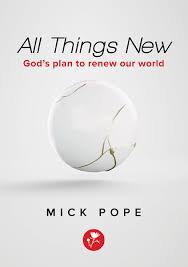
Mick Pope: All Things New: God’s Plan to Renew the World, Reservoir VIC, Morning Star Publishing, 2018.
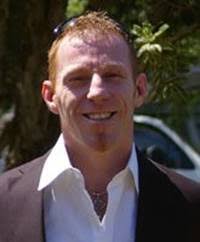
Scientist Mick Pope has a Ph.D in Meteorology and is completing a Masters in Theology at the University of Divinity.  He is a lecturer in Meteorology, Professor in Environmental Theology at Missional University, an on-line Christian Centre of Higher Education based in North Augusta, South Carolina, and a member of the Centre for Research in Religion and Public Policy attached to the University of Divinity.  He has also lived in India with his family for 16 years, working with the urban poor,  and has published two previous books on climate, the second with Claire Dawson. 

This is a complex and demanding read for all sorts of reasons. Even the cover is complex. It contains a kintsuge style image of a beautiful white sphere with cracks that have been repaired by pure gold…creating from something broken something else far more beautiful than before. Pope’s  reach is vast and  global, starting with 9/11 and the falling man— an event which for Pope underscores the existence of pure evil (although we do not have to look far in the history of the C20th to find even more telling examples). If the philosophy of evil is a difficult start, Pope quickly moves to the 2013 super typhoon of Haiyan in the Philippines which annihilated 6,300 people and severely affected over 11 million others. 

This catastrophe serves as his introduction to a very detailed analysis of global warming. Using the data from a variety of sources to highlight the imminent danger of rising sea levels. This data includes analysis of the vast increase in the levels of carbon dioxide in the atmosphere arising from greenhouse gas emissions, massive forest clearing and cement production; the dramatic acceleration of human economic activity in the last seventy years,  booming population growth,  massive use of fertilisers, urbanisation, ocean acidification from warming, extinction rates, ozone depletion rates (which have been reduced substantially) but still impacts rainfall in Australia and New Zealand, biogeochemical flows, 2.4 billion people still lacking access to sanitation, depleted and unreplaceable agquifers, clearing vast tracts of land for farming, atmospheric aerosol loading and air pollution, large scale ice melting at the poles, (curiously cleaning up air pollution will increase global warming will increase the amount of sunlight reaching the earth’s surface), declining global crop yields and rainfall, increased impact of lyme disease and other pathogens that flourish in hot conditions, and the danger of anthrax arising from melted ancient prehistoric animal carsasses. 

Pope acknowledges that some gains have been made. The news is not all bad. Rates of homicide have fallen by a factor of 50 and death in war by a factor of 20 and gains have been made in world poverty. But the unbridled confidence of the likes of cognitive psychologist  Stephen Pinker,  (Enlightenment Now: The Case for Reason, Science, Humanism, and Progress)  and zoologist and journalist  Matt Ridley (The Rational Optimist) have been savaged by Terry Eagleton (Hope Without Optimism),  and historian Peter Harrison amongst  others. Pope summarises  Eagleton’s critique of  Pinkerton as essentially a conservative, ruling-class ideology that tells us things are basically ok and assures us that the future will be a benign version of the present.  (p25)

Up to this point the average reader would think they are reading a science based textbook about how to deal with an out of control humanity’s mindless assault on our physical environment.  But in Chapter 3 Pope turns to theology for some analysis and solutions to the state of our struggling planet. Like Jordan Edwards, Pope turns to the  Genesis creation and flood narrative and the disorder and chaos caused by mankind’s rejection of God’s love and will for mankind and suggests that we start to take seriously the danger of structural evil as a spiritual power, using Walter Wink’s concept of the “Powers”.  Pope suggests some spiritual humility before a Christian reading of Scripture will help us to understand that greed is not good, that the comfort of the West has been built on the rape of the rest of the world and that Paul’s image of the creation groaning in torment awaiting a new creation In Romans 8 is not far from our present reality. 

In Chapter 4 Pope takes issue with  some science fiction and eco-technological  solutions to solve our ailing earth problems including physicist  Margaret Wertheim’s argument that cyberspace may provide an alternative to an out of date heaven, cosmologist Carl Sagan’s techno-Gnosticism and futurist Ray Kurzweil’s faith in Artificial Intelligence to solve all our earthly problems. Pope does not deny that technology will play a role in preventing the potentially catastrophic consequences of climate change and he discusses these solutions in some detail along with their limitations. More frightening are the American  “Doomsday Preppers” who are hoarding supplies and arms against the inevitable breakdown of society à la Cormack McCarthy’s dystopian novel The Road, and the anxiety we all feel about the potential for a new arms race in the Trump era. It will surprise no-one that Pope is no fan of Mr Trump!

If all this wasn’t difficult enough Pope turns his attention in chapters 5 – 8 to an analysis of the most complex book in the Bible, Revelation.  Pope works with some excellent scholars including N T Wright,  Richard Baulkham, Leon Morris,  Michael J Gorman and Stanley Grenz to show that the traumatic events threatening to engulf our fragile planet have already been laid out in this C1st apocalyptic book of the Seer,  John the Divine. Revelation was a warning to Christians suffering under the persecution of Roman tyranny but it is also a warning to us in the C21st suffering under the tyranny of our own selfishness, greed and failure to grasp obvious reality. At the same time Pope is keen to demonstrate that a simplistic view of “Heaven” as some sort of ethereal paradise elsewhere after death where we will have peace and love and live free of the perils and realities of planet earth is not a biblical view at all. In fact Revelation, Romans 8, Isaiah and Jeremiah all point to a renewal of humanity and of the earth in a kingdom of God in which all of creation and life will be recreated. We have not only a part to play in this renewal, it is our Christian task and responsibility as stewards. Flying off to heaven in some sort of weird rapture based on a faulty reading of 1 Thessalonians and a few “Left Behind” movies won’t cut it.  

Chapters 9 – 11 spell out this renewed Kingdom of God.  We will need a renewed economics, of course a renewed physical earth and above all, a renewed imagination to envisage and see through the trauma to the hope of a new creation. This is our task, our stewardship. The stakes are high.  Here is a fine handbook to achieve the goal and it comes complete with an excellent study guide for group discussion.  5 stars.
Thought starters from Mick Pope’s “All Things New: God’s Plan to Renew the World.

SOME THOUGHT STARTERS FROM MICK POPE: All Things New: God’s Plan to Renew the World,  Reservoir ViC, Morningstar Publishing, 2018.

p67 We are being made homeless in judgment over our failures to bear the divine image…to tend the garden.

p69 …One significant issue with computer games is the way that violence is portrayed, in particular what Walter Wink calls the “myth of redemptive violence”. This myth suggests that violent acts can solve problems, save people, and bring lasting peace. [in Walter Wink: The Powers that Be: Theology for a New Millenium, New York Galilee, Doubleday, 1999, p. 49]

p70  Why do people want to spend so much time in games and not in the real world? p70. [cf the Second LIfe phenomenon including the many problems that have arisen within it.   See Wikipedial article]  p71 American game designer, Jane McGonigal, claims that ‘reality is broken’ and that games can change the world….why should we needlessly spend the majority of our lives in boredom and anxiety? [Jane McGonigal: Reality is Broken: Why Games Make Us Better and How They Can Change the World, London, Vintage Books, 2012 cf Margaret Wertheim: games and the internet are, for some, a replacement for heaven. [Margaret Wertheim: The Pearly Gates of Cyberspace: A  History of Space from Dante to the Internet, Sydney, Doubleday, 2000.

p74  Raymond Kurzweil, futurist and inventor and Google’s Head of Engineering has predicted that we will achieve a complete map of the human brain, allowing us to enhance our own intelligence using nanobots, tiny robots at or close to the scale of a nanometre (10-9 metres); Human and technology will no longer be separate, but one….

p75 Will technology provided the magic beans to fix all?

p81  The American Doomsday Preppers …heavily armed survivalists building isolated bolt holes in the wild with stores to last a siege and weapons to protect it.  The unprecedented comfort, ease, and freedom form violence that Stephen Pinker boasts of, is perhaps not as stable as we might think. Whether or not you believe climate change played a role in Hurricane Sandy, the fact that some residents in New York City armed themselves with booby traps, baseball bats, and bows and arrows in The Walking Dead style to protect themselves from potential looters, shows that our civility is paper thin…what might the church look like, should society start to crumble around us?  

p83   The Bible was written for us, but not to us. What I mean is that there were original human authors who wrote to original audiences. [eg in Revelation 3..the letters to the seven churches….we are not free to randomly twist the text to our situation in a way that is not faithful to the original meaning.

p107   Our priestly role is one of mediation between God and the world. And what a bad job we have done of this.  When church leaders abuse women and children and try to cover it up, we do not mediate between the world and God.  When we join with empire oppress indigenous peoples and take it upon ourselves to try to extinguish their culture and languages in the name of the gospel, we do not mediate between the world and God.  When we refuse to acknowledge that we worship on stolen land, we do not mediate between the world and God. When we sell a message of consumerism that looks little different to that which the world offers, we do not mediate between the world and God. When we treat the environment as disposable and ignore the fact that we are undermining the beauty and variety of the natural world, and ability to support human flourishing, we do not mediate between the world and God….

p108  Let’s face it: the sorts of Christians who most want the power to reign on earth are the ones who should be casting their crowns  before the throne. Here in Revelation 5:10 is a message of encouragement for those who suffer under the impacts of war, famine, climate change, human misrule and cruelty. It is a message for Palestinian Christians who suffer under Israeli rule while American Christians fund the resettlement of the Holy Land in order to bring about the Apocalypse. It is hope for Kiribati Christians whose homes are disappearing beneath the waves. It is hope for Chinese Christians persecuted by their government…it’s time we started to feel uncomfortable in Babylon if we want to feel comforted about ruling on earth.

p138  …This is not to say that only westerners are sinful.  However, given that we have exercised the power of empire over the majority of the world for centuries, burnt fossil fuels for longer, and used resources more intensively, we bear a particular blame for the state of the world.

P143   Donella Meadows, who was an author on the 1972 Limits to Growth report, describes the growth obsession as “one of the stupidest purposes ever invented for any culture.” What kind of assumptions about human beings and the world is encapsulated by an exponentially growing curve? How can such a thing be made green, sustainable, or smart? IN the 1860’s, social thinker,  John Ruskin, declared that “there is no wealth but life…That country is the richest which nourishes the greatest number of noble and happy beings.”

P172  Who are the four riders of the apocalypse? Michael Gorman sees them as representing a chain of events that is all too well known in human history, including military conquest and the breakdown of peace; death, economic injustice, famine and the disease that follows. Not only are these events permitted to happen but are a direct judgement on sin. Gorman stressed that we must not divide human sin and divine punishment: this is a ‘false dichotomy and asks for an unnecessary choice.  [Michael Gorman: Reading Revelation Responsibly: Uncivil Worship and Witness. Following the Lamb into the New Creation, Eugene OR/Cascade Books, 2011]

p177f   Food Justice….farmers are forced to buy into a system where the seeds sold are non-renewable, under patents, and they ensure ‘an absolute monopoly and an end to our diversity.’ [Dr. Vandana Shiva & Ruchi Shroff: Seed Satyagraha: Civil Disobedience To End Seed Slavery, New Delhi, Navdanya, 2015, p5]

p180f  In praise of the vegan diet.   A recent study has shown that a vegan diet “ is probably the single biggest way to reduce your impact on planet Earth, not just greenhouse gases, but global acidiification,  eutrophication, land use and water use [Damian Carrington: “The Guardian, 1 June 2018]….For those not ready to take the vegan plunge, at least try reducing  your meat and dairy intake. 

BOOKS READ JULY 2019

BOOKS READ JULY 2019

John Dickson: The Christ Files: How Historians Know What They Know About Jesus, Sydney, Bluebottle Books, 2000

Australian John Dickson is an outstanding historian and theologian who manages to say more things in fewer words than any other person I have read. He also manages to communicate without using too much long and inscrutable vocabulary. In just 100 pages Dickson deals succinctly with:

  1. types of historical scholarship In New Testament studies (the sceptical, the apologetic and the mainstream….The mainstream historians publish in reputable journals open to the criticism and review by  their academic and trained peers; such sources are our best guide.
  2. The references to Jesus in pagan writers ..giving precise detail and analysis of  the comments by Josephus, Thallos, Mara bar Serapion, Tacitus, Pliny the Younger, Suetonius, Lucian of Samosata and Celsus.
  3. The references to Jesus in early Jewish writers – helpful detail about the comments by Josephus, the Talmud, (baraitha Sanhedrin 43 a-b  and baraitha Shabbat 104b) and a summary of the Jewish understanding of Jesus (quite detailed when you see the list altogether on p 31f).
  4. The sources and historical veracity of the New Testament Gospel materials including a very balanced discussion of the priority of Mark and the possible existence of “Q”. This chapter includes a very useful discussion of how a historian goes about the task of weighing up the value  a variety of independent historical sources within and behind the New Testament. This analysis included the criteria of coherence,  dissimilarity, archaic style (the Gospels were written in Greek, but Jesus spoke Aramaic); the criteria of embarrassment, memorability and date.
  5. A discussion about Jesus in oral tradition…”Jesus Remembered.” (the title of a useful book by James Dunn). This chapter contains very instructive analysis of two parables of the same story and comments on the differences within them and the possible reasons for the differences.
  6. A discussion about the background context for the study of Jesus. Obvious candidates here are the Jewish Tanakh (The Old Testament); the Dead Sea Scrolls; the Mishnah; Josephus; Old Testament Pseudopigrapha; Graeco-Roman writers; Archaeology (especially the last 25 years); and the so-called Secret Gospels.

John Dickson concludes in part with this sentence: … I suspect one of the reasons we modern people avoid discussing Jesus and the Gospels is that our last brush with these topics was simplistic and shallow. Sometimes this is because we were six years old when we last gave consideration to Jesus ‘meek and mild’. Other times it is because the Christians we have encountered talked about their faith in facile and unreflective ways. But the Gospels surely deserve a second look!…the influence of Jesus is incalculable..the Gospels were composed after a very sophisticated process of eyewitness reporting, oral traditioning, source examination and critical reflection…tor these reasons and more, the Gospels deserve to be read seriously by believers and unbelievers, scholars and laymen alike.  5 stars and rising!

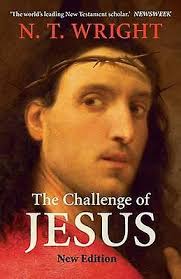
N T Wright: The Challenge of Jesus: Second Edition, London, SPCK, 2015 (1st edition 2000)

THE CHALLENGE OF JESUS 2ND EDITION
N T WRIGHT

In his new preface to this edition Tom Wright reminds us that in January 1999, nobody imagined..what would happen less than three years later, as planes smashed into buildings and the world changed forever. The Western world , and the Western Church, was embarrassingly unprepared not just for the terrible and wicked deeds of September 11, 2001 but for the world-view challenges that it offered. For far too long, Western Christianity had believed, at least implicitly, that religion and politics were two such separate things that one didn’t really need to think too hard about how they might engage with one another. The reaction to the atrocity was then predictable: meet fire with fire…into this strange, dark new world, we urgently need new light. Jesus of Nazareth brought that light a long time ago. The world, and the Church, has found it too dazzling, and we have done our best to cover it up, talking busily about a private spirituality in the present and a ‘heavenly’ salvation. But when Jesus taught us to pray that God’s Kingdom would come, and God’s will would be done, on earth as in heaven, he actually meant it. (p.ix)

Wright’s solution to this problem is to challenge his readers to think historically about Jesus of Nazareth not theologically. He writes about Jesus as a historian not as a systematic theologian or a Biblical literature theorist. The result is indeed a fresh and startling book although careful readers of his foundational works Jesus and the Victory of God and The New Testament and the People of God, and The Resurrection of the Son of God will be familiar with much of the detail of the defence of these ideas. What has changed from the first edition, apart from the new Preface, is not the content of the first edition but the context …The Western world is rapidly moving into a non-Christian, not to say anti-Christian understanding as the modernist world disintegrates and the post-modern replacement drifts in fits and starts  on every vaporous current of ideas that flits past us, bur remorselessly always in a non-Christian direction in a google-saturated world. In this environment Wright calls us not just to be kingdom announcers, modelling the new way of being human, we are also to be cross-bearers. This is a strange and dark theme which is also our birthright as followers of Jesus. (p145). …It is a matter of sharing and bearing the pain and puzzlement of the world, so that the crucified love of God in Christ may be brought to bear healingly upon the world…(p146)…we are cracked vessels full of glory, wounded healers. (p149).  

The essence of Wright’s argument about Jesus is summed up neatly in chapter 4 “The crucified Messiah”.  Of course we understand that Jesus was a prophet announcing the coming of the Kingdom of God. (Unless you are a disciple of John Crossan’s theory of Jesus the Galilean peasant who was a spinner of whimsical and gnostic tales). But Jesus was far more than a prophet. His teaching (when it is not stripped bare by inadequate, faulty and unsubstantiated mid C20th modernist criticism which reduces his message to a bare thread), is unique, powerful, cutting, incisive and life changing and demonstrates that Jesus was a theologian…a theologian of huge originality and power. But of course, there is more! Was Jesus the Son of God? people ask and Wright’s answer is that this is the wrong question. We cannot study Jesus’s psychology but we can study what he says about his vocation.  When we do we quickly learn that Jesus regarded himself at the embodiment of the Jewish Messiah…the longed hoped for saviour of the Jewish people who would free them from exile and slavery. 

Analysis of second temple Jewish literature shows that large numbers of Jews in the C1st A.D. were longing for their deliverer to come in power, overcome the Romans and bring in the long awaited and prophesied kingdom of God. The Gospels show that Jesus did indeed believe himself to be the Messiah but a very different Messiah from the one the Jewish community was looking for. He was a servant Messiah not a warrior Messiah.  Jesus’ violent acts in the temple, his warnings about the coming destruction of the temple, his authoritative offer of forgiveness of sins replacing temple offerings,  his parables of the landlord’s son coming to claim ownership and getting killed, his announcements in the Nazareth synagogue when he invoked Isaiah’s prophecy as his task, his courageous establishment of a new covenant in his crucified body and blood and much more besides clearly shows us that Jesus knew quite clearly and determinedly who we was. To ask “did Jesus know he was  God?”  is the wrong question.  Jesus’s vocation was to be God’s Messiah and he knew from Isaiah that the task would involve his death. Of course this is why Jesus’ disciples were so despondent after Jesus’ crucifixion. 

As for the resurrection, Wright argues again historically and not theoretically or theologically. He notes there is no evidence for a form of early Christianity in which the resurrection was not the central belief. Wright moves on to show what resurrection belief was not. It was not some sort of “ultimate non-physical bliss” as seen in Philo’s account;  nor was it some sort of disembodied existence in some heavenly state as in the apocryphal Book of Wisdom. Wright demonstrates that from the prophecy of Ezekiel 37 and Jeremiah  onwards there was a sense in which “resurrection” would mean Israel’s return from exile and the renewal of their covenant in the inauguration of a new age. (p101). For the Jews who did believe in the resurrection (and there were many who did not eg the Sadducees) their view of resurrection was a reembodiment of God’s chosen people… believing Jews – an event for all true Jewish believers.  As Wright notes,  the early Christian notion of the resurrection of just one person, the Messiah (Jesus or any other Messiah),  was nowhere on the second Temple Jewish wavelength. For just one person to be resurrected was a very singular and peculiar thing indeed.  The Christian claim that, apart from the earliest appearances noted in 1 Corinthians 15,  believers came to know to know the risen Jesus in the breaking of bread and in a sense of the power of the Holy Spirit was also a completely new deal although clearly foretold in Jeremiah’s prophecy. (p107) Of course Paul did go further and write about the eventual  “resurrection body” in the future and here Wright explicates well the problems of the RSV and NRSV use of the terms  the “spiritual” and the “physical” body and moves us again towards the notion of a renewed kingdom of God on a recreated and redeemed earth.

As I write this I fully understand that this book is full of demanding and difficult ideas and for someone looking for a simple answer when they are asked “Who is Jesus?” they may not have the stamina to stay with this analysis. In response Wright simply returns to the post-modern world outlined above. Evangelical Christianity in particular has tended to “deify” Jesus of Nazareth turning him into a “docetic” Christ… not a normal man at all.  But Jesus was in fact a man, a human being… a man sent by God as John writes. And that man, from childhood it seems, had the deepest possible sense of his vocation as the long awaited Jewish Messiah. A Messiah who had to show the Jewish nation that true messiahship must incorporate the prophesied suffering servant of Isaiah rather than the military might of a Davidic King.  Jesus of Nazareth was not at all interested in repeating the ultimately doomed fight of the Maccebean rebels against Roman oppression. If we are to be able to explain to non-believers the answer to the question “Who is Jesus?” we must read the Bible historically and not (only) theologically and we may get further.   I heartily commend this book.  5 stars. 
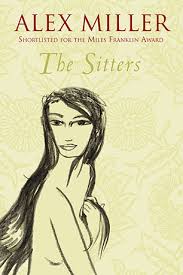
Alex Miller: The Sitters, Crows Nest NSW, Allen & Unwin, 2003

Interesting and engaging novella by brilliant English/Australian author Alex Miller about art, love and family. This was his fourth novel following his multi-award winning The Ancestor Game which won the Miles Franklin award among many others and was simply a most stunning novel. The Sitters is far less complex but still, as always with Miller, engages he mind with many twists and turn. Ittells an intriguing story of an artist on the brink of fame and his on again off again relationship with university colleague Jessica. As in many Miller novels the action eventually centres on the  dreamy and remote Australian rural outback, this time the Araluen Valley in the Southern Tablelands of New South Wales. All of Miler’s trademark skills are in evidence once more including philosophic, artistic and literary references, fine characterisations, complex family relationships and links between Australia and England.  A very readable and thoughtful novel, interesting and engaging, without reaching great heights.   4 stars. 

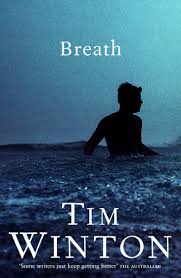
Tim Winton: Breath, Camberwell, VIC, Penguin, 2008

Complex and troubling novel by Tim Winton who never fails to surprise his readers with his characters drawn with searing honesty, weaknesses as well as strengths, and who often fall into very deep waters indeed but always finishing with some form of redemption. Bruce Pike’s life story, growing up in a small country town in South Western Australia, his adventures with surfing, school and sex and his adult life as a paramedic provide Winton with a rich array of interesting characters of whom by far the most interesting is the ageing surfing superstar Sando. The “breath” theme emerges in many and unexpected places and the novel also has much to say about changing friendship patterns, deep water writers and scientists Hans Has and Jacques Coosteau and Peruvian American mystic Carlos Castaneda. Winton also manages to interweave Christian themes into his novel as well as reflections on fame, loss and mental illness.  The deepest theme of all, however, is the majesty, spirituality, danger and power of the surf and the deep sea and its seemingly endless ability to entice its true believers into ever increasing trials of strength. This is a novel full of very powerful images, some very difficult to delete from the mind.  5 stars.

John Donne

Batter my heart, three-personnel God; for, you

As yet but knock, breathe, shine, and seek to mend;

That I may rise, and stand, o’erthrow me, and bend

Your force, to break, blow, burn, and make me new.

I, like an usurped town, to another due,

Labour to admit you, but oh, to no end,

Reason your viceroy in me, me should defend,

But is captive, and proves weak or untrue,

Yet dearly ‘I love you, and would be loved fain,

But am betrothed unto your enemy,

Divorce me, untie, or break that knot again,

Take me to you, imprison me, for I

Except you enthral me, never shall be free,

Nor ever chaste, except you ravish me.

Books read June 2019

BOOKS READ JUNE 2019

Bob Slosser: Miracle in Darien, Plainfield, NJ, Logos International, 1979

New You journalist and writer Bob Slosser

New York journalist with the New York Times and the National Courier Bob Slosser has written a unique portrait of the creation of a megachurch, St Paul’s Episcopalian Church in Darien, Connecticut. Slosser was a member of this church prior to and throughout the 17 year tenure of Everett L. “Terry” Fullam and he writes with a journalist’s eye and with what could only be actual notes taken at the time of sermons, prayers and even Fullam’s expressions of humour and other characteristics.  

Terry Fullam was a Christian musician turned philosopher and theologian who graduated from Harvard with an MA and from Barrington College with a Doctorate in Theology and was a well-known speaker and song leader.  He attended a service lead by the Revd Dennis Bennett, Rector of St Mark’s Van Nuys and was baptised in the Holy Spirit and became committed to charismatic renewal in the Episcopalian Church. 

Called to be the new Rector of St Paul’s Darien in 1972 Fullam was ordained without attending a seminary program, by the Bishop of Rhode Island, and made an immediate impact on what was already a well-attended “standard” Episcopalian church.  Fullam’s ministry based on the model of “everyone in the church is a minister”  and his exceptional musical talents and with the help of his team exploded St Paul’s into a dynamic ministry with several pastors, major support staff who worked in counselling, welfare, finance for folk in trouble, youth and childrens ministry, prison ministry and a raft of other services.  Fullam himself spent up to fifty per cent of his time on speaking engagements and missions outside the parish and after retiring from the parish he spent nine years travelling overseas encouraging spiritual renewal including over fifty separate visits to Israel. It is reasonable to say that Fullam was widely regarded as the leader of charismatic renewal in the North American Episcopalian Church deeply strengthening the beleaguered evangelical minority in that denomination.

Slosser’s writing is measured, detailed, full of scriptural references but does not beatify Fullam and demonstrates his weaknesses and challenges as well as his successes. An up to date reprint has been re-set at a more general and less personal level as a handbook for church spiritual growth and is highly regarded.  

I was not sure what to expect from Miracle in Darien. In the end I could not put it down. It is a well – crafted, wise and spiritually thoughtful and uplifting read.   5 stars. 
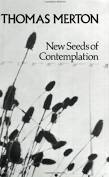
Thomas Merton, New Seeds of Contemplation. New York & Canada, New Directions, 1972 (1962)

Thomas Merton American Trappist Monk and author

In spite of this non-speaking isolation Merton gained a wide reputation as a writer, social critic, and progressive thinker by the time of his death at fifty-two. He wrote more than seventy books, diaries, biographies, poetry, meditative writing and political essays as well as hundreds of journal articles.

Born in Prades, France, the son of artists who died when he was young, Merton lived in Bermuda and Britain before enrolling briefly in Cambridge University in England. In 1934 he entered Columbia University in New York City, where he earned a master’s degree in English, studying under Mark Van Doren. It was at this time that he went from agnostic to Roman Catholic.  In 1941 after teaching English in a Harlem settlement house, he entered the Cistercian Abbey of Gethsemani, a cloistered Trappist monastery in central Kentucky. 

New Seeds of Contemplation, is an impressive series of brief essays surrounding the “art” and process of Christian contemplation. It contains many profound and thought provoking ideas, theological insights, many practical suggestions and a number of warnings about the traps of leading a contemplative life. The chapter entitled “the moral theology of the Devil” is profound and chapter 15 “Sentences” contains wise advice including Sentence 1: To hope is to risk frustration. Therefore make up your mind to risk frustration, and sentence 7: If you want to help other people you have got to make up your mind to write things that some men will condemn. Contemplation is a serious undertaking and not something one drifts into. There are salutary warnings and vast wisdom contained here but it is not all easy reading.  4 stars.

David Guterson, Snow Falling on Cedars, Maryborough Vic., Bloomsbury, 1994 (paperback film tie-in edition) originally published, UK, 1995.

Complex first novel by American writer, poet and journalist David Guterson and made into a major international movie success directed by Australian Scott Hicks.  The novel is set in the mid 1950’s in the bitter winter of the North West Pacific Puget Sound area of the Washington coast, in a  fishing and agricultural  town settled by a significant number of Japanese strawberry and raspberry crop growers.  Guterson has weaved an engrossing account of a murder trial centred on a death of a German/American fisherman at sea and a longstanding dispute over a land deal with the prime suspect being a Japanese man who had fought for the US in world war 11. The key players in the novel are Ishmail Chambers, a newspaper editor who lost an arm fighting the Japanese in the Pacific, Hatsue Imada, his Japanese childhood sweetheart whose relationship deepened into young adulthood and Kabuo Miyamoto the fisherman/farmer murderer suspect who was married to Hatsue Imada when all Japanese where interned in prison camps after the bombing of Pearl Harbour. The snow falling on tall cedar forests in the midst of a violent storm is the constant visual and emotive backdrop of this visceral novel. Guterson also describes in some detail the trauma for interned Japanese families living in appalling conditions in remote camps in the USA  as well as the bitter hand to hand fighting in the Pacific islands as the US entered the war and began to win back territory occupied by the Japanese. An engrossing and challenging read with perhaps a need for stronger editing in parts.   4 stars.
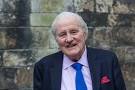
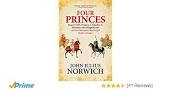
John Julius Norwich: Four Princes: Henry VIII, Francis I, Charles V, Suleiman the Magnificent and the Obsessions that Forged Modern Europe, London, John Murray, 2017

author of “Four Princes”

It is an extraordinary coincidence that in the decade between 1491 and 1500 four of the most influential leaders ever to hold power in Europe should be born. In the same half century came the explosion of the Reformation, the invention of the printing press, the beginnings of modern science and the age of world exploration.  

John Julius Norwich has the remarkable gift of making history not only come alive but fascinating and enjoyable as well as informed. Henry VIII needs no introduction ..his six wives, mercurial temperament, lust for power and passion to win France for England, quite apart from his challenge to papal power and authority is a story often told but Norwich manages to introduce us to a more personal Henry ..his doubts and fears as well as his bombast. Francis 1, King of France,  lusted after his Italian possessions especially Milan as much as Henry wanted France. Francis 1 was sandwiched between the two flanks of the mighty Holy Roman Empire, with Spain to the west and Germany, the low countries and the Balkans to the east. Frequently in opposition to Papal authority as well as Henry V111 he had few friends and needed the support of the Ottoman Muslim leader Suleiman the Magnificent to even the scales of power. Charles V,  Hapsburg King of Spain and Emperor of the Holy Roman Empire was certainly made in the tradition of Charlemagne.  Multi-lingual, a fierce warrior, cunning diplomat,  creative leader and fierce opponent of the Reformation,  he also had no qualms about sacking Rome and effectively imprisoning the Pope.

  Here were three high powered personalities indeed but the fourth was the greatest of all. Suleiman the Magnificent ruled the vast and complex Ottoman Empire with flair, intelligence and brutal power mercilessly quashing opposition from any quarter for over forty years. He was the only one of the four rulers to reach the age of 60, living into his 70s. The Ottoman rulers before him had already taken complete control of the Balkans and under Suleiman’s rule they annexed Hungary from the Hapsburgs  before laying siege to Vienna itself. In addition with the help of the naval pirate Barbarossa Suleiman controlled the Mediterranean and Aegean coast from the Barbary Coast in  North Africa in the South to Rhodes, the Balearic Islands  and even Nice and laying siege to Malta. Suleiman was a statesman, a patron of the arts, a legislator and first and foremost a soldier with unparalleled strategic skills and died with his troops in battle.

With superb skill Norwich integrates the stories of these four amazing leaders seamlessly interleaving his considerable knowledge of the role of the papacy throughout this whole period. It is difficult to find a paragraph that is not memorable in this account. The pace never weakens and it is an adventure narrative full of pathos, drama, extreme violence, political and religious intrigue as well as dirty dealing when needed. One of the saddest parts of the narrative is the appalling treatment and annihilation of Protestant Christians in both France and the Balkans…a terror whose results are still seen today.  I cannot think of a better entry to the study of  European history than this energetic and stylishly fluent account.  5 stars.

Meditating with Merton on contemplation and the spiritual life

QUESTIONS/COMMENTS FROM Thomas Merton, New Seeds of Contemplation, New York & Canada, New Directions, 1972 (1962).

p  15:   The love of God seeks us in every situation, and seeks our good.

p  45    The cowardice that does what is demanded, in order to escape sacrifice.

p  49     ..the complacency of a will that loves its own excellence.

p  50    The sin? of Christian activity.  In what way is Christian activity sinful?

p. 52f   Solitude is not separation from other humans..If you go into the desert to get away from people you dislike, you will find neither peace nor solitude; you will only isolate yourself with a tribe of devils…go into the desert not to escape other men but in order to find them in God.

p  54     There is no more dangerous solitude that that of the man who is lost in a crowd, who does not know he is alone and who does not function as a person in a community either. 

p  56    God does not give us graces or talents or virtues for ourselves alone.

p  57    In humility is the greatest freedom.

p  61f   The holiness of God is seen in God becoming man and dwelling among sinners. God was not holy enough for man so they crucified him.

p 68    The trinity is an example of fellowship being possible in one person.

p  71   Christ is massacred in His members, torn limb from limb; God is murdered in men.

p  72   Even saints cannot live with saints on this earth without some anguish. 

p  75   The root of Christian love is not the will to love, but the faith that one is loved. 

p 76    Contemplation is out of the question for anyone who does not try to cultivate compassion for other men.  

p  79   The flight from the world is nothing but the flight from self-concern…it is dangerous to go i into solitude merely because you like to be alone.

p  82f   Let there always be quiet dark churches in which men can take refuge… a place somewhere …where your mind can be idle, and forget its concerns, descend into silence, and worship the Father in secret.  There can be no contemplation where there is no secret.

p  84   Do everything you can to avoid the noise and business of men…Be glad if you can keep beyond the reach of their radios. Do not bother with their unearthly songs. Do not read their advertisements…no man who who seeks spiritual freedom, can afford to yield passively to all the appeals of a society of salesmen, advertisers and consumers. There is no doubt that life cannot be lived on a human level without certain legitimate pleasures. But to say that all the pleasures which offer themselves to us as necessities are not “legitimate” is quite another story.

p 85.    We must be able to say no to our appetites.

p 85f    No contemplative life is possible without ascetic self-discipline …drinking, smoking, eating, tv, sex and today data!…

p  86    Keep your eyes clean and your ears quiet and your mind serene. Breathe God’s air. Work, if you can, under His sky.

p  87   Keep your sense of compassion for the men who have forgotten the very concept of solitude.  You, at least, into that it exists and it is the source of peace and joy.

p 96f   Another characteristic of the devil’s moral theology is the exaggeration of all distinctions between this and that, good and evil, right and wrong. These distinctions become irreducible divisions. No longer is there any sense that we might perhaps be all more or less at fault. …the moral theology of the devil grants an altogether unusual amount of importance to …the devil…one soon comes to find out that he is the very centre of the whole system, that he is behind everything…and that there is every chance of his doing so because, it now appears, his power is equal to God, or perhaps superior to it. In one word, the theology of the devil is purely and simply that the devil is god.

p 100   It is not humility to insist on being someone that you are not….how do you expect to reach your own perfection by leading somebody else’s life?

pp104-111 Sentences:  To hope is to risk frustration. Therefore make up your mind to risk frustration

Do not be one of those who, rather than risk failure, never attempts anything.

Our minds are like crows.  They pick up everything that glitters, no matter how uncomfortable our nests get with all that metal in them.

If a writer is so cautious that he never writes anything that cannot be criticised, he will never write anything that can be read.  If you want to help other people you have got to make up your mind to write things that some people will condemn.

You cannot be a man of faith unless you know how to doubt.

True faith is never merely a source of spiritual comfort. It may indeed bring peace, but before it does so it must involve us in a struggle.

We are so convinced that past evils must repeat themselves that we make them repeat themselves.

The really “new” is that which, at every moment, springs freshly into new existence.

We need to learn how to renounce our resentment towards the absurdity and moral anarchy of modern society without becoming complicit or arrogant…we reject society’s  premise by the liberty given to us by our faith in God..we are commanded to come out of Egypt!

The poet enters into himself in order to create. The contemplative enters into God in order to be created.

p 125  Sinners are people who hate everything, because their world is necessarily full of betrayal, full of illusion, full of deception. And the greatest sinners are the most boring people in the world  because they are also the most bored and the ones who find life most tedious.

p127f  Faith is first of all an intellectual assent..faith is not expected to give complete satisfaction to the intellect …yet it does not frustrate the intellect or deny it…the act of faith is an act in which the intellect is content to know God by loving Him and accepting His statements about Himself on His own terms.

p 128  Faith is also a grasp, a contact, a communion of wills…one must assent to God.

p 130  Ultimately faith is the only key to the universe.

p 133  It is unwise to try to unlock the meaning of the three persons in one nature.

p 134  We feel the weakness and instability of our spirit in the presence of the awful mystery of God…a subjective sense of our own helplessness is perfectly compatible with true faith.  

p  139  φυχος (psuchos) = animal soul;    νους (nous)  = mind, reason, knowledge;   πνευμα (pneuma)   = spirit;  σοφια (sophia)  = wisdom, an alternative name for God in the Old Testament Wisdom literature.

p  142  The Church is at the same time esentially traditional and essentially revolutionary… Christianity is a living and perpetual revolution. 

p145   “…the dry outer crust of formality which the Church sometimes acquires.”

p 146  Mysticism and dogma are not opposed..they need each other. 

p 146   …therefore beware of the contemplative who says that theology is all straw before he has ever bothered to read any.

p 151   No one can be quite sure just how Christ looked….No one can dismiss the man Christ from his interior life on the pretext that he has now entered by contemplation into direct communication with the Word.

p 153  The “what” in Christ is vastly less important than the “who”. 

p 154   Do we need a “picture” of Christ to help us in our prayers?

p 160   People waste their whole lives in appalling labour and difficulty and sacrifice to get things that make real life impossible.

p 163   Life in Christ is life in the hidden mystery of the Cross.

p 165   Reference to “the real Presence” and p. 168 all graces come to men through Mary. 

p  169  Mary is as nothing in the presence of God. 

p 176  Do not think you can show your love for Christ by hating those who seem to be his enemies on earth…He loves them.

p  178   A man cannot be a perfect Christian – that is, a saint, unless he is also a communist. Try to share some or the poverty of the poor. 

p 180   Despair is the ultimate extreme of self-love…because our resources inevitably fail us, we are all, more or less, subject to discouragement or despair.

p 181    The beginning of humility is the beginning of blessedness…if we were incapable of humility we would be incapable of joy.

p187    Place no hope in the inspirational preachers of Christian sunshine!

p 196  We must distinguish between self-will and liberty.

p  204   …many never come to suspect how much they are governed by unconscious forms of selfishness, how much their virtuous acts are prompted by a narrow and human self-interest.

p 210 striving for complete emptinesscf 231 Be empty and see that I am God”…cf p 265 ..but in the contemplative, all complexities have now begun to straighten themselves out and dissolve into unity and emptiness and interior peace…cf p268 ..emptied of attachments..cf p 278 the experience of God opens out inside you as a terrific emptinesscf p287f  ..can such union with God be the object of inordinate desire?…you cannot inordinately desire that God’s will be done for  His own sake. But it is in these two desires perfectly conceived and fulfilled that we are emptied into Him and transformed into His joy and it is in these that we cannot sin. cf p291f ..the union of the simple light of God with the simple light of man’s spirit, in love, is contemplation. The two simplicities are one. They form, as it were, an emptiness in which there is no addition but rather the taking away of names, of forms. of content, of subject matter, of identities.

p 212   The most important thing in life is a feeling of interior peace.

p 217  Meditation…teaches you how to become aware of the presence of God : and most of all it aims at bringing you to a state of almost constant loving attention to God, and dependence on Him.

p221  If you have never had any distractions  you don’t know how to pray. 

p223 It is no use trying to clear your mind of all the material things at the moment of meditation if you do nothing to cut down the pressures of work outside that time.

p235 Let us never forget that the ordinary way to contemplation lies through a desert without tread without beauty and without water…ie contemplation comes through a suffering journey..with no refreshment for their imagination and intellect and for the desires of their nature. 

p 243  There is no such thing as a kind of prayer in which you do absolutely nothing.

p 247  Merton refers to “stigmata” but offers no comment on whether or not it actually happens.

p 250  Christ came on earth to form contemplatives??  Is this why Christ came?

p 253  A contemplative cannot operate in a situation of extreme poverty.

p 254  Contemplation …is the normal perfection of theology…unless they are united, there is no fervour, no life and no spiritual welfare in theology, no meaning and no sure orientation in theology. 

p 259  Do not look for rest in any pleasure, because you were not created for pleasure: you were created for spiritual JOY. And if you do not know the difference between pleasure and spiritual joy you have not yet begun to live.

p 266 [The contemplative’s] life is a prolonged immersion in the rivers of tranquillity that flow from God into the whole universe and draw all things back into God.

p 269  ..if your experience of God comes from God, one of the signs may be a great diffidence in telling others about it. 

p 271  No-one teaches contemplation except God.

p 279f  Merton introduces a definition of a human person which includes the person (the spiritual and hidden self, united to God) and the ego  (the exterior, empirical self…a kind of mask for the hidden self….it is our whole reality (not a distinction between “body” and “soul”). This insist self ..has its own way of knowing, loving and experiencing, which is a divine way and not a human one…. What do we think about this division?

p 285  Merton  refers to this perfect contemplation in which the should vanishes out of itself by the perfect renunciation of all desires and all things…is such perfect contemplation on earth possible?

p 288   [Contemplatives} are the strength of the world…they are the ones who keep the universe from being destroyed…. They shall inherit the land…They see God. He does their will, because His Will is there own… hmmm..

p 290  God made the world in order that He Himself might descend into the world.

p. 295  God’s presence in the world as Man depends, in some measure, upon men.

Books read May 2019

BOOKS READ MAY 2019  

Alexis Wright: Carpentaria, Artarmon NSW, Giramondo, 2006

Alexis Wright

Indigenous Australian author Alexis Wright won the Miles Franklin award for this powerful and consuming novel about her northern Australian homeland of the interior country surrounding the Gulf of Carpentaria. The setting of the novel is the fictional mining town of Desperance, a remote community divided by an upwardly socially mobile white community  (Uptown) led by the racist and violently corrupt mayor Stan Bruiser and the ineffectual and sleazy policeman Truthful. Uptown is   supported by the mine and its politely racist families would prefer the indigenous community would either come over to their side or just go away.  The dispossessed indigenous community is also divided within itself by ancient family feuds between families who live on different sides of the town…Norm Phantom’s mob in Pricklebush on one side and every other indigenous family on the other side (The Westsiders).

Wright’s pulsating organic writing manages to create a depth of reality which engulfs the reader with its passionate perfumes and more often the stinking odours of rotting fish, windswept dust or poisonous odoriferous winds and water from the mine. The writing has elements of magic realism intertwined with ancient Aboriginal lore of the bush, the plants, the sea, the rocks, the history, the rivers, the climate, the past and indeed the future. The image of the stranded Elias at night sitting in his boat in the middle of an inland lagoon in the middle of the scrub will be fixated in my mind I suspect for a very long time. 

There are key figures who engage our sympathy – the anti mine terrorist Will Phantom, the sexy and sleazy Angel Day, the prophetic cult leader Mozzie Shipman, the tragic fisherman Elias, the old man who knew everything Joseph Midnight, the Bohemian priest Danny with his souped up black Valiant and many others. Wright’s deft touch includes mystery, wonder, humour, spirituality, pathos and hope all mixed up in a kaleidoscope of colour and mixed emotions.

Norm Phantom is the lynch-pin of the narrative but his is an ambivalent and equivocal figure. His sea-lore and mystical fishing and navigating skills and his ability to communicate with the deep see Groper fish fills the reader with admiration and wonder as do his artistic skills demonstrated in his transformational fish collages.His common sense rejection of his fire-brand son Will’s terrorist approach to the mine helps us to see him as a progressive and thoughtful indigenous leader, someone who could make a difference as shown by his saving of his grandson Bala. On the other hand his liaison with the desirable but dangerous Angel Day and his apparent indifference, even hatred of his children including his inability to act on his own disgust with the libidinous Truthful’s lust after his daughter and his reliance on a visionary knowledge of the future rather than any direct  action begin to make us wonder whether his lack of action is the cause of some of the town’s misery.  His epic sea journey to see Elias appropriately laid to rest in a deep sea Groper Fish sea cave is mesmerising and memorable as is his Old Man of the Sea untidy and dangerous journey back home. 

The pace of the narrative varies radically. We are drawn unerringly through hair-raisingly fearful and rivetingly physical escape and attack narratives that you cannot put down until you reach a climax..including the sickening attack on Kevin and the three young petrol sniffers. But then comes the slow, deeply moving and intense scrutiny of the harshly beautiful Carpentaria landscape with its tyrannical climate changes, obliterating cyclones, dangerous floods and heat and vast consuming distances. This is landscape painting of the highest order, well and truly ready to match both Patrick White and Alex Miller.  

This text fills the reader with a sad longing for what might have been in the development of our young nation; shame for the murder, racism and damage inflicted on indigenous communities by “civilised whites”;  wonder at the brooding force and power of the natural physical order of the north and a genuine fear for the fragility of the fraught relationship between an ancient civilisation and its relatively recent arrivals. I was both exhausted and exhilarated when I finished this substantial Tolstoyan-like massive novel.  5 stars.

John Wyndham: The Day of The Triffids, Ringwood AU, Penguin/Michael Joseph,1971. (1951).

Englishman John Wyndham was a classic 1950s Sci-Fi writer also responsible for the  The Kraken Wakes, The Chrysalids and The Midwich Cuckoos. The Triffids are stinging plants that have evolved the ability to walk. A 24 hour shower of eerie green lights has blinded pretty well the whole of England and presumably the world enabling, the Triffids to begin to gain control. The story is about two accidentally sighted survivors who had missed the light show. Bill and Josella meet on the street, fall in love and through sadness, horror and many adventures begin to raise a family in the ensuing chaos of a totally broken England, but only just. The future remains uncertain as diverse colonies huddle together fighting hunger, disease and predatory behaviour by other groups.

The book raises interesting questions about the power of sight and how precious it is and how helpless most of us would be without it.  It is also a powerful commentary on the tension between helping others and surviving yourself. It is also a study of human drives and personality types. Interesting to compare it with the C21st  more hardcore approach of current post-nuclear story tellers like Cormac McCarthy’s The Road.

Henry David  Thoreau: Walden, or Life in the Woods, Everyman’s Library: London, J M Dent/New York, E P Dutton & Co., 1912 (1854).

Henry Thoreau

One of the “American Transcendentalists”, and protege of Ralph Waldo Emerson, Henry Thoreau was a prolific essayist, poet, philosopher, sometime teacher and manual labourer. His father had French ancestry from the island of Jersey and his mother was the daughter of a Puritan Minister. Brought up in Concord, Massachusetts, then a country of woodland, lakes and pastures, he graduated from Harvard College  but refused to pay the $5 to receive his certificate.  Thoreau had little interest in career and wealth and would have been a common labourer and something of a drifter, refusing to pay taxes and therefore occasionally imprisoned, he survived on odd jobs and occasionally teaching. He was fortunate to have the support of Emerson who encouraged publication of his articles, employed him from time to time and provided the land for his wooden hut which be built close to Walden Pond. Thoreau built and lived in this isolated one room hut for two years, planting a bean field, and fishing and hunting.   Walden is the story of these two years. Thoreau never married and died of tuberculosis at age 44, never having travelled outside north-eastern America and Canada. 

It is difficult to describe the impact made by Thoreau’s writing in Walden. In exalted prose and some poetry he describes the natural wonderland of forest, pond ( a very large pond), plants and animals that greeted his daily woodland ramblings. He still regularly visited the local village and had many visitors to his hut but by and large he lived his solo life for two years. Everything comes under scrutiny …the sounds of the forest and bird life, the seasons of the lake including the iced up winters, his rumination on solitude, philosophy, early history of the area, his bean field, food (“this slimy, beastly like, eating and drinking”), religion, loons, poetry, business,  fires, the harsh winter cold, the beauty of ice and the rapture of Springtime. Every now and then we glimpse his immense learning. Comfortable in Greek and Latin with an exhaustive knowledge of Greek mythology, he is equally at home with the Hindu mysticism of the Bhagavad-Gita as Cato or the Bible. He read widely in travel literature and had a vast knowledge of global geography and history without ever leaving the North American mainland. His writing about meditation and thinking would today be described as writing about mindfulness.  The dream-like writing leads the reader on gently and instructively and although the minute details of birds and fish and ice might seem unnecessary, somehow he continues to engage interest.

There are some classic sentences in Walden that live today most especially perhaps: The mass of men lead lives of quiet desperation. (p5).  He asks: will you be a reader, a student merely, or a seer? (p98) He quotes Confucius: Virtue does not remain as an abandoned orphan; it must of necessity have neighbours. (p119) 

He was consumed by the idea of solitude and the individual. I am conscious of the presence and criticism of a part of me, which, as it were, is not a part of me, but spectator, sharing my experience but taking no not of it…when the play, it may be the tragedy, of life is over, the spectator goes his way. It was a kind of fiction, a word of the imagination only, so far as he was concerned. This doubleness may easily make us poor neighbours and friends sometimes…I find it wholesome to be alone the greater part of the time. To be in company, even with the best, is soon wearisome and dissipating. (p119)  He cared little for money..for I was rich, if not in money, in sunny hours and summer days and spent them lavishly.  (P169) Give me the poverty that enjoys true wealth. (p174).  He valued “siting and doing nothing” above all: Enter ye that have leisure and a quiet mind, who earnestly seeks the right road. (p257); In a pleasant Spring morning, all men’s sins are forgiven. (p277). About Springtime he writes: There needs no further proof of immortality. All things must live in such a light. O death, where is thy sting?”  He ponders the inscrutability and mystery of existence:  At the same time we require that all things be mysterious and unexplorable, that land and sea be infinitely wild, unsurveyed and unfathomed by us because unfathomable…

Walden closes with the simple sentence: I finally left Walden September 6th, 1847.  But he then adds a chapter entitled Conclusion which is much more didactic and philosophical. He challenges his readers to take hold of life and celebrate its beauty. The universe is wider than our view of it (p282). Thoreau encourages us to be explorers .. Be a Columbus…open new channels, not of trade but of thought…there are continents and seas in the moral world, to which every man is an isthmus or an islet , and yet unexpected by him.  (p283)  He opposes Mirabeau’s opposition to the sacred laws of society and defends just government (p284). He writes: however mean your life is, meet it and live it; do not shun it and call it hard names. It is not so bad as you are. It looks poorer when you are richest. The fault-finder will find faults even in paradise. (p289).  Money is not required to buy one necessity of the soul. (p290) Rather than love, than money, than fame, give me truth. I sat at a table where were rich food and wine in abundance, and obsequious attendance, but sincerity and truth were not; and I went away hungry from the inhospitable board. (p291) Thoreau closes with Only that day dawns to which we are awake. There is more day to dawn.  The sun is but a morning star. 

Walden is a tale to be read slowly and thoughtfully, not rushed through. Thoreau was a massive fighter against slavery and an environmentalist well before Rachel Carson. A philosopher who is clear, consistent and easily understood! How rare is that?   5 stars.

Peter Jones: Imagist Poetry, London England, Penguin,1972.

Peter Jones

In the first decades of the C20th poetry, like art, underwent a massive change in form, structure, and just about everything else.  Prefigured by Japanese Haiku poetry,  Walt Whitman, Emily Dickenson, Gerard Manley Hopkins and the French vers libre Symbolists including Rimbaud and Mallarmé, a small group of American and English poets gravitated together and began to produce a radically new form of cut down and highly compressed and intuitive poetry. They  came to be known as “The Imagists”, a name coined by Ezra Pound. 

The American poets were Ezra Pound, Hilda Doolittle (H.D.), John Gould Fletcher and Amy Lowell, and the British poets were Richard Aldington, F.S. Flint and D. H. Lawrence. Five volumes were produced: Des Imagistes, edited by Ezra Pound, Some Imagist Poets 1914, 1915 and 1917 all edited by Amy Lowell and finally a much later Imagist Anthology of 1930 edited by Richard Aldington.

The editor of this collection, Peter Jones is an English and Classics teacher, publisher, poet and literary critic and has created a fascinating and accessible collection of poems and a careful and well documented introductory  study of “the imagists” and associated poets including Edward Storer, T. E. Hulme, Skipwith Cannell, John Cournos, Ford Madox Ford, James Joyce, Marianne Moore and William Carlos Williams.

Imagism is a poetry of intuition rather than description and it was written in  free verse with a radical rejection of traditional poetic devices, especially alliteration and metre as well as a revolt against Victorian moralism. It is the poetry of presentation,  not representation and a kind of accurate mystery (Aldington). It owed a debt to Bergson’s philosophy of image and intuition and had a tinge of the metaphysical around the edges. At the same time it ran straight into the horrors of WW1 and a deeper sense of evil challenged the evanescent sense of mystery and awe in their later works. Although this group had dispersed by the 1920s they laid a foundation for a major new direction for much C20th poetry writing, well and truly preparing the way for the exceptional genius of T S Eliot who was also influenced by Pound and who came on to the organising committee of the Imagists towards the end of its life.

Peter Jones touch is light and easy to understand just as many of the poems are elusive, complex and difficult to understand. Jones includes both positive and critical responses of the day and a useful feature is his inclusion of poems already written and then rewritten by the same poet in the Imagist style (usually severely cut but achieving a pleasing and favourable result. Jones also includes the Prefaces to the 1914 -17 collections, biographical notes on each poet represented, a useful  bibliography of the texts discussed in the introduction and a very useful  guide to further reading regarding the development of Anglo-American poetry up to the 1960s. This is altogether a marvellous collection of diverse materials and a very helpful introduction to a group of less well known poets with the exception of Lawrence and Joyce.  4 stars.

Peter Jones (Editor): Imagist Poetry, London, Penguin,1972

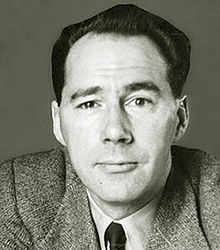
Peter Jones poet and publisher/editor
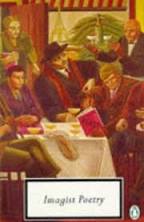
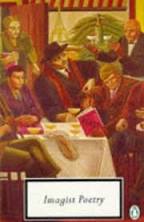
Peter Jones: Imagist Poetry: the cover is a section of a poem by William Roberts in the Tate Gallery London called “Les Vorticists dans la Tour D”Effel Restaurant.
the complete list in the original painting is: left to right seated Cuthbert Hamilton, Ezra Pound, William Roberts, Wyndham Lewis, Frederick Etchells, and Edward Wadsworth
Standing in the doorway: Jessica Dismor & Helen Saunders, Joe the Waiter and Rudolph Stulik, the proprietor of the Restaurant from 1908 -1937.Etchells is holding volume 1 of the Vorticist’s publication “Blast”.

Books Read April 2019

BOOKS READ APRIL 2019

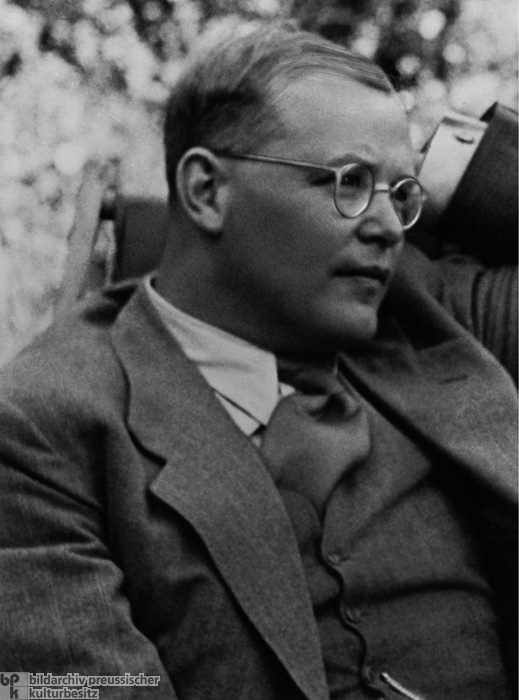
Dietrich Bonhoeffer: Life Together, translated by John W Doberstein, London, SCM, 1954 ; from German Gemeinsaames Leben, 1949.


Motiv 2 von 3
Aufnahmedatum: 1939
Aufnahmeort: London
Systematik:
Geschichte / Weltkrieg II / Krieg in der Heimat / Deutschland / Widerstand / Bekennende Kirche / Bonhoeffer

Dietrich Bonhoeffer is truly one of the heroes of Christian faith. Executed by the Nazis, close to the end of WW11 for plotting against Hitler’s life, Bonhoeffer was a theological giant, cut off in his prime. His books Letters and Papers from Prison, Ethics, The Cost of Discipleship and No Rusty Swords are rightly regarded as Christian classics. This little Book about the church, Life Together, just ninety five pages, is, in my view the best of all. In seemingly simple terms he packs in such helpful practical advice, spiritual wisdom and energising encouragement that the reader cannot help but be inspired to return to their church inspired and encouraged.

Chapter one is simply about Christian community. Bonhoeffer reminds us that we should not take our Christian community for granted. Many Christians around the world are on their own, literally. If we have a church fellowship we are fortunate. He reminds us that our Christian community must be based on Christ alone. If we are going to church for the social experience, because it is a “dream” church where everyone is “people like us” and “nice”, or a place we can go to have a “rapturous experience” or because the music is wonderful then we have failed to understand Christian community. 

All of these are false motivations. Bonhoeffer writes that God is not a God of emotions but the God of truth..He who loves his dream of a community more than the Christian community itself becomes a destroyer of the latter , even though his personal intentions be ever so honest, and earnest and sacrificial. Bonhoeffer encourages us to give thanks daily ..even where were is no great experience, nod discoverable riches, but much weakness, small faith, and difficulty.  This must surprise us, especially those like me who have been fortunate in the past to belong to huge and powerful congregations, with exceptional music, outstanding preachers, deep spiritual maturity and close friendships. 

Bonhoeffer celebrates the opposite..Christ bids me to celebrate fellowship for the sake of love …the exclusion of the weak and insignificant, the seemingly useless people from a Christian community may actually mean the exclusion of Chris; in the poor brother, Christ is knocking at the door… thus it is that really annoying person, that person with deep needs, that person who is not “people like us”, that person whose memory is gone, that person who is so depressing…is Christ knocking at the door. I found this chapter especially challenging.

Chapter 2 concerns “the day with others”…how we lead our daily lives and our worship life. Bonhoeffer helps us with the imprecatory psalms which seem so unChristian..what should we do with them? (you will need to read the book for the answer!); he reminds us that our church activity should be based on solid biblical ground.  Rather than speaking to others on the basis of life experience or life coaching he calls us to base our counselling on Scripture. He encourages us in our ministries not to draw attention to ourselves, to use both formal and personal prayers, to heal our divisions on the same day and not let them fester. Bonhoeffer suggests that arguments about church music should not become heated or doctrinaire..it is the church which is singing not individuals getting off on what they like.

Chapter 3 concerns our personal spiritual life. Bonhoeffer reminds that unexpected, extraordinary experiences in meditation are welcome when they happen but if they do not it is not a sign that the meditation was useless. When we are distracted in our prayers he suggests we pray about our distractions. I have always practised this and it is helpful. 

Chapter 4 is about ministry. Bonhoeffer reminds us that We should not try to fashion folk in our own Christian image. God did not give this person to me as a brother or sister for me to dominate and control, but in order that might find above him or her the creator.  He urges us to practise the ministry of holding the tongue…to speak about a brother publicly or covertly is forbidden, even under the cloak of help and good will. How much church gossip, anger and bitterness would be squished immediately if we kept to this rule? 

Bonhoeffer reminds us Thomas à Kempis’ dictum that we should consider ourselves the greatest of sinners and urges us to see listening to others as the first service we owe them.  Strikingly he notes that he who no longer listens to others will soon be no longer listening to God!  About helpfulness he reminds us that we must be ready to allow ourselves to be interrupted by God.  About evangelism he notes that the speaking of the Word is beset with infinite perils…and yet we are called to this task.  It requires training and care. 

Chapter 5 is a brief reflection on the importance of Confession and Holy Communion. I was surprised to see no comment at all on baptism.

This is a little book to read, re-read and read again. You won’t agree with everything Bonhoeffer says but your spiritual life will be deepened and encouraged as you turn to Christ and his Word.  5 stars

Richard Prideaux.

Bertolt Brecht: Mother Courage and her Children with commentary and notes, translated from German by John Willett; commentary and notes by Hugh Rorrison, London, Methuen, 1983 (translation 1980; original German 1940).

Brecht’s impact on European and Western drama in general was revolutionary and this play demonstrates why.  Gone are the “good guys vs the bad guys” of drama from Sophocles onwards and what we have is a new art form, known from the 1920s as “epic theatre” in which the audience is presented with an “objective case” about war and can make up their own mind about which side or neither is in the right. Written on the eve of World War 11 when Marxist leaning Brecht had left Germany this play is set in the C17th Religious wars between Protestant Sweden and the Holy Roman Empire but its relevance to WW11 cannot be doubted.  Brecht apparently wrote the play as a warning to Denmark that attempting to stay neutral in relation to Nazism won’t save their country from significant damage and trauma. 

Mother Courage bases her whole existence around her cart of sellable goods which is pulled along by her children and the occasional male friend who might turn up. She is quite willing to change sides abruptly depending on which side is winning the war. It is in her economic interest that the war continues for as long as possible. Even though she eventually loses all three children in different circumstances, all of them tragic, we find her at the conclusion setting off almost joyfully because the armistice has broken and the war has resumed.

This is bleak Brechtian drama with no redeeming characters and only Courage’s third child Kattrin, who is unable to speak, emerging as a heroine who saves a city from anihillation. The clergyman is cowardly, flabby-minded and only preaches with passion on the occasion of the appearance of a rival for a relationship with Courage. The generals are alcoholic incompetents leading armies who scramble for whatever food, woman or safety they can scrounge.  The Cook and would be lover of Courage proves to be a pervert and a selfish go-getter. The political leaders seem far away and irrelevant to the appalling conditions on the ground and the common victims at all time are the peasants and commoners whose property and lives are shown to be at the mercy of the first comer. Brecht had summaries of each act projected on screens in his productions so that the audience was already aware of the drama about to unfold and can effectively become if not participants, then judges of the characters and are called upon themselves to have a view about the sordid and vicious realities of warfare.

This play is a powerful, amoral, disquieting and critical assault on the dismal realities of European history in both the C20th and C17th.    There is only minimal redemption here.   4 stars.

Tara Westover: Educated, London, Windmill, 2018

Extraordinary autobiographical account of growing up as the youngest child  in a rural backwater of Idaho in the United States.  Westover’s parents were extremist anti-government, anti-medicine, anti-hospital, anti-education loners  psychologically and pathologically attached to an annihilationist view of world history which was to come to an end in their lifetime. They were attached to the Mormon church which met in the nearest town but their behaviour and beliefs were extremist and they were not well regarded by the Mormon church who they despised at “gentiles” or fake Mormons.  The father in particular was a completely dominant and controlling misogynist  and manic religionist whose sone were trained in his image and one of whom became pathologically destructive towards women. 

Only the first three boys had any education and that only for about three years until they were old enough to work in the father’s metal scrap and barn building businesses. The mother was completely dominated and intimidated by the father and earned money as an untrained  mid-wife and herbalist. All of the children went to work in very dangerous conditions in the scrap yard including the girls.  They had no birth ceritificates, no medical records, no educational records 

The narrative reveals in excruciating detail the evil and and increasingly violent tyranny of one of the boys over the sisters including Tara.  Three of the brothers, Tyler, Richard and Tony eventually broke away from the family, married and had children and lived relatively normal though still scarred lives. Tara tells of her gradual separation from her parents  through odd jobs in the town, a supportive grandmother and two supportive aunts and eventually, almost miraculously and after extraordinary effort finds her way to Brigham Young University and by dint of a very fine though untrained mind and some exceptional support, to a doctorate at Cambridge.  Yet the power of the family remained and her final “escape” was a near thing. 

This is one of the most disturbing books I have ever read. It is desperately honest, horrific in its descriptions of family brutality and frightening in its revelation of the damage that psychological pathology can produce on the mind of even strong and highly educated people.  This book is strong meat! Ultimately a triumphant hymn of praise to education and good educators but the personal cost and trauma of its protagonist is a tragedy of Shakespearian or Zola-like proportions and not a read for the faint-hearted.  5 stars. 

Kate Grenville: The Idea of Perfection,Sydney, Picador, 2002 (1999)

Kate Grenville: The Art of Perfection

Engaging and lively love story centred in a rural one horse New South Wales  town called Karakarook. The dying town is trying to forge a new identity as a tourist destination and fighting to save their unusual wooden bridge. Shy and socially clumsy middle aged and divorced engineer Douglas Cheeseman, sent to destroy the bridge and build a new one, falls stupendously and very quickly in love with equally divorced (three times)  and on her own reckoning “dangerous” Harvey Savage, a quilter and museum administrator sent from Sydney to help set up a heritage centre in the town. Having  her last husband commit to a violent suicide, Harvey was not looking for a new partner in a hurry but on arrival immediately attracts a life-time friend in a stray-dog as well as the determined Douglas Cheeseman. 

What in my view is a sub-plot in the narrative, perrfectionist one child younger mum Felicity Porceline, the wife of the local bank manager, becomes the story of the title. Out of all character, Mrs Porcelline enters into an erotic relationship with single man Alfred Chang  (“Freddy”) a  butcher and amateur photographer, especially of beautiful women!

Grenville won the 2001 Orange Prize for Fiction with this novel and its whimsical humour, unique perception of the chatter and lifestyle of the women in Australian country towns, and the strange tension and loneliness of the Australian bush all combine to create a humorous, enchanting and at times even tensing novel.  5 stars.

Hermann Hesse: The Glass Bead Game, 

translated from the German by Richard and Clara Winston, Ringwood, Penguin, 1972 (this translation,1960; in German Das Glasperlenspiel, 1943)  

[Subtitle: A tentative sketch of the life of Magister Ludi Joseph Knecht together with Knecht’s posthumous writings, edited by Herman Hesse.] 

Herman Hesse

German author Herman Hesse (1877 – 1962) settled permanently in Switzerland as a protest against German militarism in the First World War. Hesse was unable to have this or any of his books published in Nazi Germany but he won the Nobel Prize for Literature in 1946  for this, his last novel. 

The complex story is set somewhere in the C25th century in a central European region called Castalia, a specially dedicated educational province within a larger independent nation. Students were selected from secondary colleges across the State to study at tertiary level at Waldzell  which has been set aside as a specialised centre for high achieving students. Outstanding students from this group were encouraged to take part in a highly complex game and activity called “the Glass Bead Game”  which is difficult to describe but includes exceptional skills in musicology, mathematics, languages, architecture, art, science and virtually any other major area of study (except, perhaps for history!) In its foundation this group of students were joined by another group of “journeyers to the East” who brought back a significant influence of Chinese philosophy especially of The Book of Changes, the I-Ching which brought a powerful component of meditation into the game and lifestyle. 

Absolutely outstanding students were recommended to join “the Order” which was a select group of leaders who controlled the curriculum and development of the Glass Bead Game and the whole educational centre of Waldzell.  The “Ludi Magister” is the senior principal and controller of the Glass Bead Game and highly honoured and revered.The period follows the “century of Wars “ and is called the Feuilleton era..devoted to literature, philosophy, research, knowledge and wisdom. 

The culture of Castalia honoured order, truth, normality, reason, lawfulness, beauty, calm and moderation. It was a culture of quintessential intellectual genius, meditative wisdom and harmony but in Knecht’s time it has gone beyond its greatest height of intellectual and mystical flowering and has begun to lose its inventive and intellectual power and drive…it has become overly delicate, comfortable and self-satisfied.

The novel basically tells the intellectual and spiritual formation and life story (a “bildungsroman”)  of Joseph Knecht  who, after many complex encounters and challenges rises to the role of Ludi Magister.  Along the way he faces many problems and challenges, some of whom represent major philosophical heavyweights in Hesse’s own philosophical world. Thus Thomas von der Trave, the previous Ludi Magister, is a thinly veiled Thomas Mann;  Knecht’s best friend Fritz Tegularias stands in for Nietzsche; and  the Benedictene Father Jacobus makes an impressive Jacob Burckhardt, the exceptional German historian of the Renaissance. 

 Hesse manages to include most of the major  C19th and C20th musicians, as well as Leibniz, Kant, Hegel, Pindar, Goethe, Froberger, Faustianism, Montaigne, Opitz, entelechy, C18th German pietists (Bengel, Zinzendorf, Oetinger), Taoism, Franke of Halle, Pythagoras, Plato, Confucius, Cicero, Catholicism, Buddhism and many more central philosophical ideas and tensions. In addition the account of Knecht’s eight year reign as “Ludi Magister” is an excellent study of outstanding leadership principles!

The story comes complete with a selection of Knecht’s poetry which reveals much of his inner mind. In addition one of the tasks of a senior applicant for the Order is to write a series of three “other lives” based on someone living  at three different times. Knecht unusually chooses three different ancient historical periods, ( a culturally ancient,  pre-literate shamanistic “rain-maker” and mystic;  a C3rd Christian desert hermit/confessor; and a Hindu Brahman prince, devotee of Vishnu in his avatar as Rama.   These three “lives” are as powerful and effecting as Knecht’s own story, which, in spite of the philosophical complexity, manages to hold a committed reader in thrall.

This is a difficult and disturbing novel. It is not for the faint-hearted. It reaches out to the highest possible ideals made all the more urgent and mordant given its date of writing. Hesse has a breath-taking and detailed grasp of many deep philosophical and theological ideas and faiths…he seems to be somehow inside of each. 

But Hesse also manages to sow doubt in the reader’s mind about the ultimate power and value of these very high ideals and modes of living. There is always the ongoing threat of evil and brutal power as well as unique weaknesses in each philosophical ideal whether it is the uncertainty of illusion in Hinduism, the sheer hardship of maintained Christian love, the limits of calm meditation to deal with physical realities and so on. Knecht’s fraught attempt to re-enter the real world will perhaps disappoint many readers…or perhaps the ending will affirm that it is  not the destination but the journey that matters. In spite of the Nobel Prize, just 4 stars!

Building a Christian life with Bonhoeffer: Life Together

Building a Christian life with Bonhoeffer about being and living in a worshipping family and community.

Notes from Dietrich Bonhoeffer: Life Together, London, SCM, 1954. (Translated by John W Doberstein, 1954) (published in German, 1939)

Bonhoeffer’s Life Together is a small but very powerful book which covers a series of suggestions about how Christians should live, work and worship together both in their families and in Christian communities.  The following notes pull out some of Bonhoeffer’s key ideas and suggestions. 

Chapter 1: Community,  Covers the working of the Christian family but the principles widen out to the family of the church. 

Life Together begins with a quotation from Psalm 133:…Behold, how good and how pleasant it is for brethren to dwell together in unity.  Bonhoeffer underlines the importance of unity both in the family and in the local church.

Bonhoeffer notes on p7 that it is not simply to be taken for granted that the Christian has the privilege of living among other Christians…the Christian, too, belongs not in the seclusion of a cloistered life but in the thick of foes. This is a good reminder to pray for folk who do live in minority environments or have no-one that they can realistically fellowship with in person. One gets the feeling that Bonhoeffer was not a fan of closed monasteries.

On fellowship with other Christians, Bonhoeffer notes (p10): The Christ in his own heart is weaker than the Christ in the word of his brother; his own heart is uncertain, his brother’s is sure. There is strong encouragement from meeting and praying with Christian brothers and sisters. Throughout my working life in schools I have always managed to have a  weekly prayer partner in my school environment. It is a huge blessing.

On p13 Bonhoeffer notes: Christian community means community through and in Jesus Christ . On this presupposition rests everything that the Scriptures provide in the way of directions and precepts for the communal life of Christians.  The sub-text of this point is that the community of the church we attend is not really Christian at all, no matter how vital and busy, if it is not a community based strongly in and through Jesus our Lord. Otherwise we could just as well be a bowling club or a reading group. On p14 Bonhoeffer continues: One who wants more than what Christ has established does not want Christian brotherhood. He is looking for some extraordinary social experience which he has not found elsewhere; he is bringing muddled and impure desires into Christian brotherhood. 

On the desire (I have often heard expressed and often felt myself) for the perfect church Bonhoeffer writes on p14: Just as surely God desires to lead us to a knowledge of genuine Christian fellowship, so surely must we be overwhelmed by a great general disillusionment with others, with Christians in general, and, if we are fortunate, with ourselves…By sheer grace god will not permit us to live even for a brief period in a dream world. He does not abandon us to those rapturous experiences and lofty moods that come over us like a dream. God is not a God of the emotions but the God of truth…He who loves his dream of community more than the Christian community itself becomes a destroyer of the latter, even though his personal intentions be over so honest and earnest and sacrificial…we must give thanks daily …even where there is no great experience, no discoverable riches, but much weakness, faith, and difficulty….These are typically tough words from Bonhoeffer.  

I do not think he is saying there should be no emotion in our community or worship but rather that Christ’s church cannot be built on pure emotion..it must be built on Christ alone. I do not think either that he means we should not aim high..rather that when we fail to achieve what we think should be or happen in our church, we ought not to blame ourselves or our fellow Christians…we simply must work within the fellowship we have; we should not get depressed or down-hearted  and we should keep on praying for the blessing of God’s Holy Spirit. It is God’s church and he will build it.  Trying to build it with our own strengths and gifts alone will simply result in disillusion and burn out.  In addition I am sure he is reminding us that “when we think we are strong then we are weak”. We are in the greatest spiritual danger when we become proud and over-confident of our spiritual maturity and “joyful Christian life”.  Pride does go before a fall and spiritual pride is the deadliest of sins. When we become dependent on ourselves and not God’s mercy we are in the greatest of dangers.

On p17 Bonhoeffer notes: A pastor [nor a church member] should not complain about his congregation, certainly never to other people, but also not to God.  Hmm.. this will reduce a large number of Christian conversations! 

In a footnote on p19 the translator, John W Doberstein, explains the words he uses for translating the Greek pneumatikos ( Greek πνευματikος , German geistlich ) and the Greek psuchikos ( Greek ψυχικος, German seelisch ).  He translated geistlich as “spiritual” and seelisch as “human”.  He felt that “psychic” has a different connotation in English and although he didn’t say so “soulish” is not really a word. [Of course the New Testament gets itself into difficulties any way in 1Corinthians 15 where Paul distinguishes between the “physical” (Greek φυσικος – phusikos ) body and the  “spiritual” (Greek πνευματikος – spiritual body which could be interpreted as an “immortal soul which is without a body… which is not his intention as shown by his argument at the beginning of 1 Corinthians 15. Small wonder that Christian theologians easily get themselves into differences and difficulties when they begin writing in detail about the “resurrection of the body”!]

On p22 Bonhoeffer writes: Where Christ bids me to maintain fellowship for the sake of love, I will maintain it. Where his truth enjoins me to dissolve a fellowship for love’s sake, there I will dissolve it, despite all the protests of my human love.  On a first reading, this passage appears to contradict his statements on p14 that we should expect much weakness, faith, and difficulty in our Christian community. In fact what I think he is saying is that when an allegedly ‘Christian” community says outright that it will have no truck with prayer, or Bible or preaching Christ or talk of salvation or repentance then indeed it should rename itself and become something else. I once was paid to run a youth group of over 80 members in a wealthy inner Melbourne community but when it came to worship they said “ok, but no hymns, no Bible readings, no prayers!”. These were thus difficult gigs to present and although the members came  (they had to if they wanted the youth club afterwards), not a lot of spiritual growth occurred. We occupied a lot of lives on a Friday evening for two years but the only observable life changes I recall were those in a small group of eight who met separately at a different time for Bible study and prayer.  When we left that church, the youth group disappeared overnight. On the other hand I have read of other folk who laboured faithfully on an overseas mission field for perhaps  fifteen years and had not one observable convert. They maintained their faithful vision.

On p23 Bonhoeffer writes spiritual love…will not seek to move others by all too personal, direct influence, by impure interference in the life of another. It will not take pleasure in pious, human fervour and excitement. It will rather meet the other person with the clear Word of God and be ready to leave him alone with this Word for a long time…Once again Bonhoeffer steers away from too much emotion in our evangelistic efforts.  (Not sure how he would have related to a Billy Graham Crusade meeting).  I also understand this paragraph to say that we need to give folk space, and not badger them with the Gospel or try to force something on them they are clearly uncomfortable with.   Paul’s encouragement to preach “in season and out of season” is not intended to encourage bullying or rudeness I am sure. Bonhoeffer is also saying I think that “scalps on the evangelistic belt’ is not what we are about in speaking a word of Christian encouragement to another traveller. 

On p24 Bonhoeffer seems to show a dislike for para-church organisations with a single aim or function. He writes life under the Word will remain sound and healthy only where it does not form itself into a movement, an order, a society, a collegium pietatis, but rather when it understands itself as being a part of the one, holy, catholic, Christian church. 

On p24  Bonhoeffer writes that there is no such thing as a church consisting of only spiritually strong people. …the exclusion of the weak and insignificant, the seemingly useless people, from a Christian community may actually mean the exclusion of Christ; in the poor brother, Christ is knocking at the door…when a community of a purely spiritual kind is established, it always encounters the danger that everything human will be carried into and intermixed with this fellowship. A purely spiritual relationship is not only dangerous but also an altogether dangerous thing…Nothing is easier than to stimulate the glow of fellowship in a few days of life together, but nothing is more fatal to the sound, sober, brotherly fellowship of everyday life.   We cannot stay on the mountain-top! We have to walk through life’s valleys as well as its peak experiences.

Chapter 2: The Day with Others…about Christian practices.

On p32f  Bonhoeffer describes some difficulties we encounter when we try to pray the Psalms. Sometimes they say exactly what we want to say…especially when we want to shout God’s praises or communicate our deep distress. But some of the psalms are very personal to individuals and may not be “us” at all. And then there are the imprecatory psalms..how do we pray them in relation to Jesus’ command to love our enemies?

 One particularly helpful solution which Bonhoeffer offers on p34 is that in the psalms..there are two voices, bringing the same concern to God..the one who prays is never alone…there must be a second person…Jesus Christ himself, praying with him.

In regard to reading the Scripture, Bonhoeffer notes (p36) there is little doubt that brief verses cannot and should not take the place of reading the Scripture as a whole..and further (p36)..the reason we find it hard to read large sections of Scripture is because we are ignorant of the contents of Scripture!    In relation to the public reading of Scripture, Bonhoeffer stresses that it is very important not to try to draw attention to yourself.

In regard to singing hymns in church Bonhoeffer is very much opposed to folk who sing harmony in church (something I love to do!) Bonhoeffer things this is showing off (p44) …It is not you that’s singing, it is the church that is singing! He write of the great power of the church singing together in unison.  Regarding the perennial problem of what hymns/songs to sing and how to sing them Bonhoeffer offers the advice that any doctrinaire attitude, which we meet so often in this area, comes of evil.  (p44).

In regard to devotional prayers, Bonhoeffer argues that one person in the family group only should do this (p46)…I am not sure why he would insist on this.

In regard to formal, liturgical prayers, Bonhoeffer accepts that they can be a help (p47) …but often ritual becomes an evasion of real prayer.

In regard to dissension within the church or family, Bonhoeffer is strong (p56)…It is a decisive rule of every Christian fellowship that every dissension that the day has brought must be healed in the evening. It is perilous for the Christian to lie down to sleep with an unreconciled heart. 

Chapter 3: The Day Alone:…about individual Christian devotional practice.

On p57f Bonhoeffer notes: Many Christian people seek fellowship because they are afraid to be alone…who hope they will gain some help in association with others. They are generally disappointed. Then they blame the fellowship for what is really their own fault? The reverse is also true: let him who is not in community beware of being alone. Into the community you were called, the call was not meant for you alone.

On p59f Bonhoeffer writes; There is a time to keep silence and a time to speak (Ecclesiastes 3:7).  Silence is nothing else but waiting for God’s Word and coming from God’s Word with a blessing. 

Regarding personal devotional times and the use of Scripture, Bonhoeffer notes we are better with a brief selected text, rather than a long consecutive passage. We should ask “what is the text saying to us?” not “‘what should I preach about it or tell others about it?” (p61f)

On p63 Bonhoeffer notes ..it is not necessary that we should have any unexpected, extraordinary experiences in meditation. This can happen, but if it does not, it is not a sign that the meditation period was useless.  Bonhoeffer seems to be encouraging us not to set the bar too high in our expectation of “spiritually uplifting” moments in our devotional lives.  When these times comes it is a blessing but it is not a sign of spiritual slackness or weakness if they are not occurring. 

Regarding folk losing concentration in meditation Bonhoeffer notes (p64f) Many folk get upset when their mind strays in meditation. When this happens it is often a help not to snatch back our thoughts convulsively, but quite calmly to incorporate into our prayer the people and events to which our thoughts keep straying. I think this is excellent advice and it is an approach I have always felt to be particularly helpful

Chapter 4: Ministry. Bonhoeffer notes many important ministries…many of them seldom spoken about: 

p70:  The ministry of holding our tongue…it must be a decisive rule of every Christian fellowship that each individual is prohibited from saying much that occurs to him…to speak about a brother covertly is forbidden, even under the cloak of help and good will.

p. 71 Bonhoeffer notes that we should not try to fashion folk in our own image. God did not give this person to me as a brother for me to dominate an control, but in order that I might find above him the Creator. 

p72 In a Christian community everything depends on whether each individual is an indispensable link in a chain…a community which allows unemployed members to exist within it will perish because of them.  [nb I think he means “unemployed” in the sense of not having a role in the Christian community!

p73  the first man who was born on this earth was Cain.  A useful insight…Adam was created in Paradise. 

p74 As a rule we shouldn’t be running around insisting on our rights. Paul insisted on his rights as a Roman citizen but I believe he did this hoping to testify to Christ before the Roman Emperor himself. 

p74. In community, it is important to consider ourselves s the greatest of sinners…Thomas à Kempis:  Never think that thou hast made any progress till thou look upon thyself as inferior to all.

p75  The first service that one owes to others in the fellowship consists in listening to them….He who no longer listens to his brother will soon be no longer listening to God.

p76   The ministry of helpfulness:  We must be ready to allow ourselves to be interrupted by God.

p77.  The ministry of bearing:  For the pagan the other person never becomes a burden at all. He simply sidesteps every burden that others may impose upon him. Here in this passage only, I disagree strongly with Bonhoeffer. In my experience pagans are often the first responders and helpers in a crisis and often seriously put themselves out.  I think Bonhoeffer underestimates selfless and caring pagans many of whom often put Christians to shame. 

p80  The ministry of proclaiming: Bonhoeffer notes that the speaking of that Word is beset with infinite perils….and yet we are called to this task..training and care is required…

p 84  The ministry of authority:  Bonhoeffer notes that the desire we so often hear expressed for ‘episcopal figures’, ‘priestly men’, ‘authoritative personalities’ springs frequently enough from a spiritually sick need for the admiration of men ….The Church does not need brilliant personalities but faithful servants of Jesus and the brethren. 

Chapter 5: Confession and Communion.   

On p86 Bonhoeffer notes Many Christians are unthinkably horrified when a real sinners suddenly discovered among the righteous. So we remain alone with our sin, living in lies and hypocrisy. The fact is that we are sinners.

On p88ff Bonhoeffer puts up a strong case for confession to a fellow Christian individually and personally, not just corporately in worship.  There do seem to be significant difficulties in this process.