BOOKS READ MAY 2024
Tom Nancollas: Seashaken Houses: A Lighthouse History from Eddystone to Fastness: p/b, London, Penguin, 2018

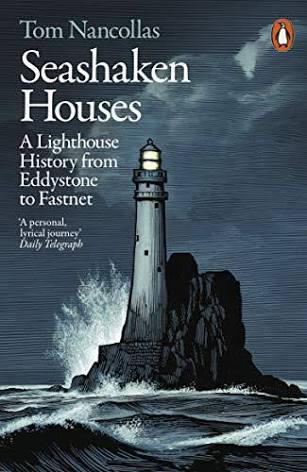
Dramatic history of several of the most famous British lighthouses, written by building conservationist Tom Nancollas. These histories contain some of the most horrific events of loss of life that could be found outside war zones or perhaps some of the appalling loss of life due to tidal waves or massive floods. This highly detailed work has the potential to be boring to all but genuine lighthouse enthusiasts but Nancollas manages to surprise us with a series of unlikely events and a lively set of personalities. The interlude Blackwell is a highly technical chapter of the history of lighthouse development which most mere mortals will struggle with but engineering experts will love.
The lighthouses studied in detail are Eddystone near Plymouth, Bell Rock near arbroath Scotland, Haulbowline near Carlingford Lough Ireland, Perch Rock at the mouth of the River Mersey in Wirral, Wolf Rock off Land’s End in Cornwall, Eddystone off Looe in Cornwall, Bishop Rock, 32 Miles of Lands End in Cornwall, and Fastnet off West Cork in Ireland. The final chapter is a plaintive call to make sure we never lose these beacons in the sea which have done so much to save the lives of so many.
I struggled with this book initially, not being of a technical bent but gradually the horror of lives lost at sea and the remarkable achievements of those who managed to plant lighthouses in the middle of the ocean gradually took me over. The engineering, courage and determination of these men (and they seem to have been all men) is quite astonishing. Nancollas brings meticulous detail to his account and lightens the complexity with humour and insight. 4 stars.
Trent Dalton: Boy Swallows Universe, p/b, Fourth Estate/Harper Collins, New South Wales, 2019.


Australian journalist Trent Dalton’s breakthrough novel has been a sensation in Australian publishing earning plaudits galore in Australia and internationally. Set in south Queensland the story centres on the early and young adult life of Eli and August whose separated parents are both loving and caring but also deeply heroin addicted. The boys live originally with their mother and her lover Lyall in a run-down end of town and later with their father when their mother is jailed and Lyall is murdered. Lyall cares for the two boys but also likes a drink and works for a major drug player resulting in his death.
The novel describes their inevitably hectic journey into adult hood including their school days and their dreams. Their role model Slim has done many years for murder but does provide a balancing wisdom while he lives. Both boys have talent but their unsettled lifestyle leads them into deep waters, especially when they tangle with the legendary Brisbane drug dealer Titus Bros. The writer’s emphasis is on Eli but his silent brother August also provides an unusual and wise support. Lyall eventually achieves his lifelong goal of becoming a journalist but his background and knowledge of the drug scene leads him into very deep waters at the same time as he falls in love with the much older journalist Caitlyn Spiers.
This remarkable novel never stops to draw breath and leaves the reader constantly hungry and finding it very difficult to put the book down. For a first novel it is a tour de force, constantly challenging and surprising the reader but also bringing a real depth of character as well as the reality of the impact of the drug scene sweeping many parts of Australia. It is a long time indeed since an Australian novel has made such an impact. 5 stars and rising.
William Faulkner: The Sound and the Fury,Intro: Richard Hughes, p/b, Ringwood, Penguin/Chatto & Windus, 1982 (1931).
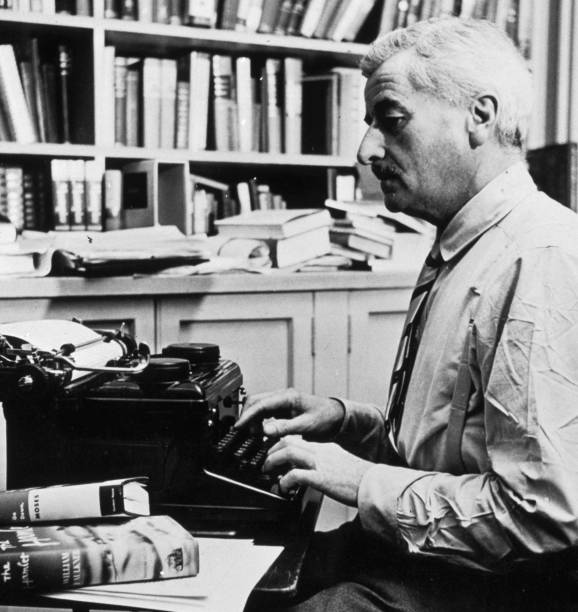
Traumatic account of the gradual falling apart of the American Compson family which included the very seriously disabled congenital Imbecile Benjy, now thirty years old, and still passionately devoted to his sister Caddy. The family survives in a poverty stricken environment, with increasingly unwell adults, ineffectual and poorly treated negro servants and a defiant rebellious niece. In spite of their poverty the mother is devoted to and deeply influenced by their Pentecostal church. Nevertheless the father who regularly cheats on his boss and anyone else he can, has amassed a fortune of $3000 which he has kept from the family.
There are two Quentins in this story, the first Quentin, a brother of the father, commits suicide at Harvard University and this complex story takes up the whole of chapter 2. The second Quentin is the rebellious niece who runs away from the family with her boyfriend and maybe or maybe not with the $3000, the final answer not being clear.
Richard Hughes’ preliminary notes provide sufficient information to enable a determined reader to make their way through Faulkner’s complex narrative and I for one am glad to have read this story. Every family and every individual has challenges, hard times, anger, defeat, love, acceptance and happiness and everything in between. Faulkner’s whimsical narrative is reminding us, if needed, that sound and fury are a part of all or our lives, and we all have our emotions, our wins and losses, our loves and failures at various times in our life on planet earth. The trick is to keep on keeping on!
Tony Payne: How to Walk into Church, p/b, Sydney, Matthiasmedia, 2015.

This little booklet is surprisingly full of good advice for practising Christians. It is written not so much for newcomers to a church because when you think about it, the first time you attend a particular church there can be a hundred different reasons for why you are there and just as many reasons why you might or might not continue to attend that church.
On the contrary this book is written for regular church attendees whether you are a weekly, fortnightly, monthly or yearly attendee. As someone who has regularly attended church all of my life I found a surprising amount of good advice in Tony Payne’s little monograph.
One key issue is the irregular attendee. That this is a major issue is very evident in many churches and let’s face it, irregular attendance springs from the set of priorities in our own life. If we are easily tempted to give church the flick, it’s because we prioritise other activities like sleeping in, having visitors, going away at the weekend, just doing other things on church day etc. Payne makes the point (p.37) that if we’re not there, we can’t love people, we can’t talk to them and encourage them, we can’t gather with them to listen and talk together, or simply genuinely share in their friendship and perhaps their challenges or problems.
A second key issue is Payne’s suggestion that we should prepare for church by using our brains, for example, by preparing the readings beforehand (p.41) but also being alert and ready to care for folk you know to be in need or having a hard time or who are shy or who simply need encouragement. Being alert to what is said also really shows that it is a rare service that doesn’t give you something to chew on about your own walk with God.
A third key issue is to come to church prayerfully. It stands to reason that if we we are already thinking negative thoughts when we first walk into church the experience is not going to improve! Again often it is what happens with interactions after church that counts whether in caring for new comers, good conversation during coffee after church, or simply being aware that a particular person is needy or is upset.
The above are only three issues that stood out for me in this booklet but Payne has some very wise advice and useful suggestions and he has done it all in a book that takes about thirty minutes maximum to read! I warmly commend this book.
 Theological, Cultural and Educational Reflections