James Graham Ballard: Empire of the Sun, p/b, London, Harper Collins, 1993 (1984)
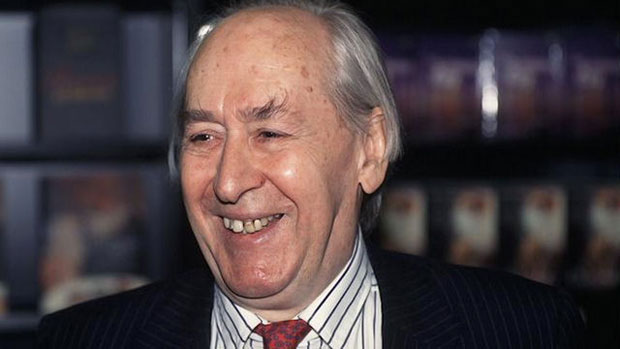

J G Ballard (Jim) was a young child living in Shanghai with his parents when the Japanese attack on Pearl Harbour took place on 7 December 1941 (8 December 1941 in Shanghai because of the time difference across the Pacific Date Line).
In the chaos of the Japanese entering the second world war on Germany’s side Jim was separated from his parents as all British citizens were immediately interned. Initially Jim survived by eating left over food and supplies from his family home and later by breaking into other homes in his area. After various dangerous near misses and assaults Jim finally handed himself over to the Japanese and was interned for three years in the Lunghus Civilian Assembly Centre.
This compelling novel details his own privations almost starving to death alongside the chaos of the Japanese war machine mingled with China’s own internal battles led by tensions between Nationalist Chiang Kai Shek and the Chinese communist party. Ballard powerfully describes the starvation and methods of survival of those held in Japanese internment camps, the death marches, the profiteers and self sacrifice of missionaries and others who cared for others in the midst of their own misery and hunger.
Ballard was eventually reunited with his parents and went on to become a copywriter and reporter before joining the RAF in Canada, later becoming a scientific journal editor and eventually a full time writer of over 22 books. Empire of the Sun was often set as a senior text in Australian secondary schools in the 1970s, introducing young Australians to the horrors of world war trauma. It is a novel which leaves an indelible impression on the mind. 5 stars and rising.
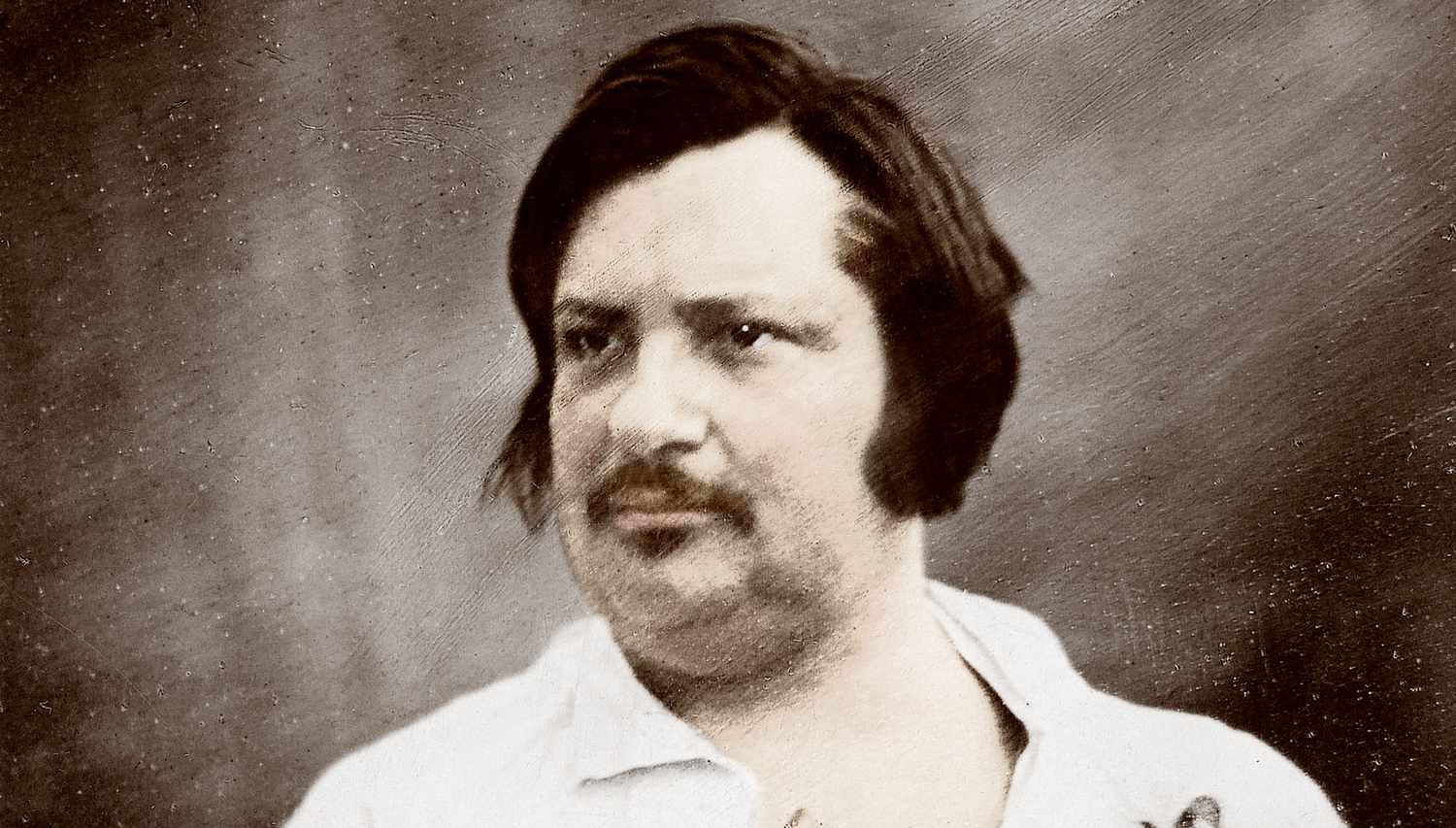
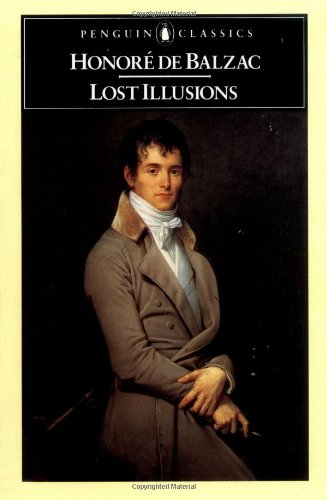
Honore’ De Balzac: Lost Illusions: Trans & Intro Herbert J. Hunt, p/b, England, Penguin, 1987, (1837-43).
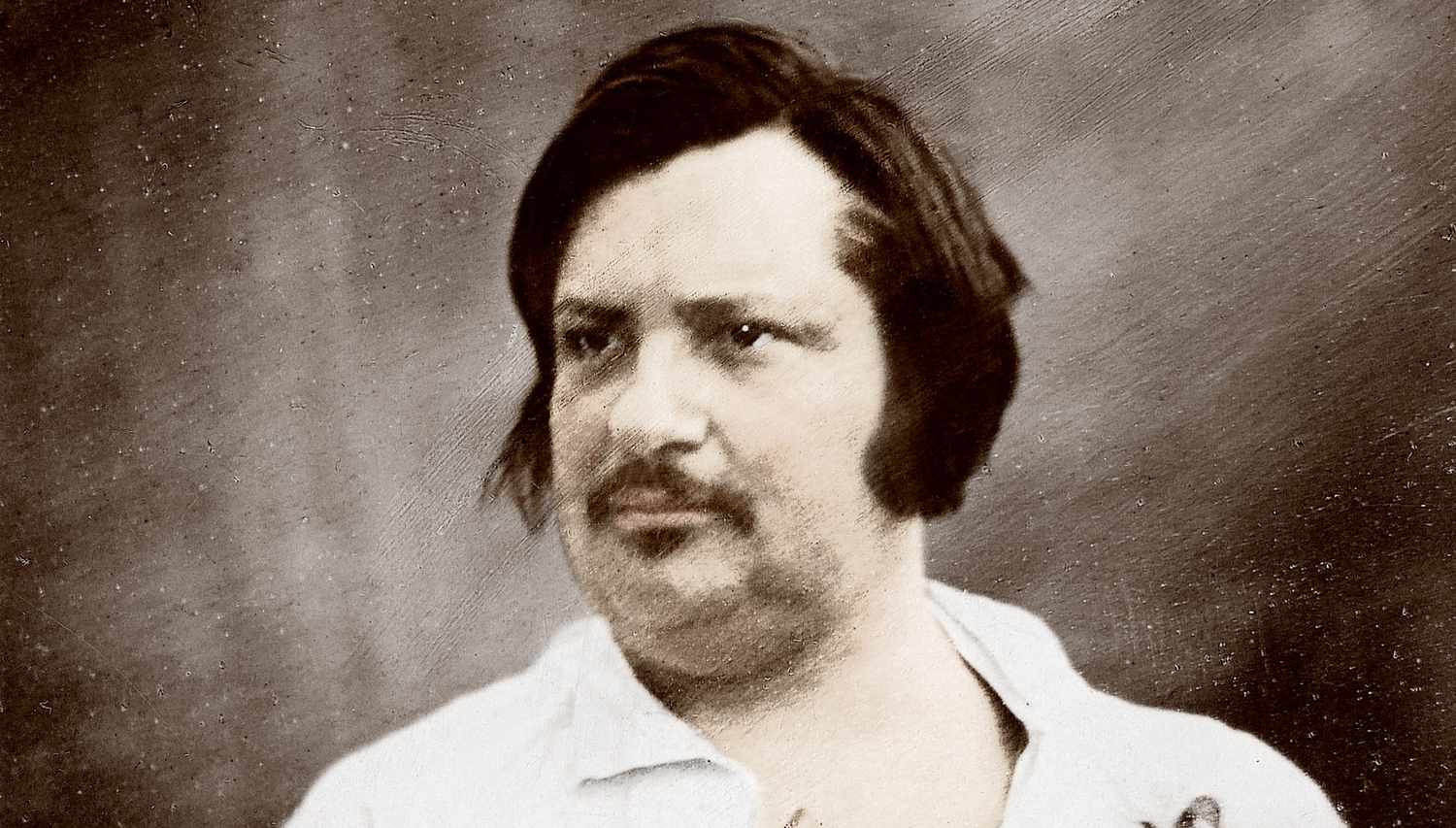
Balzac was a prolific C19th French author producing over ninety novels to which he gave the comprehensive term The Human Comedy. These extraordinary works included studies of French manners, philosophy, Parisian, military and country life in remarkable detail.
Lost Illusions is a large novel in three parts consisting of the chaotic life of Lucien Chardon, born of a plebeian father and an aristocratic mother, a poet who tries unsuccessfully to make a name for himself in Paris. Lucien’s story is based to some extent on his knowledge of the writer Jules Sandeau. Alongside this hectic story Balzac includes Scenes of Parisian Life and Scenes of Provincial Life. The thread which ties this lengthy work together is the friendship between Lucien and provincial printer David Sechard. Balzac wrote a second story about Lucien’s second attempt to make it in Parisian society encouraged by the mysterious Spanish ecclesiastic and diplomat ‘Carlos Herrera’. This long sequel to Lost Illusions is entitled Splendour and Misery of Courtesans or in the Penguin translation, A Harlot High and Low.
During my Year 12 French class many years ago I was supposed to have read Balzac’s Pere Goriot in French, which was not an achievement that went very well. As a result I have had a dread of reading Balzac ever since and I regret that I have not until now read Balzac in English. Herbert J. Hunt’s translation is superb and the trials, successes and deep trauma of Lucien’s life is indeed hard to put down. Lost Illusions is a genuine classic and in many turns one both feels for and hates the remarkable Lucien. 5 stars.
Christopher Marlowe: The Tragical History of the Life and Death of Doctor Faustus: Ed. & Intro: Sylvan Barnet, p/b, New York, Signet Classic, 1969 (1616)
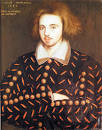
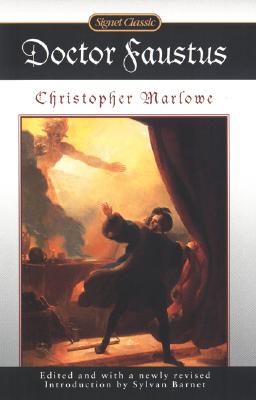
Christopher Marlowe tended to live on the wild side himself, Graduating from Cambridge, working for the British Government in Europe intrigues and leading a lively life on the streets in Britain whilst producing some brilliant plays. He finally lost his life in a street fight at an eating house after a dispute over the bill.
Editor Sylvan Barnet notes that The Historia von D. Iohan Fausten was published anonymously in German in 1587 and describes the career of a man who gave the devil his soul in exchange for twenty-four years of earthly power, and who at last after performing miraculous feats and low practical jokes, was carried of to Hell. She further notes that An English translation of this work was published in 1592 as The History of the damnable life, and deserured death of Doctor John Faustus, Newly imprinted, and in convenient places imperfect matter attended…and translated into English by P. F. Gent[leman]. Barnett considers that Marlowe based his play on this edition although an additional story from John Foxe’s Acts and Monuments has been added. Barnet’s 1969 edition contains additional essays on The Tragic Form by Richard B. Sewall, Five-Act Structure in Doctor Faustus by G.K. Hunter and other notes on whether or not Dr. Faustus is a Christian tragedy as well as the way the play was presented at Stratford-On-Avon in the early C17th.
Marlowe’s story is a rollicking yarn as Faustus gets tangled up in all sorts of outrageous events and actions including popes, emperors and anyone else who gets in his way. He has 24 years to enjoy himself before Lucifer and his faithful sidekick Mephistopheles finally claim their victim. There are plenty of comic interludes in the play and indeed Dr Faustus causes significant havoc and fun wherever he travels. Nevertheless the fateful ending is severe and grim indeed and one can imagine an early C17th audience feeling the horror of the sad and final act.
Whilst Dr Faustus can be seen simply as a morality play it is also a real question whether Marlowe intended the play to challenge the stranglehold that Christian faith had in Europe until the gradual infusion of scientific investigations and translations of ancient texts from the C13th onwards. Thinkers like Roger Bacon and Robert Grosseteste and many others began to challenge the Christian world view. Such thinkers paved the way for the Renaissance and the genuine challenge to spiritual as opposed to scientific forms of analysis of human life, history and science. There are certainly many direct anti-papal incidents on centre stage in Marlowe’s play.
One thing is certain, the human mind will always be hungry to prolong life and to explore any possible golden key to the mystery of ongoing human life. 5 stars.
Robert Shore: Andy Warhol, h/b, London, Laurence King Publishing, 2020

Journalist Robert Shore.

Andy Warhol
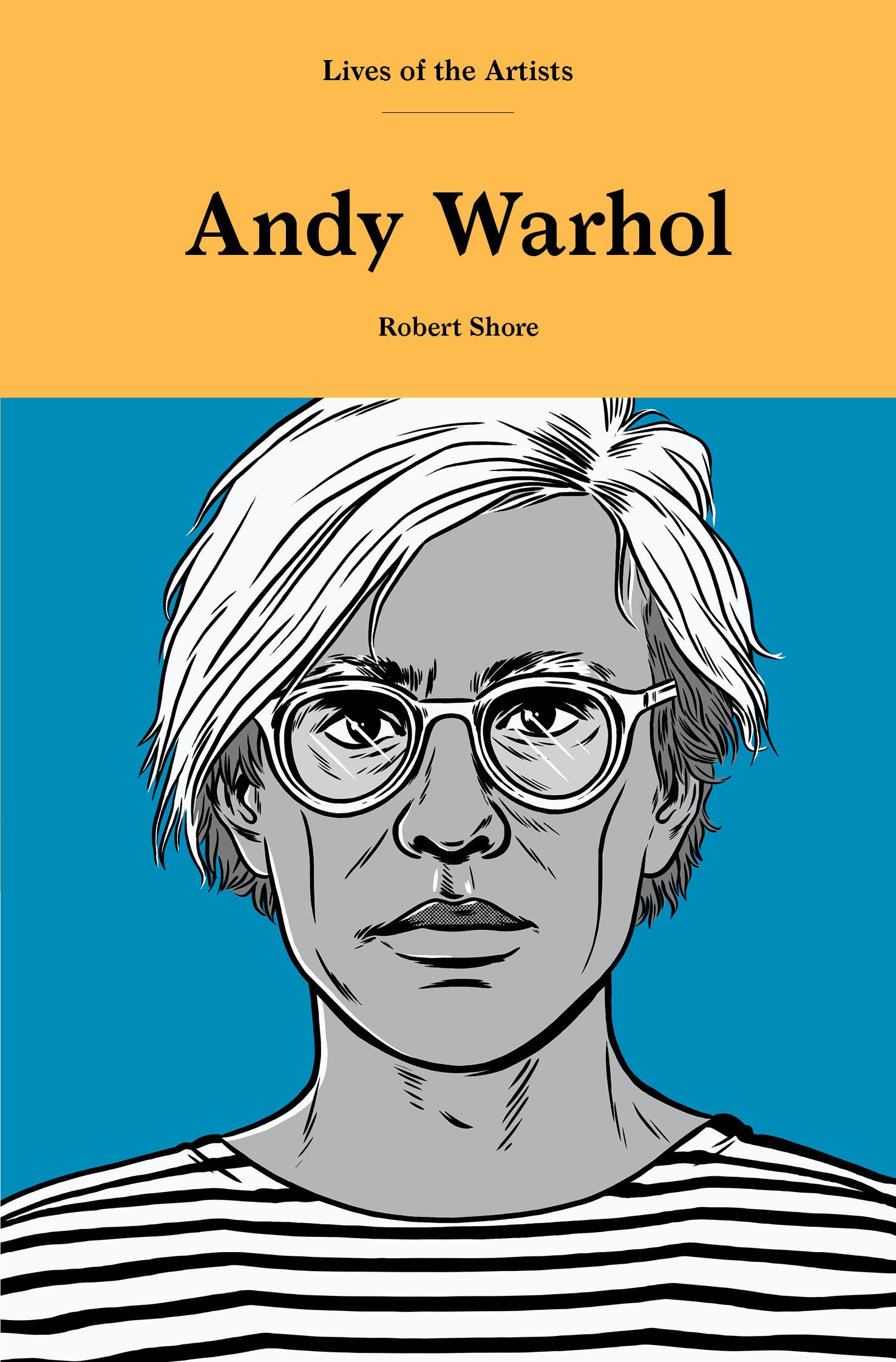
Journalist Robert Shore has produced a thorough and masterful summary of the complex world of commercial artist, photographer and film maker Andy Warhol. Ward died in 1987 from complications after a successful gall bladder operation.
Warhol was born in Ruthenia in the Carpathian Mountains on the border of Russia and Ukraine. His family migrated to the USA and he grew up in Pittsburgh in a Central European ghetto, regularly attending St John Chrysostom Church where they listened to services in Old Slavonic. His father was a construction worker often away from home and his mother was of European peasant stock, eccentric and superstitious and wearing peasant dress but also a talented singer and floral artist.
Warhol was a sickly child eventually contracting St Vitus Dance, a disorder of the Central Nervous System which left him with problems of trembling and shaking as well as a skin condition which made him look pale and blotchy.
He was addicted to the cinema and his childhood bedroom was surrounded by autographed photographs of Hollywood stars, especially Shirley Temple. At school Warhol’s drawing skills were soon spotted, earning him a free Saturday art training at the Carnegie Institute each Saturday. He eventually enrolled at the Carnegie Institute of Technology and his talents spread to dance and window dressing eventually obtaining part time work in Pittsburgh where he became a connoisseur of fashion magazines and the printed page.
From these raw beginnings Warhol developed into perhaps the most well known and highly skilled commercial artist of all time creating a vast Factory space in New York which attracted the edgy, rock and roll stars, the edgy artistics, the wayout, the far way out and the wacky with a strong emphasis on the creation of a homosexual community laced with vast quantities of every kind of drug and amphetamine use.
It was in this centre that the famous paintings of Campbells’ tomato soup cans and other icons were made. It was also in this centre that Valerie Solanas walked out of the sixth floor into the factory and pulled the trigger of a .32 calibre automatic pistol, firing it twice at Warhol, felling him to the floor. Warhol was pronounced dead at the Columbus hospital but somehow managed to pull through.
Warhol eventually drifted from commercial art becoming known worldwide for his offbeat, outrageous and frequently pornographic film work and his photography of the rich and famous all over the world including a session with Mao Tse Tung!
In his later years he lived more quietly in a large house with intimate friends but his photographic and artwork still dominated the edgy scene from Hollywood to New York and overseas. He died in 1968 in hospital after a successful operation removing his gall bladder. Robert Shore’s concise and clear analysis of every aspect of Warhol’s complex oeuvre along with 22 hard to find photographs of Warhol with the rich and famous is thorough, concise and clear. This is a very fine biography of one of the modern art world’s most complex superstars.
 Theological, Cultural and Educational Reflections