Barbara Kingsolver: Unsheltered, p/b, 2018, London, Faber & Faber.
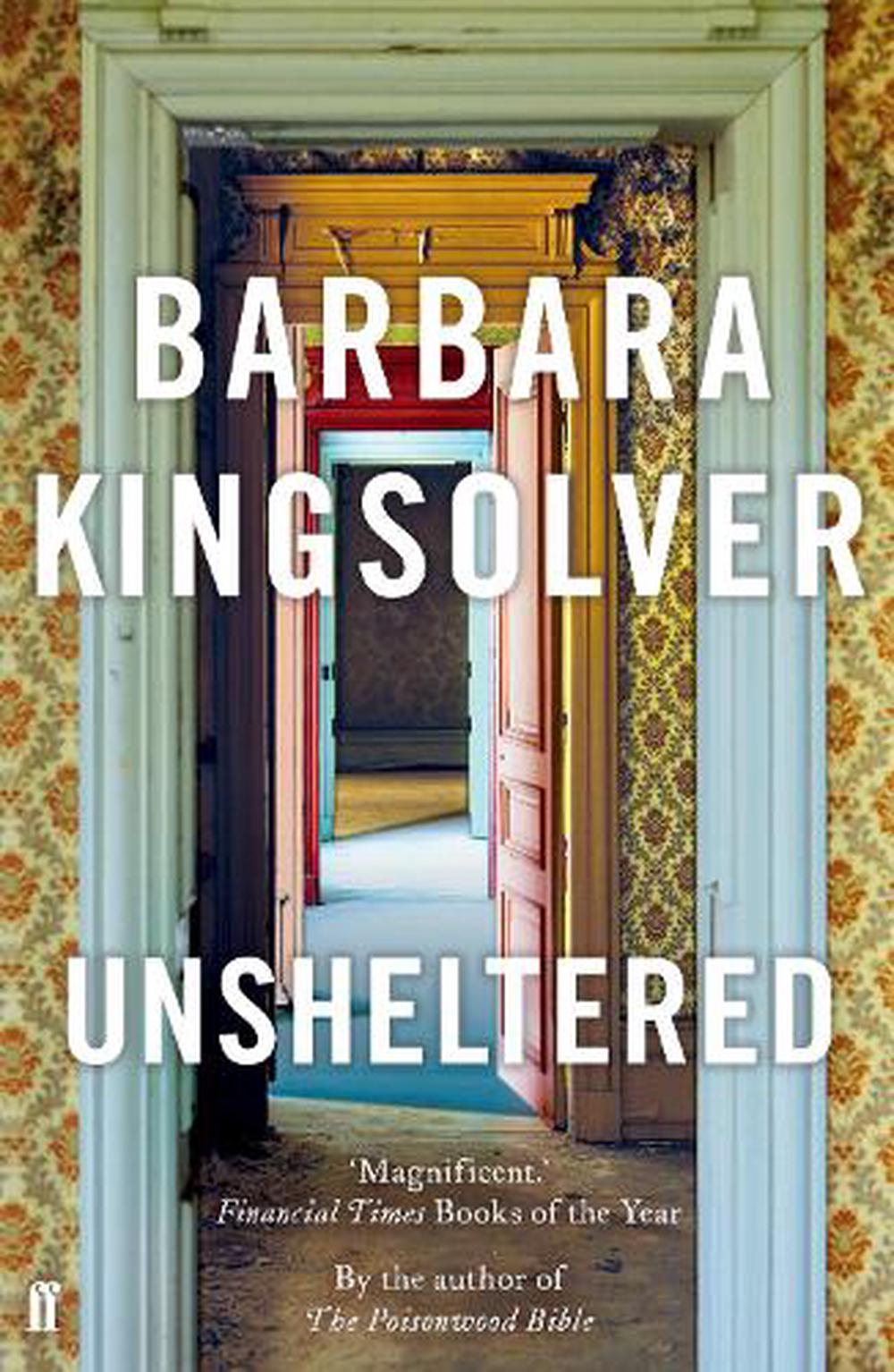
Clever partly historical novel which describes the lives of two couples and their families about 150 years apart. Willa and her Greek science teacher husband Iano have two children and having moved house for employment find themselves the unlucky owners of a home which proves to be unredeemable.
At the same time both their twenty something children find themselves in difficulty and need to return home to live. Along with their seriously ill grandfather on a breathing machine and a new baby of one of their children, the couple struggle to make ends meet as their house gradually disintegrates.
Meanwhile in the 1870’s Science teacher Thatcher and his beautiful wife Rose are living in the same house 130 years earlier, along with his equally attractive teenage daughter Polly. At his school Thatcher is caught up in the scandal of Charles Darwin and his new theories of biological evolution which he passionately supports.
Thatcher’s convinced Darwinism is strongly opposed by his Headmaster who becomes determined to destroy Thatcher’s name and career. At the same time Thatcher meets the remarkable Dr. Mary Treat (1830-1923), a naturalist and a key contributor to Darwin’s work through her scientific collections, explorations and experiments.
The two scientists become soul mates as the marriage begins to fail.
Double story novels with some connection seem to be a current fad with Geraldine Brooks’ novel Horse a typical example. Kingsolver even commences each chapter of one family with the last sentence of the previous family’s story. These days I have trouble keeping up with all the characters in one novel let alone two novels side by side, so I found the structure difficult to cope with at first.
As a sometime biologist myself I found the Treat/Darwin connection fascinating and well told. The opening story line with its lessons about twenty somethings having the answers to all the world’s problems felt more like a series of school lessons at times and became a bit tedious. I gave this novel 4 stars.
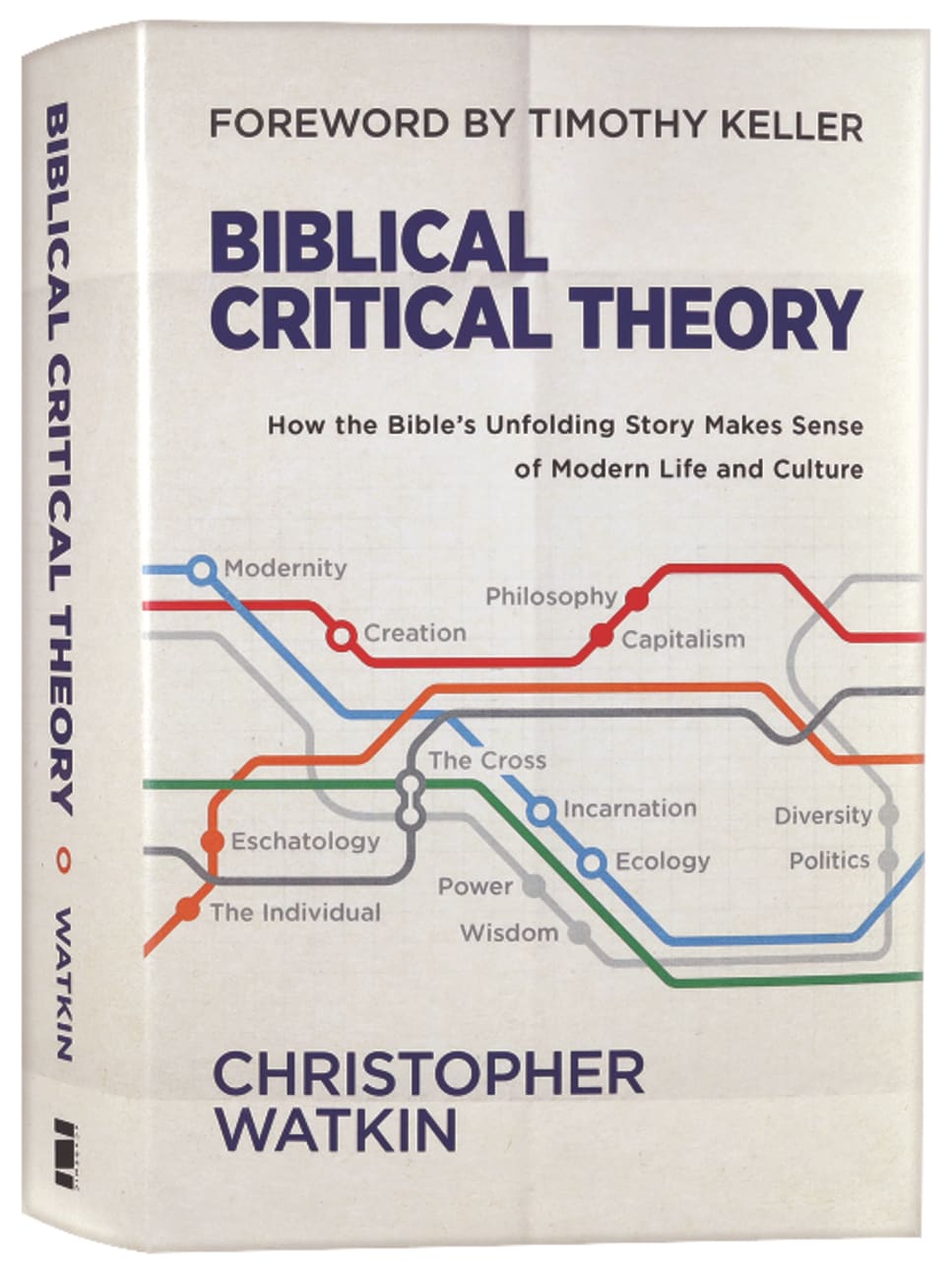
Christopher Watkin: Biblical Critical Theory: How the Bible’s Unfolding Story Makes Sense of Modern Life and Culture, Foreword by Tim Keller, h/b, 648 pp including full bibliography and Index, Grand Rapids, Zondervan Academic, 2022.

Dr Christopher Watkin is Associate Professor in French Studies at Monash University in Melbourne and has an international reputation in the area of modern and contemporary European thought, Atheism and the relationship between the Bible and Philosophy.
A critical theory is any approach to political philosophy that focuses on society and culture to attempt to reveal, critique, and challenge power structures.
Watkin has modelled this major work of Christian and philosophical thinking on Augustine’s magisterial The City of God in 426 C.E. The City of God analyses C4th Roman culture alongside a grand sweep of Biblical literature from Genesis to Revelation.
Watkin’s work is equally monumental and demanding. In 28 dynamic chapters Watkin introduces his readers to a wide range of theological, philosophical and Biblical ideas including Trinity, Creation, Humanity, Sin and Society, The Cross, Resurrection, Eschatology, Identity, Culture, and a host of other topics which include all the major events of the Biblical story from Genesis to Revelation.
A major feature of this work is Watkin’s introduction to the fierce assault of philosophic thinking on to the Biblical narrative, challenging many of the assumptions which moderns have assumed to be taken for granted.
His targets include Marx, Heidegger, Foucault, Russell, Kierkegaard, Nietzsche, Camus and many others.
Watkin’s reply to the philosophical attack is well supported by an equally articulate collection of sympathetic and Christian thinkers including David Bentley Hart, Terry Eagletion, Colin Gunton, C S Lewis, Leslie Newbigin, Bonhoeffer, Pascal, Alvin Plantinga, Jaques Ellul, Chesterton, Midgely and many others too numerous to name.
Each chapter finishes with a series of helpful Study Questions and suggestions for further thought and action so this monumental study would make an excellent small group study series.
A distinctive and helpful feature of Watkin’s approach is his use of diagrams. One very common example is the use of diagrams with two opposing ideas in their own squares, neither of which are capable of moving forward. Watkin then adds to the diagram a Biblical or Christian solution which diagonally cuts across both squares to provide a way forward. These diagrams themselves would make excellent discussion starters.
Biblical Critical Theory is an intimidating and challenging read and would not do for someone coming new to theological or philosophic discussion. Thoughtful Christians however will rejoice that here at last is a book which not only challenges but unpicks and defeats many of the controlling thought centres which dominate C21st Western thinkers. New attacks on Christian faith in this post-Christian era require equally valid and newly formulated Christian responses and here Watkin has delivered in Spades. Watkin has written an amazing book which will be frequently referred to in theological training and conversation for many years to come. 5 stars and rising.
 Theological, Cultural and Educational Reflections